(7% discount is applied at checkout)
Cart is empty
Your go-to destination for cutting-edge server products
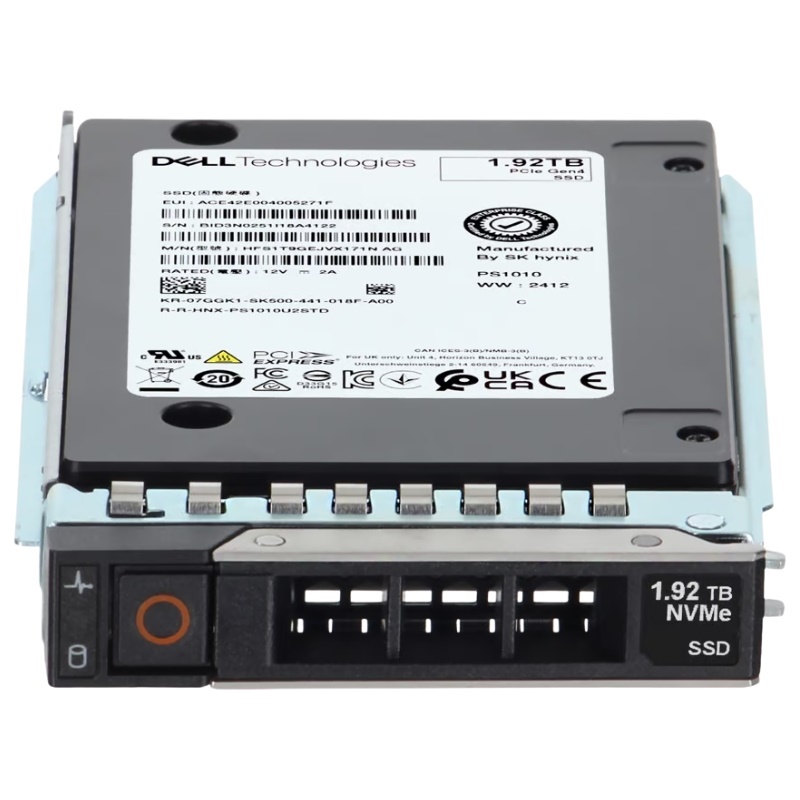


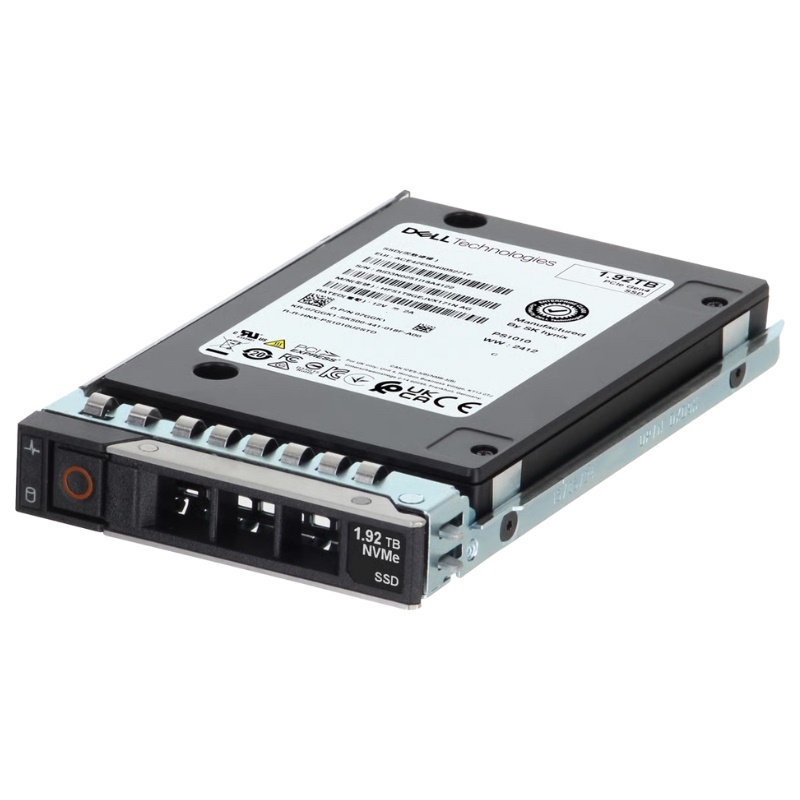
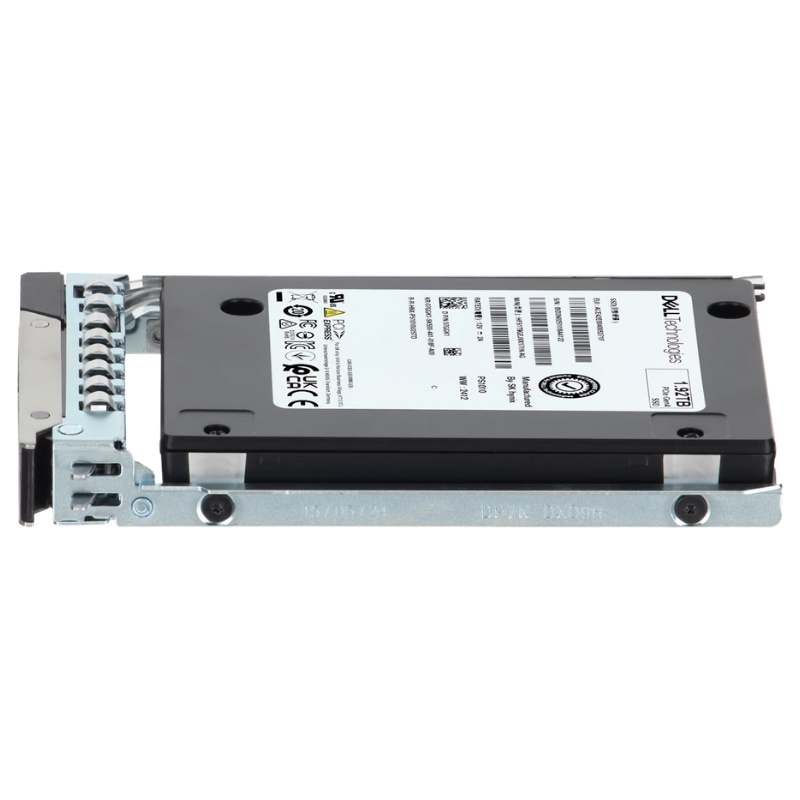
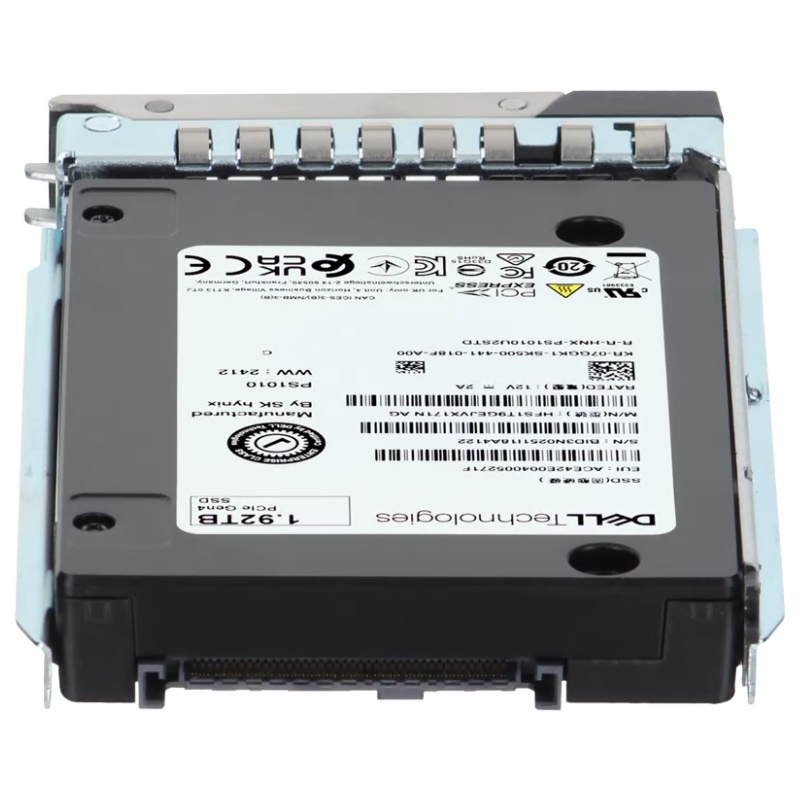
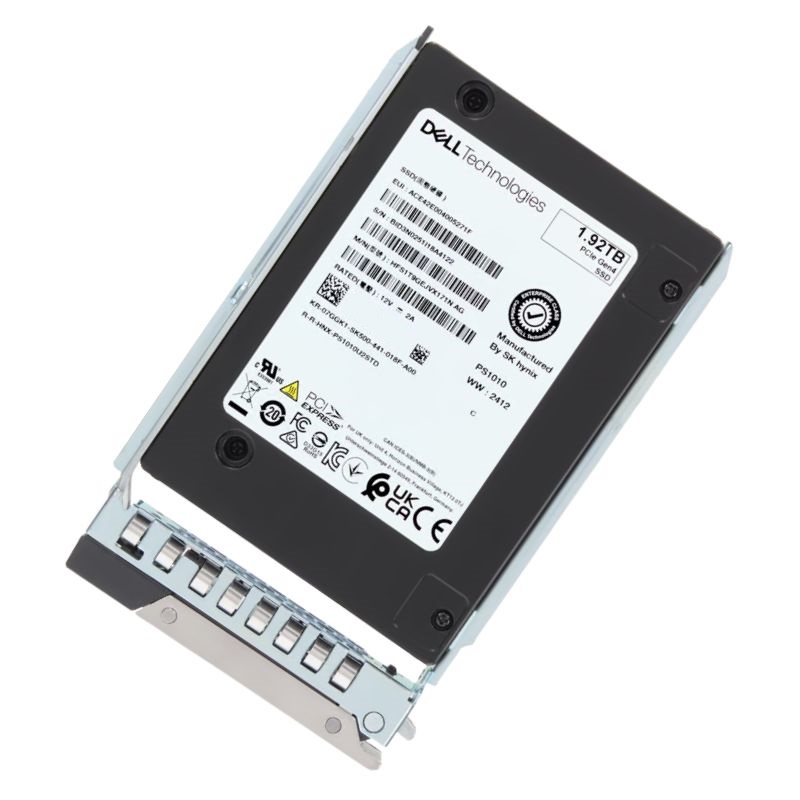
Dell 345-BJPH 1.92TB PCI-E 4.0 X4 Gen4 NVMe U.2 SFF TLC 3D Nand Read Intensive Solid State Drive. New Sealed in Box (NIB) with 1 Year Warranty
The Dell 345-BJPH represents a significant advancement in enterprise storage technology, specifically engineered for Dell PowerEdge servers from 14th to 17th generation. This 1.92TB PCIe Gen 4.0 x4 NVMe U.2 SSD combines high-performance hardware with Dell's rigorous validation process to deliver exceptional reliability and speed for read-intensive applications. The drive utilizes the U.2 (SFF-8639) interface in a 2.5-inch Small Form Factor (SFF) with a 15mm z-height profile, making it compatible with modern high-density server configurations while maintaining enterprise-grade endurance characteristics.
This solid-state drive operates on the PCI Express 4.0 interface with x4 lanes, doubling the bandwidth compared to previous PCIe 3.0 generations. The drive delivers sequential read speeds up to 6,900 MB/s and sequential write speeds up to 2,100 MB/s, with random read performance reaching 900,000 IOPS and random write performance up to 110,000 IOPS. These performance characteristics make the 345-BJPH particularly suitable for applications requiring rapid data access and high throughput.
The 1.92TB capacity point represents an optimal balance between storage density and performance consistency. Utilizing 3D TLC NAND technology, this drive provides substantial storage while maintaining cost-effectiveness for read-intensive workloads. The 2.5-inch Small Form Factor with 15mm height allows for high-density deployments in Dell PowerEdge servers, maximizing storage per rack unit while ensuring proper thermal management through designed airflow characteristics.
The U.2 interface (SFF-8639) supports NVMe 1.4 protocol over PCIe 4.0 x4 lanes, providing a maximum theoretical bandwidth of approximately 7.88 GB/s. This interface maintains backward compatibility with earlier PCIe generations while enabling the full performance potential of the NVMe protocol. The implementation includes support for multiple namespaces, end-to-end data protection, and advanced error correction capabilities.
Dell has engineered the 345-BJPH with comprehensive enterprise features including power loss protection, end-to-end data path protection, thermal throttling mechanisms, and advanced wear leveling algorithms. These features ensure data integrity during unexpected power events and maintain consistent performance under varying workload conditions. The drive includes SMART monitoring capabilities that provide early warning of potential issues, allowing for proactive maintenance and replacement scheduling.
As a read-intensive drive, the 345-BJPH is rated for 1.3 Drive Writes Per Day (DWPD) over a 5-year warranty period, translating to approximately 4.26 Petabytes Written (PBW) total endurance. This endurance rating makes it suitable for applications with moderate write requirements balanced against high read demands. The wear-leveling algorithm distributes writes evenly across all available NAND blocks, extending the drive's usable life and maintaining consistent performance throughout its lifespan.
The drive implements a sophisticated LDPC (Low-Density Parity Check) error correction code engine capable of correcting multiple bit errors per page. Combined with RAID support and end-to-end data protection, this ensures data integrity from the host interface through to the NAND media. The protection mechanisms include CRC (Cyclic Redundancy Check) for both command and data packets, ensuring corruption detection throughout the data path.
Operating within a power envelope of 12-15 watts during active operation and dropping to below 5 watts during idle states, the 345-BJPH provides excellent performance per watt metrics. The drive supports multiple power states as defined in the NVMe specification, allowing for dynamic power management based on workload requirements. This capability is particularly important in dense server configurations where power and thermal budgets are carefully managed.
The 345-BJPH is specifically validated for Dell PowerEdge 14th, 15th, 16th, and 17th generation servers, ensuring optimal performance and compatibility through Dell's extensive testing procedures. This includes compatibility with Dell's BIOS, iDRAC, and OpenManage systems management tools. The drive appears in Dell's support matrix and is eligible for Dell ProSupport and warranty services when deployed in compatible systems.
For PowerEdge 14G servers including the R740, R740xd, R740xd2, T640, and similar models, the 345-BJPH operates at PCIe 3.0 speeds due to platform limitations while maintaining full functional compatibility. In these systems, the drive delivers exceptional performance for applications such as database servers, virtualized environments, and content delivery networks. The drive is recognized by the Dell Unified Server Configurator and can be managed through iDRAC9 interface.
With PowerEdge 15G servers including the R750, R750xa, R7525, and T550, the 345-BJPH operates at full PCIe 4.0 speeds, delivering maximum performance potential. These systems leverage the increased bandwidth for demanding workloads including AI/ML inference, high-frequency databases, and real-time analytics. The drive's thermal characteristics are specifically tuned for the cooling solutions in 15th generation chassis.
The 345-BJPH maintains full compatibility with PowerEdge 16G and 17G servers, ensuring investment protection for organizations standardizing on this drive model. In these newer platforms, the drive benefits from enhanced PCIe lane management, improved thermal controls, and tighter integration with Dell's system management ecosystem. This forward compatibility allows for seamless technology refresh cycles without storage redesign requirements.
Under sustained workload conditions, the 345-BJPH maintains consistent performance through advanced thermal management and garbage collection algorithms. The drive exhibits low latency characteristics with typical read latency below 100 microseconds and write latency below 15 microseconds, making it suitable for latency-sensitive applications. Performance consistency remains high even under mixed workload conditions, with minimal performance degradation during continuous operation.
For sequential read workloads, the drive maintains near-maximum throughput across various transfer sizes, making it ideal for large file operations, backup storage, and data streaming applications. Sequential write performance remains consistent during sustained operations thanks to the large SLC cache and intelligent write acceleration algorithms. The drive automatically adjusts its caching strategy based on workload patterns to optimize both performance and endurance.
Random read performance excels with the 345-BJPH, delivering high IOPS across various queue depths and block sizes. This characteristic benefits database applications, virtualization hosts, and other IOPS-sensitive workloads. Random write performance scales effectively with queue depth, making it suitable for applications that generate concurrent write operations from multiple threads or processes.
In mixed read/write workloads typical of enterprise applications, the drive maintains balanced performance without significant degradation in either operation type. The NVMe protocol's parallel command processing capabilities enable efficient handling of concurrent read and write requests, while the advanced controller manages NAND access patterns to minimize write amplification and maintain consistent latency profiles.
The Dell 345-BJPH is optimally suited for read-intensive enterprise applications where high throughput and low latency are critical requirements. Common deployment scenarios include database servers, web hosting infrastructure, virtual desktop infrastructure (VDI), content delivery networks, and big data analytics platforms. The drive's characteristics make it particularly effective for applications with predominantly read-oriented access patterns complemented by moderate write activity.
For database management systems including SQL Server, Oracle Database, MySQL, and PostgreSQL, the 345-BJPH provides excellent performance for query processing, indexing operations, and transaction logging. The low latency characteristics improve response times for OLTP workloads, while the high sequential read performance benefits data warehouse and business intelligence applications. The drive's endurance rating ensures reliable performance throughout the warranty period under typical database workloads.
In virtualized environments using VMware vSphere, Microsoft Hyper-V, or KVM, the 345-BJPH delivers the consistent performance required for high-density virtual machine deployment. The drive efficiently handles boot storms, simultaneous VM operations, and storage migration activities. For cloud infrastructure, the drive provides the durability and performance characteristics required for instance storage in private cloud deployments.
The drive utilizes 3D TLC NAND flash memory with multiple layers stacked vertically to achieve high density while maintaining reliability. The 3D structure allows for larger feature sizes compared to planar NAND, improving endurance and data retention. The memory cells employ charge trap technology for better cycling endurance and data retention compared to floating gate alternatives.
A dedicated DRAM cache serves multiple purposes including mapping table storage, command queuing, and write buffering. The cache size is optimized for the 1.92TB capacity to ensure efficient operation under various workload conditions. Data in the DRAM cache is protected by ECC and includes power loss protection to prevent data corruption during unexpected power events.


 Contact Us
 Information
 Catalog
 Solid State Drives (SSD)
 Network Switches
 Hard Disk Drives
 HBA & Controllers
 PC & Servers
 PC & Server Memory
 CPU & Processors
 Network Routers
 Power Supplies
 Tape Drives & Libraries
 Network Devices
 Computer & Network Cables