(7% discount is applied at checkout)
Cart is empty
Your go-to destination for cutting-edge server products
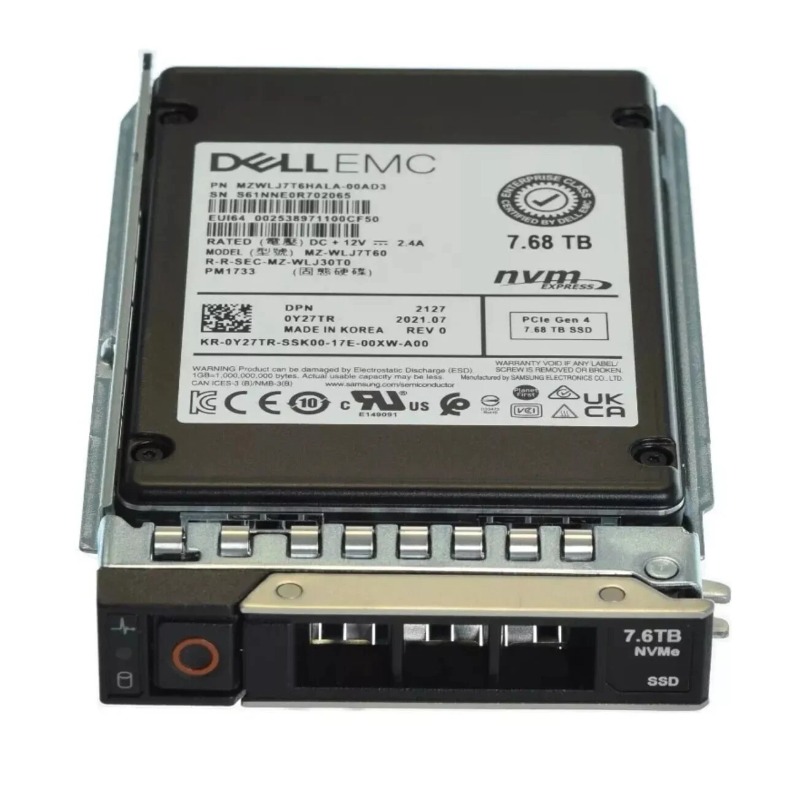


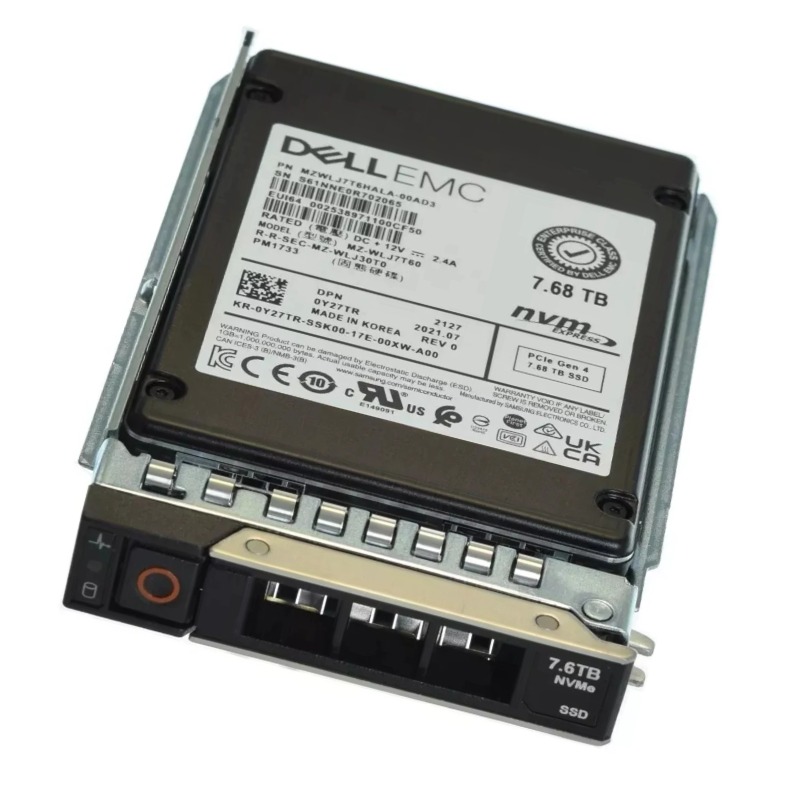
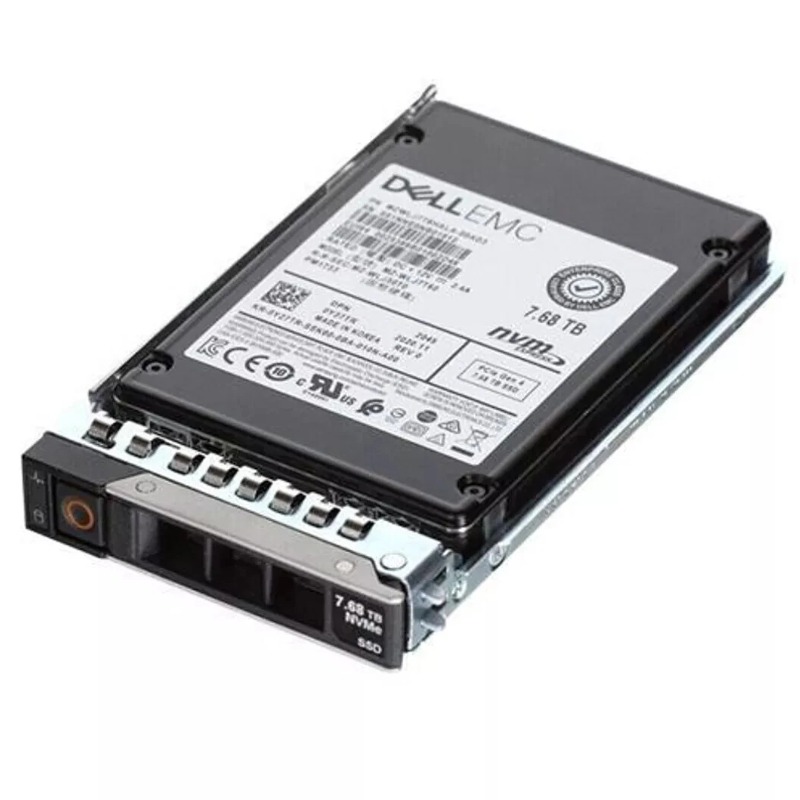
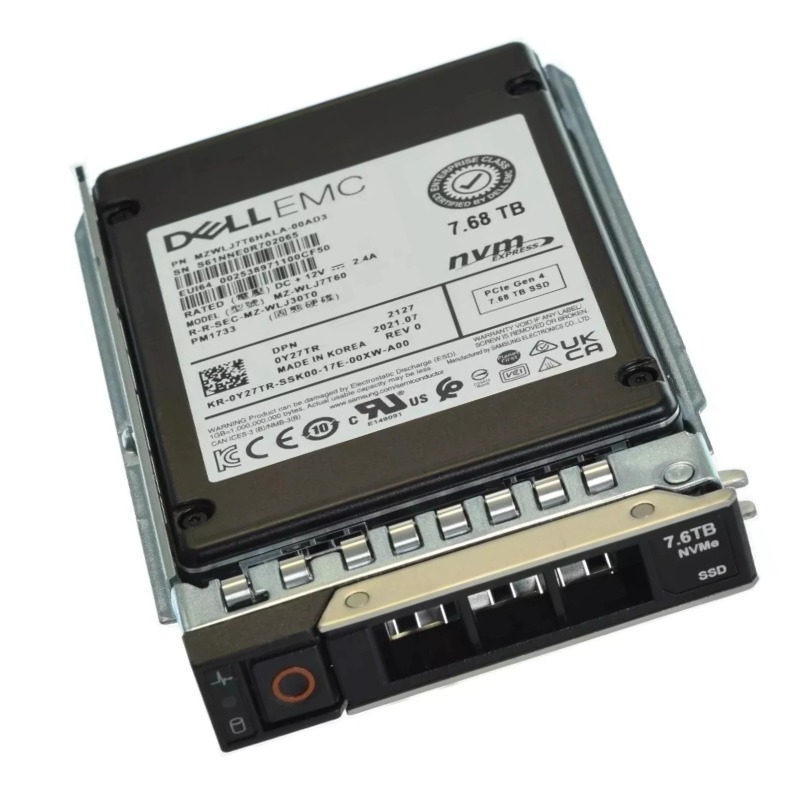
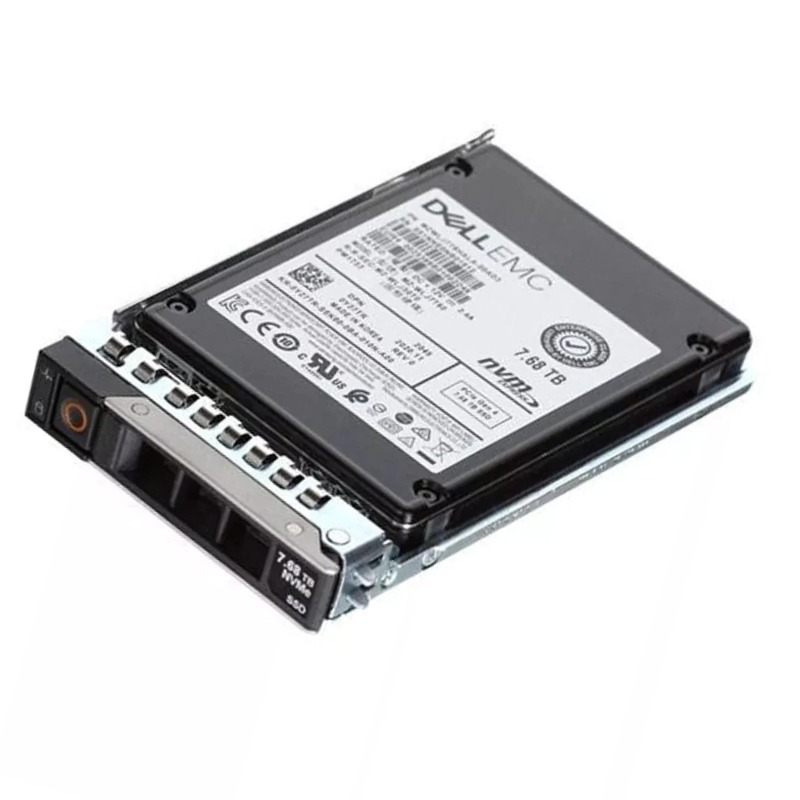
Dell 345-BMJL 7.68TB PCIE Gen 5.0 X4 NVME E3.s 2.5-inch Read Intensive TLC Enterprise SSD with Tray. Excellent Refurbished with 1 Year Replacement Warranty
The Dell 345-BMJL 7.68TB PCIe Gen5 x4 NVMe E3.S SSD redefines data acceleration for today’s performance-driven workloads. Designed for Dell PowerEdge servers, this ultra-fast, read-intensive storage solution offers outstanding responsiveness, scalability, and reliability for enterprise applications demanding consistent uptime and seamless data flow.
Unlock the next generation of storage performance with PCIe Gen5 technology. The Dell 345-BMJL ensures faster response times, minimal latency, and rock-solid dependability, making it an essential component for businesses seeking peak efficiency in mission-critical environments.
The category covers high-capacity enterprise NVMe solid state drives designed for modern data centres and server infrastructures, focusing specifically on the model Dell 345-BMJL 7.68TB PCIe Gen5 E3.S NVMe SSD. This category addresses large-scale storage needs with ultra-low latency, high throughput and optimized form-factors for dense server configurations. Within this category, you will also find related subcategories such as “NVMe E3.S Gen5 SSDs”, “7.68TB enterprise NVMe drives”, “Dell PowerEdge compatible SSDs”, and “Read-intensive PCIe Gen5 SSDs”. These SSDs are engineered for enterprise workloads including AI/ML inference, analytics, cloud infrastructure, virtual desktop infrastructures (VDI) and other demanding applications.
Historically, enterprise SSDs evolved from SATA and SAS interfaces to NVMe over PCIe to remove bottlenecks and fully exploit NAND flash performance. The transition to PCIe Gen5 (32 GT/s per lane) and newer EDSFF (Enterprise & Data Center Standard Form Factor) design standards such as E3.S form-factor represent a leap in performance, density and power efficiency.
This category emphasises several key criteria: interface (PCIe Gen5 x4), form-factor (E3.S), capacity (7.68TB in this case), workload-type (read-intensive or mixed enterprise), endurance rating, reliability features such as power-loss protection and error-correction, and compatibility with server platforms such as Dell PowerEdge series. For example, the 345-BMJL model is specified for multiple PowerEdge server models and offers sequential reads of up to 14,000 MB/s and random reads up to ~2,500,000 IOPS.
As data volumes explode and applications such as generative AI, analytics, real-time inference, in-memory databases and cloud microservices demand lower latency and higher I/O density, the importance of enterprise NVMe SSDs in the “7.68TB Gen5 E3.S” class has grown significantly. Drives in this class allow server designers to increase storage capacity per slot, maintain high throughput, reduce power and thermal footprint and simplify infrastructure scaling. Because the E3.S form-factor allows greater drive density and easier cooling in 1U or 2U rack servers, these drives become strategic components in modern data centres.
In practice, many vendors now deliver Gen5 NVMe SSDs built for enterprise use, offering sequential read speeds that significantly exceed prior Gen4 solutions, sometimes by 60 %-100 % or more, while supporting high endurance and advanced telemetry. :contentReference[oaicite:4]{index=4} The Dell 345-BMJL exemplifies this trend by providing a 7.68TB capacity in the E3.S 2.5-inch form-factor with a PCIe Gen5 x4 interface, aimed at large-scale use cases that demand ultra-fast read-intensive storage.
This subcategory includes SSDs built in the E3.S form-factor under the EDSFF standard (Enterprise & Data Center Standard Form Factor) and leveraging PCIe Gen5 x4 and NVMe protocols. E3.S drives deliver high density and improved signal integrity, thermal management and serviceability compared to older 2.5-inch U.2/U.3 formats. :contentReference[oaicite:6]{index=6} Devices in this subcategory typically feature high IOPS, high sequential throughput, support for 24/7 data-center operation and enterprise reliability features such as power-loss protection, end-to-end data path protection, and strong MTBF values. For example, KIOXIA’s CM7-R series supports up to ~2.7 million IOPS random read and ~310k IOPS random write. :contentReference[oaicite:7]{index=7}
Membership in this subcategory implies the drive is designed for server racks, modern storage systems and cloud infrastructure rather than typical consumer desktops. These drives ensure that enterprise environments can scale storage capacity without compromising performance or reliability. For the Dell 345-BMJL model, its 7.68TB capacity combined with Gen5 interface and E3.S form-factor positions it squarely within this high-end enterprise SSD market. :contentReference[oaicite:8]{index=8}
The 7.68 TB capacity bracket is a common sweet-spot in enterprise SSDs: large enough for high-density data-center deployment while still delivering strong cost-per-terabyte value compared to smaller drives. Operators deploying large data sets, virtualization hosts, persistent memory caches, streaming analytics, or AI inference appliances look for drives that can handle both capacity and performance demands. The Dell 345-BMJL falls into this capacity category, allowing administrators to deploy fewer drives yet serve the same or higher storage demands, thus simplifying cabling, reducing overhead and enhancing thermal efficiency. :contentReference[oaicite:9]{index=9}
In this subcategory you will also find other OEM part-numbers with 7.68 TB capacity in the E3.S form-factor and Gen5 interface (for example, Dell 345-BMJP, Dell 345-BMFB, etc). :contentReference[oaicite:10]{index=10} Because they share similar specification tiers, buyers can compare endurance, warranty, performance and vendor compatibility when selecting which high-capacity drive fits best within their infrastructure roadmap.
This subcategory focuses on SSDs verified or listed as compatible with Dell PowerEdge server platforms. For instance, the Dell 345-BMJL is specified with compatibility for server models such as PowerEdge R670, R6715, R6725, R760, R7615, R7625, R770, R7715, R7725, Xe 7745, Xe 9640, and others. :contentReference[oaicite:11]{index=11} This compatibility listing is critical for enterprise IT teams because using certified drives ensures better firmware integration, warranty support, thermal and power compatibility, and smoother deployment of storage in large server fleets.
When purchasing from the “Dell PowerEdge compatible SSDs” subgroup, buyers typically evaluate factors such as hot-swap tray inclusion, firmware version compatibility with server generation, vendor UUID or asset tagging, and serviceability. For example, the 345-BMJL comes with a tray included (2.5-inch E3.S W-Tray) which simplifies installation in compatible Dell servers. :contentReference[oaicite:12]{index=12}
In this category the named model, Dell 345-BMJL 7.68TB, offers standout performance features: sequential reads up to ~14,000 MB/s, sequential writes up to ~6,000 MB/s, random read IOPS up to 2.5 million, random writes up to ~300,000 IOPS, MTBF of ~2.5 million hours, endurance of ~14,016 TBW (total bytes written) over lifetime, and typically 1 DWPD (Drive Writes Per Day) for a 5-year design life in read-intensive workloads.
Interface: PCIe Gen5 x4 delivers approximately double the bandwidth of Gen4, enabling next-generation storage throughput. :contentReference[oaicite:14]{index=14} Form factor: E3.S (EDSFF) ensures high density, improved thermal performance and easier serviceability in 1U/2U server chassis. :contentReference[oaicite:15]{index=15} The use of read-intensive TLC NAND in such drives optimizes cost while still achieving enterprise-grade reliability and long operational lifespans.
Reliability features: This category emphasises enterprise-grade features such as power‐loss protection (PLP), end-to‐end data path protection, advanced error correction (ECC) and firmware/flash health telemetry. These are integral to large-scale deployments where data integrity and uptime are non‐negotiable. For example, the 345-BMJL includes enterprise-grade reliability built for 24/7 uptime.
Drives in this category are engineered for workloads such as cloud & hyperscale storage, AI/ML inference and analytics platforms, virtualized infrastructure (VDI), database acceleration, caching layers, and real-time streaming applications. The category description for the Dell 345-BMJL lists it as “Ideal For AI, Analytics, VDI, and Cloud-scale Workloads that Require Lightning-Fast Data Access and Consistent Uptime.
Because of the high throughput and low latency, this class of SSDs is well suited to replace slower storage tiers or be deployed as front-tier storage in high-performance servers. The 7.68 TB capacity permits large datasets to reside on ultra-fast flash rather than being paged out to slower tiers, reducing bottlenecks and speeding up time-to-insight for business-critical workloads.
When integrating drives from this category, key considerations include server architecture (does it support PCIe Gen5 and E3.S drives), cooling and thermal profiles (E3.S higher density implies tighter thermal management), power consumption (Gen5 drives typically draw more peak power than prior generations), firmware & BIOS compatibility, hot-swap tray or carrier support, and vendor-certified compatibility with host servers. The Dell 345-BMJL listing explicitly indicates compatibility with certain PowerEdge servers and includes a tray. :contentReference[oaicite:19]{index=19}
Operators should confirm whether the server backplane supports E3.S drives and Gen5 lanes, and check if the system BIOS or firmware version is up to date to properly address new SSD features such as NVMe 2.0 support, namespace management, and telemetry. As enterprise SSDs continue evolving rapidly, this category (Gen5 E3.S) often benefits from broader platform validation across multiple server generations.
By choosing a drive in this category, purchase decisions aim to maximise performance per rack unit, minimise latency and increase storage density. A single 7.68 TB drive may replace multiple smaller drives, reducing cabling, power and cooling overhead. The Gen5 interface ensures headroom for future growth. The E3.S form-factor supports higher density configurations in modern server chassis, improving overall infrastructure efficiency.
From a cost perspective, while the up-front price of drives like the Dell 345-BMJL may be higher than legacy SAS/SATA SSDs, the total cost of ownership (TCO) is improved via reduced rack space, lower cooling and power costs, fewer drives to manage, and lower latency leading to higher operational performance. In large-scale deployments, these benefits scale significantly.


 Contact Us
 Information
 Catalog
 Solid State Drives (SSD)
 Network Switches
 Hard Disk Drives
 HBA & Controllers
 PC & Servers
 PC & Server Memory
 CPU & Processors
 Network Routers
 Power Supplies
 Tape Drives & Libraries
 Network Devices
 Computer & Network Cables