(7% discount is applied at checkout)
Cart is empty
Your go-to destination for cutting-edge server products
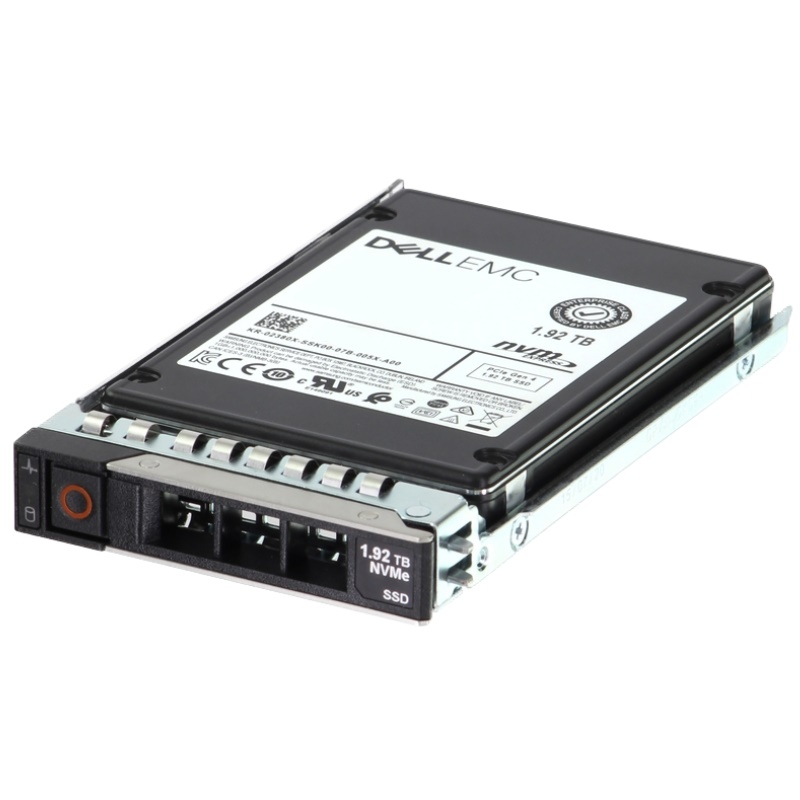


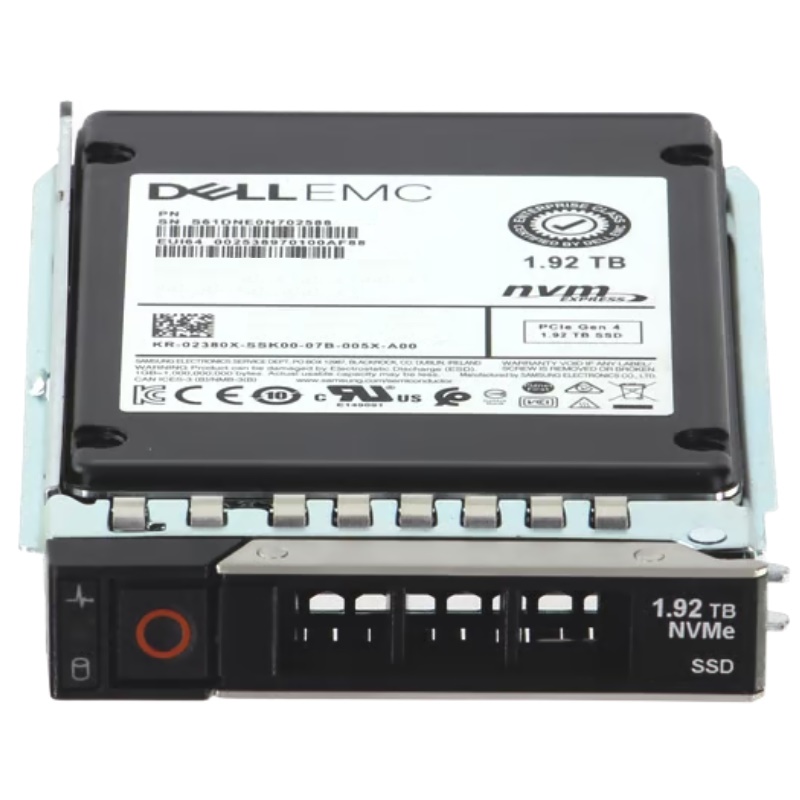
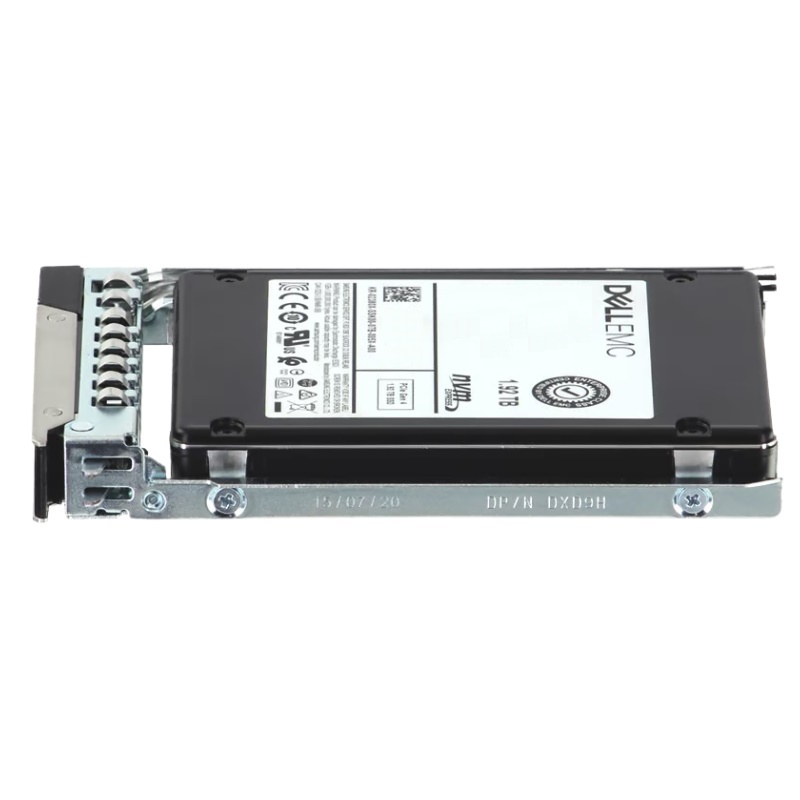
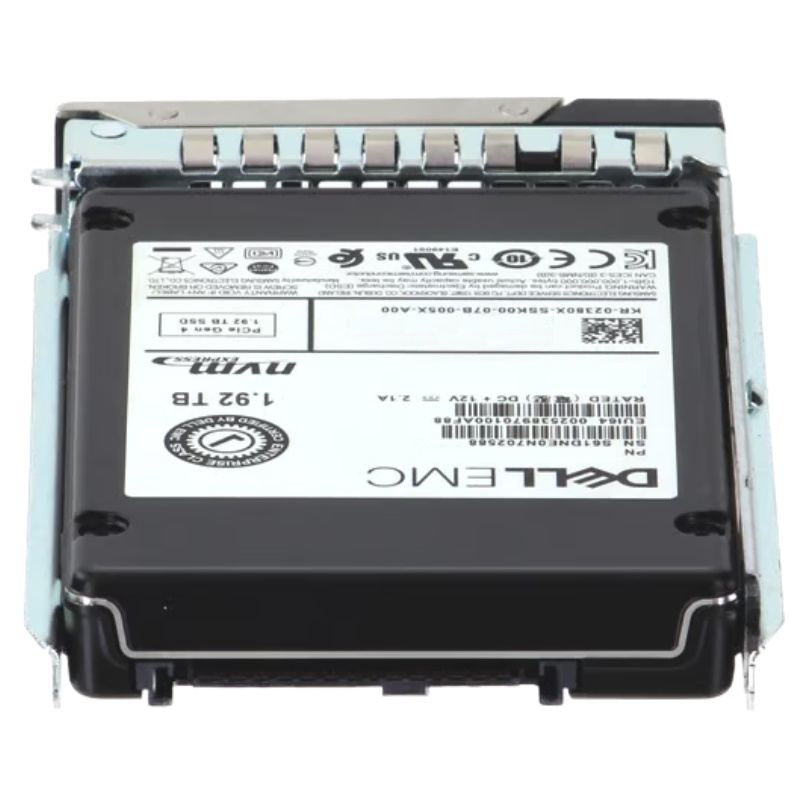
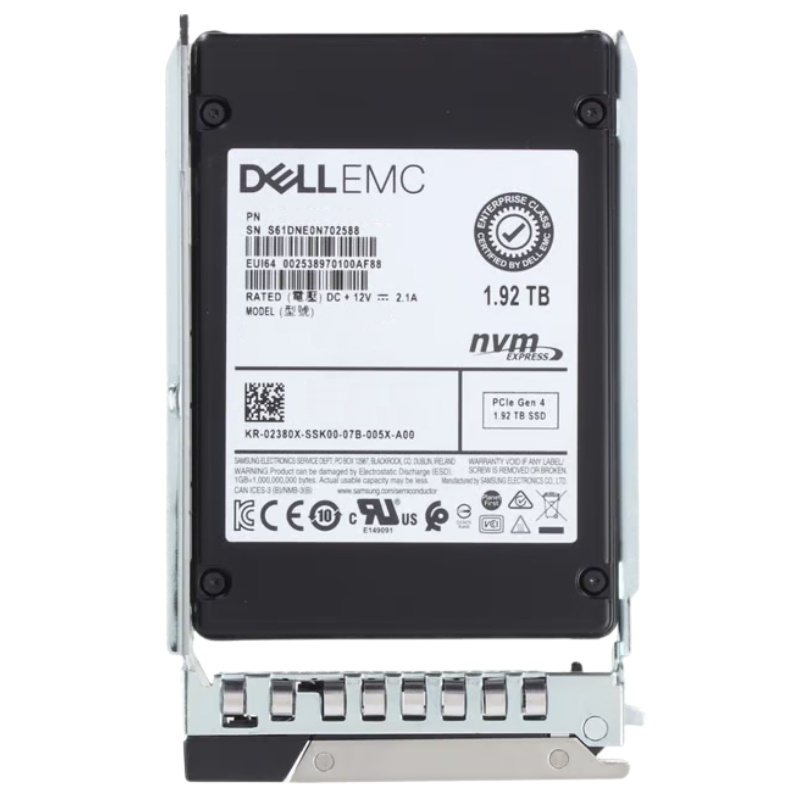
Dell 400-BSHW 1.92TB PCI-Express Gen 4.0 X4 NVMe U.2 SFF 15mm Read-Intensive TLC 3D Nand for Poweredge Server Solid State Drive. New Sealed in Box (NIB) with 1-Year Replacement Warranty
The Dell 400-BSHW is a purpose-built enterprise NVMe solid state drive designed to bring sustained read-centric performance, platform-level resilience, and datacenter compatibility in a compact U.2 15mm small form factor. Engineered for modern PowerEdge servers and validated across multiple Dell PowerEdge generations, this 1.92TB drive pairs PCI-Express Gen 4.0 x4 throughput with NVMe protocol efficiency and Read-Intensive TLC 3D NAND to deliver a balance of high sequential bandwidth, strong random read IOPS, and economical capacity-per-dollar for large-scale read-heavy workloads. Practical design choices — like the U.2 connector for hot-swap trays, a 15mm z-height for robust thermal headroom, and enterprise-grade firmware with power loss protection — make the 400-BSHW a straightforward drop-in option when migrating legacy SATA/SAS arrays to NVMe or when scaling read performance across database, analytics, cache and virtualization tiers.
The 400-BSHW arrives in the U.2 (SFF 2.5-inch) 15mm mechanical envelope which preserves compatibility with Dell drive sleds and U.2-capable backplanes while providing additional vertical space to accommodate a denser flash assembly and more robust heat dissipation. Using PCI-Express Gen 4.0 x4 lanes, the drive leverages the doubled per-lane bandwidth of Gen4 compared with Gen3, enabling much higher sequential throughput and improved queue depth scaling for mixed enterprise workloads. The U.2 mechanical choice also simplifies serviceability; the drive can be deployed in hot-pluggable PowerEdge trays and swapped without requiring motherboard-level M.2 access, a meaningful advantage for rack-level maintenance windows and 24/7 operations. Because the 15mm z-height creates more surface area and volume inside the sled, thermal designs typically allow the firmware to sustain higher clocks under load without aggressive throttling, but rack architects should still account for airflow and drive slot spacing to maintain optimal operating temperatures.
PCI-E 4.0 x4 provides a raw lane budget that supports multi-gigabyte-per-second sequential transfers, and when combined with NVMe — a protocol engineered for parallelism and low latency — the 400-BSHW can deliver server-class responsiveness for read-dominant applications. The NVMe command set reduces CPU overhead per I/O and multiplies effective queue depth, which matters most when dozens to hundreds of virtual machines, containers or database threads are simultaneously issuing 4K random reads. This drive’s firmware and controller are tuned to prioritize read efficiency and queue handling so that when the dataset is larger than cache and the workload is predominantly read-heavy, host systems experience lower tail latency and higher aggregate throughput compared with comparable SATA or earlier-generation NVMe drives.
Performance figures for the 400-BSHW emphasize read capability: peak sequential read bandwidth reaches multi-gigabyte-per-second levels while sequential write bandwidth is tuned to match the drive’s read-intensive endurance class. Random read IOPS are engineered to be particularly high for 4K accesses, which are the bread-and-butter of database index lookups, metadata harvesting, search workloads, CDN edge caches, and VM boot storms. In practice, the drive’s characteristics make it an excellent candidate for read-cache layers in hybrid storage architectures, primary read stores for analytics nodes, and as a low-latency object store layer where millions of small reads are common. Even in mixed workloads the 400-BSHW’s controller and firmware manage internal garbage collection and wear-leveling so that read performance remains predictable while writes are staged and committed within the drive’s endurance envelope.
Triple-level cell (TLC) 3D NAND in a read-intensive configuration represents a deliberate balance: by stacking memory cells vertically and storing three bits per cell, manufacturers achieve higher capacities at lower cost per gigabyte than single-level or multi-level cell alternatives, while read-optimized firmware and overprovisioning deliver acceptable endurance for read-dominant enterprise tasks. For fleet managers, this means lower acquisition cost when sizing capacity for large datasets that are read frequently but written relatively less. TLC 3D NAND with enterprise firmware optimizations offers predictable read latency and strong retention characteristics, while wear-leveling and program/erase cycle management keep drive health within serviceable limits for the read-intensive use case. Drive-level telemetry exposed via SMART and vendor tools lets administrators measure remaining useful life and plan replacements proactively.
Reliability features are central to the 400-BSHW’s enterprise credentials. The drive implements enhanced power-loss data protection that safeguards in-flight data during unexpected power events, reducing the risk of data corruption and improving recovery determinism. Hardware encryption is provided at the drive level with AES-256 support, enabling IT teams to meet regulatory controls and accelerate secure decommissioning workflows. The drive’s physical robustness, such as high shock tolerance and a multi-million hour mean time between failures (MTBF) rating, is designed to align with the operational expectations of 24/7 datacenter hardware. Administrators can integrate drive-level telemetry into server management systems to monitor temperature, SMART attributes and other health indicators for scheduled replacement and predictive maintenance.
Enhanced power loss data protection is realized through a combination of internal capacitors, firmware metadata handling, and on-disk journaling mechanisms that ensure the drive can complete critical write sequences or cleanly roll back partial operations in the event of an abrupt shutdown. This reduces the chance of file system inconsistency after an outage and simplifies recovery paths. For secure handling of retired drives, hardware AES-256 encryption combined with drive-level secure erase commands enables effective cryptographic erase workflows, which are faster and more auditable than multi-pass overwrites at scale. When paired with data center policies and e-waste regulations, these features help organizations maintain compliance while streamlining decommissioning logistics.
Compatibility is a primary reason many organizations choose the 400-BSHW for PowerEdge refreshes: Dell-qualified drives undergo validation across multiple PowerEdge generations, simplifying procurement and lifecycle management for enterprises already standardized on Dell hardware. The drive is commonly listed as compatible with a broad set of PowerEdge models, enabling IT teams to reuse existing drive sleds and leverage native management interfaces such as iDRAC for firmware updates, SMART reporting and drive-level health alerts. This reduces integration friction, minimizes driver or firmware mismatches, and shortens time-to-production when deploying at scale across datacenter rows. Administrators should confirm exact compatibility with their server generation and BIOS/iDRAC versions, and follow Dell’s published support matrices for best results.
The 400-BSHW excels in several production roles where read performance dominates total cost-of-ownership calculations. In web scale and CDN edge servers it serves as a low-latency object store for frequently accessed content, reducing the load on backend storage clusters. In analytics clusters and OLAP nodes, it speeds up large-scale index and query operations by delivering fast random reads across large datasets. Virtual desktop infrastructure and virtual server boot tiers benefit from the drive’s high read IOPS during concurrency peaks such as startup storms. It also functions effectively as a read cache layer in hybrid arrays, providing a high-speed front end that dramatically reduces read latency while lower-cost bulk storage handles long-term storage.


 Contact Us
 Information
 Catalog
 Solid State Drives (SSD)
 Network Switches
 Hard Disk Drives
 HBA & Controllers
 PC & Servers
 PC & Server Memory
 CPU & Processors
 Network Routers
 Power Supplies
 Tape Drives & Libraries
 Network Devices
 Computer & Network Cables