(7% discount is applied at checkout)
Cart is empty
Your go-to destination for cutting-edge server products
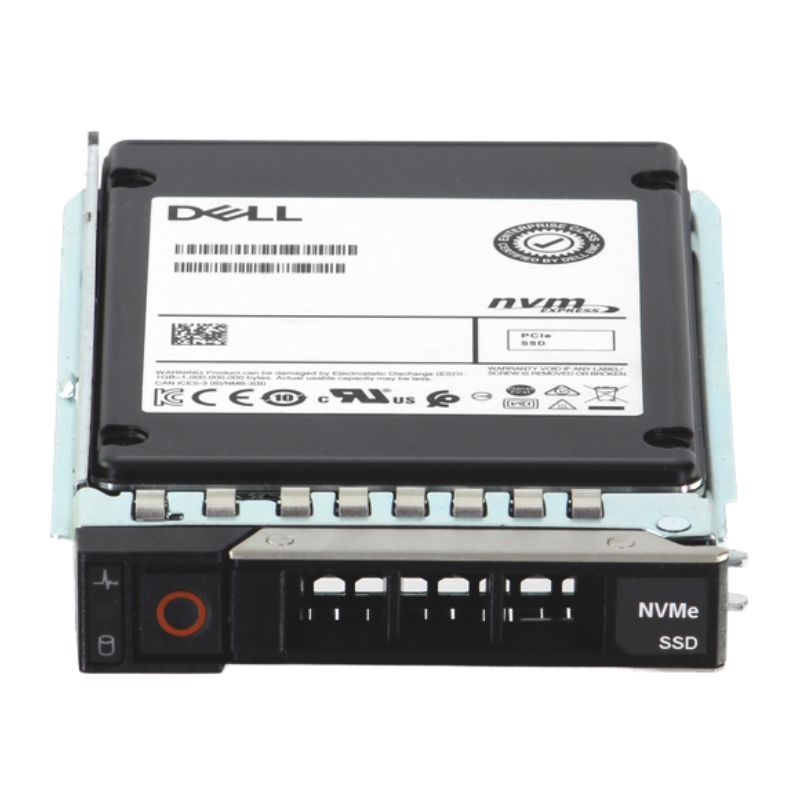


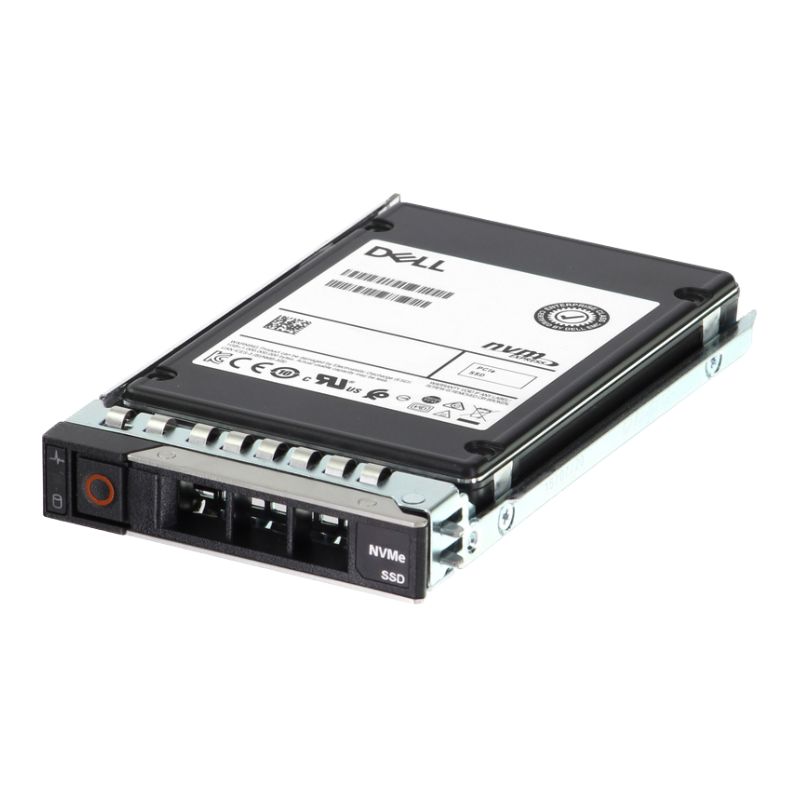
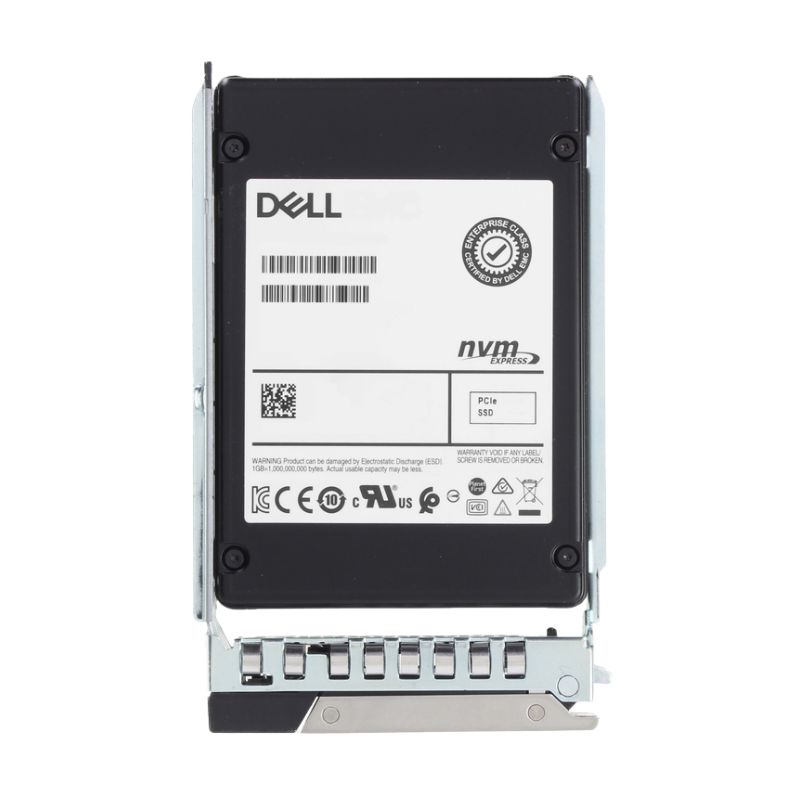
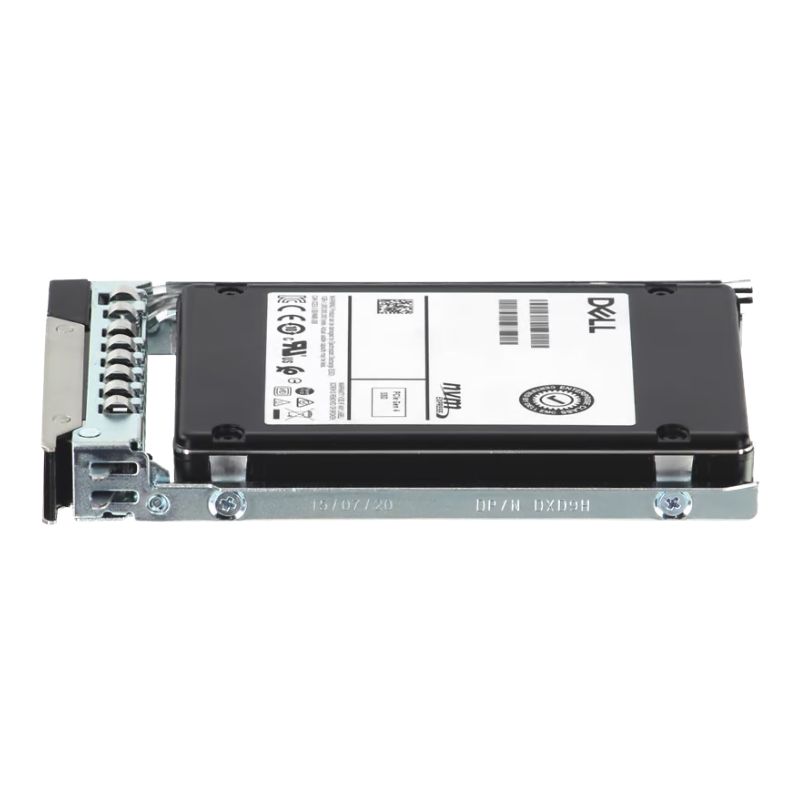
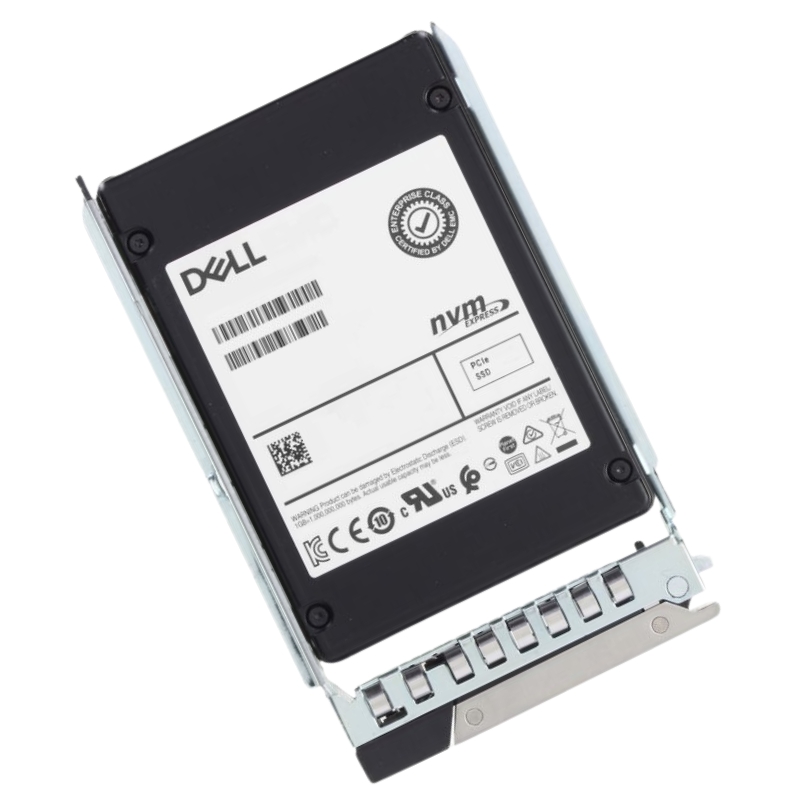
Dell KRD48 61.44TB PCIE Gen4 4.0 X4 NVMe U.2 2.5inch Enterprise Class QLC 3d Nand Solid State Drive. New Sealed in Box (NIB) with 1-Year Replacement Warranty. Call.
The Dell KRD48 61.44TB QLC PCIe 4.0 x4 NVMe U.2 SFF SSD is a high-capacity solid-state drive engineered for enterprise-level performance and reliability. Designed to meet the demands of modern data centers, this drive offers exceptional speed, endurance, and compatibility.
The architecture of the Dell KRD48 SSD is a testament to modern engineering, designed from the ground up to address the unique challenges of petabyte-scale storage environments. At its core, the drive leverages a sophisticated controller that acts as the central nervous system, managing the immense flow of data to and from the NAND flash memory. This controller is responsible for critical functions such as wear leveling, bad block management, error correction, and the intricate process of reading and writing QLC NAND. The integration of a high-speed PCIe 4.0 interface ensures that this controller is never a bottleneck, allowing it to fully saturate the available bus bandwidth. The architecture also includes a robust DRAM cache, which serves as a high-speed buffer for mapping tables and frequently accessed data, further accelerating read and write operations and ensuring consistent low-latency performance.
The 2.5-inch U.2 form factor is a critical aspect of this product category's identity. Unlike consumer M.2 drives, the U.2 specification is built for the rigorous demands of enterprise and data center environments. It provides a standardized physical and electrical interface that ensures broad compatibility with existing server chassis and backplanes. The U.2 form factor supports a larger physical footprint, which allows for superior thermal management. Enterprise drives like the KRD48 generate significant heat during intensive operations, and the U.2 design facilitates efficient heat dissipation through direct contact with server cooling systems. This thermal resilience is paramount for maintaining consistent performance and long-term reliability, as throttling due to overheating is a primary concern in densely packed storage servers. The hot-swappable nature of the U.2 form factor also means that drives can be replaced or added without powering down the entire system, a non-negotiable feature for maintaining 24/7/365 uptime.
Integrating a drive of this caliber requires careful consideration of backplane compatibility. The Dell KRD48 is designed to seamlessly interface with modern server backplanes that support NVMe over PCIe. This eliminates the legacy SATA/SAS bottlenecks and enables a direct, point-to-point connection between the drive and the CPU. This direct attachment is a cornerstone of the performance characteristics that define this category, reducing latency and increasing overall system efficiency.
The classification of this drive within the PCIe Gen4 x4 NVMe category places it at the forefront of storage performance technology. The Peripheral Component Interconnect Express (PCIe) 4.0 standard doubles the bandwidth per lane compared to the previous PCIe 3.0 generation. With four lanes (x4) dedicated to the SSD, the theoretical maximum bandwidth reaches nearly 8 GB/s. This category of drives is engineered to come as close as possible to this theoretical limit for sequential operations. The Non-Volatile Memory Express (NVMe) protocol is the other half of this performance equation. Designed specifically for high-speed, non-volatile memory like NAND flash, NVMe operates with a highly efficient, parallelized command queue that drastically reduces the command overhead and latency associated with older protocols like AHCI. For enterprise applications involving large file transfers, video streaming, or scientific data sets, the combination of PCIe Gen4 and NVMe translates to significantly reduced wait times and accelerated data processing pipelines.
Beyond raw throughput measured in gigabytes per second, the performance category of the Dell KRD48 is also defined by its Input/Output Operations Per Second (IOPS) and latency figures. Low latency ensures that requests for data are serviced with minimal delay, which is critical for real-time analytics, financial trading platforms, and large-scale database transactions. High IOPS indicate the drive's ability to handle a massive number of small, random read and write requests concurrently. This is a common workload profile for virtualization, cloud infrastructure, and database servers where numerous users or virtual machines are accessing data simultaneously. The KRD48, as part of this high-performance enterprise category, is optimized to deliver exceptional IOPS and consistently low latency, ensuring that application performance remains smooth and responsive even under extreme load.
The 61.44TB capacity point is a defining feature of this storage category, representing a strategic move towards unprecedented storage density. This capacity is not an arbitrary number; it is the result of advanced NAND flash packaging and controller capabilities. By achieving such a high density in a single 2.5-inch drive, organizations can drastically reduce their storage footprint. This consolidation leads to tangible benefits, including reduced power consumption, lower cooling requirements, and simplified cabling and management within the server rack. The economic and operational advantages are profound, enabling businesses to store more data per rack unit, thereby lowering the Total Cost of Ownership (TCO) for their storage infrastructure. This category is aimed at applications where data growth is exponential, such as AI and machine learning model training, which requires vast datasets, or large-scale video surveillance archives, where retaining high-resolution footage for extended periods is necessary.
The use of Quad-Level Cell (QLC) 3D NAND memory is a cornerstone of this high-capacity category. QLC technology stores four bits of data per memory cell, a significant increase over Triple-Level Cell (TLC), which stores three bits, and Multi-Level Cell (MLC), which stores two. This higher bit density is the primary enabler for achieving massive storage capacities like 61.44TB within a standard form factor. Historically, increasing bits per cell came with trade-offs, namely in endurance and write performance. However, enterprise-grade QLC, as used in the Dell KRD48, has overcome these challenges through advanced engineering. Sophisticated error correction codes, robust wear-leveling algorithms, and intelligent write caching strategies mitigate the inherent limitations of QLC. This makes modern QLC a viable and cost-effective technology for a wide range of enterprise workloads, particularly those that are read-intensive.
The "3D NAND" aspect refers to the vertical stacking of memory cells, akin to building a skyscraper instead of a sprawling single-story building. This three-dimensional architecture allows for vastly greater storage capacity on a single silicon die without requiring a smaller, more difficult-to-manufacture process node. For endurance, the drive controller employs a technique called wear leveling, which dynamically distributes write operations across all the available memory cells. This prevents any single cell from being written to and erased more frequently than others, thereby extending the overall lifespan of the drive to meet enterprise-class endurance specifications.
The "Enterprise Class" designation for the Dell KRD48 category signifies a suite of features and qualifications that distinguish it from commercial-grade storage. Reliability in this context is measured by metrics such as Mean Time Between Failures (MTBF), which is typically in the millions of hours for enterprise drives. Endurance is quantified by the total number of bytes that can be written to the drive over its lifetime, known as Total Bytes Written (TBW) or Drive Writes Per Day (DWPD). The KRD48 is built to withstand years of continuous, heavy write workloads. Furthermore, enterprise-class drives include advanced data integrity features like end-to-end data path protection, which guards against data corruption as it moves between the host, the drive's cache, and the NAND media. Power-loss protection is another critical feature, involving onboard capacitors that provide enough temporary power to complete in-progress writes and flush the cache to non-volatile memory in the event of an unexpected power failure, ensuring data is not lost.
Operating within specified thermal and power envelopes is a non-negotiable requirement for enterprise components. The Dell KRD48 is characterized by its defined power consumption under various load states (active, idle, and sleep). Efficient power usage contributes directly to lower operational expenses in a large-scale deployment. Thermal specifications dictate the drive's operating temperature range, and its design ensures that it can maintain performance without thermal throttling under the airflow conditions typically found in a server environment. Adherence to these specifications is what allows this category of drive to be reliably deployed in high-density storage servers without compromising system stability.
The specific combination of high capacity, PCIe Gen4 performance, and enterprise resilience defines the ideal application scenarios for the Dell KRD48 category. These drives are not general-purpose storage; they are specialized tools for specific, demanding IT challenges. Their value is most apparent in read-intensive and capacity-optimized workloads where the cost-per-terabyte and density are primary decision factors.
In the realm of big data, platforms like Hadoop Distributed File System (HDFS) or large-scale data lakes require massive, scalable storage that can feed data quickly to analytics engines. The 61.44TB capacity of the KRD48 allows for immense datasets to be stored on fewer physical drives, simplifying the cluster architecture. The high sequential read performance ensures that data processing jobs are not stalled waiting for data input, accelerating time-to-insight for business intelligence and machine learning applications.
For cloud service providers and large-scale virtualization environments, storage density and performance are key to profitability and service quality. The Dell KRD48 allows for a greater number of virtual machines or container instances to be hosted on a single physical server due to its enormous capacity. The high IOPS performance ensures that the "I/O blender" effect—where multiple VMs generate a random mix of I/O requests—does not degrade the performance of individual workloads, maintaining consistent service level agreements (SLAs).


 Contact Us
 Information
 Catalog
 Solid State Drives (SSD)
 Network Switches
 Hard Disk Drives
 HBA & Controllers
 PC & Servers
 PC & Server Memory
 CPU & Processors
 Network Routers
 Power Supplies
 Tape Drives & Libraries
 Network Devices
 Computer & Network Cables