(7% discount is applied at checkout)
Cart is empty
Your go-to destination for cutting-edge server products
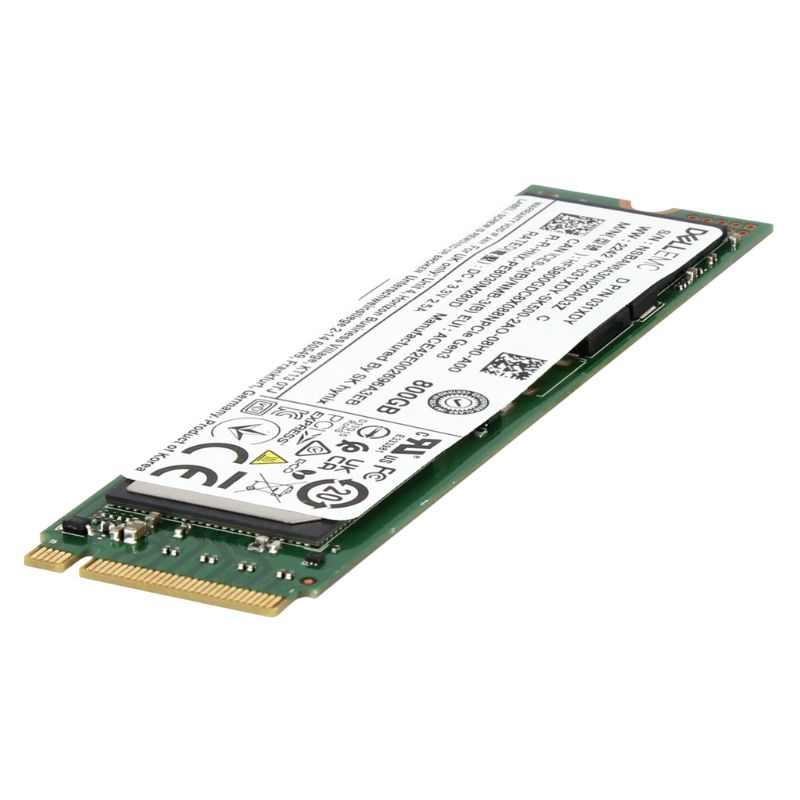


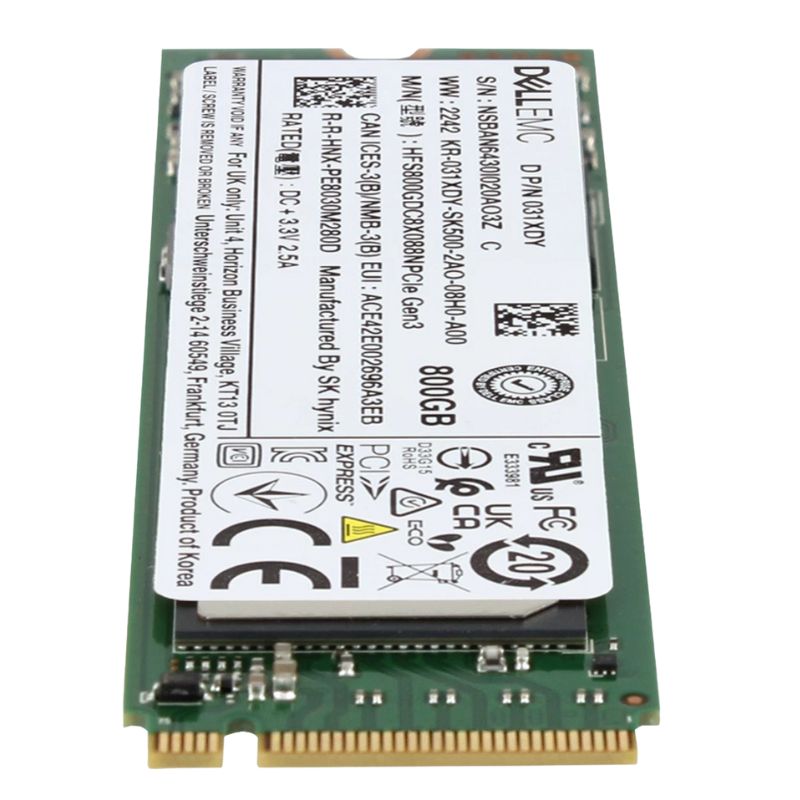
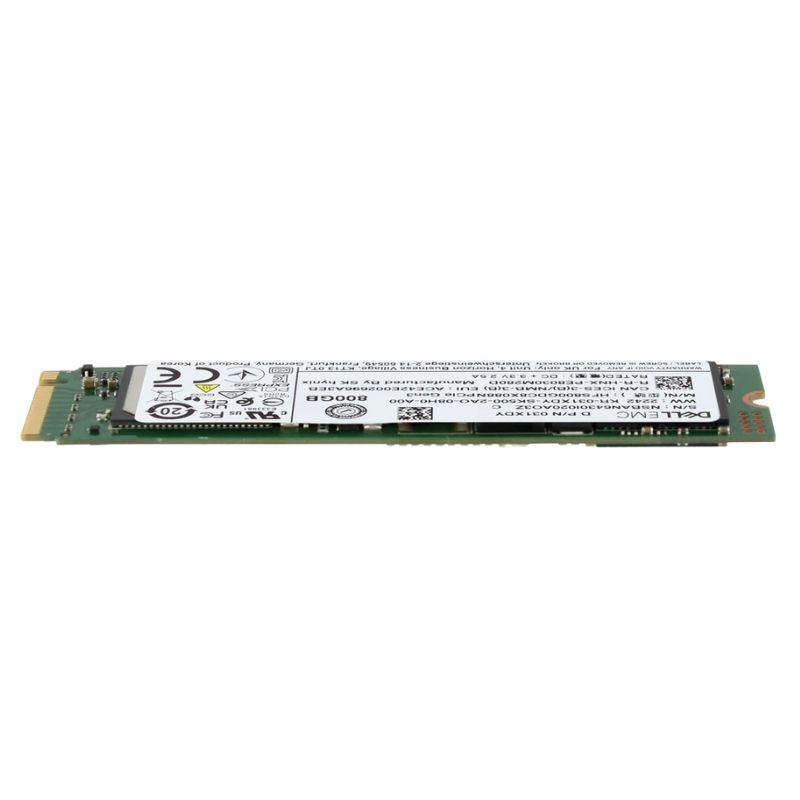
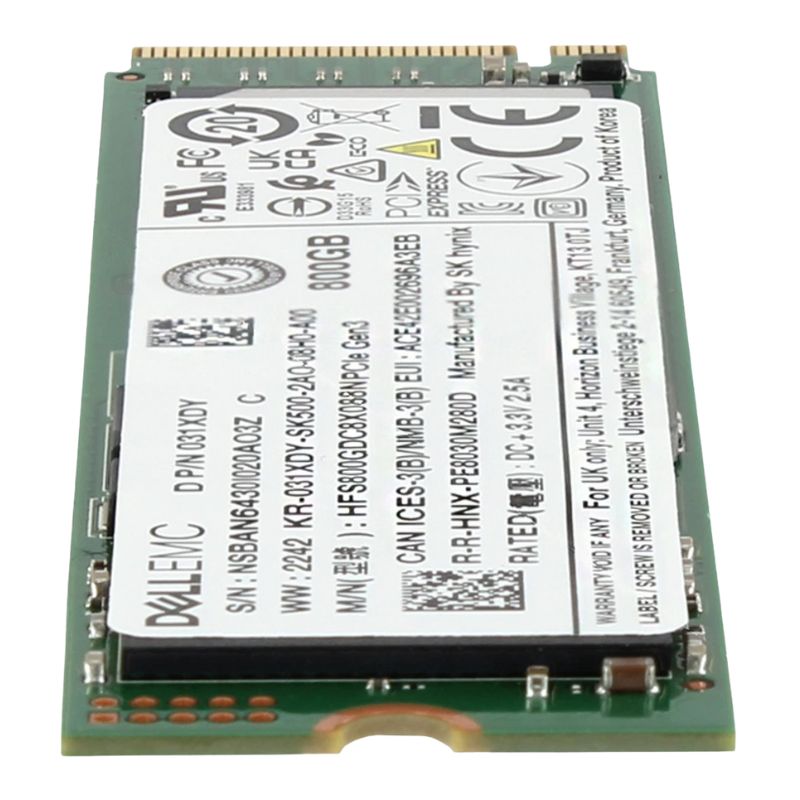
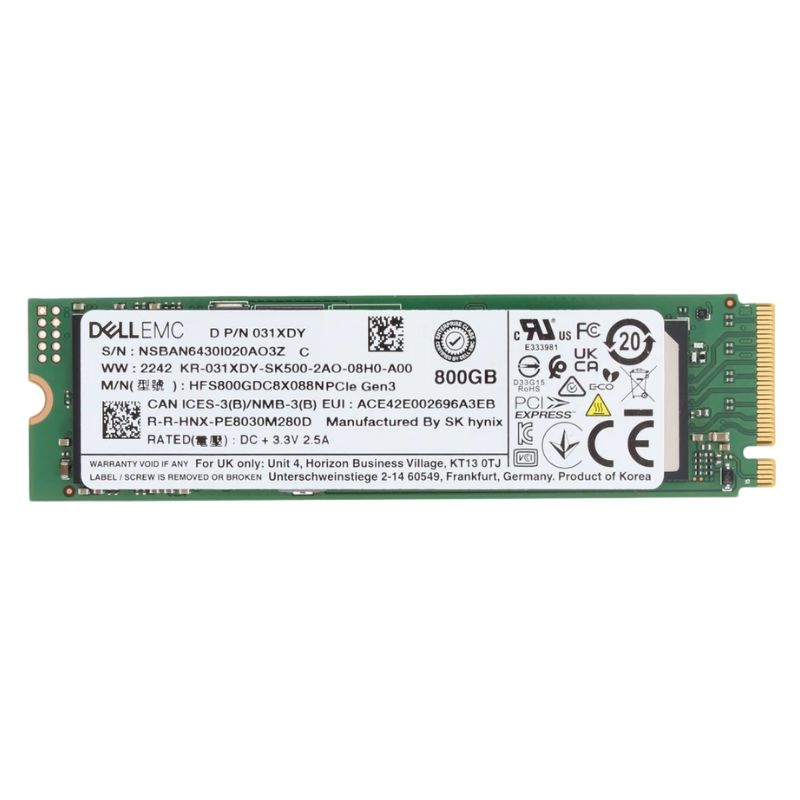
Dell EMC 400-BOQE 800GB PCI-E Gen3 NVMe M.2 2280 Enterprise Class Mixed Use Solid State Drive. Excellent Refurbished with 1 Year Replacement Warranty
Discover the high-performance Dell EMC 400-BOQE, a cutting-edge 800GB NVMe M.2 solid state drive engineered for enterprise workloads. Optimized for reliability, speed, and efficiency, this SSD is ideal for demanding data centers and professional storage solutions.
The Dell EMC 400-BOQE 800GB PCI-E Gen3 NVMe M.2 2280 enterprise class mixed-use solid state drive is engineered to deliver datacenter-grade performance and reliability inside a compact M.2 2280 package. Designed for mixed workloads that combine random reads, random writes and sequential operations, this drive targets servers, edge platforms, and storage-dense systems where high I/O per watt, low latency, and strong endurance matter. The M.2 2280 form factor makes the 400-BOQE well suited for modern server motherboards, high-density compute modules, and embedded appliances where space, thermal management, and power efficiency are critical. As an NVMe device leveraging PCIe Gen3 lanes, it unlocks the protocol efficiencies of NVMe—reduced command overhead, deep queueing, and parallelized I/O paths—while delivering consistent user experience for transactional databases, virtual machine boot volumes, metadata storage, and mixed cloud workloads.
The 400-BOQE uses the PCI-E Gen3 NVMe interface to provide a balanced mix of throughput and latency. NVMe over PCIe exposes a lightweight command set that reduces CPU cycles spent on storage I/O, enabling higher IOPS per core and lower tail latency compared with legacy SATA or SAS interfaces. The M.2 2280 physical footprint allows integration into a wide variety of server and edge platforms without requiring additional drive bays or adapters, simplifying upgrades and retrofits. For systems that support multiple M.2 slots or mezzanine carriers, the 400-BOQE offers a path to increase aggregate storage performance while minimizing rack space and system complexity.
The 800GB capacity point positions the drive for mixed-use environments where maintaining a balance between usable capacity and performance per dollar is essential. This capacity is especially effective for tiered architectures where hot or warm datasets reside on NVMe media to provide fast access, while colder data is tiered to higher-capacity HDDs or object storage. In virtualized environments, the 800GB capacity supports multiple VM boot and swap volumes, container storage layers, and application caches without quickly exhausting high-performance media. For database systems, the capacity enables larger working sets to remain on low-latency NVMe storage, reducing query times and improving concurrency.
As a mixed-use enterprise SSD, the 400-BOQE is designed for workloads that include both significant reads and sustained writes. Mixed-use classification typically implies greater endurance than read-intensive classes but is tuned for cost effectiveness compared with extreme endurance (write-intensive) drives. This makes the drive ideal for general purpose server backplanes, caching layers, metadata handling, and content management systems where write traffic is steady but not extreme. The enterprise focus also means firmware algorithms, over-provisioning strategies, and wear-leveling mechanisms are optimized to deliver predictable performance across the drive’s lifespan. This results in consistent IOPS, bounded latency spikes, and reliable serviceability over long duty cycles in production environments.
NVMe drives like the 400-BOQE excel at lowering average and tail latencies due to direct PCIe connectivity and the NVMe command model. Transactional workloads such as OLTP databases, authentication services, message queues, and real-time analytics benefit from reduced I/O wait times and higher IOPS density. In practical deployments, lower latency translates into higher request completion rates, fewer stalled worker threads, and better user-facing responsiveness. For multi-tenant platforms, predictable latency is particularly important to maintain quality of service across diverse tenants and varied I/O patterns.
While many NVMe narratives focus on random I/O, the 400-BOQE also maintains strong sequential throughput for bulk transfers, snapshot commits, and backup windows. Mixed workloads that interleave sequential reads/writes with random accesses benefit from firmware that intelligently prioritizes queue handling, garbage collection, and internal defragmentation to keep foreground I/O responsive. In practice, systems performing log writes, checkpointing, or large file ingest experience shorter completion times and reduced interference with latency-sensitive transactions.
M.2 drives are compact and often operate near other heat-generating components. The 400-BOQE’s thermal profile should be considered during system integration to prevent thermal throttling under sustained high load. Many server designs incorporate heat spreaders, airflow channels, and thermal pads to maintain optimum temperatures for M.2 modules. Systems architects should validate sustained throughput under anticipated ambient temperatures and consider placement in locations with sufficient airflow or additional cooling if the drive will encounter prolonged heavy writes or extended peak periods.
Enterprise SSDs include firmware features focused on data integrity and recoverability. The 400-BOQE’s firmware is expected to implement end-to-end data path protection, power loss protection strategies, and robust error correction codes to reduce the risk of silent data corruption. These measures help ensure that metadata updates and transactional writes are safely committed, and that data remains consistent following unexpected power events. For environments with compliance or audit requirements, these protections enhance confidence in storage reliability and simplify regulatory documentation.
Proactive monitoring using SMART attributes and manufacturer-provided telemetry enables operators to detect early warning signs of wear, thermal stress, or firmware anomalies. Enterprise drives typically expose a broad set of metrics including media wear indicators, power cycles, read/write counts, and critical error counters. Integrating the 400-BOQE into centralized monitoring tools allows automated alerts, scheduled maintenance, and preemptive drive replacement ahead of failure, reducing unscheduled downtime and improving operational resilience. Dell EMC ecosystems often provide management layers that aggregate drive telemetry across fleets to simplify lifecycle planning and warranty support coordination.
The M.2 2280 NVMe interface is widely supported by modern server platforms, hyperconverged appliances, and many embedded systems. When integrating the 400-BOQE, ensure BIOS and firmware on host platforms fully support NVMe boot and direct PCIe enumeration for M.2 devices. Some servers require specific BIOS settings to enable full NVMe performance or to support booting from NVMe drives. Additionally, compatibility matrices and qualified hardware lists should be consulted for enterprise environments to ensure vendor interoperability and to secure supported configurations. OEM and system integrator guidance reduces integration risk and expedites certification of production stacks.
Virtualization hosts and container platforms require dense, low-latency storage for guest operating systems, ephemeral container layers, and shared caches. The 400-BOQE provides a sweet spot of capacity, endurance, and performance that can host dozens of small VM images or numerous container overlays without saturating IO budgets. Lower read/write latencies improve VM boot times and reduce noisy neighbor effects, while steady endurance supports frequent snapshots and image churn. In hyperconverged infrastructures, the drive can serve as a local high-performance tier for hot data, accelerating distributed file systems and local caching layers.
Databases demand consistent performance for index operations, transactional logs, and metadata updates. The mixed-use design of the 400-BOQE makes it appropriate for accelerating database working sets and write-ahead logs where both reads and writes are critical. Faster index lookups and reduced commit latencies improve transaction throughput and lower tail latencies, which is particularly valuable for latency-sensitive applications such as financial trading, e-commerce checkout flows, and real-time personalization engines.
At the edge, compact form factors and power efficiency are highly valued. The M.2 2280 footprint fits into ruggedized servers, network function virtualization (NFV) appliances, and lightweight compute nodes used in telco and industrial deployments. The 400-BOQE delivers enterprise-grade endurance and predictable performance in environments where maintenance windows are limited and remote management is essential. For telco use cases, where logs, caches, and user plane functions require fast local storage, the drive supports consistent packet processing and service chaining with minimal latency impact.
To maximize lifetime and maintain steady performance, consider leaving spare capacity or leveraging the drive’s over-provisioning settings. Over-provisioning reduces write amplification, improves garbage collection efficiency, and extends media life. Capacity planning should take into account average and peak write rates, snapshot frequencies, and retention policies. Workload consolidation strategies that colocate highly write-intensive tenants on purpose-built write-optimized media while reserving mixed-use SSDs like the 400-BOQE for balanced loads will optimize total cost of ownership and prolong service life across the storage fleet.
Maintaining current firmware is crucial to benefit from performance improvements, security patches, and reliability enhancements. Enterprises should establish controlled update procedures including preflight testing in staging environments, rollback plans, and vendor coordination for any firmware known issues. Lifecycle management also involves tracking warranty windows and RMA processes. Regular audits of drive health reports and scheduled replacements at or before end-of-warranty dates reduce the risk of sudden failures and protect service level commitments.
Even enterprise class SSDs should be part of a broader backup and redundancy strategy. RAID constructs, erasure coding, or software defined replication across nodes complement the drive’s reliability features. Integrating the 400-BOQE into data protection workflows ensures that logical errors, accidental deletions, or application-level corruption are recoverable. Snapshotting strategies should be tuned to the drive’s performance profile to avoid long snapshot windows or elevated write bursts that could temporarily influence foreground I/O performance.
Read-intensive SSDs often prioritize cost per GB and optimize firmware for predominantly read workloads. The 400-BOQE’s mixed-use classification means it supports higher write workloads and offers superior endurance relative to read-optimized drives. For systems with occasional to steady write traffic, mixed-use devices provide a more resilient choice to avoid premature wear or performance degradation. Choosing the balanced option avoids overpaying for write-intensive drives while maintaining the endurance needed for production mixed loads.
Write-intensive SSDs are engineered for the heaviest write workloads and often carry a price premium for higher endurance ratings. When an application’s write profile approaches extreme levels—such as high-frequency logging, telemetry ingest, or heavy caching—write-intensive media may be justified. The 400-BOQE is positioned between read-intensive and write-intensive extremes, offering a cost-effective compromise for many real world use cases where both reads and writes contribute meaningfully to workload demands. System architects should measure real write amplification and daily write volumes to determine whether mixed-use media meets SLA and lifetime targets.
In tiered storage designs, the 400-BOQE fits as a performance tier for hot and warm data. Placing the drive ahead of high-capacity HDD tiers or behind caching layers can reduce latency for critical application paths while keeping long-term storage costs manageable. Intelligent tiering systems can dynamically migrate data between NVMe and larger capacity tiers based on access patterns, ensuring that frequently accessed objects reap the benefit of the drive’s low latency and IOPS. For archival or cold storage, lower-cost drives remain appropriate, reserving the 400-BOQE for active datasets where responsiveness drives business value.


 Contact Us
 Information
 Catalog
 Solid State Drives (SSD)
 Network Switches
 Hard Disk Drives
 HBA & Controllers
 PC & Servers
 PC & Server Memory
 CPU & Processors
 Network Routers
 Power Supplies
 Tape Drives & Libraries
 Network Devices
 Computer & Network Cables