(7% discount is applied at checkout)
Cart is empty
Your go-to destination for cutting-edge server products
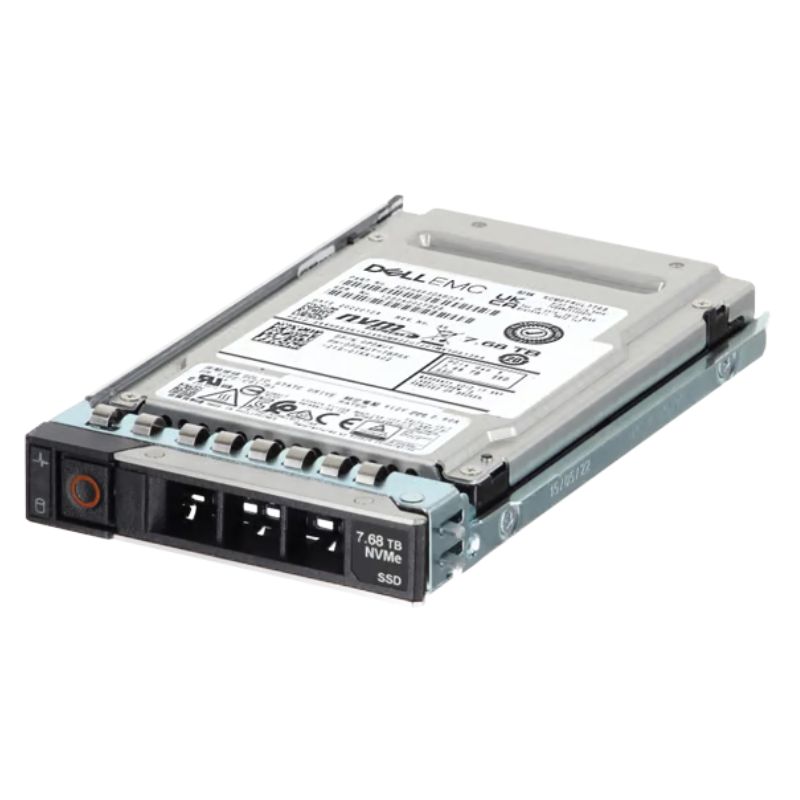


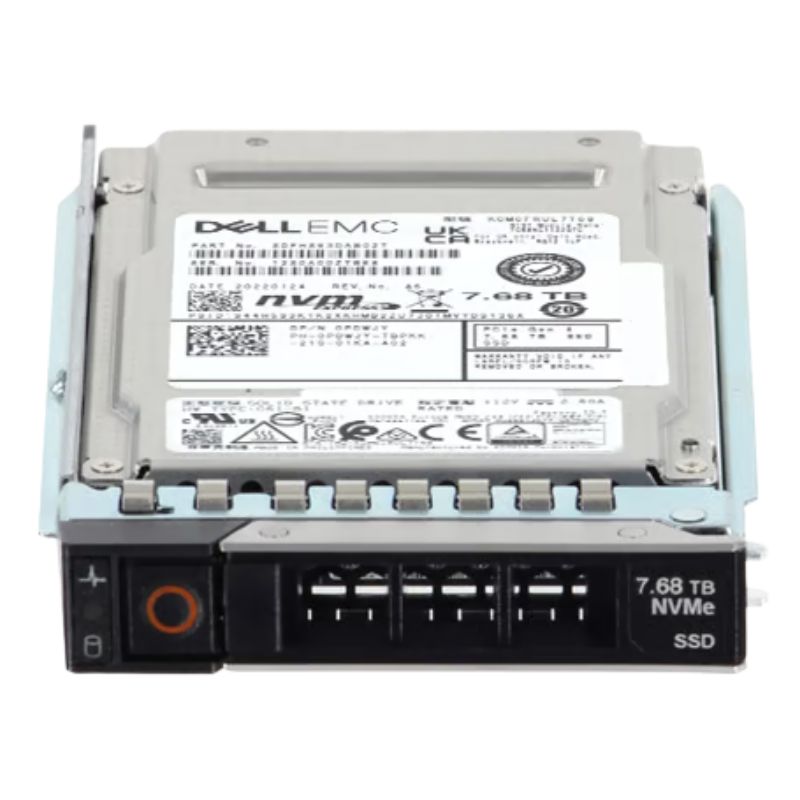
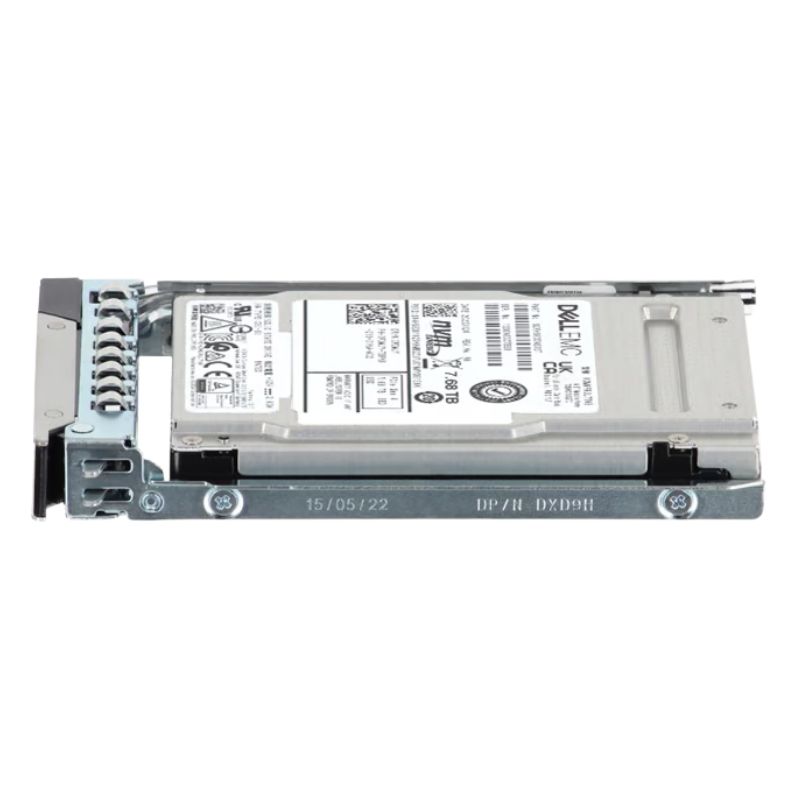
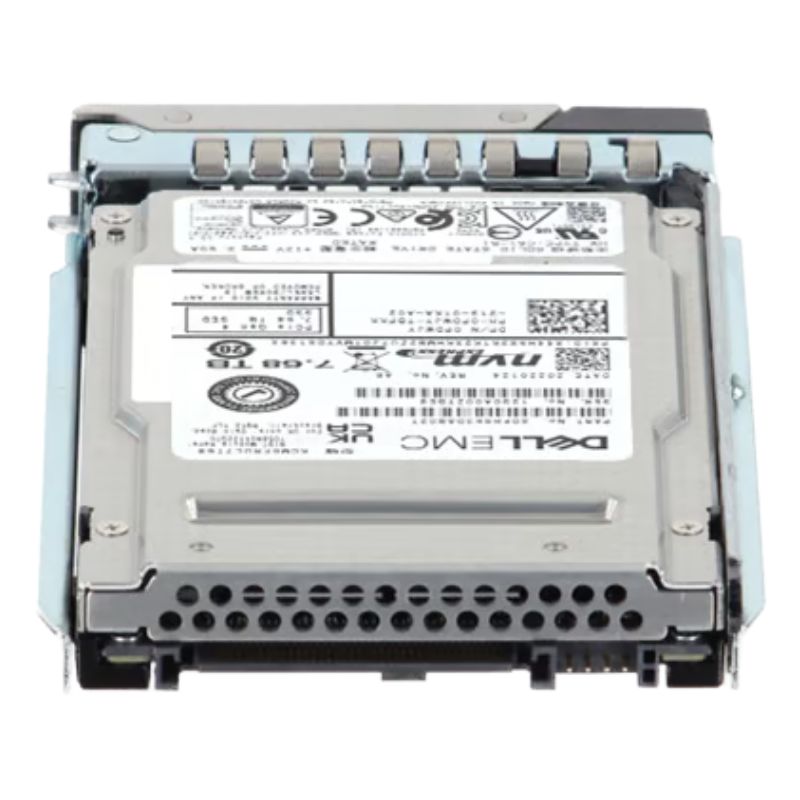
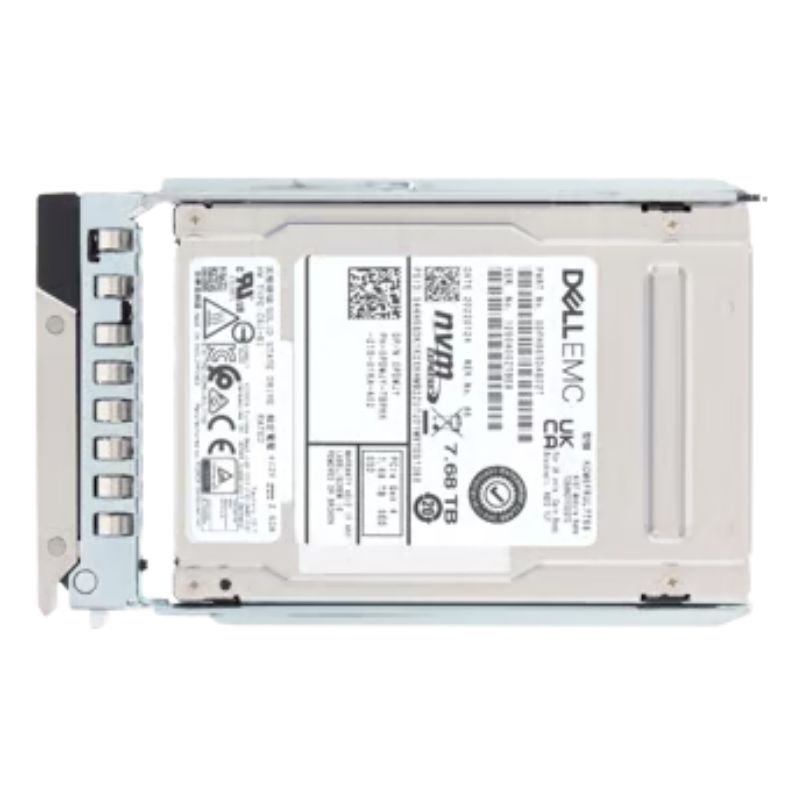
Dell 400-BOXU 7.68TB PCI-E Gen4 NVMe U.2 2.5Inch Read Intensive Solid State Drive. New Sealed in Box (NIB) with 1 Year Warranty
The Dell 400-BOXU is a high-capacity 7.68TB PCIe Gen4 NVMe solid-state drive designed for rapid data access, exceptional durability, and optimized read-centric workloads. Built for modern data centers, it enhances server responsiveness while maintaining dependable long-term performance.
Engineered for power-efficient read-heavy applications, this NVMe U.2 SSD delivers smooth throughput and improved latency. Its PCIe Gen4 technology enables higher data bandwidth, boosting server productivity and accelerating enterprise workflows.
The Dell 400-BOXU is widely preferred for analytics platforms, virtualization environments, and applications where rapid retrieval of large datasets is essential. Its read-focused design supports cost-efficient scaling without sacrificing responsiveness.
This NVMe drive integrates seamlessly with a broad selection of Dell PowerEdge systems, ensuring smooth deployment and maximum hardware synergy.
The Dell 400-BOXU 7.68TB PCI-E Gen4 NVMe U.2 2.5-Inch Read-Intensive Solid State Drive represents a high-density, enterprise-grade storage option designed for read-dominant workloads in modern data centers. Engineered to balance capacity, throughput, and endurance, this U.2 form factor NVMe drive is tailored to applications where high sequential read performance and low-latency random reads are mission-critical. Use cases commonly include large-scale content delivery networks, database read replicas, analytics query engines, virtualization boot/storage tiers, and archival hot storage where read operations dominate write activity. The drive’s 7.68TB capacity positions it as a space-efficient solution for consolidation projects and dense storage servers, while its PCI-Express Gen4 interface ensures elevated bandwidth relative to Gen3 counterparts, enabling improved IOPS and throughput for contemporary workloads.
The PCI-E Gen4 NVMe interface present in the Dell 400-BOXU unlocks a step-change in raw interface bandwidth when compared with legacy Gen3 devices. For read-intensive SSDs, this additional headroom translates to quicker large-block sequential reads, higher sustained random read IOPS, and lower queuing latency under heavy parallel access patterns. NVMe’s native command set further reduces I/O overhead by minimizing driver and protocol latency, which is especially beneficial for applications that issue many small random read requests. The Gen4 pathway also enables better utilization of the drive’s internal parallelism: multiple NAND channels and controllers can be saturated more effectively, improving real-world throughput in database and analytics workloads.
In practical deployments, system integrators and administrators should expect the Dell 400-BOXU to deliver significant read throughput improvements over comparable Gen3 U.2 SSDs, particularly for large sequential reads and mixed read-dominant I/O. For read-heavy OLAP queries, content streaming, and distributed file systems, the drive’s latency profile and IOPS stability under sustained load will produce measurably faster query responses and reduced tail latencies. Because performance varies with controller firmware, host platform, and queue depth, production benchmarks should be run in representative conditions. Nonetheless, the Gen4 interface reduces the chance of interface bottlenecks, allowing true device-level performance to show through.
A 7.68TB U.2 SSD like the Dell 400-BOXU dramatically improves storage density for servers and storage arrays that accept 2.5-inch U.2 devices. For organizations consolidating VMs, container images, or large read-only datasets, swapping multiple lower-capacity drives for fewer high-capacity drives frees up rack space, lowers power draw per TB, and simplifies cabling and drive management. Economically, the TCO benefit appears in reduced power, cooling, and rack-space costs, as well as in lower failure domain counts when fewer devices host the same amount of data. For clustered storage architectures, dense NVMe nodes reduce the number of enclosures and NVMe fabrics required for a given capacity, simplifying architecture and potentially lowering capital expenses.
The U.2 2.5-inch form factor combines enterprise-grade ruggedness with the convenience of hot-swap serviceability in server environments. Compared with M.2 drives, U.2 offers easier field replacement and better thermal paths due to its larger chassis interface and typical use of drive carriers and caddies in server bays. The Dell 400-BOXU’s 2.5-inch profile ensures compatibility with a broad set of enterprise chassis and storage shelves, making it suitable for legacy systems that support U.2 NVMe as well as modern servers designed for NVMe-over-Fabric or direct-attached NVMe configurations. Hot-swap capability guarantees minimal downtime during maintenance or replacements, a crucial characteristic for high-availability services.
Endurance metrics for read-intensive SSDs are specified to strike a balance between cost and longevity. Firmware-level wear leveling, error correction, and spare area management ensure the drive maintains data integrity over time. The Dell 400-BOXU implements these techniques to safeguard stored data while minimizing write amplification and managing NAND cell wear. Enterprise-class power-loss protection mechanisms and robust SMART telemetry provide administrators with the tools required for healthy fleet management, enabling preemptive actions before failures occur. For mission-critical services, pairing the drive with RAID or erasure-coding strategies offers additional layers of redundancy and resiliency.
While the NVMe standard ensures basic compatibility, host hardware and BIOS/UEFI settings can influence the realized performance of the Dell 400-BOXU. CPU core allocation, PCIe lane configuration, thermal throttling policies, and NVMe driver versions all play roles in performance outcomes. For servers with multiple NVMe devices, PCIe lane distribution must be validated to prevent oversubscription. In hyperconverged or NVMe-over-Fabric setups, fabric switch configurations and RDMA settings should be tuned to optimize round-trip times and throughput. Proper host configuration ensures that the drive’s Gen4 capability is fully utilized rather than being constrained by platform bottlenecks.
Keeping firmware current is essential not only for performance but also for security and data integrity. Firmware updates may introduce bug fixes, vulnerability patches, and enhancements to error handling or thermal management. When planning updates for a fleet of 7.68TB drives, administrators should follow staged rollout procedures with rollback plans, test updates in a staging environment, and capture pre- and post-update performance metrics. Maintaining a secure update process and validating firmware source authenticity protects data and ensures vendor-supported reliability across the drive lifecycle.
Thermal performance is a key aspect of NVMe drive operation. The Dell 400-BOXU’s U.2 form factor facilitates better heat dissipation than M.2 devices thanks to the drive’s mounting and airflow characteristics in enterprise chassis. Nevertheless, sustained high throughput, particularly during large sequential reads and heavy parallel I/O, increases power draw and heat generation. Proper airflow within the server chassis, appropriate drive carrier selection, and temperature monitoring through system management tools will help prevent thermal throttling. Power efficiency is another hallmark: read-intensive SSDs typically consume less energy per random read operation than comparable HDD arrays, significantly lowering power-per-TB in read-dominant deployments.
To extract maximum service life and performance from the Dell 400-BOXU, operate the drives within the manufacturer’s specified temperature, humidity, and shock/vibration tolerances. Ensure regular monitoring of SMART attributes, including media errors, temperature, and endurance estimates. Use vendor tools to gather telemetry and to integrate alerts into existing monitoring systems. For environments with heavy thermal constraints, consider adding heatsinks or ensuring unobstructed airflow to each drive bay. Regularly scheduled maintenance windows for firmware and system-level updates paired with continuous monitoring yield the most reliable and predictable outcomes.
Although individual SSD reliability is high, data protection strategies are essential for enterprise deployments. The Dell 400-BOXU integrates into standard RAID and software-defined storage architectures, allowing deployment within RAID6, RAID10, or erasure-coded clusters. For read-intensive workloads, RAID configurations that favor read performance while providing parity protection make sense; however, administrators must be mindful of rebuild times and the stress rebuilds place on remaining drives. Leveraging modern erasure-coding and distributed replication strategies can reduce rebuild impact and minimize the chance of data unavailability during drive replacement events.
Complementing RAID with regular backups, point-in-time snapshots, and off-site replication ensures robust disaster recovery capabilities. While the Dell 400-BOXU simplifies scaling of read tiers, an effective data protection policy considers recovery point objectives and recovery time objectives. Snapshot functionality can offload read spikes to secondary tiers, and replication can distribute read loads globally while protecting against localized failures. Align these practices with application-level tolerances for consistency and latency to avoid surprising performance regressions during failover or recovery.
Choosing the Dell 400-BOXU is particularly compelling when organizations need a blend of high-capacity NVMe performance with cost-efficient endurance tailored for read-dominant operations. For analytics clusters that need fast access to large datasets, the drive provides capacity and throughput while keeping overall storage footprint compact. For content distribution platforms, its sequential read performance accelerates streaming and delivery. For virtual desktop infrastructure and boot-tier consolidation where many read operations occur at login and start-up, the drive reduces boot storms and improves responsiveness.
In content delivery networks and media streaming platforms, large numbers of concurrent read requests for media files create pressure on cache and storage tiers. The Dell 400-BOXU’s high capacity allows larger caches closer to compute while its Gen4 bandwidth and predictable read latency keep user-facing services responsive under peak loads. By reducing the number of required devices and improving per-TB cost efficiency, the drive supports scalable, low-latency media delivery architectures.
For analytics engines and search indexes that predominantly read large data slices, the drive’s sequential and random read profile shortens query times and accelerates index lookups. In data-lake architectures where hot partitions require high read throughput, the Dell 400-BOXU enables rapid scanning and fewer I/O-bound bottlenecks during complex query execution. The drive’s capacity allows more of the dataset to remain in high-performance NVMe tiers rather than falling back to slower disk-based tiers, thereby improving overall job completion times.
When evaluating the Dell 400-BOXU against other SSD classes, the decision often hinges on a specific workload’s read/write profile, required endurance, and budget constraints. Compared to mainstream all-flash mixed-use NVMe drives, the read-intensive model will typically offer higher effective capacity and lower cost per TB while providing sufficient endurance for read-dominant workloads. Versus SAS or SATA SSDs, the Gen4 NVMe U.2 drive yields superior throughput and lower latency, particularly in parallel I/O situations. Compared with HDDs, the advantages in latency, IOPS, and power-per-TB are substantial, especially for latency-sensitive services. The key is matching the drive class to the application’s operational profile to avoid overpaying for unnecessary write endurance or under-provisioning throughput.
U.2 remains a strong choice for enterprise servers where hot-swap capability and straightforward serviceability are priorities. For ultra-dense sleds and blade systems, M.2 and EDSFF (ruler) options may offer different density or thermal trade-offs, but U.2 balances accessibility and performance. Selecting the correct interface involves assessing chassis compatibility, serviceability needs, and thermal constraints within the target server architecture.


 Contact Us
 Information
 Catalog
 Solid State Drives (SSD)
 Network Switches
 Hard Disk Drives
 HBA & Controllers
 PC & Servers
 PC & Server Memory
 CPU & Processors
 Network Routers
 Power Supplies
 Tape Drives & Libraries
 Network Devices
 Computer & Network Cables