(7% discount is applied at checkout)
Cart is empty
Your go-to destination for cutting-edge server products
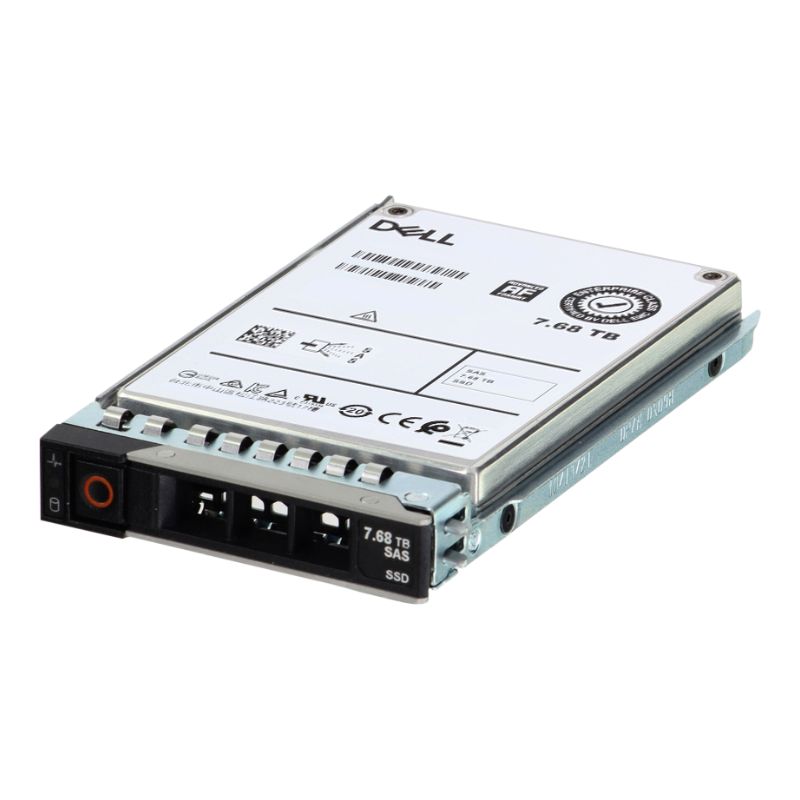


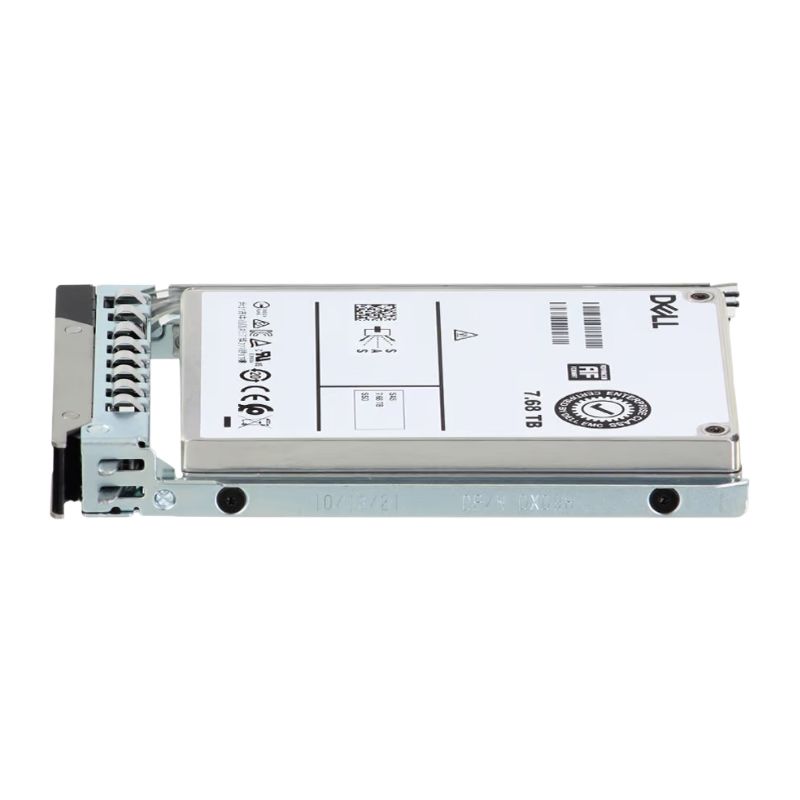
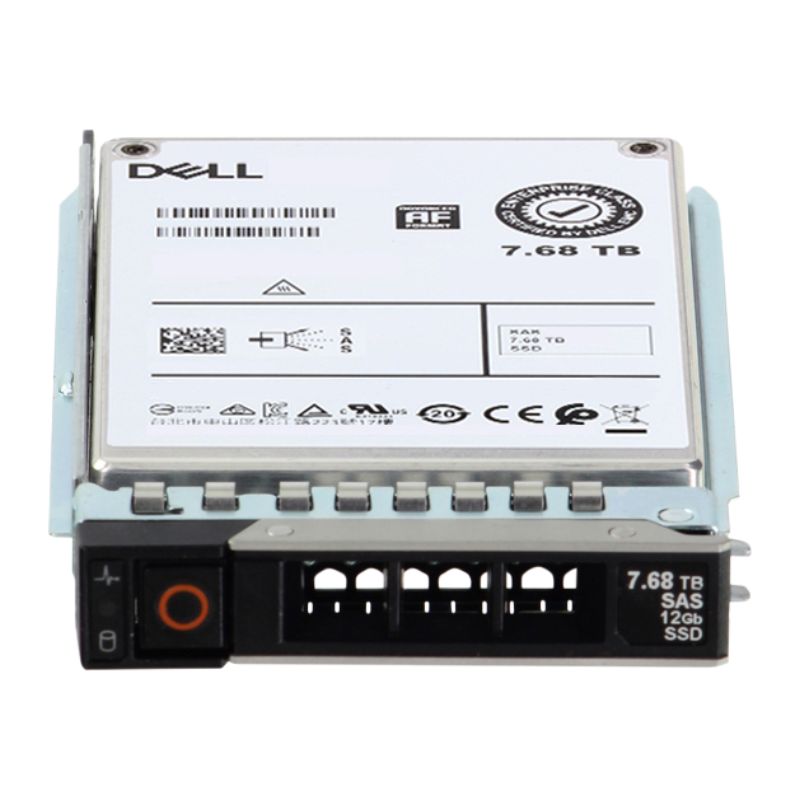
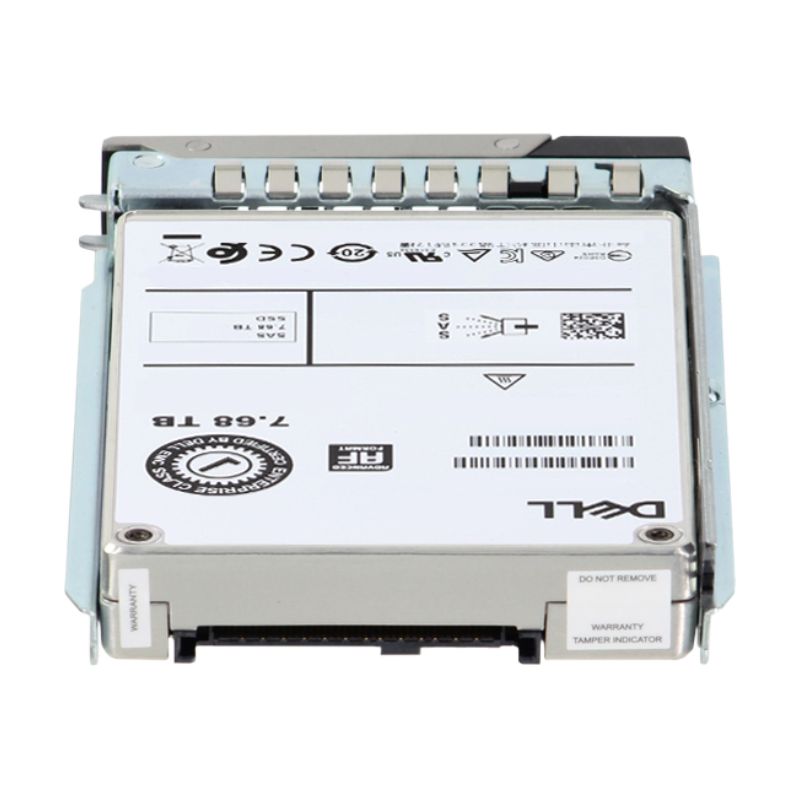
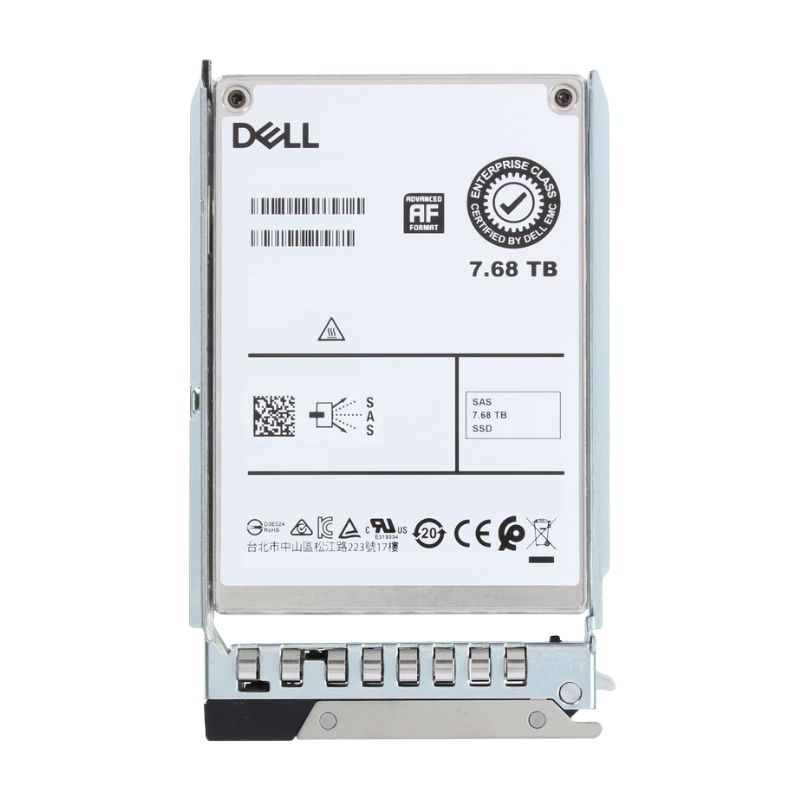
Dell D3T9Y 7.68TB SAS-12GBPS Read Intensive 1DWPD SFF Hot Plug Solid State Drive. New Sealed in Box (NIB) with 1 year Warranty
The D3T9Y Dell 7.68TB SAS 12Gbps Read-Intensive TLC SSD. D3T9Y brings a highly reliable, enterprise-class storage option engineered for next-generation PowerEdge environments. Designed with advanced V-NAND TLC flash, this hot-plug SFF drive ensures exceptional stability, optimized read throughput, and dependable performance for large-scale virtual workloads, data-driven operations, and high-capacity databases.
The Dell D3T9Y represents a pinnacle of enterprise storage engineering, specifically designed for read-intensive applications demanding high capacity, relentless reliability, and exceptional performance. This 7.68TB, 2.5-inch Small Form Factor (SFF) hot-plug drive leverages the robust SAS-12Gbps interface and 3D TLC NAND technology to deliver a balanced solution for data centers, cloud infrastructure, and large-scale server environments where read operations dominate the workload profile.
Leveraging D3T9Y V-NAND TLC flash technology, this enterprise SSD minimizes latency and boosts longevity. Its optimized structure supports large sequential workloads, stable power efficiency, and reduced heat output—vital for servers operating in high-density data center racks.
Being a Dell-certified component, the SSD guarantees complete synergy with Dell PowerEdge systems. This ensures firmware-level optimization, effortless integration, predictable performance, and enhanced operational stability. The included hot-plug tray allows quick installation or replacement without interrupting server availability, supporting 24/7 enterprise operations.
Selecting a Dell-certified SSD ensures performance, compatibility, and reliability engineered for the unique demands of PowerEdge servers. This drive provides exceptional efficiency for organizations seeking scalable, high-capacity storage optimized for read-heavy traffic.
Whether deployed in cloud environments, enterprise data centers, or scalable IT frameworks, the D3T9Y Dell 7.68TB SAS SSD elevates storage efficiency, enhances application readiness, and supports long-term operational continuity. Its robust engineering helps businesses maintain consistent performance in mission-critical scenarios.
Enterprise-Grade Endurance for Read-Intensive Applications
With a 1 DWPD endurance rating, this drive is engineered for environments where read operations dominate daily workloads. Ideal for systems requiring quick access to structured and unstructured data, it strikes a balance between durability, speed, and cost efficiency.
The 7.68TB capacity point is strategically chosen for high-density storage needs. It provides a significant leap from 3.84TB drives, allowing organizations to consolidate storage and reduce the number of drives required for a given capacity, which simplifies management and can improve overall system reliability.
The 2.5-inch SFF design is the industry standard for modern high-density servers. The "hot-plug" capability is a non-negotiable feature in enterprise environments, allowing for drive replacement, addition, or removal without powering down the entire server or storage array. This ensures maximum system uptime and facilitates seamless maintenance and scalability.
The Serial Attached SCSI (SAS) interface, specifically the 12GBPS (Gen 3) variant, is a cornerstone of enterprise storage. Unlike consumer-grade SATA interfaces, SAS is built for mission-critical environments. Key benefits include:
While exact figures can vary, a drive in this class typically delivers exceptional sequential read speeds, often exceeding 1,000 MB/s, and high random read IOPS (Input/Output Operations Per Second), crucial for server and database applications. The write performance is robust and consistent, tailored to the 1 DWPD workload profile, ensuring that the drive does not become a bottleneck during data ingestion or update cycles.
DWPD is a standardized metric for quantifying SSD endurance over its warranty period. A rating of 1 DWPD for the D3T9Y means that over its 5-year warranty, you can write the entire 7.68TB drive capacity once every day. This translates to a total lifetime writes specification, often in the range of petabytes written (PBW).
Calculation Example: 7.68TB * 1 DWPD * 365 days * 5 years = ~7,000 TBW (or 7 PBW). This substantial endurance is managed by advanced flash management techniques.
The drive utilizes 3D Triple-Level Cell (TLC) NAND flash memory. Unlike planar NAND, 3D NAND stacks memory cells vertically in layers, dramatically increasing density and reducing cost per gigabyte while improving reliability and power efficiency.
While TLC stores three bits per cell (making it denser than SLC or MLC), its use in enterprise drives was historically limited due to endurance concerns. However, modern enterprise TLC, like that in the D3T9Y, is coupled with sophisticated controllers, advanced error correction codes (ECC), and intelligent wear-leveling algorithms. These technologies effectively mitigate endurance limitations, making TLC a cost-effective and highly reliable choice for read-intensive enterprise workloads.
Also known as Capacitor-Based Power Loss Protection, this is a critical safety feature. In the event of a sudden power failure, onboard capacitors provide enough temporary power to complete any pending writes in the volatile DRAM cache and flush the data to the non-volatile NAND flash. This prevents data corruption and ensures data-at-rest consistency, a fundamental requirement for any enterprise storage device.
The drive employs a powerful, multi-level ECC engine, such as Low-Density Parity-Check (LDPC) code, to detect and correct a high number of bit errors, preserving data integrity as the NAND cells age. Furthermore, it is designed to work flawlessly in RAID (Redundant Array of Independent Disks) configurations, supporting features like RAID 5, 6, and 10, which are standard for data protection in server environments.
Characteristics: High capacity, lower endurance (1-3 DWPD), optimized for read performance, lower $/GB.
Best For: The workloads listed earlier (CDN, Data Warehousing, VDI boot).
Characteristics: Balanced read/write performance, moderate endurance (3-10 DWPD), moderate $/GB.
Best For: Transactional databases, email servers, virtualization hosts.
Characteristics: Highest endurance (10+ DWPD), often uses SLC or eMLC cache, highest $/GB.
Best For: High-frequency trading logs, write-back caches, intensive journaling.
Selecting a Read-Intensive drive like the D3T9Y for a Write-Intensive application would lead to premature wear-out and potential failure. Conversely, using a expensive Write-Intensive drive for a primarily read-based workload results in unnecessary capital expenditure. Analyzing your I/O profile is essential for cost-effective storage tiering.
Upon deployment, it is a best practice to check and update the drive's firmware to the latest version available from the Dell support website. This ensures you have the latest performance optimizations, bug fixes, and security patches. Running a full diagnostic scan upon installation provides a baseline for the drive's health.
It is important to note that the D3T9Y SAS-12Gbps interface is fully backward compatible with existing 6Gbps (SAS-2) infrastructure. The drive will automatically negotiate down to the lower speed, ensuring interoperability with older HBAs and storage controllers, though at a reduced performance level.


 Contact Us
 Information
 Catalog
 Solid State Drives (SSD)
 Network Switches
 Hard Disk Drives
 HBA & Controllers
 PC & Servers
 PC & Server Memory
 CPU & Processors
 Network Routers
 Power Supplies
 Tape Drives & Libraries
 Network Devices
 Computer & Network Cables