(7% discount is applied at checkout)
Cart is empty
Your go-to destination for cutting-edge server products
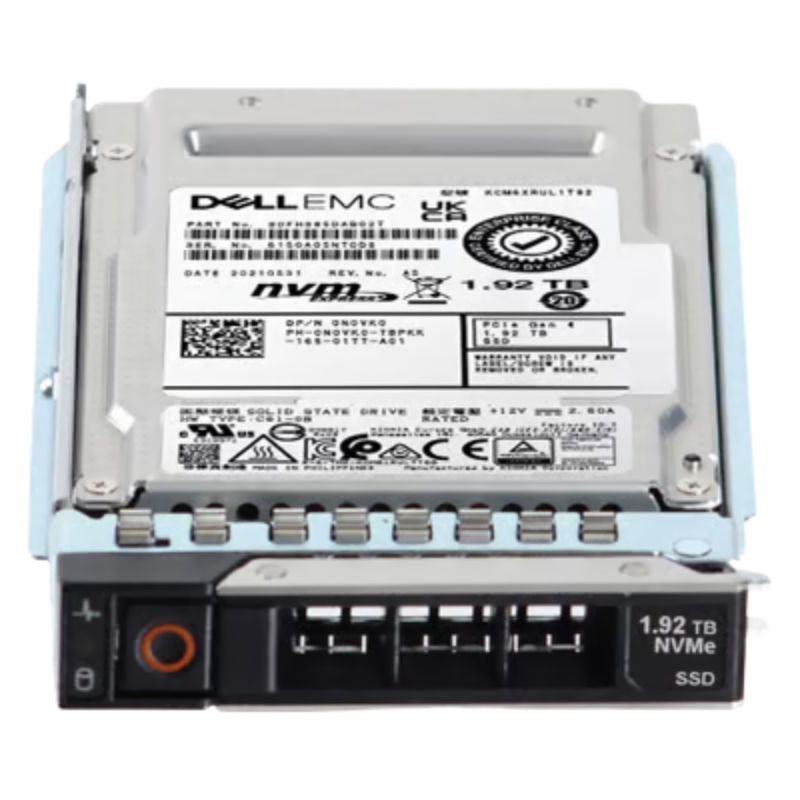


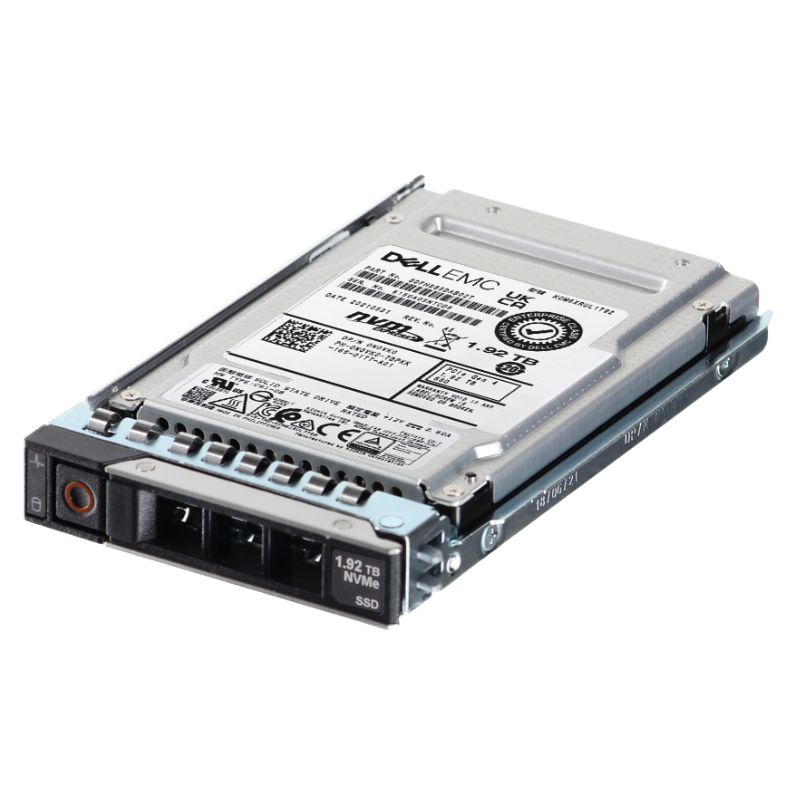
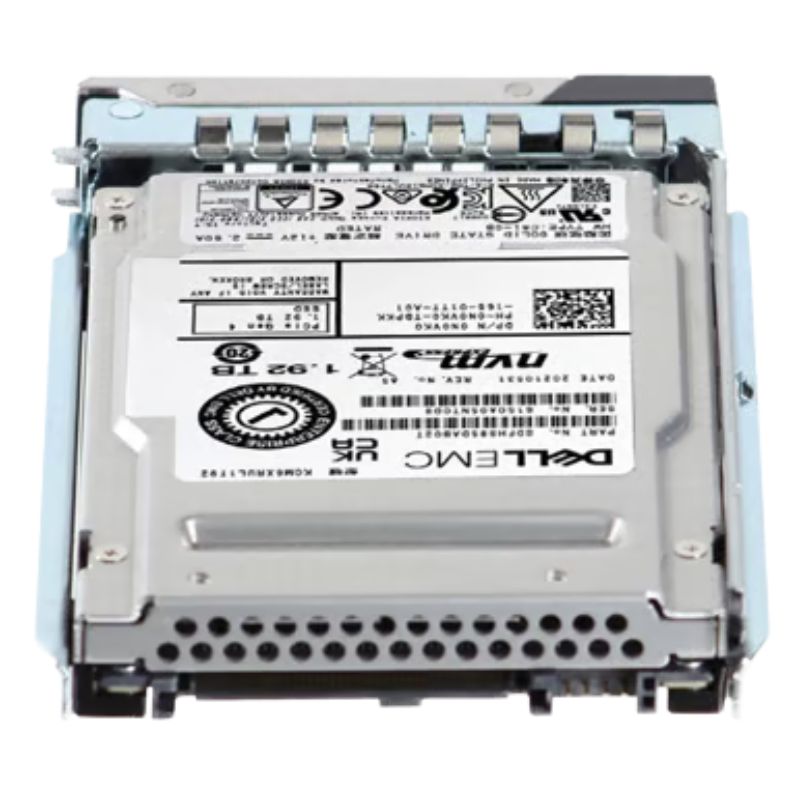
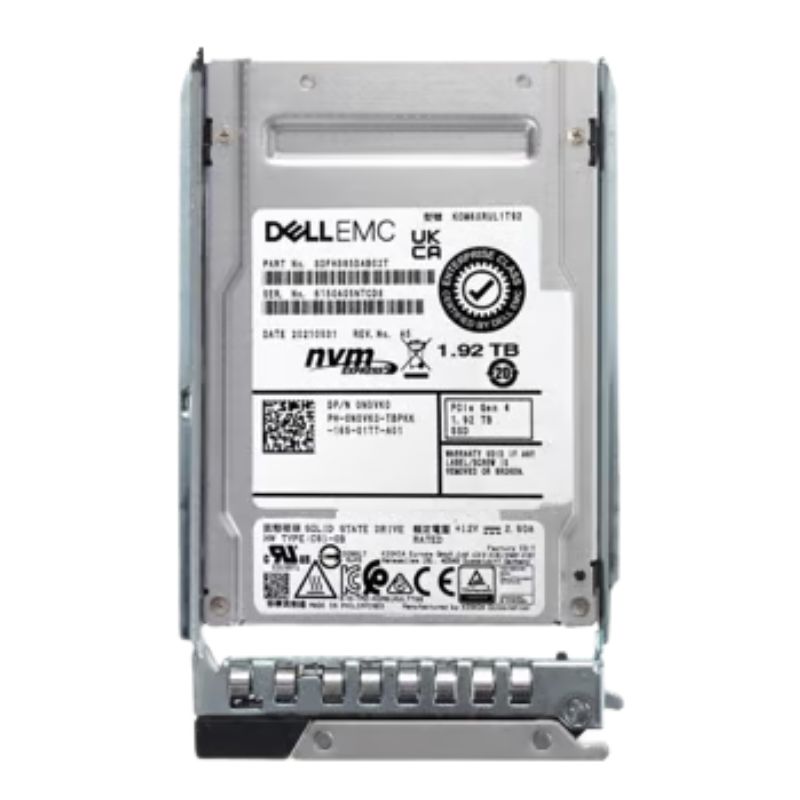
Dell 400-BSCS 1.92TB PCI-E Gen4 NVMe U.2 2.5Inch SFF Read Intensive Solid State Drive. New Sealed in Box (NIB) with 1 Year Warranty
The Dell 400-BSCS is a high-efficiency PCIe Gen4 NVMe solid-state drive engineered for data-intensive workloads, offering fast access times, dependable endurance, and enterprise-class reliability. Designed to elevate server responsiveness, it ensures seamless performance across demanding virtualized, cloud, and database environments.
This SSD integrates seamlessly with a wide selection of Dell PowerEdge servers, delivering reliable, high-bandwidth storage tailored for enterprise architectures.
The Dell 400-BSCS 1.92TB PCI-E Gen4 NVMe U.2 2.5Inch SFF Read Intensive Solid State Drive represents a focused category of enterprise-class storage optimized for read-dominant workloads. Designed for modern data centers and edge deployments that prioritize predictable low latency, high I/O per second, and cost-efficient endurance, this category blends the advantages of PCI-Express Gen4 bandwidth with NVMe protocol efficiencies and the robust U.2 2.5-inch SFF (small form factor) chassis common to rack servers and storage arrays. Target buyers include system integrators, IT infrastructure teams, cloud service providers, virtualization administrators, and database managers who need a 1.92TB capacity point that balances usable storage with performance consistency and endurance optimized for read-intensive applications.
At the core of the Dell 400-BSCS category is the use of PCI-Express Gen4 lanes, which double raw host interface throughput compared with Gen3. This increase in bus capacity translates into higher sequential and random throughput when paired with NVMe controllers designed to exploit Gen4 x4 connectivity. For read-intensive SSDs such as the 1.92TB Dell 400-BSCS, the Gen4 interface reduces queuing bottlenecks and allows data center workloads to scale up without the host bus becoming the limiting factor. Typical benefits for enterprise workloads include accelerated database read performance, shorter search and indexing times, faster boot and application startup, and improved responsiveness for read-heavy virtualization and analytics tasks.
NVMe is integral to this category’s value proposition. As a protocol developed explicitly for NAND flash and modern PCIe fabrics, NVMe minimizes CPU overhead and command latency compared to legacy storage interfaces. The Dell 400-BSCS drives leverage NVMe's deep command queues and parallelism to deliver consistently low latencies under multi-threaded read loads. For IT teams, this means better tail latency behavior during peak read bursts, smoother application performance under concurrent access, and more predictable service-level-agreement compliance for latency-sensitive applications.
The choice of U.2 2.5-inch SFF form factor positions the Dell 400-BSCS as a drop-in compatible option for many enterprise servers and storage enclosures. U.2’s mechanical and electrical design supports hot-pluggability, improved cooling in chassis bays, and straightforward integration into existing arrays that require 2.5-inch drive sleds. This compatibility reduces migration friction for organizations upgrading older Gen3 NVMe or SAS SSDs to Gen4 NVMe technology. IT procurement benefits from a familiar server installation workflow and broad vendor support across server OEMs and third-party enclosures.
The 1.92TB capacity point is strategic: it offers a balance between cost per gigabyte and usable capacity for many enterprise datasets. For read-intensive workloads where write amplification and endurance constraints are less critical than read throughput, 1.92TB provides ample room for operating system images, database indexes, read caches, virtual machine images, container layers, and analytics datasets. The capacity is large enough to reduce administrative overhead for frequent drive swaps while small enough to remain cost-effective when deploying many drives across a cluster. For storage architects, choosing 1.92TB Dell 400-BSCS drives often enables efficient tiering strategies with higher capacity HDD layers or mainstream NVMe tiers for mixed workloads.
The Dell 400-BSCS category excels in environments where reads dominate I/O patterns. Common deployment scenarios include database read replicas, content delivery caches, metadata stores for object storage, web application frontends, search index nodes, analytics query engines, and virtual desktop infrastructure where many endpoints boot from shared images. In these contexts, the drive’s read-oriented firmware tuning, overprovisioning settings, and wear-leveling schemes are optimized to preserve endurance while sustaining high read IOPS and throughput. Organizations that run large-scale read analytics pipelines will find that using read-intensive SSDs reduces operational costs without sacrificing the reliability required for enterprise operations.
For virtualization hosts and cloud infrastructure, deploying Dell 400-BSCS SSDs as a read tier improves startup times for virtual machines and containers, decreases snapshot restore durations, and accelerates operations like cloning and provisioning. Because many cloud workloads rely heavily on reads after initial deployment, dedicating a read-optimized layer to these tasks can increase VM density per host while keeping storage TCO in check. This approach allows administrators to allocate high-endurance or mainstream NVMe drives to write-heavy database nodes while deploying 1.92TB read-intensive units in caching layers and replica sets.
Dell’s enterprise drive offerings are designed with reliability features that matter in production deployments. The 400-BSCS category typically includes robust SMART telemetry, power loss protection mechanisms, and firmware engineered to maintain data integrity across unexpected events. Read-intensive drives are tuned for workloads with low write amplification, enabling lower overprovisioning while retaining predictable endurance ratings. Drive health monitoring and telemetry integration with server management platforms allow operations teams to perform proactive maintenance and replace drives based on trend analysis rather than reactive failure responses.
Endurance in read-intensive SSDs is often expressed in drive writes per day (DWPD) over a specified warranty period. The Dell 400-BSCS 1.92TB drive category typically provides endurance that supports heavy read workloads without overcommitting on endurance that write-intensive applications would require. For capacity planning, administrators should consider the expected write footprint per application and align the drive category accordingly. The read-focused endurance design means that lifecycle replacement schedules are predictable, enabling planned maintenance windows and simplified asset depreciation calculations for financial teams.
Thermal efficiency and power consumption are essential considerations in dense rack deployments. Because the U.2 2.5-inch SFF design sits in high-density server bays, the Dell 400-BSCS drive family typically adheres to thermal specifications that work with standard server fan curves and chassis airflow. Power efficiency gains from NVMe and Gen4 interfaces can reduce per-drive energy draw and cumulative heat, which in turn lowers cooling and operational expenses. For sustainability-focused organizations, deploying read-intensive drives where appropriate can contribute to a more efficient overall storage architecture.
Firmware plays a pivotal role in how drives behave in enterprise environments. The Dell 400-BSCS series often includes firmware features such as adaptive read prefetching, optimized garbage collection tuned for read patterns, and intelligent error correction that preserves usable capacity while maintaining performance under stress. Manageability integrations allow drives to report detailed SMART attributes, temperature thresholds, and lifetime estimates to centralized management consoles. These telemetry streams are invaluable for capacity planners and reliability engineers who need to forecast replacements and fine-tune overprovisioning for cluster consistency.
Compatibility is a key advantage for enterprises choosing U.2 2.5-inch NVMe drives. The form factor and interface are supported by a broad ecosystem of servers, RAID/HBA adapters with NVMe passthrough capabilities, and storage arrays designed to accept U.2 NVMe modules. The Dell 400-BSCS drives are often validated across server SKUs and chassis configurations to ensure firmware interoperability and thermal compliance. For mission-critical deployments, operations teams should follow vendor compatibility matrices and firmware best practices to avoid subtle issues like thermal throttling or host driver incompatibilities during load surges.
U.2’s mechanical design facilitates hot-swap serviceability, which is essential in enterprise environments to avoid downtime. The Dell 400-BSCS category supports standard drive sleds and carrier mechanisms, allowing field replacement without server downtime when backed by proper software failover configurations. Serviceability extends to diagnostics where drives provide error logs and self-test features enabling rapid triage and replacement. For cloud providers and large enterprises, the ability to perform non-disruptive drive swaps reduces mean time to repair and maintains higher overall availability metrics.
Security is increasingly integral to storage procurement. Many drives in this category implement hardware-based encryption and support for TCG Opal or similar industry standards, enabling compliance with organizational encryption policies without significant performance penalties. Secure erase and instant secure wipe features ensure rapid decommissioning of drives for redeployment or retirement. Additionally, firmware-level safeguards and error reporting contribute to preventing silent data corruption and facilitating audit trails for regulatory compliance.
For enterprises subject to regulatory regimes or internal security mandates, hardware encryption capabilities reduce the need for host-based encryption overhead and simplify key management integration with enterprise key management systems. The Dell 400-BSCS category’s secure erase functionality assures administrators that decommissioned hardware does not retain residual customer data. When combined with lifecycle policies and asset tracking, these features simplify compliance audits and reduce organizational risk related to data leakage.
Storage architects can deploy Dell 400-BSCS 1.92TB drives in multiple patterns: as a dedicated read cache tier in hyperconverged systems, as a front-end read layer in multi-tier storage architectures, or as mirrored read replicas for database scaling. Each approach leverages the drive’s optimized read performance and predictable behavior. When designing a tiered storage strategy, planners should evaluate the interaction between read cache size, backing store latency, and network topology to maximize return on investment. Many teams adopt a hybrid approach, combining high-capacity HDDs for cold data, mainstream NVMe for mixed workloads, and read-intensive NVMe like the 400-BSCS for high-read hot data sets.
Determining the right cache size and placement requires careful analysis of access patterns. Read-intensive drives are most effective when the hot working set can be accommodated within the aggregate read tier. Tools that profile I/O heat maps and identify read hot spots are useful to decide how many 1.92TB drives are needed to meet latency and throughput targets. Effective tiering reduces unnecessary writes to higher-endurance media and optimizes lifecycle costs across the storage estate.


 Contact Us
 Information
 Catalog
 Solid State Drives (SSD)
 Network Switches
 Hard Disk Drives
 HBA & Controllers
 PC & Servers
 PC & Server Memory
 CPU & Processors
 Network Routers
 Power Supplies
 Tape Drives & Libraries
 Network Devices
 Computer & Network Cables