(7% discount is applied at checkout)
Cart is empty
Your go-to destination for cutting-edge server products
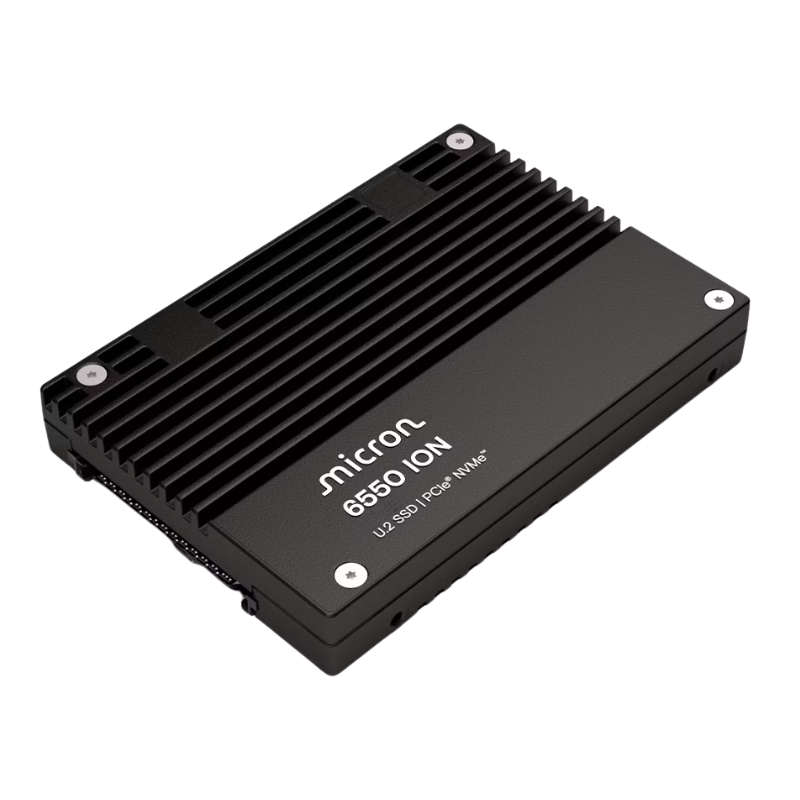


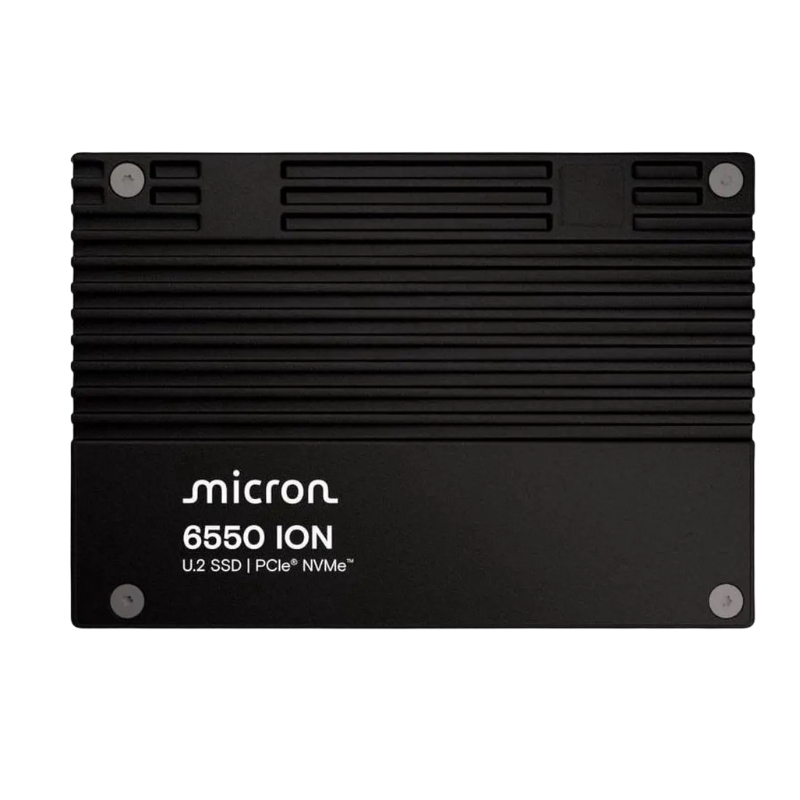
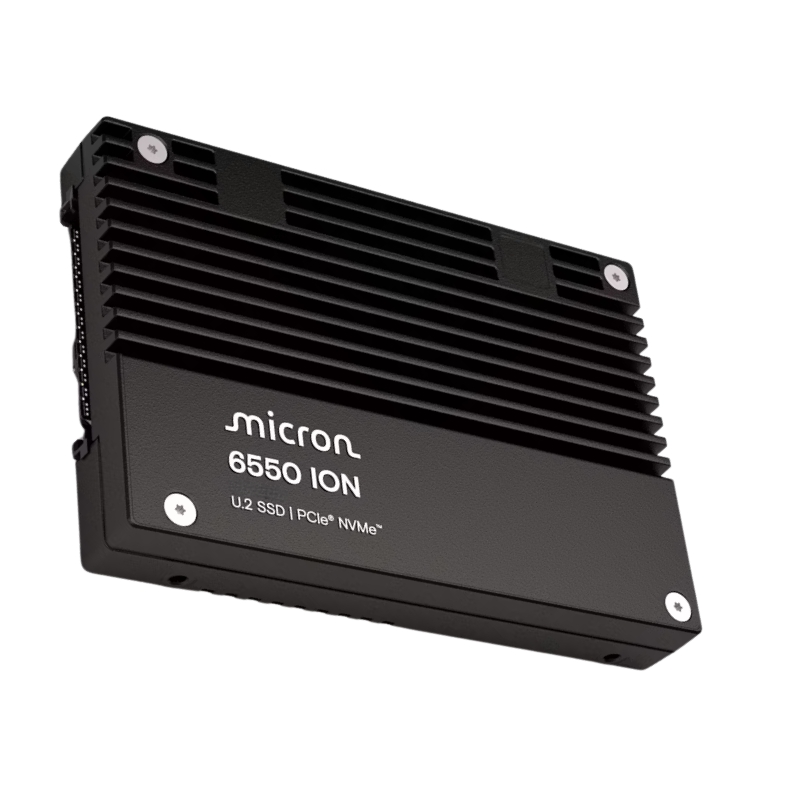
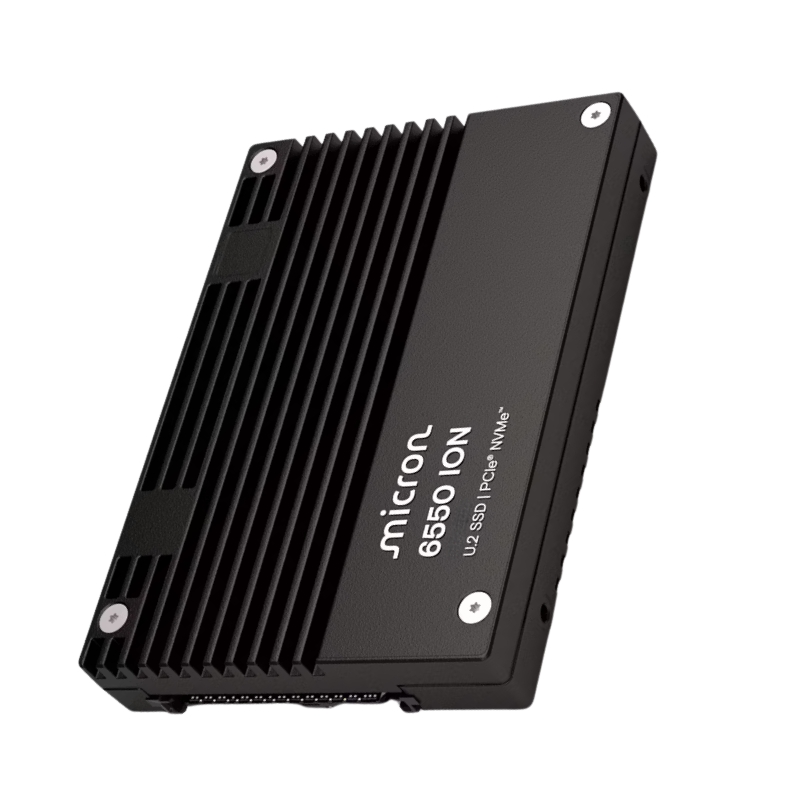
Micron MTFDLAL30T7THL-1BK1DFCYY 30.72TB 6550 Ion Series Pci Express Gen5 X4 Nvme U.2 Single Port 2.5inch Solid State Drive. New Sealed in Box (NIB) with 3 years Warranty - Call
Discover the high-capacity Micron MTFDLAL30T7THL-1BK1DFCYY, a 30.72TB enterprise-class solid-state drive engineered for next-generation performance. Designed for demanding data-center and cloud workloads, this storage solution delivers exceptional speed, endurance, and reliability.
The Micron 6550 Ion Series represents a quantum leap in enterprise solid-state drive technology, designed specifically for the most demanding data center workloads. As a flagship product in Micron's extensive storage portfolio, this series delivers unprecedented capacity, performance, and reliability for modern cloud infrastructure, hyperscale computing, and enterprise storage applications.
Built upon Micron's industry-leading 232-layer TLC NAND technology, the 6550 Ion Series achieves remarkable density while maintaining exceptional power efficiency. The sophisticated controller architecture is optimized for mixed workloads, ensuring consistent performance whether handling read-intensive, write-intensive, or balanced operational patterns.
The 232-layer NAND represents Micron's most advanced flash memory technology to date, offering significant improvements in both performance and power efficiency compared to previous generations. This innovation enables the 6550 Ion Series to achieve higher capacities while reducing the physical footprint and power consumption per terabyte.
Through precise engineering of the charge trap architecture and enhanced materials, Micron has achieved greater electron retention and reduced cell-to-cell interference. This results in improved endurance characteristics and data retention capabilities, crucial for enterprise deployment scenarios.
This specific model represents the pinnacle of the 6550 Ion Series, offering an extraordinary 30.72TB capacity in the industry-standard U.2 form factor. The drive is engineered for maximum performance in PCI Express Gen5 environments while maintaining compatibility with existing Gen4 infrastructure.
The 30.72TB capacity point is strategically designed to maximize storage density in space-constrained data center environments. The 2.5-inch U.2 form factor ensures broad compatibility with existing server and storage infrastructure while providing the thermal characteristics necessary for sustained high-performance operation.
The U.2 (SFF-8639) interface provides multiple advantages over other form factors, including superior thermal dissipation capabilities, hot-swap functionality, and robust mechanical connections. This makes the drive ideal for high-density storage configurations where reliability and serviceability are paramount.
Enterprise workloads can generate significant heat, and the U.2 form factor allows for efficient heat transfer from the NAND and controller components to the drive enclosure and ultimately to the system's cooling infrastructure. This thermal efficiency ensures consistent performance without thermal throttling during extended operations.
The implementation of PCIe Gen5 doubles the bandwidth compared to previous Gen4 solutions, providing up to 32GT/s (GigaTransfers per second) per lane. With four lanes operational, the interface delivers unprecedented throughput capable of saturating the fastest storage controllers and host bus adapters.
The x4 lane configuration maximizes the available bandwidth while maintaining optimal power efficiency. This balanced approach ensures that the drive can deliver maximum performance without creating unnecessary bottlenecks in the storage subsystem.
While designed for Gen5 systems, the drive maintains full backward compatibility with PCIe Gen4 infrastructure, operating at reduced speeds but maintaining all functionality. This ensures investment protection for organizations transitioning between generations.
The drive implements the latest NVMe 2.0 specification, incorporating numerous enhancements for enterprise deployment. These include improved command handling, enhanced security features, and optimized queue management for multi-core processor environments.
With support for deep command queues (up to 64K commands) and multiple namespaces, the NVMe implementation ensures that the drive can handle concurrent I/O requests from multiple virtual machines or containers without performance degradation.
The Micron 6550 Ion Series is engineered to deliver exceptional performance across a wide range of enterprise workloads, from read-intensive cloud applications to mixed-use database environments.
With sequential read speeds exceeding 10,000 MB/s and write speeds approaching 7,000 MB/s, the drive can handle large data transfers with exceptional efficiency. This makes it ideal for data analytics, video processing, and scientific computing applications.
The high sequential performance enables rapid processing of large files common in media and entertainment, healthcare imaging, and financial modeling applications. The sustained transfer rates ensure that data movement doesn't become a bottleneck in computational pipelines.
Random performance metrics exceeding 1.5 million IOPS for reads and 250,000 IOPS for writes make this drive suitable for the most demanding database and virtualization workloads. The low queue depth performance ensures responsive operation even under light loads.
Online transaction processing (OLTP) and analytical processing (OLAP) workloads benefit from the consistent random read performance and low latency. The drive's architecture minimizes performance variability, ensuring predictable response times for critical applications.
With read latencies consistently below 100 microseconds and write latencies under 20 microseconds, the drive provides near-instantaneous data access for performance-sensitive applications. This low latency is maintained across various workload patterns and capacity utilization levels.
Enterprise applications require predictable performance, and the 6550 Ion Series delivers exceptional QoS metrics. The 99.999th percentile latencies remain within strict boundaries, ensuring that even during peak loads, performance remains consistent.
Through advanced algorithms and buffer management techniques, the drive minimizes tail latency, which is critical for multi-tenant environments and service level agreement (SLA) compliance in cloud deployments.
The MTFDLAL30T7THL-1BK1DFCYY is built for continuous operation in 24/7 enterprise environments, with extensive reliability features designed to maximize uptime and data integrity.
With a rated endurance of 1 drive write per day (DWPD) over its 5-year warranty period, the drive can handle substantial write workloads while maintaining data integrity. This translates to over 56 petabytes written (PBW) over the drive's lifespan.
Advanced dynamic and static wear leveling ensures even distribution of write cycles across all NAND blocks, preventing premature wear on frequently written areas and extending the usable life of the drive.
The drive incorporates sophisticated bad block management with extensive spare area allocation, ensuring that defective blocks are seamlessly retired without impacting performance or capacity.
Multiple layers of data protection ensure integrity from the host interface to the NAND cells. This includes end-to-end data path protection, advanced error correction codes, and robust RAID-like protection within the drive architecture.
The drive utilizes sophisticated low-density parity check (LDPC) error correction combined with manufacturer-grown bad block management to ensure data integrity even as the NAND cells age throughout the drive's operational life.
Comprehensive power loss protection circuits ensure that in-flight data is protected during unexpected power interruptions. The design includes sufficient holdup time to complete active operations and commit data to non-volatile storage.
With an MTBF rating of 2.5 million hours, the drive demonstrates exceptional reliability for mission-critical applications. This reliability metric is backed by extensive testing and validation processes.
The drive operates reliably across industrial temperature ranges (0°C to 70°C) and can withstand operational shock and vibration levels typical in data center environments.
Comprehensive management capabilities and robust security features make the 6550 Ion Series suitable for the most demanding enterprise and cloud deployment scenarios.
The drive supports the full suite of NVMe management commands, allowing for detailed monitoring and configuration through standard operating system utilities and enterprise management platforms.
Comprehensive telemetry data provides insights into drive health, performance metrics, and environmental conditions. This information is accessible through standard interfaces including S.M.A.R.T. attributes and NVMe log pages.
Advanced analytics capabilities can predict potential issues before they impact operations, allowing for proactive maintenance and replacement scheduling in large-scale deployments.
The drive supports multiple security options including IEEE 1667 and TCG Opal 2.01 compliance, providing robust data-at-rest protection through hardware-based encryption.
Instant cryptographic erase capabilities allow for rapid decommissioning and repurposing of drives by rendering previous data cryptographically inaccessible through key destruction.
Firmware updates are cryptographically signed and verified before installation, preventing unauthorized modification and ensuring the integrity of the drive's operational code.
Features such as SR-IOV (Single Root I/O Virtualization) support and multiple namespaces make the drive ideal for virtualized and containerized environments where resource sharing and isolation are critical.
Through careful implementation of namespace management and quality of service controls, the drive can securely serve multiple tenants or applications while maintaining performance isolation.
The massive capacity and high performance of the MTFDLAL30T7THL-1BK1DFCYY make it suitable for numerous demanding enterprise applications where storage density and performance are critical.
Cloud service providers benefit from the exceptional capacity density, allowing them to maximize storage per rack unit while maintaining the performance necessary for demanding cloud applications.
The drive's consistent performance characteristics make it ideal for scale-out storage architectures where predictable performance is essential across hundreds or thousands of nodes.
By reducing data loading times and supporting concurrent access from multiple training nodes, the drive accelerates the overall model development lifecycle from experimentation to production.
During extended training sessions, model checkpoints can be saved rapidly to the high-performance storage, minimizing interruption and providing recovery points in case of system failure.
Enterprise database systems handling thousands of transactions per second benefit from the low latency and high random I/O performance, ensuring responsive application performance even during peak loads.
While in-memory databases provide exceptional performance, they require persistent storage for recovery logs and periodic snapshots. The low latency of this drive minimizes the performance impact of these persistence operations.
4K, 8K, and emerging higher-resolution video formats create enormous files that require high-bandwidth storage for editing, rendering, and distribution. The sequential performance handles these large files with ease.
Multiple editors and artists can work concurrently on projects stored on shared storage built with these high-performance drives, streamlining production workflows.
Large-scale simulations, genomic sequencing, and experimental data analysis generate massive datasets that require both high capacity and performance for timely processing and analysis.
The drive's ability to sustain high performance under mixed workloads makes it suitable for high-throughput computing environments where multiple research projects share infrastructure.
Successful deployment of high-performance storage requires careful consideration of system compatibility and integration factors to maximize performance and reliability.
To fully leverage the PCIe Gen5 capabilities, compatible server platforms with appropriate PCIe lane configuration and cooling capacity are required. The drive operates in both x4 and x8 slot configurations.
Proper system BIOS settings and current firmware revisions are essential for optimal performance and compatibility. Specific attention should be paid to PCIe link training and power management settings.
All major operating systems with NVMe driver support are compatible, including recent versions of Windows Server, Linux distributions, VMware ESXi, and other hypervisor platforms.
While standard NVMe drivers provide basic functionality, vendor-specific drivers or updated native drivers may offer enhanced performance and additional management capabilities.
The drive is designed for integration into both custom storage solutions and commercial storage arrays, with compatibility testing completed for major storage platform vendors.
Proper hot-swap implementation requires attention to backplane design, controller compatibility, and operating system support to ensure safe removal and insertion during operation.
For large-scale deployments, considerations include power distribution, thermal management at rack level, and management infrastructure to monitor hundreds or thousands of drives.
While individual drive power consumption is optimized, rack-scale deployment requires careful power planning and efficiency considerations to maximize compute density within power constraints.


 Contact Us
 Information
 Catalog
 Solid State Drives (SSD)
 Network Switches
 Hard Disk Drives
 HBA & Controllers
 PC & Servers
 PC & Server Memory
 CPU & Processors
 Network Routers
 Power Supplies
 Tape Drives & Libraries
 Network Devices
 Computer & Network Cables