(7% discount is applied at checkout)
Cart is empty
Your go-to destination for cutting-edge server products
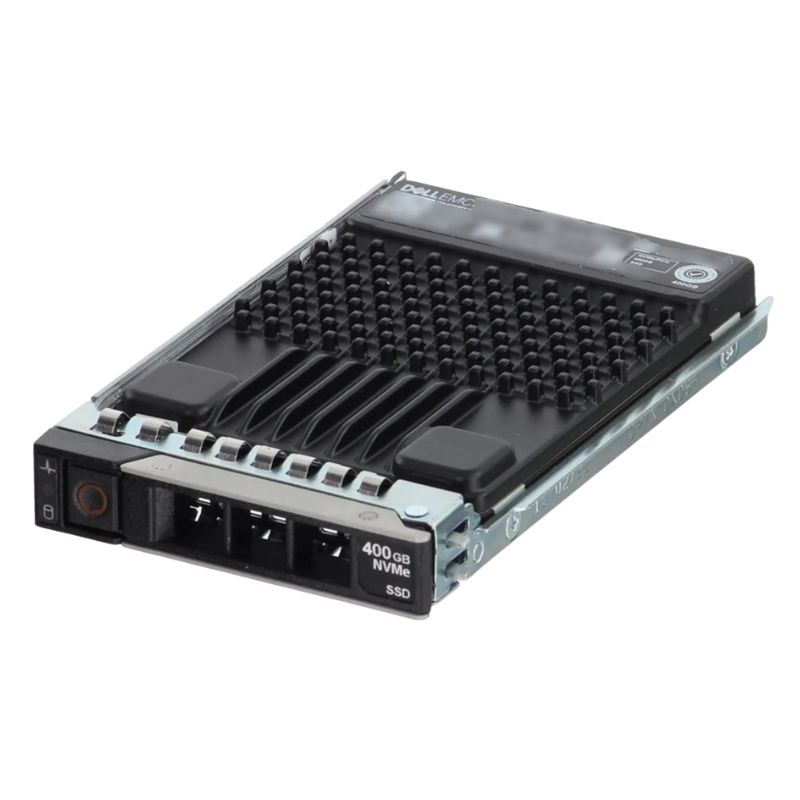


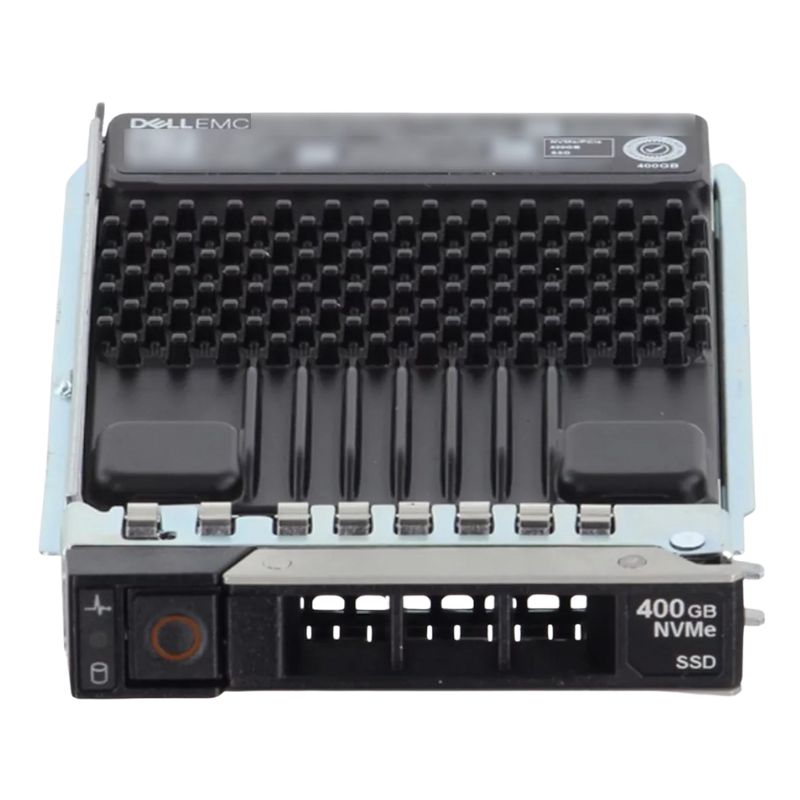
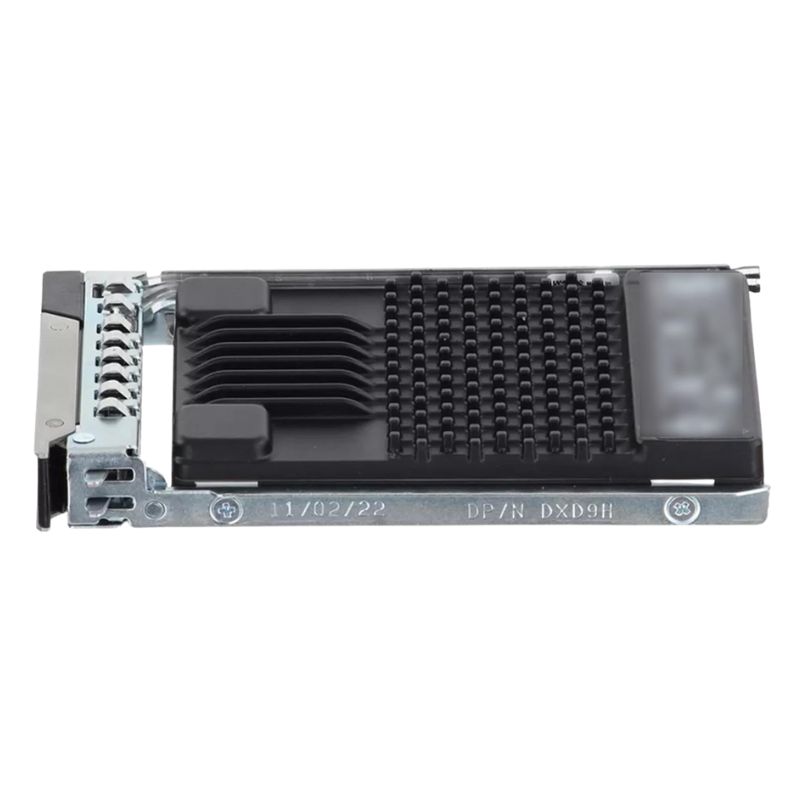
Dell NXNX0 DC P5800X Series 400GB PCI Express 4.0 X4 NVMe U.2 2.5Inch SFF Solid State Drive with Tray. New Sealed in Box (NIB) with 1 Year Warranty
The Dell NXNX0 DC P5800X Series 400GB NVMe drive combines exceptional durability, lightning-fast data access, and enterprise-grade reliability. Crafted for servers demanding constant workload performance, this 2.5-inch U.2 NVMe SSD enhances system responsiveness, reduces latency, and ensures smooth multitasking in data-intensive environments.
Designed for demanding enterprise applications, this SSD provides stable performance under extreme workloads. Its Intel® Optane™ memory media ensures consistent throughput even under heavy pressure.
This SSD is engineered to deliver extremely low latency and exceptional read/write speeds that surpass many traditional NVMe models.
The Dell NXNX0 DC P5800X SSD integrates seamlessly with a wide range of Dell PowerEdge platforms. Its enterprise-grade NVMe interface guarantees optimized performance when paired with modern server architectures.
The Dell NXNX0 DC P5800X Series 400GB NVMe PCI Express 4.0 x4 U.2 2.5-inch SFF Solid State Drive with tray represents a high-performance enterprise storage building block designed to meet the demanding throughput, low-latency, and endurance requirements of modern data centers. Engineered to leverage PCIe Gen4 bandwidth and NVMe protocol efficiencies, this drive provides a blend of predictable latency, exceptional IOPS, and power-loss protection features that make it suitable for databases, virtualization hosts, high-frequency transaction processing, caching tiers, and mixed workload storage arrays.
The Dell NXNX0 DC P5800X Series is manufactured in the U.2 2.5-inch small form factor (SFF) and connects over a PCIe 4.0 x4 interface using the NVMe command set. The U.2 interface keeps server front-accessible hot-swap capability while enabling the full performance benefits of NVMe devices. The 400GB capacity positions this model as a read- and mixed-workload optimized device, offering a balance between usable capacity, endurance, and cost-per-performance for enterprise tiers where densely packed, high-performance drives are required.
With PCIe Gen4 x4, the NXNX0 DC P5800X can saturate a significantly higher bandwidth envelope than previous generation Gen3 devices. The NVMe protocol reduces command overhead through a streamlined I/O path and deep parallelism, enabling much higher queues, lower CPU overhead, and better end-to-end latency characteristics. For systems architecting low-latency stacks, the combination of NVMe and Gen4 translates into measurable improvements in transaction throughput and more consistent response times under peak load.
Performance for the P5800X Series centers on high sustained read throughput, competitive mixed IOPS, and enterprise-grade random performance. Typical performance markers include extremely fast random read IOPS at low queue depths, high sequential read bandwidth for large-block transfers, and strong mixed read/write behavior for transactional databases. The drive is engineered to deliver predictable tail latency, which is essential for multi-tenant virtualization environments and latency-sensitive applications such as online transaction processing (OLTP) and real-time analytics.
IOPS performance scales with concurrency and queue depth; the NVMe interface enables increased parallel queues and command submission rates. For system designers, this drive’s low single-digit microsecond latency on typical reads and optimized latency on writes reduce application jitter. When deployed in server configurations with modern CPUs and NVMe-aware storage stacks, endpoint applications experience fewer latency spikes, which in turn improves SLA observability and user-perceived responsiveness.
Enterprise SSDs like the P5800X Series are built with endurance metrics and data integrity mechanisms suitable for sustained workload operations. The 400GB model offers endurance metrics expressed as drive writes per day (DWPD) and total bytes written (TBW) over a warranted period. Dell’s enterprise SSD firmware typically includes robust wear-leveling algorithms, dynamic over-provisioning to optimize endurance and performance consistency, and end-to-end data protection. The inclusion of power-loss protection capacitors or a power-loss protection mechanism ensures that in-flight data is flushed to non-volatile media during unexpected power events, minimizing the risk of data corruption and improving recovery characteristics after abrupt shutdowns.
Operational monitoring is essential in enterprise environments. The P5800X supports SMART attributes and telemetry designed to provide drive health indicators, endurance consumption, and temperature metrics. Firmware updates address performance optimizations, compatibility enhancements, and reliability fixes; thus, administrators should integrate firmware management into routine maintenance. Dell’s enterprise tools and standard NVMe management utilities enable remote querying and firmware distribution, enabling proactive replacement or remediation before drive degradation impacts service availability.
Security is a core attribute for enterprise storage. This series typically supports hardware-based encryption standards to protect data at rest. Common enterprise features include self-encrypting drive (SED) support, compliance with TCG Opal or IEEE standards, and optional integration with host-based key management or external encryption key servers. When enabled, hardware encryption reduces CPU overhead compared to software-only encryption, and it simplifies secure decommissioning by enabling cryptographic erase of drive contents instead of physical destruction.
Lifecycle management benefits from secure erase and cryptographic sanitization capabilities. The P5800X allows administrators to rapidly decommission drives with confidence by leveraging secure erase commands that invalidate encryption keys or perform authenticated secure wipe operations. These capabilities are particularly valuable for regulated industries and cloud providers who must adhere to strict data disposition policies while maintaining fast turnaround for drive reuse or replacement in large fleets.
The U.2 2.5-inch SFF form factor is widely supported across Dell PowerEdge servers and many OEM server platforms, providing easy front-access hot-swap replacement in rack-mounted systems. Compatibility testing covers firmware, BIOS/UEFI NVMe drivers, RAID controllers, and host operating systems. While NVMe devices are increasingly supported natively by modern OS kernels, administrators should verify compatibility with existing management stacks, driver versions, and storage controllers. In many enterprise deployments, NVMe drives are presented directly to the OS as block devices or aggregated through NVMe-aware software RAID, or used as cache tiers in hybrid arrays.
Natively, NVMe drives are often used behind controllers that either expose them as individual devices or present an aggregated volume using software-defined storage solutions. Traditional SATA/SAS RAID controllers are not applicable to U.2 NVMe drives; instead, NVMe-oF targets, host-based software RAID, or specialized NVMe RAID controllers are used. For organizations re-architecting storage infrastructure, the P5800X can serve as a high-performance tier in a multi-tier storage strategy, complementing higher-capacity HDD or SATA/SAS SSD layers where cost-per-GB rather than absolute performance drives procurement decisions.
The strengths of this Dell NVMe model become most apparent in several proven use cases. These include hosting high-concurrency databases, accelerating virtual machine boot storms, serving as a cache layer for latency-sensitive read/write operations, and powering analytics workloads that require sustained random IOPS. For hyperconverged infrastructure, where compute and storage converge in the same nodes, these drives reduce application-level latency and increase VM density per host. For AI and machine learning inference, they provide a responsive storage layer that reduces model load times and dataset seek times for real-time inferencing.
Relational databases and NoSQL engines benefit from the predictable low-latency reads and high random IOPS provided by NVMe drives. Systems with high small-block random I/O patterns see improvements in query latency and throughput, especially when combined with optimized filesystem and kernel tuning. The P5800X’s design reduces tail latency and improves consistency under transactional loads, making it well-suited for OLTP environments, caching layers, and write-through or write-back caching architectures.
High-performance NVMe devices generate heat under sustained I/O. The U.2 form factor and Dell’s tray design help integrate the drive within server cooling zones, enabling efficient airflow and thermal dissipation. Monitoring temperature sensors and adapting airflow policies are important to maintain consistent performance. Drives typically reduce performance via thermal throttling if temperatures exceed safe operating ranges, so proper rack airflow planning and placement in the server can prevent unwanted throttling. Power consumption is optimized for balance between performance and energy efficiency, and firmware power states can be managed for idle-power conservation in data center environments where power budgets are a key operational constraint.
The included tray provides front-access installation and hot-swap capability, simplifying in-field replacement without server downtime. For operations teams managing large fleets, hot-swap support is indispensable for maintaining availability and performance SLAs. The tray also standardizes physical mounting across compatible Dell chassis, ensuring the drive remains secure and receives proper mechanical and electrical connections during normal operation and rack service events.
Successful integration of the NXNX0 DC P5800X Series starts with planning for firmware versions, compatibility with server models, and integration with monitoring frameworks. Best practices recommend maintaining an inventory of drive firmware and using vendor-supplied tools to apply updates during maintenance windows. Configure SMART telemetry and health thresholds within centralized monitoring systems to enable early detection of wear or anomalies. Where applicable, enable hardware encryption with a managed key system and incorporate secure erase procedures into retirement workflows. When provisioning storage for mixed workloads, consider grouping drives into tiers based on endurance and capacity to align cost with performance needs.
Capacity planning must take into account usable capacity after reserved over-provisioning and RAID overhead. For tiering strategies, use the 400GB P5800X as a high-performance tier for hot datasets and caching, while relying on larger capacity drives for colder datasets. This approach maximizes the return on investment by keeping small, performance-sensitive datasets on NVMe while offloading bulk storage to high-capacity HDD or denser SSD media. Implement automated data movement policies to migrate data between tiers based on access patterns and age to optimize performance and reduce storage costs.
Benchmarking should reflect real workload profiles rather than synthetic peak numbers alone. Use representative tools and traces that simulate application-level I/O patterns—such as real database workloads or VM boot traces—to gauge how the drive will behave in production. Benchmarks should measure not only peak IOPS and throughput but also tail latency and consistency under sustained mixed loads. Real-world validation includes stress testing under peak concurrency, firmware update validation, and verifying integration with backup and replication solutions to ensure operational continuity.
Compared to older SAS or SATA enterprise SSDs, NVMe Gen4 devices deliver significantly higher parallelism and lower latency. When evaluating against other NVMe models, consider endurance ratings, latency under mixed workloads, and features like power-loss protection and encryption. The P5800X Series is optimized for environments that prioritize low latency and predictable performance; for environments that prioritize cost-per-GB above latency, other form factors may be more economical. Performance-to-cost trade-offs must be examined in the context of the entire storage architecture and workload behavior.


 Contact Us
 Information
 Catalog
 Solid State Drives (SSD)
 Network Switches
 Hard Disk Drives
 HBA & Controllers
 PC & Servers
 PC & Server Memory
 CPU & Processors
 Network Routers
 Power Supplies
 Tape Drives & Libraries
 Network Devices
 Computer & Network Cables