(7% discount is applied at checkout)
Cart is empty
Your go-to destination for cutting-edge server products
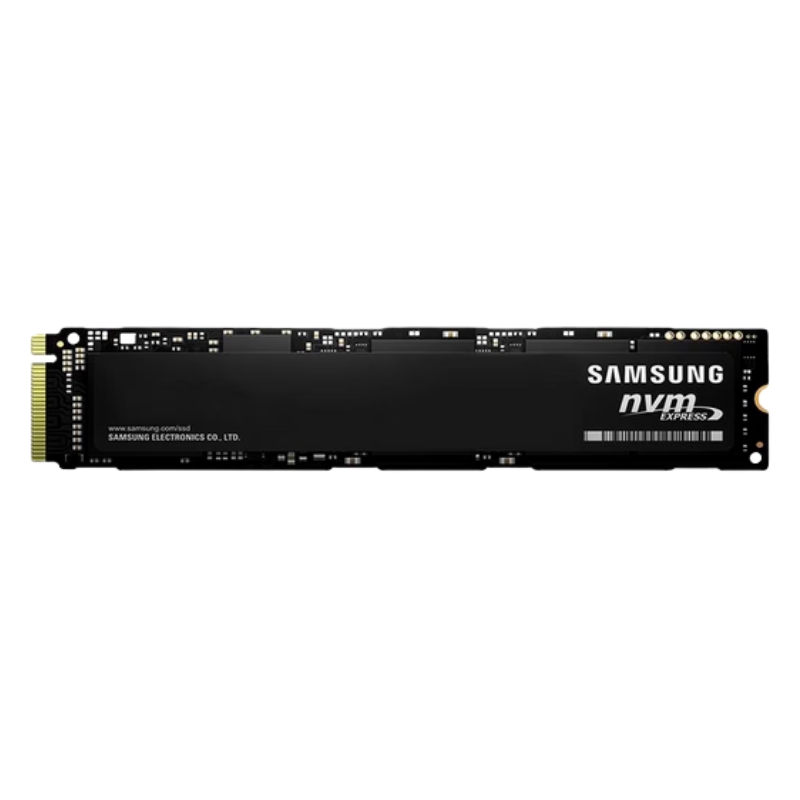


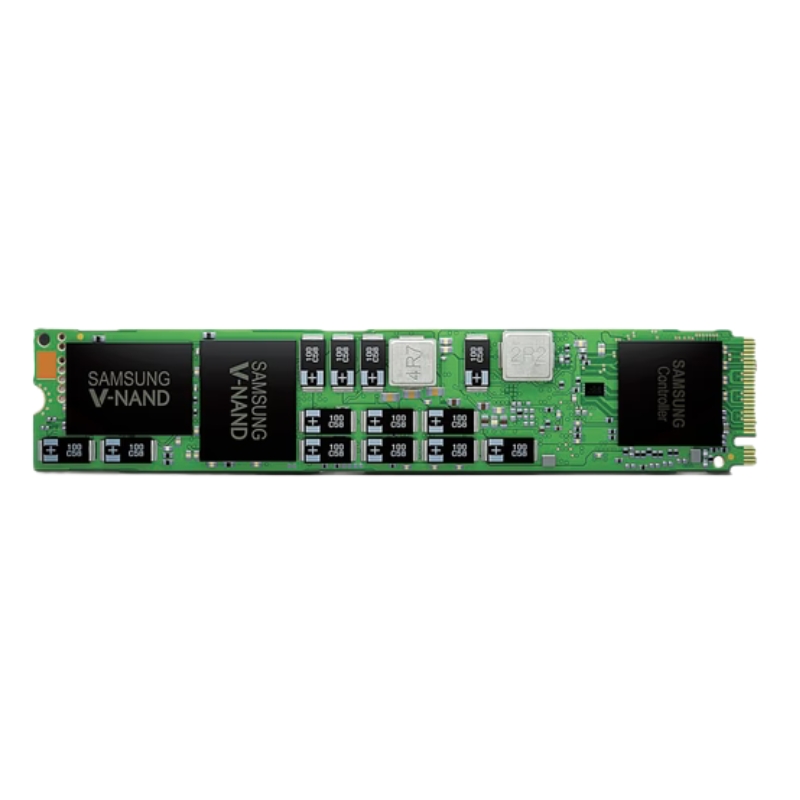
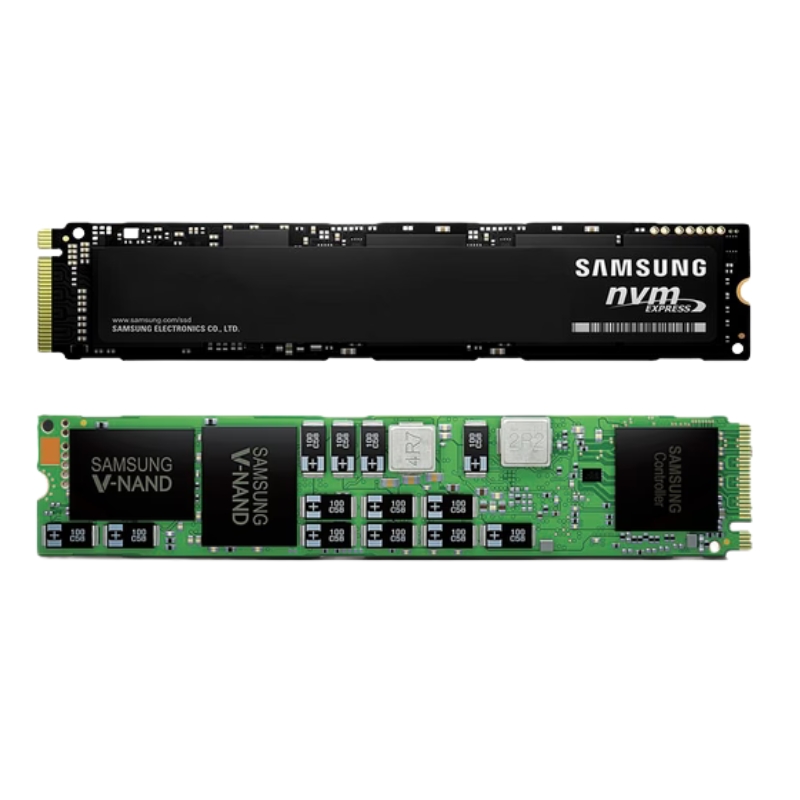
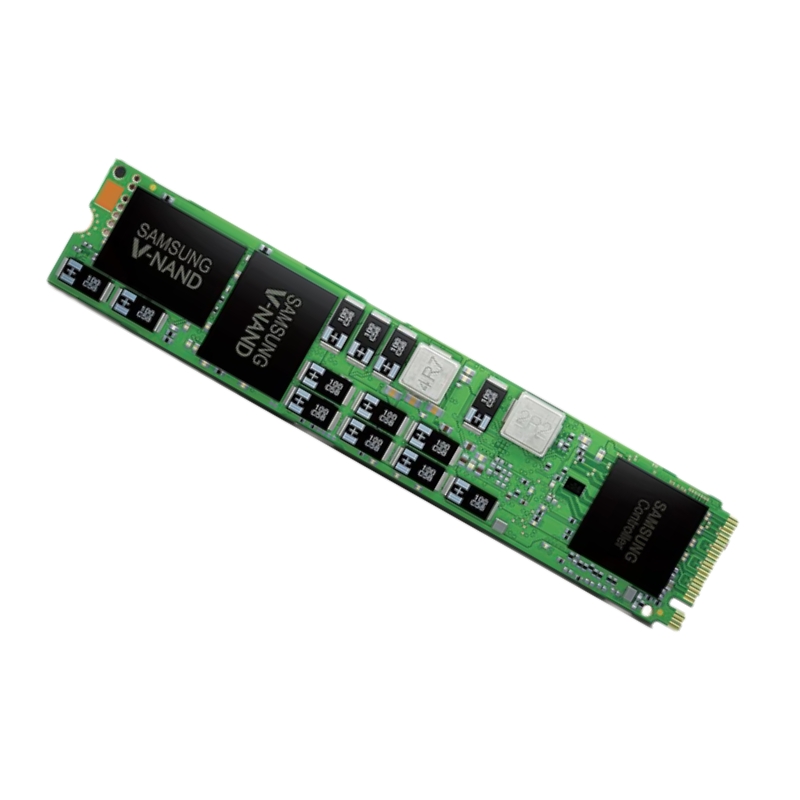
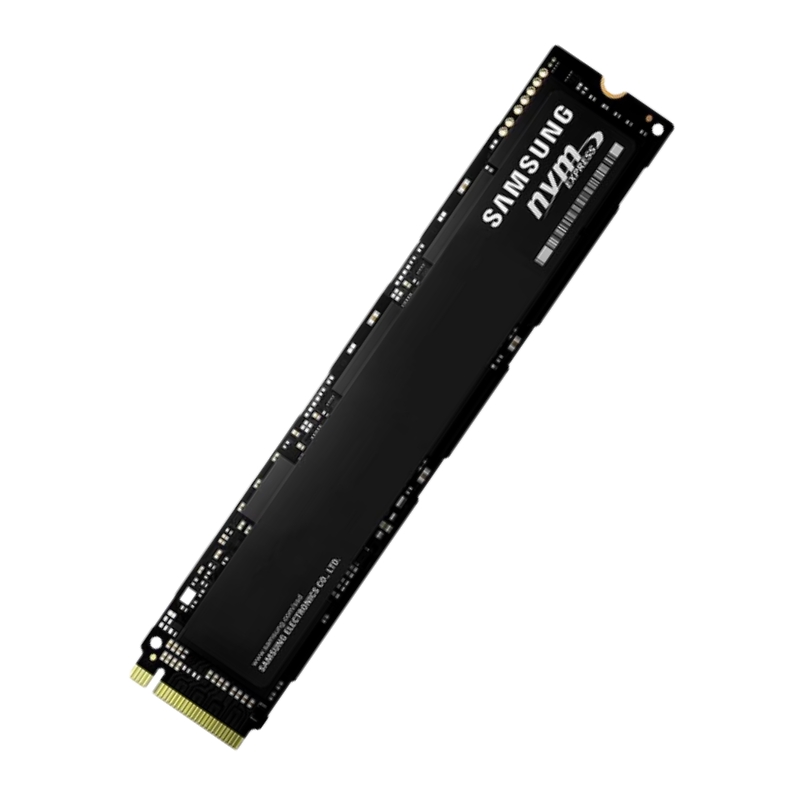
Samsung MZ-1LW1T90 1.92TB PCI-E PM963 M.2 22110 NVMe Internal Solid State Drive. New Sealed in Box (NIB) with 3 Years Warranty
The Samsung PM963 1.92TB NVMe SSD is an enterprise-grade internal solid-state drive engineered for fast storage, low latency and dependable service in servers and high-performance workstations. This M.2 22110 drive uses Samsung V-NAND TLC and a PCIe Gen3 x4 interface to deliver consistent throughput and strong endurance for data-center and professional workloads.
The Samsung MZ-1LW1T90 PM963 utilizes the M.2 22110 form factor, which represents a specific physical dimension standard for solid-state drives. The "22110" designation breaks down as follows: 22mm in width and 110mm in length. This extended length compared to more common M.2 drives (such as 2280) provides additional physical space for more NAND flash chips and potentially a more sophisticated controller, enabling higher capacities and better thermal management through increased surface area for heat dissipation.
The 22110 form factor offers several distinct advantages for enterprise and data center applications. The additional length allows for greater component density, enabling manufacturers like Samsung to incorporate more NAND packages to achieve higher storage capacities without moving to larger form factors. The increased surface area also improves thermal performance by providing more area for heat to dissipate naturally, which is crucial for maintaining consistent performance during sustained workloads. Additionally, the 22110 specification can accommodate more power delivery components, supporting the higher power requirements of enterprise-grade SSDs.
When considering the Samsung PM963 22110 SSD, compatibility with your existing hardware is paramount. Not all M.2 slots support the 22110 length—many consumer motherboards are designed for 2280 drives only. Enterprise servers, workstations, and specific carrier cards are more likely to support the 22110 form factor. Always verify that your target system has both the physical clearance for a 110mm long card and the appropriate mounting standoff position.
The Samsung PM963, like most high-performance enterprise NVMe drives, generates significant heat during operation. The 22110 form factor helps with heat dissipation, but additional cooling is often required in dense configurations. Many enterprise systems designed for 22110 drives include dedicated heatsinks or airflow channels. In systems without integrated cooling solutions, you may need to install a third-party M.2 heatsink to prevent thermal throttling and maintain optimal performance.
NVMe (Non-Volatile Memory Express) represents a fundamental shift in how storage devices communicate with a computer's CPU. Unlike older protocols like SATA and SAS, which were designed for mechanical hard drives, NVMe was built from the ground up specifically for flash memory. It operates over the PCIe (Peripheral Component Interconnect Express) bus, providing a direct, high-speed pathway to the CPU. This eliminates the translation layers and bottlenecks inherent in SATA and SAS interfaces, resulting in significantly lower latency and higher input/output operations per second (IOPS).
The Samsung PM963 utilizes a PCIe 3.0 x4 interface, meaning it uses four lanes of third-generation PCI Express connectivity. Each PCIe 3.0 lane provides approximately 1GB/s of bandwidth in each direction (read/write). With four lanes, the theoretical maximum bandwidth reaches 4GB/s in each direction. This substantial bandwidth enables the PM963 to deliver exceptional performance that far exceeds the capabilities of SATA SSDs, which are limited to approximately 600MB/s due to the SATA interface bottleneck.
In practical terms, the PCIe 3.0 x4 interface allows the Samsung PM963 to achieve sequential read speeds up to 3,000MB/s and sequential write speeds up to 1,100MB/s, depending on the specific capacity point. More importantly for enterprise workloads, it delivers exceptional random performance, reaching up to 450,000 IOPS for random reads and 40,000 IOPS for random writes. This makes it ideal for applications requiring rapid access to large datasets, such as database transactions, virtualization, and high-frequency trading platforms.
The Samsung PM963 incorporates sophisticated power loss protection (PLP) circuitry, a critical feature for enterprise environments where data integrity is non-negotiable. This system typically includes onboard capacitors that store enough electrical charge to provide temporary power in the event of sudden power failure. This emergency power allows the drive to complete any pending write operations in its cache and flush volatile data to the non-volatile NAND flash, preventing data corruption and ensuring transaction consistency.
In database servers, financial systems, healthcare applications, and other mission-critical environments, unexpected power loss can lead to catastrophic data corruption or loss. The PM963's power loss protection ensures that even during sudden power interruptions, all committed writes are preserved, maintaining database ACID (Atomicity, Consistency, Isolation, Durability) properties and preventing filesystem corruption that could require lengthy recovery procedures or result in permanent data loss.
Samsung has implemented comprehensive end-to-end data protection in the PM963 series. This means that data is protected by error correction codes (ECC) from the moment it enters the drive's DRAM cache until it's written to the NAND flash and retrieved. The protection extends across all data paths, including those between the controller, DRAM, and NAND flash memory. This multi-layered approach ensures data integrity throughout the entire data processing pipeline, protecting against corruption that could occur due to electrical interference, signal degradation, or other transmission errors.
The PM963 employs sophisticated wear leveling algorithms that distribute write and erase cycles evenly across all available NAND flash blocks. Dynamic wear leveling distributes new writes across less-used blocks, while static wear leveling periodically moves rarely-changed data to facilitate more even wear distribution. This approach significantly extends the drive's operational lifespan by preventing specific NAND cells from wearing out prematurely, which is particularly important in write-intensive enterprise applications.
Like all NAND flash-based storage, the PM963 requires garbage collection to maintain performance over time. When data is deleted or updated, the original physical locations aren't immediately erased. The drive's background garbage collection process identifies these "stale" pages, consolidates valid data, and erases blocks so they're ready for new writes. The PM963's advanced garbage collection algorithms are optimized to minimize performance impact during these maintenance operations, ensuring consistent latency and throughput even during sustained workloads.
Unlike consumer SSDs that may experience significant performance degradation during extended write operations, the Samsung PM963 is engineered to deliver consistent performance under sustained workloads. This is achieved through a combination of high-quality TLC V-NAND, an over-provisioned area (additional NAND capacity not available to the user), advanced flash management algorithms, and robust thermal design. These features allow the drive to maintain predictable I/O latency and throughput, which is essential for quality of service in multi-tenant environments and performance-sensitive applications.
The PM963 excels in mixed read/write workloads common in server environments. While many drives perform well in either read-intensive or write-intensive scenarios, the PM963 maintains strong performance across varied I/O patterns. This balanced performance profile makes it suitable for applications that don't fit neatly into single workload categories, such as database servers that handle both transaction processing (write-heavy) and reporting/analytics (read-heavy) simultaneously.
Enterprise storage demands predictable performance, which is quantified through Quality of Service metrics. The Samsung PM963 is designed to deliver consistent I/O latency with minimal variance, even under heavy loads. Key QoS measurements include tail latency (the highest latency experienced by a small percentage of I/O operations) and latency consistency across the drive's lifespan. Excellent QoS ensures that applications won't experience unexpected slowdowns that could impact user experience or system functionality.
The Samsung PM963 serves as an excellent boot drive for servers, providing fast boot times and responsive system operation. When used as a boot drive in conjunction with other storage, it ensures that the operating system and critical applications remain highly responsive even when data drives are under heavy load. The reliability features also reduce the risk of boot drive failure, which could result in server downtime.
Database systems, both SQL and NoSQL, benefit tremendously from the low latency and high IOPS capabilities of the PM963. The drive can significantly reduce query times, accelerate transaction processing, and improve overall database responsiveness. For in-memory databases, the PM963 provides fast persistence of data snapshots and transaction logs, while for traditional disk-based databases, it can host the entire database or critical indexes for maximum performance.
In high-performance computing environments, the PM963 accelerates data-intensive workloads such as scientific simulations, genomic sequencing, financial modeling, and engineering analysis. These applications often involve reading and writing massive datasets where storage performance can become a bottleneck. The high sequential throughput of the PM963 minimizes time spent on I/O operations, allowing computational resources to focus on processing rather than waiting for data.
Video editing, 3D rendering, and other content creation workflows involve working with large media files that can range from gigabytes to terabytes in size. The PM963's high sequential read and write speeds enable smooth playback of high-resolution video streams, faster file transfers, and quicker project load times. For collaborative workflows, multiple workstations can access projects stored on a shared PM963-based storage system without performance degradation.
In virtualized environments, the PM963 can serve both as storage for hypervisor boot images and as high-performance datastore for virtual machines. When hosting multiple VMs on a single physical host, the drive's high random I/O performance ensures that each VM receives responsive storage access regardless of what other VMs are doing. This improves VM density per host while maintaining service level agreements.
VDI deployments place extreme demands on storage systems, particularly during boot storms when hundreds or thousands of virtual desktops start simultaneously. The PM963's high random read performance accelerates these boot operations, while its consistent write performance handles user profile updates and application data. This results in better user experience and more predictable infrastructure scaling.
The PM963 utilizes Samsung's 3D V-NAND (Vertical NAND) technology with TLC (Triple-Level Cell) architecture. Unlike planar NAND that places memory cells in a single layer, V-NAND stacks cells vertically in multiple layers, significantly increasing density without sacrificing reliability or performance. The TLC design stores three bits of data per cell, providing an excellent balance of capacity, endurance, and cost-effectiveness for read-intensive and mixed-use enterprise workloads.
Samsung's V-NAND technology offers several advantages over traditional planar NAND. The vertical structure allows for larger cell sizes, which improves data retention and endurance. The proprietary charge trap flash (CTF) design reduces cell-to-cell interference, enhancing reliability. Additionally, the higher density achieved through 3D stacking enables higher capacities in the same physical form factor while maintaining competitive performance characteristics.
At the heart of the PM963 is a sophisticated custom-designed Samsung controller optimized for enterprise workloads. This controller features multiple ARM processor cores, dedicated hardware accelerators for encryption, ECC, and flash management operations. The parallel architecture allows the controller to manage multiple NAND channels simultaneously, maximizing throughput and minimizing latency. The controller's advanced algorithms manage wear leveling, bad block management, read retry, and other essential flash management tasks transparently to the host system.
The PM963 runs specialized firmware tuned for enterprise usage patterns. This firmware includes optimizations for queue depths, interrupt handling, and power states that differ significantly from consumer SSD requirements. Enterprise firmware prioritizes consistent latency and quality of service over peak burst performance, ensuring predictable behavior under varying load conditions. The firmware also implements telemetry and health monitoring features that integrate with enterprise management systems.
While consumer NVMe SSDs and the enterprise-focused PM963 may share similar basic technology, there are significant differences in their design priorities and capabilities. Consumer drives optimize for burst performance in typical client workloads with periodic activity, while the PM963 is engineered for consistent performance under continuous heavy loads. The PM963 includes power loss protection, end-to-end data protection, and more sophisticated error correction—features often omitted from consumer drives to reduce cost.
Enterprise SSDs like the PM963 typically offer 3-10 times higher endurance ratings than consumer drives of similar capacity. This is achieved through higher-grade NAND flash, more aggressive over-provisioning, and wear-leveling algorithms optimized for 24/7 operation. Additionally, enterprise drives often come with longer warranties (typically 5 years) that aren't pro-rated and include advanced replacement options critical for business continuity.
The M.2 22110 form factor of the PM963 offers several advantages over 2.5" U.2 NVMe drives in specific applications. M.2 drives require less physical space, enabling higher storage density in space-constrained environments. They also use less cabling, simplifying system design and improving airflow. However, U.2 drives often offer better thermal performance in traditional server chassis due to their larger surface area and compatibility with standard drive bay cooling systems.
Compared to SAS and SATA SSDs, the PM963 delivers significantly higher performance due to its NVMe interface and PCIe connectivity. While high-end SAS SSDs might reach 1,200MB/s sequential read speeds, the PM963 achieves up to 3,000MB/s. More importantly, NVMe offers dramatically lower latency—often under 20 microseconds compared to 100-200 microseconds for SAS and SATA SSDs. This latency advantage translates to much faster response times for I/O-intensive applications.


 Contact Us
 Information
 Catalog
 Solid State Drives (SSD)
 Network Switches
 Hard Disk Drives
 HBA & Controllers
 PC & Servers
 PC & Server Memory
 CPU & Processors
 Network Routers
 Power Supplies
 Tape Drives & Libraries
 Network Devices
 Computer & Network Cables