(7% discount is applied at checkout)
Cart is empty
Your go-to destination for cutting-edge server products
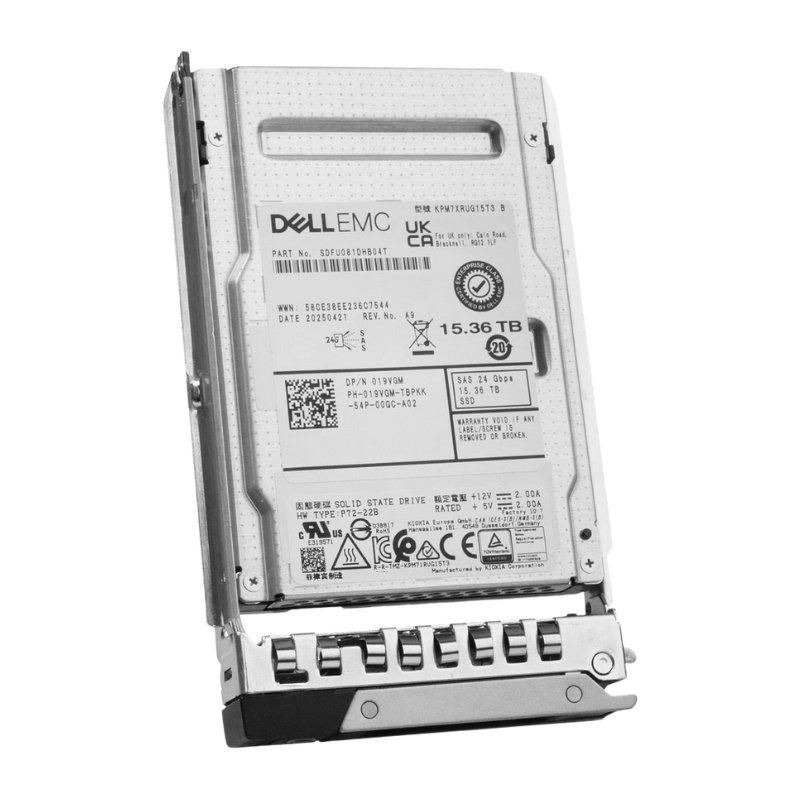


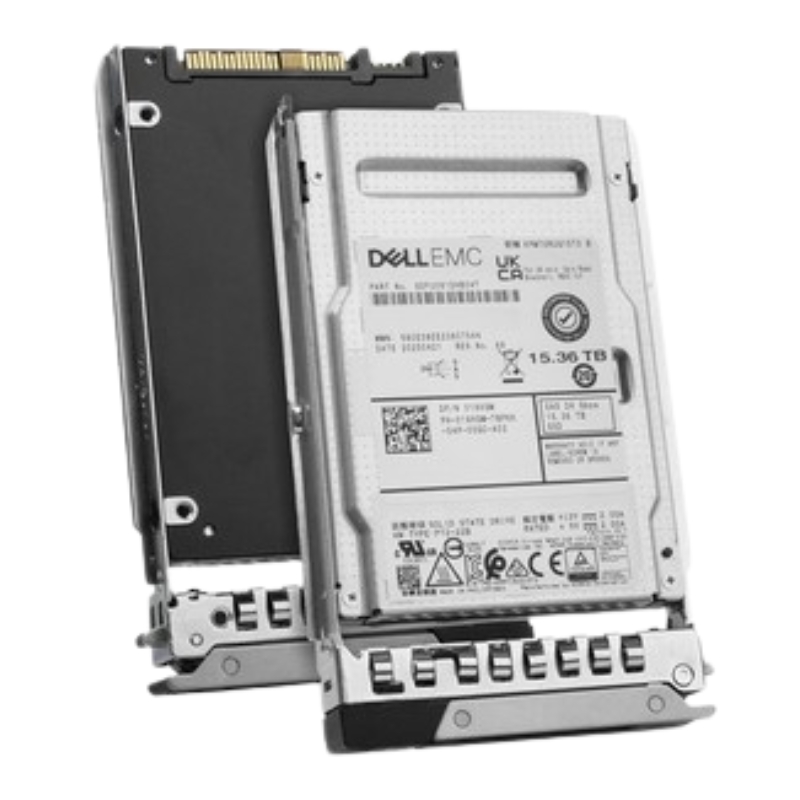
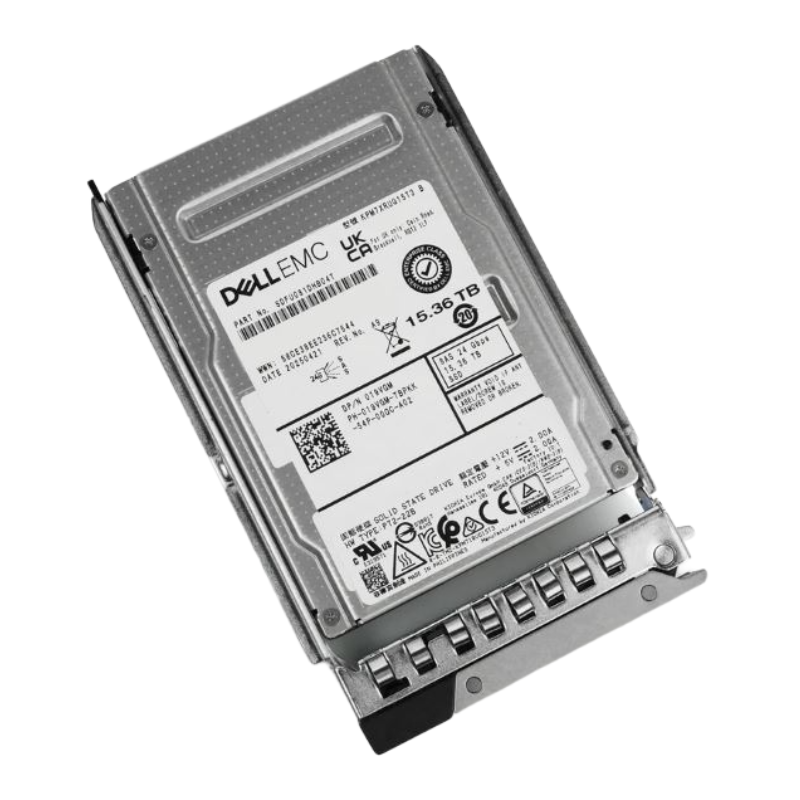
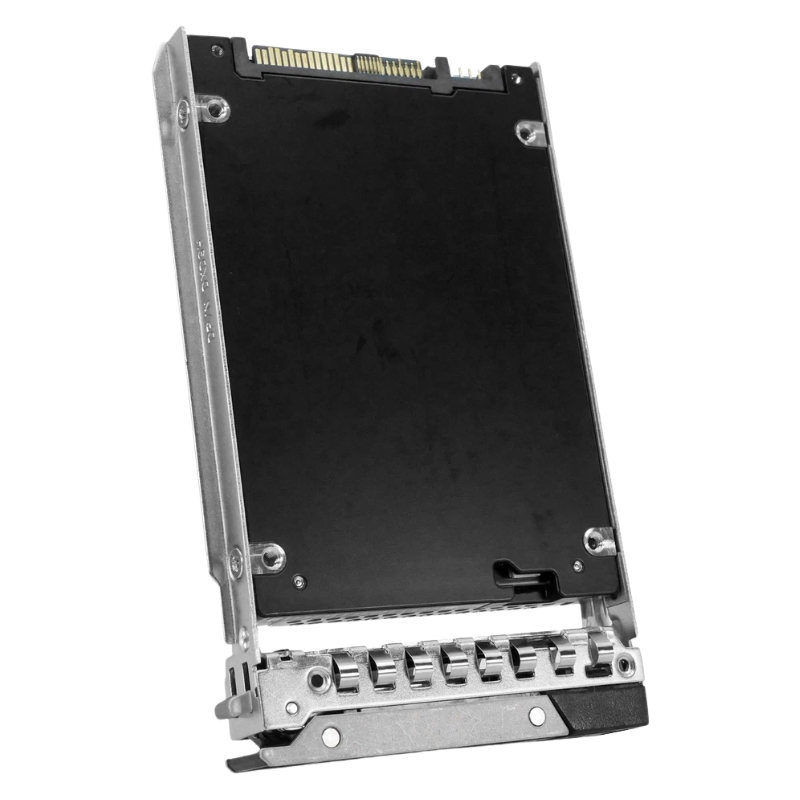
Dell 345-BBYC 15.36TB SAS 24GBPS 2.5Inch Hot-Plug 1DWPD Read-Intensive Solid State Drive. New Sealed in Box (NIB) with 1 Year Warranty
The Dell 345-BBYC 15.36TB SAS SSD is engineered for exceptional reliability and rapid data throughput. Designed for enterprise-grade environments, this hot-swap solid-state drive delivers superior endurance, enhanced data integrity, and seamless compatibility with numerous Dell PowerEdge server platforms.
The Dell 345-BBYC 15.36TB SAS 24Gbps 2.5-Inch Hot-Plug 1DWPD Read-Intensive Solid State Drive stands as one of the most advanced enterprise-class storage components available for modern data centers. Within this category, the drive is engineered to support high-capacity environments that demand reliability, durability, exceptionally fast throughput, and seamless scalability. Dell’s SAS-based read-intensive SSD architecture delivers performance advantages that help organizations reduce bottlenecks, improve latency, and process data at speeds aligned with next-generation workloads. This category is dedicated to enterprises evaluating high-performance storage solutions that fulfill evolving requirements for virtualization, cloud computing, analytics, edge computing, and high-availability infrastructures, while minimizing operational risks associated with heavier and more complex workloads.
High-capacity storage infrastructure is a foundational component of modern businesses, especially as data availability becomes more critical and data sets grow exponentially. The Dell 345-BBYC 15.36TB SAS SSD contributes to this by combining extremely large storage capacity with enterprise-grade durability and read-focused performance optimization. This category elaborates on how such a storage medium supports expanding datasets, reduces storage footprint, and enhances return on investment due to optimized density and reliability.
Large-scale applications—such as modeling and simulation, data mining, compliance recording, real-time business intelligence, and integrated enterprise software deployments—benefit significantly from a 15.36TB SAS SSD. This category also emphasizes how the combination of high capacity and high throughput facilitates rapid access, minimal latency, and superior multi-user performance. Organizations that rely on persistent storage demands find that a large drive reduces fragmentation of storage pools and helps consolidate multiple databases into single high-throughput SSDs.
The SAS 24Gbps interface integrates next-generation bandwidth capabilities that provide enhanced data throughput and improved energy efficiency. This connection type reflects one of the most important technological leaps within server storage categories. In this section, the emphasis is on how the 24Gbps SAS interface significantly surpasses older standards like 12Gbps SAS, enabling faster sequential reads, expanded queue depths, and improved workload parallelism. The result is a storage experience calibrated for analytics-intensive, AI-powered, and cloud-driven systems.
The 24Gbps SAS performance layer strengthens system reliability through the protocol’s dual-port capability, which protects against signal loss and single-path failures. This makes the SSD suitable for mission-critical environments where redundancy is essential. Additionally, SAS environments employ advanced signal integrity technologies, strengthening reliability across lengthy cable runs and complex server architectures. Because SAS hardware is designed to maintain consistent data transfer despite interference or environmental changes, this category explains how key features like error correction, improved command queuing, and full-duplex communication enhance operational stability for enterprises of all sizes.
The distinction between SAS and SATA is significant in enterprise categories. SAS drives are optimized for performance, load balancing, continuous uptime, and multi-initiator builds. SATA, while valuable in many environments, lacks the advanced signaling and dual-port features that SAS provides. With the 345-BBYC configured explicitly for SAS 24Gbps usage, enterprises ensure that they deploy high-speed, highly scalable, and fully managed data infrastructures. This section elaborates on how SAS drives maintain consistent throughput even when multiple applications request simultaneous data processing.
The high availability paradigm requires that storage components perform under intensive workloads with minimal failure risks. SAS technology integrated into this Dell SSD enhances multi-pathing capabilities and enables hot-swapping without risking data corruption. This helps ensure that mission-critical systems maintain operation even during drive replacements or failures.
The Hot-Plug feature is integral for enterprises that require nonstop service operations. This category section explains how hot-plug support allows drives to be inserted or removed from servers without powering down the system. This dramatically reduces downtime, supports maintenance cycles, and enhances the overall sustainability of IT operations. Maintenance teams benefit from the flexibility of upgrading storage pools without disrupting end users or interrupting mission-critical workloads.
Hot-plug SSDs streamline technician workflows by eliminating scheduled downtime. This section further explains how hot-plug functionality enhances resource allocation and maintains service-level agreements. Enterprises with hybrid infrastructures or multi-node clusters also rely heavily on hot-plug capacities to adjust storage configurations dynamically as workload demands evolve. As a result, servers remain fully operational even during maintenance cycles.
Downtime produces significant financial impact. This category elaborates on how the Dell 345-BBYC SSD contributes to savings by preventing disruptions caused by storage replacements. When paired with redundancy and clustering, hot-plug operations provide uninterrupted access to critical data, which enhances user experience and keeps core systems functioning without delay.
The 1DWPD endurance rating indicates that the drive is built for read-intensive workloads, meaning it provides long-term reliability for environments where write cycles are not constant. This makes the Dell 345-BBYC an ideal solution for tasks such as content delivery, database indexing, machine learning inference pipelines, virtualization boot volumes, archival systems, and more. This category clarifies how lower write frequency fits into various enterprise use cases, enabling organizations to utilize the drive’s performance while optimizing long-term sustainability.
The DWPD metric helps organizations determine the appropriate SSD type for their use case. A 1DWPD drive allows full drive writes once per day for its entire warranty life. This category explains how this endurance meets the needs of read-oriented tasks. While higher DWPD drives exist for write-heavy environments, the majority of enterprise workloads—such as media libraries, AI inference datasets, customer portals, CRM platforms, and web servers—benefit from read-intensive specifications.
Read-heavy applications require minimal write amplification and high-speed data access. By incorporating Dell’s 345-BBYC SSD, organizations benefit from accelerated application loading times, faster file indexing, more efficient report generation, and improved scalability. When used within large arrays, read-intensive drives produce exceptional performance results, especially for transactional and search-driven processes.
Data lakes often contain unstructured or semi-structured datasets that require fast read speeds but limited constant writing. The Dell 345-BBYC SSD category supports this by providing underlying storage stability, ensuring that datasets remain accessible while maintaining long-term reliability even under persistent access patterns.
Compatibility is a major factor when selecting enterprise SSDs. The Dell 345-BBYC SSD is engineered to fit Dell PowerEdge servers, storage arrays, and modular systems that utilize SAS 24Gbps infrastructure. This category expands on how the drive integrates with modern server environments, including rack servers, tower servers, blade systems, and high-density enclosures. Compatibility ensures that the drive operates within manufacturer specifications and provides maximum performance without the need for extensive configuration.
When paired with Dell PowerEdge systems, the 345-BBYC SSD delivers enhanced functionality, including optimized RAID performance, accelerated caching, and intelligent failover. PowerEdge servers leverage SAS controllers designed to maximize performance and maintain signal integrity. This category elaborates on how the firmware alignment between the drives and Dell hardware ensures secure communication, minimal error rates, and improved overall performance.
Hyperconverged infrastructure environments depend on fast storage to maintain node synchronization and prevent bottlenecks. The 345-BBYC SSD supports such ecosystems with high throughput, predictable latency, and superior reliability. This helps ensure that VM migrations, container deployments, orchestration tasks, and multi-cloud operations run efficiently. When used in clusters, these drives accelerate synchronized reads and reduce the load on general computing resources.
RAID configurations remain essential for enterprise-level storage fault tolerance. This category discusses how this SSD functions effectively within RAID arrays, especially RAID 1, RAID 5, RAID 6, and RAID 10. With high read performance and reliable endurance metrics, these drives enhance recovery processes, rebuild times, and overall storage redundancy.
This category details a wide range of enterprise environments where the Dell 345-BBYC drive excels. Industries such as financial services, telecommunications, healthcare, government, education, cloud hosting, and retail benefit from high-capacity SAS SSD storage. Applications requiring constant data retrieval—such as BI dashboards, AI inference engines, fraud detection systems, transaction archives, and complex decision-support models—find exceptional value in its performance characteristics.
Data analytics platforms that process large volumes of structured and unstructured datasets benefit from the drive’s high capacity and rapid read performance. AI inference workloads also depend on quick dataset retrieval. This category examines how the SSD accelerates neural network deployment cycles, supports rapid indexing for feature extraction, and improves model serving performance.
Enterprise databases require consistent read performance to ensure responsive query execution. With its large capacity, organizations can host multiple database instances or large tablespaces within a single 345-BBYC SSD. Performance-critical tasks like data replication, point-in-time recovery, and indexing benefit significantly from rapid SAS-based performance.
Virtual environments host numerous users simultaneously, each requiring fast access to OS files and application libraries. Read-intensive SSDs like the Dell 345-BBYC reduce login storms, accelerate profile loading, and maintain consistent performance throughout peak activity. This category further expands on how VDI benefits from strong read throughput and stable low latency.
Enterprise storage must maintain reliability and data integrity throughout long operational lifespans. The Dell 345-BBYC SSD includes advanced error correction technologies, power-loss protection, secure firmware, and integrity monitoring. This category addresses how these technologies protect data and ensure stability. Consistent error handling extends the drive’s operational life and prevents data corruption under high-stress loads.
Secure firmware authentication protects against malicious modifications. Enterprise systems rely heavily on secure storage components to maintain compliance with industry standards. The Dell 345-BBYC meets modern security requirements, integrating hardware-level protections that prevent unauthorized access or changes.
The combination of endurance, power-loss protection, ECC, stable firmware, and enterprise design allows the SSD to deliver long-term operational stability. This category concludes that organizations gain consistent performance and confidence when deploying this drive in mission-critical infrastructures.


 Contact Us
 Information
 Catalog
 Solid State Drives (SSD)
 Network Switches
 Hard Disk Drives
 HBA & Controllers
 PC & Servers
 PC & Server Memory
 CPU & Processors
 Network Routers
 Power Supplies
 Tape Drives & Libraries
 Network Devices
 Computer & Network Cables