(7% discount is applied at checkout)
Cart is empty
Your go-to destination for cutting-edge server products
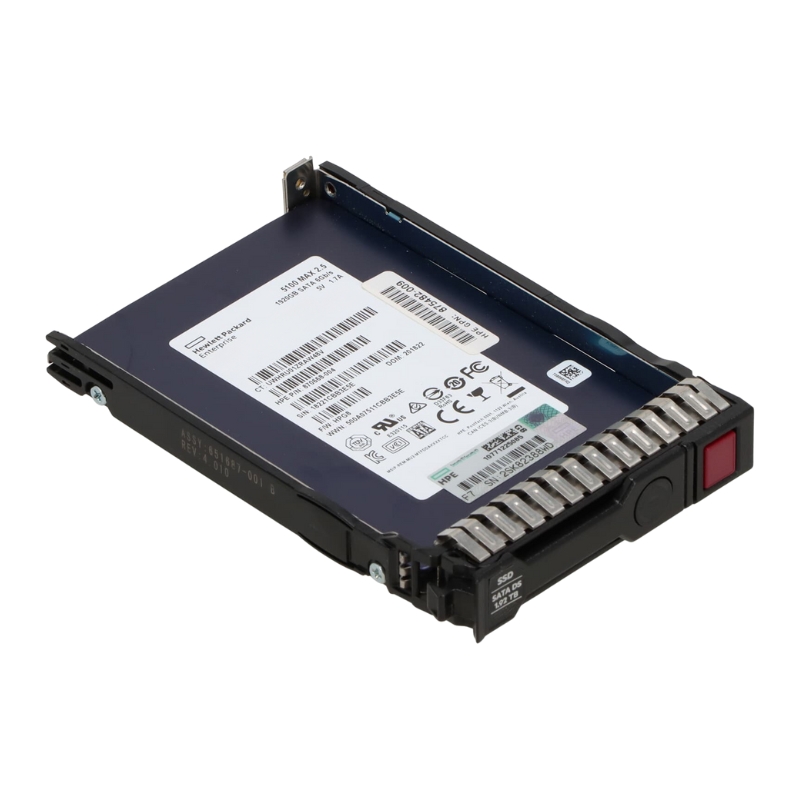


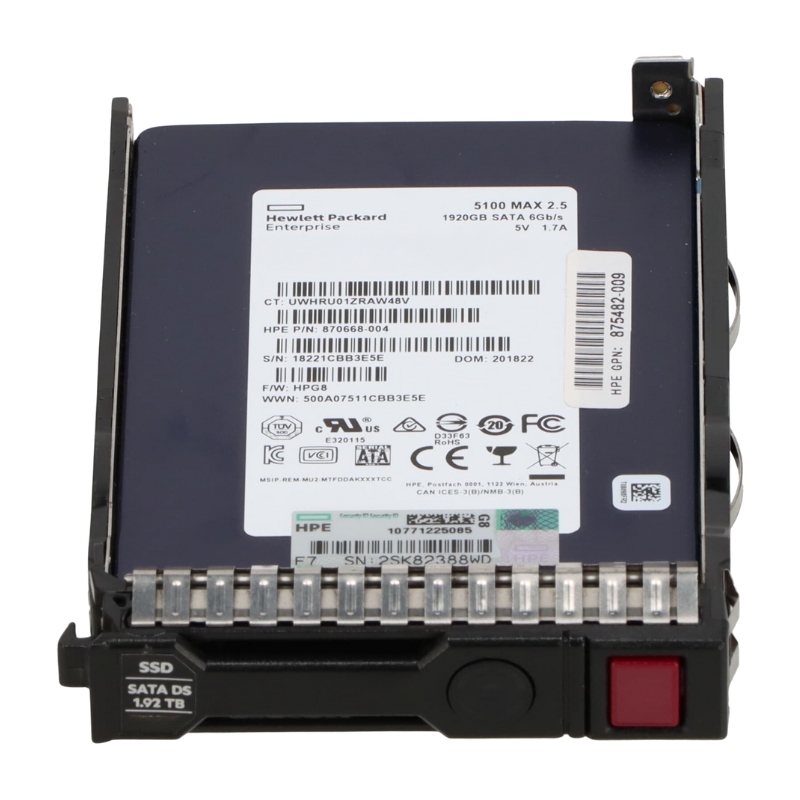
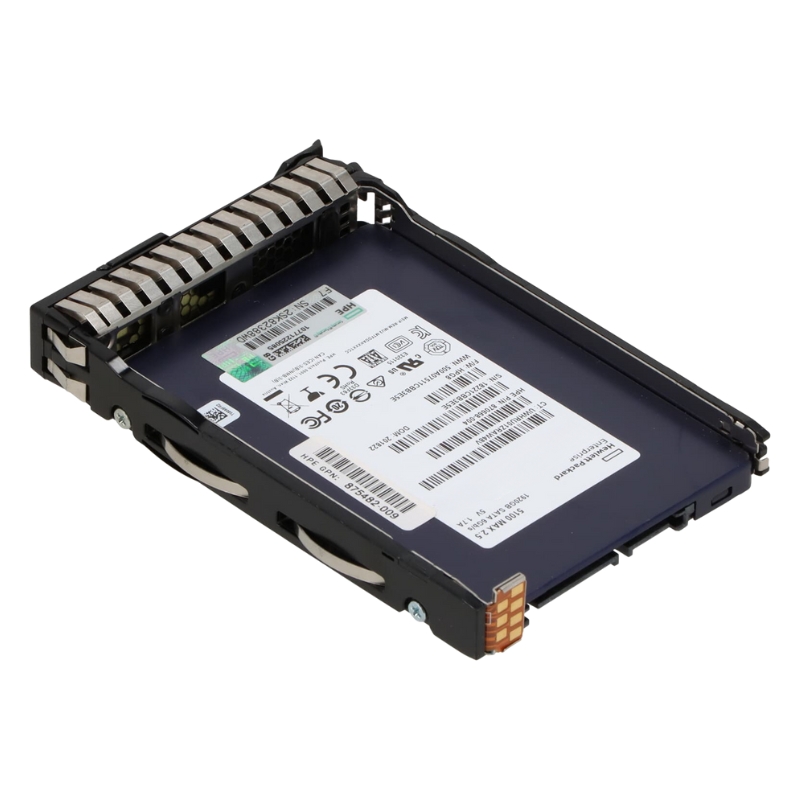
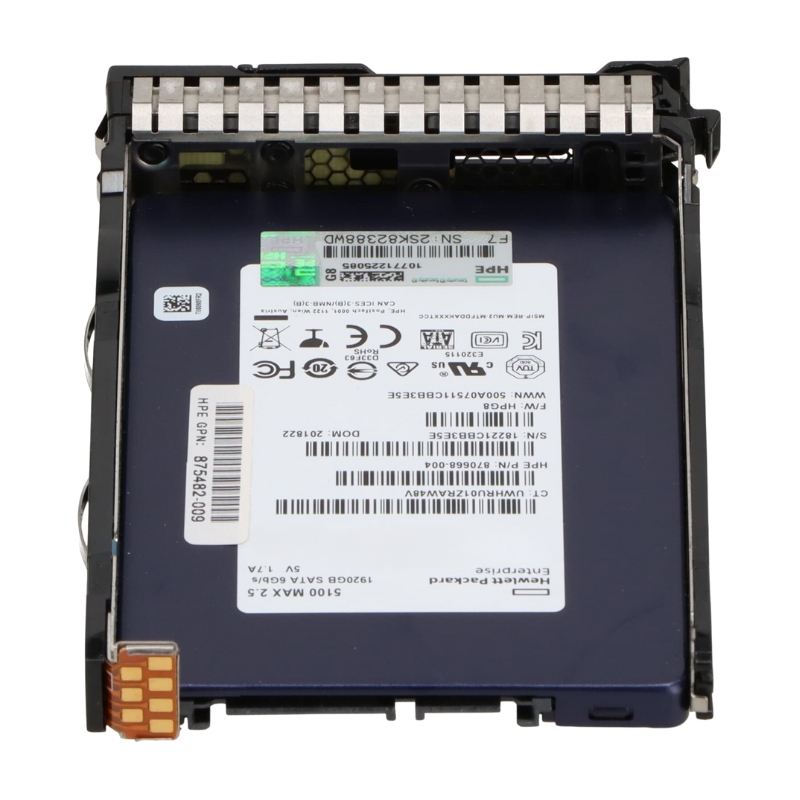
HPE P47999-B21 1.92TB SATA 6GBPS Mixed Use SC SFF Solid State Drive. New Sealed in Box (NIB) with 3 years Warranty
The HPE P47999-B21 1.92TB SATA 6Gbps Mixed-Use SC SFF SSD delivers dependable storage performance for modern enterprise systems. Designed for balanced workloads, this small-form-factor solid-state drive ensures improved reliability, swift data handling, and energy-efficient operation.
The HPE P47999-B21 1.92TB SATA SSD represents a critical component in modern data center infrastructure, engineered specifically for environments demanding a balanced blend of read and write performance. As a Mixed-Use, read-intensive drive, it occupies a vital niche between cost-effective read-intensive drives and high-endurance write-intensive models, offering an optimal price-to-performance ratio for a broad spectrum of enterprise applications.
Mixed-Use Solid State Drives are designed to handle workloads that impose a significant but balanced demand on both read and write operations. Unlike Read-Intensive (RI) drives optimized for lighter write patterns (e.g., web serving, boot drives) or Write-Intensive (WI) drives built for extreme write endurance (e.g., high-frequency transaction processing, logging), Mixed-Use (MU) drives provide a robust middle ground.
This specific model is a 1.92TB, 2.5-inch Small Form Factor (SFF) drive utilizing the SATA 6Gb/s interface. It is a cornerstone of the HPE Value Endurance series, designed to provide reliable, high-performance storage for HPE ProLiant, Apollo, and Synergy servers.
The 2.5-inch Small Form Factor is the industry standard for modern server storage bays. It allows for significantly higher storage density within a server chassis compared to older 3.5-inch drives. For example, a single 2U server can typically hold up to 24 SFF drives, maximizing terabyte-per-rack-unit efficiency, which is crucial for scalable data center design.
While NVMe has become the standard for top-tier performance, the SATA interface remains highly relevant in the enterprise. The SATA 6Gb/s interface, with a theoretical bandwidth of ~600 MB/s, provides ample throughput for many applications and is a cost-effective solution for capacity-optimized storage tiers. Its simplicity and broad compatibility across server generations make it a reliable and accessible choice for IT departments.
The 1.0 DWPD and 3500 TBW ratings are the hallmarks of a true Mixed-Use drive. This endurance is achieved through a combination of high-quality components and sophisticated firmware.
The P47999-B21 utilizes 3D TLC (Tri-Level Cell) NAND memory. 3D NAND stacks memory cells vertically, increasing density and reliability while reducing cost per gigabyte compared to planar NAND. While MLC (Multi-Level Cell) was traditionally used for high-endurance drives, advancements in 3D TLC, combined with robust controllers and over-provisioning, now allow it to meet the demanding requirements of enterprise mixed-use workloads.
A 1.92TB drive contains more than 1.92TB of physical NAND. This extra, unadvertised capacity is the Over-Provisioning (OP). It serves critical functions: it provides spare blocks to replace those that wear out, acts as a buffer for garbage collection, and improves write amplification. This is a key factor in achieving the drive's high TBW and consistent long-term performance.
The drive's controller uses sophisticated wear-leveling algorithms to distribute write and erase cycles evenly across all the NAND blocks. This prevents any single block from wearing out prematurely, thereby extending the overall lifespan of the drive and ensuring data integrity.
Enterprise environments cannot tolerate data corruption. The P47999-B21 is equipped with Power Loss Protection (PLP), often involving onboard capacitors. In the event of a sudden power failure, these capacitors provide enough temporary power for the drive's controller to complete any in-progress writes and flush data from volatile cache to the non-volatile NAND memory. This ensures data-at-rest integrity is maintained, a non-negotiable requirement for business-critical applications.
The HPE P47999-B21 is not a one-size-fits-all solution; it is strategically optimized for specific server roles and applications that benefit from its mixed-use profile.
Virtualization hosts (e.g., VMware vSphere, Microsoft Hyper-V) run multiple virtual machines (VMs) on a single physical server. This creates a highly randomized I/O pattern with a mix of OS boot operations, application reads, and write activities from logs, databases, and user data. A read-intensive drive can become a bottleneck under such loads, making the P47999-B21 an ideal choice for general-purpose virtualization.
VDI boot storms, where hundreds of virtual desktops start up simultaneously, generate an intense burst of read I/O. However, during normal operation, user profiles, applications, and data generate a steady stream of writes. The balanced performance and endurance of this Mixed-Use drive make it perfectly suited for housing VDI linked clones or persistent disks.
Applications like Microsoft Exchange Server, SharePoint, and team collaboration platforms serve a high volume of read requests (e.g., fetching emails, documents) while simultaneously processing a continuous stream of writes (e.g., new emails, saved edits, version history). The consistent low latency of the SSD improves user experience, while its 1 DWPD endurance guarantees longevity.
For relational databases (e.g., Microsoft SQL Server, MySQL, PostgreSQL) that support departmental applications or web services, I/O is a complex mix of transaction log writes (sequential) and data page reads/writes (random). While high-transaction OLTP systems may require NVMe or Write-Intensive drives, many medium-duty databases will perform excellently and cost-effectively on the P47999-B21.
Using this SSD as a boot drive for HPE ProLiant servers provides extremely fast server OS (Windows Server, Linux) boot times and rapid application/service startup. Its mixed-use endurance is more than sufficient for the logging and system update writes of an OS drive, future-proofing the server for its lifecycle.
Within the HPE Synergy composable infrastructure, the Image Streamer module deploys OS images statelessly to compute modules. The high read speed and reliability of the P47999-B21 are ideal for storing these golden images, enabling rapid and reliable provisioning of hundreds of servers.
Purchasing an HPE genuine drive like the P47999-B21 provides significant advantages over third-party SSDs, ensuring optimal performance, management, and support within the HPE server ecosystem.
When installed in an HPE server with a Genuine HPE Smart Array controller (e.g., the HPE Smart Array E208i-p, P408i-a), the drive firmware is tuned to work seamlessly with the controller's caching and RAID algorithms. This deep integration can enhance performance, improve data safety, and provide more accurate drive health monitoring.
HPE Integrated Lights-Out (iLO) management firmware provides deep visibility into the drive's status. Administrators can monitor SSD health, temperature, remaining life percentage, and predictive failure alerts directly from the iLO web interface, enabling proactive maintenance and preventing unexpected downtime.
HPE drives report extensive S.M.A.R.T. (Self-Monitoring, Analysis, and Reporting Technology) attributes. HPE's analytics tools can interpret this data to predict potential drive failures well in advance, allowing for planned, non-disruptive drive replacements.
HPE rigorously tests and validates firmware updates for its drives within its server platforms. These updates are easily deployed through HPE OneView or the HPE Service Pack for ProLiant (SPP), ensuring compatibility, addressing potential issues, and adding new features. Using a non-HPE drive can void server support and lead to compatibility problems during firmware updates.
To make an informed decision, it's essential to understand where the P47999-B21 sits relative to other drives in the HPE portfolio and the broader market.
Compare this drive to an HPE Read-Intensive model, such as a 1.92TB RI SATA SSD. The RI drive would have a lower DWPD (e.g., 0.3-0.5) and a lower TBW. While potentially slightly cheaper, it would not be suitable for applications with significant write components, as it would wear out more quickly and might throttle performance under sustained writes.
Conversely, a 1.92TB Write-Intensive SATA or SAS SSD would offer a much higher DWPD (e.g., 3-10) and TBW. However, this comes at a significantly higher cost per gigabyte. For many workloads, this extreme endurance is overkill and represents an unnecessary capital expenditure. The Mixed-Use drive provides the "sweet spot."
Best for: Cost-effective capacity, general-purpose workloads, high-density storage servers, boot drives. Limitation: Interface bottleneck (~600 MB/s) compared to newer standards.
Best for: Mission-critical, high-availability environments requiring dual-porting (two paths to the drive for redundancy), slightly higher performance than SATA. Consideration: Higher cost than SATA.
Best for: Performance-critical applications requiring the lowest latency and highest throughput (multiple GB/s). Consideration: Highest cost, requires specific NVMe-enabled server bays and PCIe lanes.
The P47999-B21 is the optimal choice when SATA-level performance is sufficient, and the priority is a balance of cost, capacity, and endurance for mixed workloads.


 Contact Us
 Information
 Catalog
 Solid State Drives (SSD)
 Network Switches
 Hard Disk Drives
 HBA & Controllers
 PC & Servers
 PC & Server Memory
 CPU & Processors
 Network Routers
 Power Supplies
 Tape Drives & Libraries
 Network Devices
 Computer & Network Cables