(7% discount is applied at checkout)
Cart is empty
Your go-to destination for cutting-edge server products
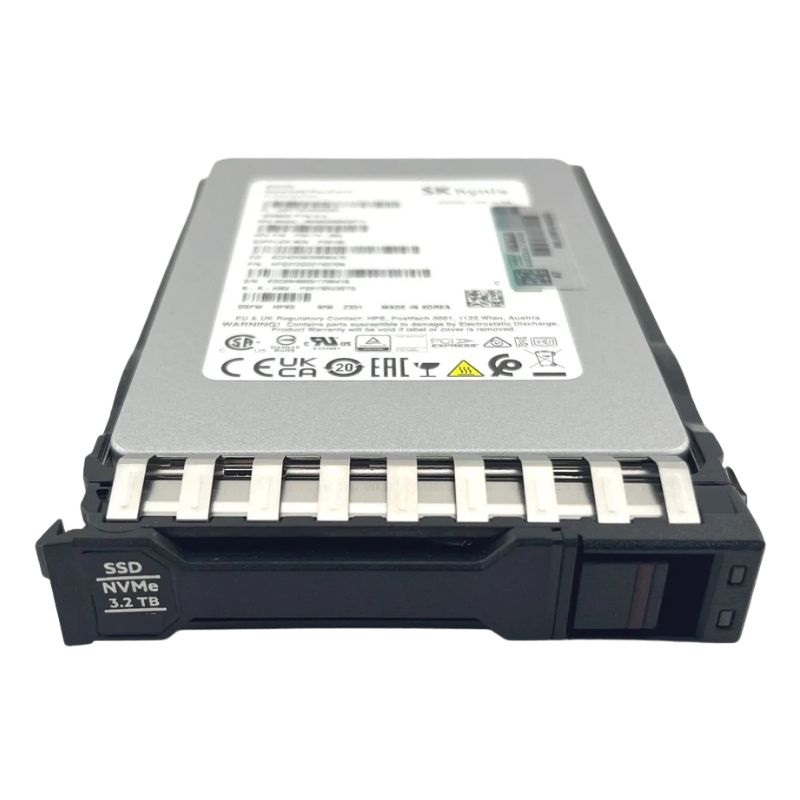


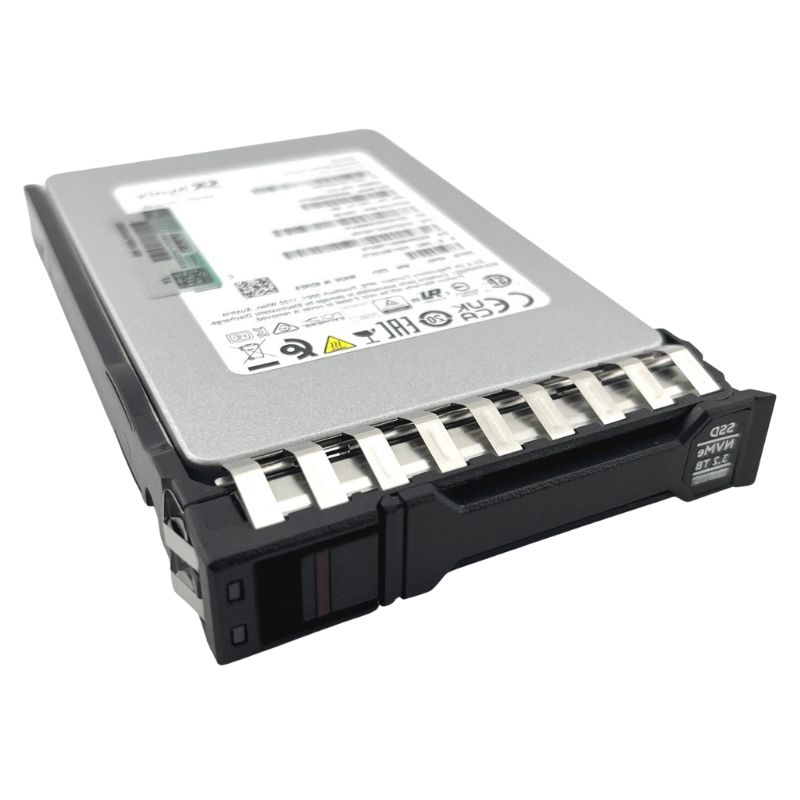
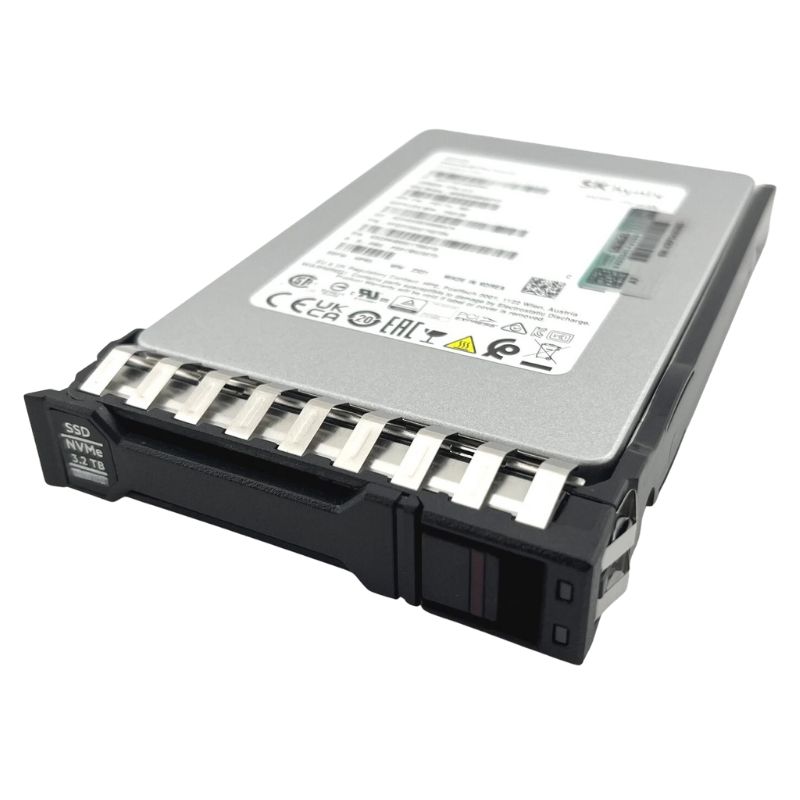
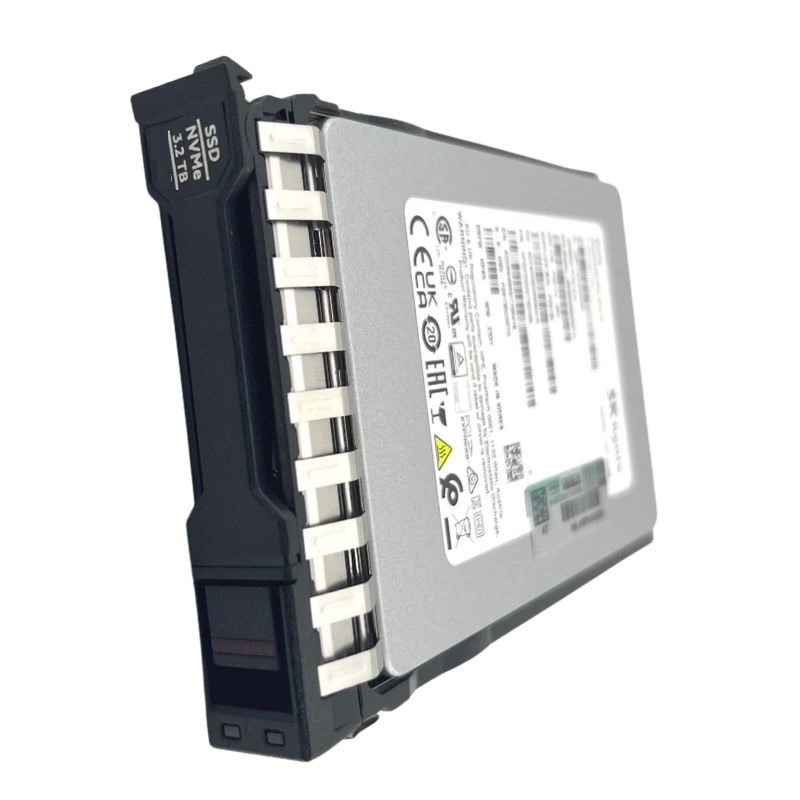
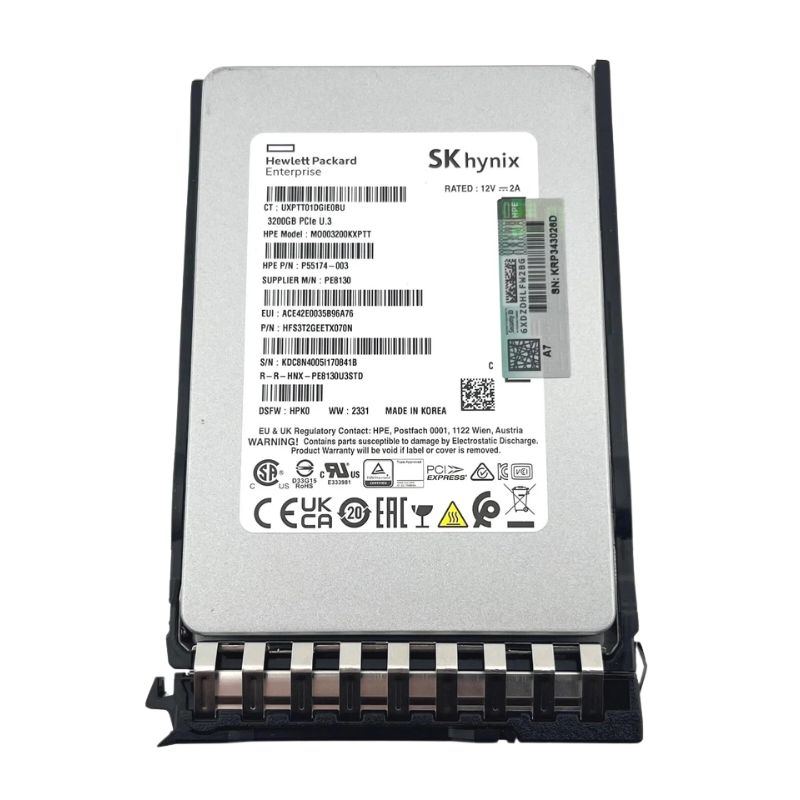
The HPE P40494-B21 is engineered to deliver dependable mixed-use performance for modern data environments. Designed with a compact 2.5-inch SFF U.3 form factor and built on Gen4 NVMe architecture, this SSD ensures swift response times, elevated throughput, and long-lasting endurance for both read-intensive and write-balanced workloads.
This NVMe Gen4 SSD offers impressive benchmark values that help data-heavy workflows operate at maximum consistency. High IOPS, low latency, and rapid throughput make it a strong choice for enterprise servers that require minimal delays and smooth multi-tasking performance.
The HPE P40494-B21 is fully compatible with various HPE enterprise servers, ensuring cohesive integration and optimized performance tuning.
The HPE P40494-B21 3.2TB NVMe Gen4 High Performance Mixed Use 2.5 Inch SFF Bc U.3 Cm6 Solid State Drive occupies a high-value niche within enterprise storage: modern data centers, virtualization platforms, high-performance databases, and mixed-use application stacks that require both fast random I/O and predictable sustained throughput. As a Gen4 NVMe device in a 2.5 inch small form factor with U.3 backplane compatibility and CM6 form-factor signaling, this SSD is designed for organizations that need a balance between raw performance, endurance, and compatibility with modern HPE server and storage architectures. The drive is typically marketed to system integrators, IT operations teams, and procurement professionals who prioritize low latency, strong mixed workload performance, and the reliability expected from HPE-branded components.
This category — HPE P40494-B21 3.2TB NVMe Gen4 High Performance Mixed Use — can be described as enterprise-class NVMe solid state drives optimized for mixed-use workloads. “Mixed use” indicates design trade-offs between read- and write-optimized drives; the drive targets environments with an even or variable ratio of reads and writes, including virtual desktop infrastructure, SQL/NoSQL databases, analytics nodes, and boot and cache tiers. The Gen4 NVMe interface delivers a higher PCIe lane speed compared with previous generations, enabling lower queue times and higher IOPS. U.3 (Universal 3) compatibility and CM6 naming reflect modern hot-plug and backplane standardization for server arrays and JBODs. The 2.5 inch SFF format ensures dense, rack-friendly deployments, while the 3.2TB capacity point is one of the most useful balances between storage density and cost-per-gigabyte for enterprise tiering and caching scenarios.
At the heart of this category are several core features that buyers should evaluate: NVMe Gen4 performance envelope, mixed-use endurance rating, enterprise-class firmware and power-loss protection, U.3/Bc compatibility for modern server backplanes, and thermal behavior for 2.5 inch SFF form factors. The HPE P40494-B21 is positioned to deliver lower latency and higher IOPS for random access patterns compared with SATA and older NVMe generations. Firmware features include namespace management, SMART telemetry, secure erase, and enterprise-grade error handling. Such drives are frequently deployed in RAID or erasure-coded arrays where predictable behavior under sustained load matters as much as peak throughput.
Performance is the headline metric for Gen4 NVMe drives. In practice, the HPE P40494-B21 is designed to reduce latency for random reads and writes while delivering high sustained throughput for sequential operations. Mixed-use workloads typically stress both queue depths and concurrency, and Gen4’s increased bandwidth allows modern server CPU and storage stacks to avoid bottlenecking on I/O. For virtualization hosts running dozens or hundreds of VMs, or for databases that use both transactional and analytics queries, the drive’s responsiveness translates into faster application response times, better user experience, and higher consolidation ratios per host.
Input/output operations per second (IOPS) measure random access capability and are critical for transactional workloads such as OLTP databases and VM boot storms. Latency measures the time for each I/O to complete and is often more visible to end users than raw throughput. Throughput, measured in megabytes per second, describes sequential read/write transfer rates and matters for backup restoration, streaming workloads, and large file transfers. The Gen4 NVMe architecture of the HPE P40494-B21 maximizes the interplay between these metrics: it enables higher IOPS and lower latency while maintaining ample sequential throughput, creating an attractive option for mixed workloads where both small-block random performance and large-block throughput are needed.
Not all workloads require Gen4 NVMe class performance, so it is important to profile target applications. This category is best suited to databases with frequent transactional updates, containerized microservices with heavy ephemeral I/O, virtualization platforms, and high-concurrency web applications. When capacity and cost point towards higher-density storage, these drives often serve as a performance tier in hybrid storage architectures, accelerating hot data and acting as write buffers to reduce wear on backend media. IT teams should gather I/O traces and evaluate read/write ratios, block sizes, and queue depths to confirm the mixed-use profile aligns with their operational goals.
Deploying the HPE P40494-B21 requires attention to platform compatibility. The drive uses U.3 connectivity, which is widely supported in modern HPE ProLiant servers and many third-party chassis that support universal backplanes. CM6 form-factor conventions relate to the connector pinouts and mechanical tolerances necessary to ensure hot-plug reliability. Administrators should verify server firmware and BIOS support for Gen4 NVMe devices, as well as any chassis midplane or hot-swap cage limitations. In many cases, system-level firmware updates are required to achieve full performance and feature parity.
When adding drives to dense server arrays or storage drawers, confirm that the backplane supports U.3 and Gen4 signaling; older backplanes may be limited to U.2, SATA, or PCIe Gen3 speeds. Hot-swap trays and retention mechanisms must meet mechanical tolerances for 2.5 inch SFF drives. Cable and power delivery paths should be checked because high-performance NVMe devices can draw more power under peak load than legacy SATA drives. Proper backplane ventilation and clear airflow paths are essential for thermal management, especially when multiple Gen4 drives are installed in adjacent bays.
Enterprise drives in this category typically include firmware features for telemetry, SMART reporting, power-loss protection, and namespace controls. HPE-branded drives often integrate with system management ecosystems such as HPE iLO and HPE Smart Storage utilities, enabling remote monitoring, firmware updates, and inventory control. IT administrators should integrate drives into existing monitoring pipelines to capture endurance metrics, remap events, and health indicators. Regular firmware updates may deliver performance optimization, improved error handling, and security patches; follow vendor guidance for staged rollouts to mitigate production risk.
Endurance metrics differentiate mixed-use drives from read-intensive or write-intensive classes. The P40494-B21 category is engineered with higher program/erase cycle tolerance and wear-leveling algorithms to support environments with moderate-to-high write volumes without risking premature drive failure. Enterprise-grade error correction, power-loss data protection, and consistent latency under load are signature qualities that reduce the risk of data corruption and maintain predictable performance. When reliability is a priority, organizations choose such drives for their stronger warranty terms and enterprise firmware support.
Terabytes written (TBW) and drive writes per day (DWPD) are practical endurance metrics. TBW represents cumulative lifetime write capability while DWPD normalizes workload writes to drive capacity per day. Mixed-use drives strike a compromise: higher TBW than read-optimized drives, but generally lower than write-intensive models. For capacity planning, translate projected daily write volume into expected DWPD to calculate expected lifespan, then apply redundancy strategies such as RAID, erasure coding, or tiering to protect against unexpected failures. Real-world deployments should include a buffer above calculated lifespans to allow for unforeseen peaks in write activity.
To preserve data integrity, drives in this category typically support end-to-end data protection features such as internal CRC checks, background media scans, bad block remapping, and advanced ECC algorithms. Power-loss protection ensures that in-flight data and metadata are flushed to non-volatile storage in the event of power anomalies, reducing the chance of file system corruption. Integrating these SSDs with storage stacks that support transactional journaling and atomic writes yields the highest data protection assurances for mission-critical applications.
High-performance NVMe drives produce more heat than legacy SATA drives, especially under sustained write loads. Proper thermal design is integral to maintaining consistent performance and avoiding thermal throttling. The 2.5 inch SFF format provides constrained space for heat dissipation; thus, chassis airflow design, heatsink options, and adjacent device placement become important deployment considerations. Administrators should monitor drive temperatures via SMART telemetry and plan for adequate cooling headroom when populating server bays with multiple drives.
Thermal throttling is a protective measure to prevent damage when temperatures exceed recommended thresholds. While occasional throttling under extreme load is expected, consistent throttling indicates inadequate cooling or excessive consolidation density. Design the server rack and airflow such that intake and exhaust flows are consistent, avoid obstructing airflow with cabling, and consider front-to-back cooling balances. In cases where ambient conditions are warm, active cooling upgrades or heatsink-equipped drive carriers can mitigate temperature-induced performance drops.
Security features are increasingly important in enterprise storage selection. Drives in this category often support hardware-based encryption standards such as TCG Opal, allowing drive-level data encryption for regulatory compliance and secure decommissioning. Self-encrypting drive (SED) functionality simplifies workflows for data sanitization at end-of-life, while secure erase commands ensure that sensitive data can be irrecoverably cleared. Evaluating the drive’s compatibility with existing key management systems and corporate encryption policies is essential for organizations handling regulated or personally identifiable information.
For industries subject to stringent regulatory frameworks, choose drives that support auditing and reporting features required by compliance regimes. Hardware encryption and secure logging help address regulatory controls around data at rest. Additionally, look for vendor-provided documentation and certifications that demonstrate compliance with environmental, safety, and interoperability standards relevant to your region or industry. A documented chain of custody for vendor firmware and validated supply chain practices can further decrease operational risk.
The P40494-B21 class fits well within multi-tier storage architectures where performance, endurance, and capacity are balanced across media types. Use cases include an NVMe performance tier for hot data, a large-capacity HDD tier for cold data, and an intermediate flash tier for warm data. These drives can operate as primary storage for high-performance virtual machines, as cache layers in hybrid arrays, or as persistent storage for container orchestration platforms. Designing effective tiering policies, eviction algorithms, and lifecycle transitions will maximize return on investment by placing the right data on the right media at the right time.
When used as a caching or write-back layer, these NVMe drives accelerate writes and reads for downstream, denser storage. The drive’s mixed-use endurance should be evaluated against expected cache churn; write-back caches may increase write amplification, which affects drive lifespan. Implement cache policies that balance performance gains with endurance impacts, and monitor caching hit rates and write amplification to tune cache sizing. A well-implemented NVMe cache reduces I/O on mechanical tiers and improves overall application responsiveness.


 Contact Us
 Information
 Catalog
 Solid State Drives (SSD)
 Network Switches
 Hard Disk Drives
 HBA & Controllers
 PC & Servers
 PC & Server Memory
 CPU & Processors
 Network Routers
 Power Supplies
 Tape Drives & Libraries
 Network Devices
 Computer & Network Cables