(7% discount is applied at checkout)
Cart is empty
Your go-to destination for cutting-edge server products
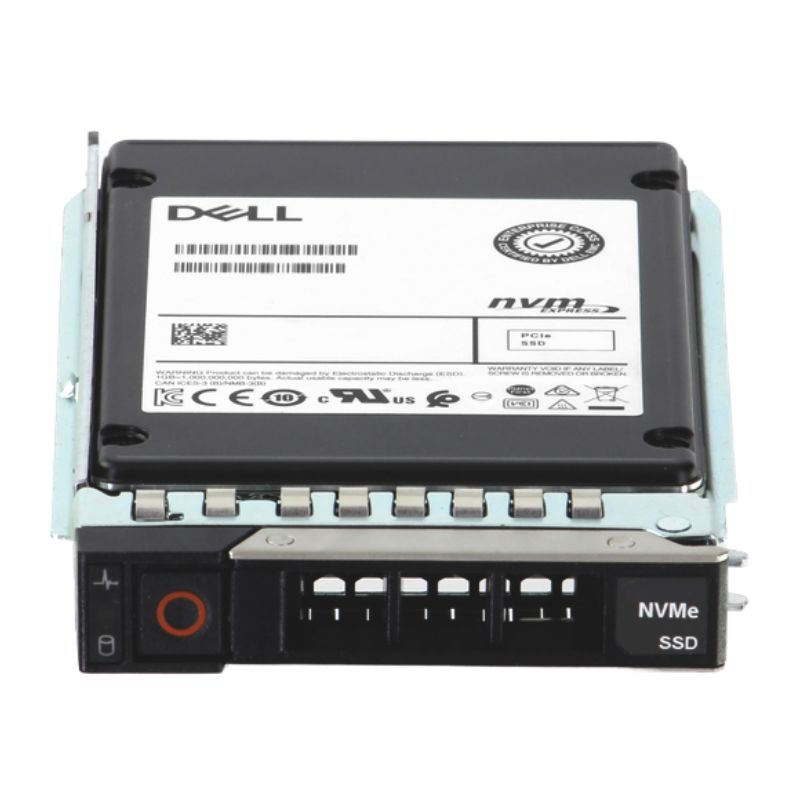


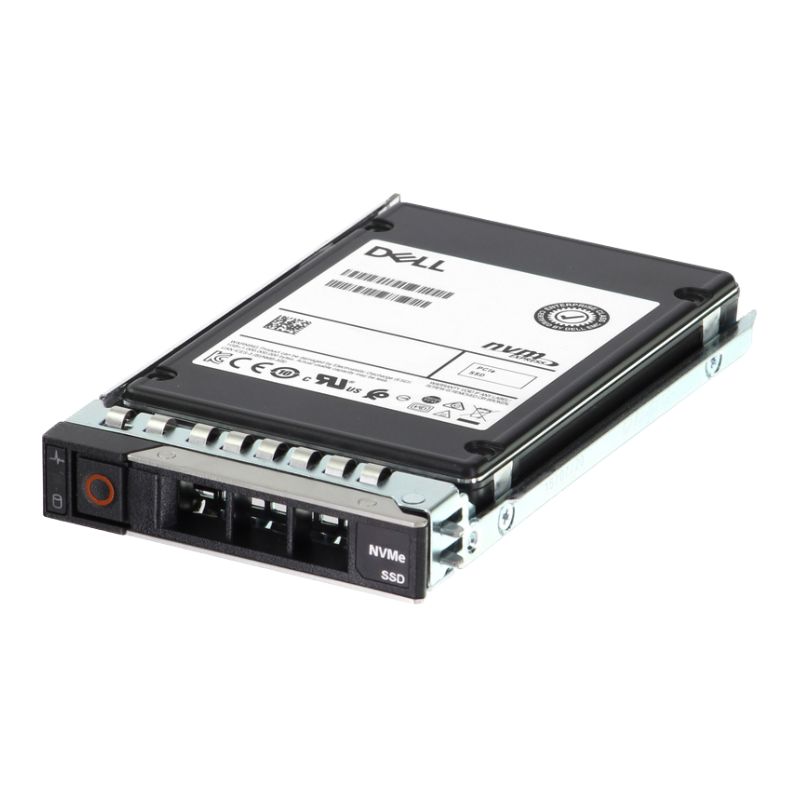
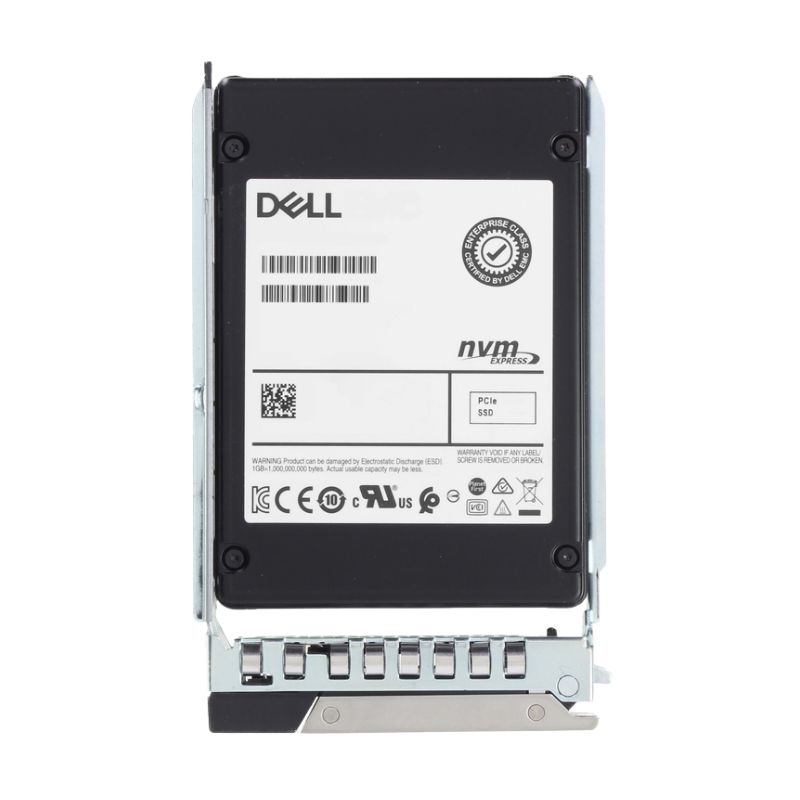
Dell R7T2D 61.44TB PCIE Gen4 4.0 X4 NVMe U.2 2.5inch Enterprise Class QLC 3d Nand SSD With Tray. New Sealed in Box (NIB) with 1-Year Replacement Warranty. Call.
The Dell R7T2D 61.44TB PCIe Gen4 x4 NVMe U.2 solid-state drive represents a breakthrough in ultra-dense data storage technology. Designed for modern enterprise applications, this extremely high-capacity SSD delivers exceptional performance, reliability, and efficiency for data-intensive environments such as cloud workloads, virtualized infrastructures, hyperscale deployments, and high-performance computing clusters.
Dell R7T2D 61.44TB PCIE Gen4 U.2 2.5inch SSD Overview
The Dell R7T2D 61.44TB PCIe Gen4 NVMe U.2 2.5-inch enterprise-class QLC solid state drive represents one of the most substantial leaps in large-capacity flash storage within the enterprise hardware ecosystem. This category of ultra-high-capacity NVMe drives focuses on enabling data centers, hyperscale infrastructures, cloud platforms, and large analytical environments to store petabyte-scale data while retaining efficient access speeds, predictable latency, and enhanced power management. The segment of enterprise QLC-based NVMe SSDs centers on balancing endurance with exceptionally high storage density, allowing organizations to consolidate workloads, reduce rack footprint, and simplify long-term storage scalability. These drives provide businesses with far more than simple data retention; they offer an optimized pathway to handle massive information growth without sacrificing operational efficiency.
The category of large-capacity QLC NVMe SSDs, such as the Dell R7T2D, has undergone dramatic transformation as enterprise storage requirements increase. Traditional SATA and SAS SSDs once dominated the space, but the modern era demands substantially higher throughput, reduced bottlenecks, and infrastructure-ready performance. The shift from spinning disks to solid state drives marked an important milestone, but the growth of unstructured data, virtual environments, AI/ML processes, and multi-layered application hosting necessitated even more scalable solutions. QLC NAND technology enables this scaling by storing four bits of data per cell, allowing significantly higher capacity per physical footprint. Combined with PCIe Gen4 architecture, which dramatically increases available bandwidth compared to earlier PCIe generations, enterprise environments now have access to drives that blend enormous capacity with improved speed consistency.
QLC NAND serves as the cornerstone of this category’s development. While earlier NAND types such as SLC, MLC, and TLC set the stage for SSD adoption, QLC introduces the ability to achieve extreme capacities without overwhelming hardware budgets. Although QLC traditionally has lower endurance characteristics, enterprise-grade firmware, overprovisioning methods, wear-leveling algorithms, and controller technologies have significantly improved its reliability. In enterprise environments where read-intensive or mixed workloads dominate, QLC drives are increasingly recognized as the ideal solution for replacing bulky hard drives. The Dell R7T2D, with its massive 61.44TB capacity, exemplifies how QLC storage can reshape infrastructure planning by consolidating storage arrays and reducing operating overhead.
PCIe Gen4 technology forms another vital foundation of this SSD category. Compared to earlier generations, PCIe Gen4 doubles the throughput capabilities, enabling faster queuing, superior I/O handling, and improved multitasking operations. This enhances the SSD’s ability to handle demanding enterprise workloads such as large sequential reads, extensive database retrieval operations, rapid indexing, log file processing, media library access, and big-data analysis tasks. The Dell R7T2D leverages this connectivity standard to ensure smooth data channeling between the SSD and system processors, reducing latency while boosting system responsiveness. The Gen4 interface also supports robust scalability for next-generation servers, ensuring long-term platform compatibility and future-proof infrastructure deployment.
This category of enterprise NVMe SSDs caters to environments demanding significant storage consolidation, such as cloud computing facilities, AI/ML data centers, multi-tier virtualization hosts, enterprise backup networks, and archival systems. As digital transformation accelerates, businesses must store exponentially increasing data volumes without expanding physical data center space. High-capacity NVMe SSDs like the Dell R7T2D are designed to fit this purpose by merging density with performance.
Cloud service providers require extremely dense and reliable SSD solutions to serve thousands of concurrent users and virtual machines. The Dell R7T2D class of SSDs helps streamline these operations by offering rapid access to stored datasets, consistent read speeds, and reduced operational delays. By providing tens of terabytes within a single drive, it allows operators to deploy more virtual machines per host, minimize hardware sprawl, and reduce electrical and cooling expenses in large-scale installations. Additionally, these drives simplify resource allocation and balancing across distributed cloud clusters, leading to more stable service delivery.
Compliance regulations, data retention laws, and organizational governance standards require long-term safe storage of logs, documents, media repositories, and transaction records. Enterprise NVMe drives in this category provide exceptional density, enabling organizations to store multi-year datasets on fewer drives, lowering maintenance and management complexity. The Dell R7T2D, with its sizeable 61.44TB capacity, serves as an optimal medium for backup environments where fast restore operations are crucial. Unlike traditional high-capacity hard drives, NVMe SSDs drastically reduce recovery times, allowing organizations to resume operations more quickly in disaster recovery scenarios.
Performance remains a core focus of this category, despite the high capacity emphasis. Although QLC drives may not match the endurance levels of SLC or TLC drives, enterprise engineering advancements ensure that QLC-based units achieve favorable performance in real-world conditions. The Dell R7T2D exemplifies the balance between speed, reliability, and density. Within this segment, performance hinges on optimized controllers, NVMe command structures, dynamic caching mechanisms, advanced wear leveling techniques, and robust thermal management.
The PCIe Gen4 x4 structure enables exceptional sequential read performance, which is essential for tasks such as data ingestion, archiving, large file transfers, and high-throughput media applications. Even random read performance, which impacts transactional tasks and database-driven operations, remains impressively stable. Within the category, SSDs like the Dell R7T2D maintain consistent IOPS under demanding workloads thanks to firmware-level optimization and enterprise-calibrated command handling.
Latency is one of the most defining factors of enterprise NVMe SSD performance. The category emphasizes predictable low-latency behavior under intense usage. The Dell R7T2D benefits from the NVMe architecture’s ability to support multiple hardware queues, each capable of processing thousands of commands simultaneously. This enables the drive to minimize bottlenecks in virtualized applications and multi-user environments. Enterprise QLC SSDs integrate intelligent caching layers that smooth out latency spikes and ensure quick responsiveness even under sustained operations.
The category of enterprise NVMe SSDs places considerable emphasis on energy efficiency. Despite offering extraordinary capacity, drives like the Dell R7T2D maintain optimized power states and advanced thermal balancing. By carefully controlling voltage demands and heat distribution, these drives help reduce infrastructure cooling costs and support higher-density rack deployments. Power loss protection features, capacitive hold-up mechanisms, and intelligent shutdown routines further ensure safe data retention in the event of power interruptions.
Reliability is a critical benchmark within the enterprise SSD category, especially when using QLC NAND. Manufacturers incorporate numerous reinforced mechanisms to safeguard data integrity, extend drive lifespan, and maintain stable performance. Enterprise-class drives undergo stringent validation processes to meet the operational standards demanded by modern organizations.
QLC NAND naturally features lower write endurance, but enterprise models like the Dell R7T2D compensate through significant overprovisioning and intelligent block management. These drives are optimized for read-intensive and mixed workloads, making them ideal for cloud data sets, media libraries, analytics storage, and virtualization layers. Wear-leveling algorithms distribute writes evenly across NAND cells to avoid premature degradation. Error correction systems monitor and resolve data inconsistencies before they escalate into critical issues.
Security remains a high priority for enterprise-grade SSDs. NVMe drives within this category support strong encryption standards that protect data both in transit and at rest. The Dell R7T2D participates in these security frameworks by integrating modern encryption methods that safeguard sensitive information commonly stored in enterprise and data center environments. Additional protections such as secure erase capabilities ensure data can be safely removed during repurposing or decommissioning operations.
One of the most significant advantages of this category is scalability. Enterprise infrastructures often experience exponential data growth, and traditional storage options lack the density and compactness necessary to adapt. High-capacity NVMe SSDs enable smoother scaling by consolidating storage resources while maintaining high performance.
By offering up to 61.44TB per drive, the Dell R7T2D allows organizations to reduce the number of total drives needed, limiting rack expansion and easing cabling complexity. This density benefit also reduces cooling requirements and helps optimize airflow systems. As a result, data centers can store significantly more data without expanding their physical infrastructure.
The flexibility provided by ultra-dense NVMe storage enables businesses to adapt to unpredictable future needs. Instead of continuously adding extra drives or storage arrays, organizations can deploy fewer high-capacity units while reserving space for future upgrades. This allows long-term planning to become more predictable and budget-friendly.
Servers supporting PCIe Gen4 NVMe standards benefit immensely from high-capacity drives like the Dell R7T2D. Integration with next-generation server platforms provides seamless performance scaling, better virtual machine density, and reduced bottlenecks across distributed workload clusters. The NVMe U.2 interface ensures compatibility with widely adopted server models used in enterprise and hyperscale operations.


 Contact Us
 Information
 Catalog
 Solid State Drives (SSD)
 Network Switches
 Hard Disk Drives
 HBA & Controllers
 PC & Servers
 PC & Server Memory
 CPU & Processors
 Network Routers
 Power Supplies
 Tape Drives & Libraries
 Network Devices
 Computer & Network Cables