(7% discount is applied at checkout)
Cart is empty
Your go-to destination for cutting-edge server products
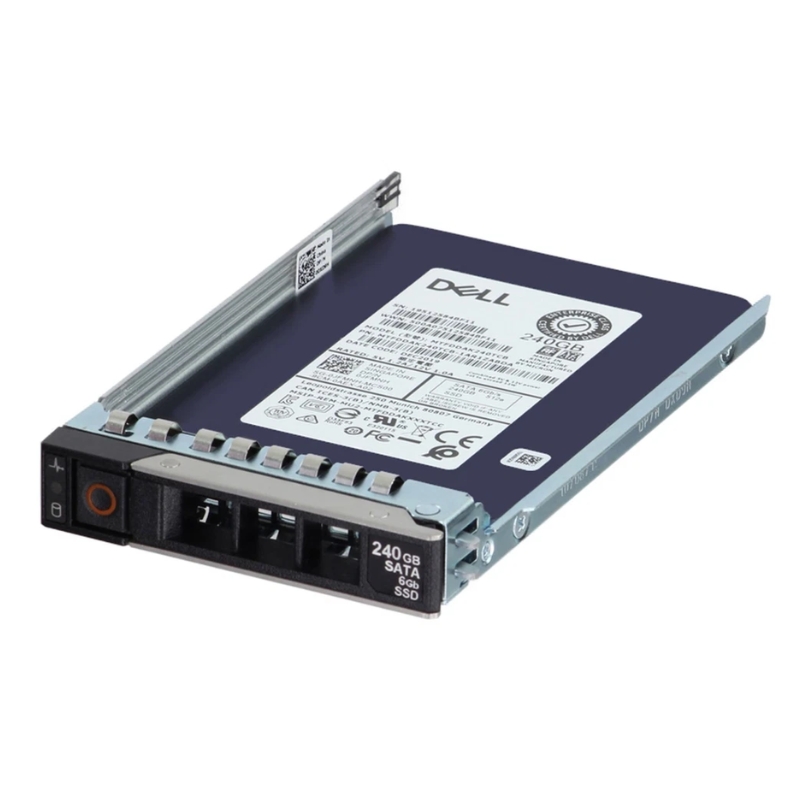


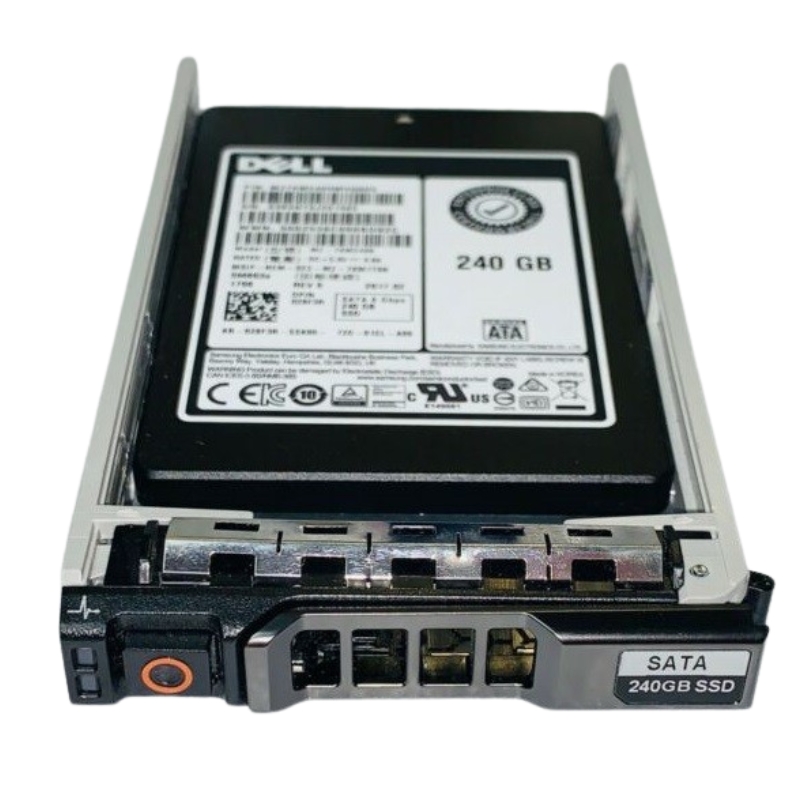
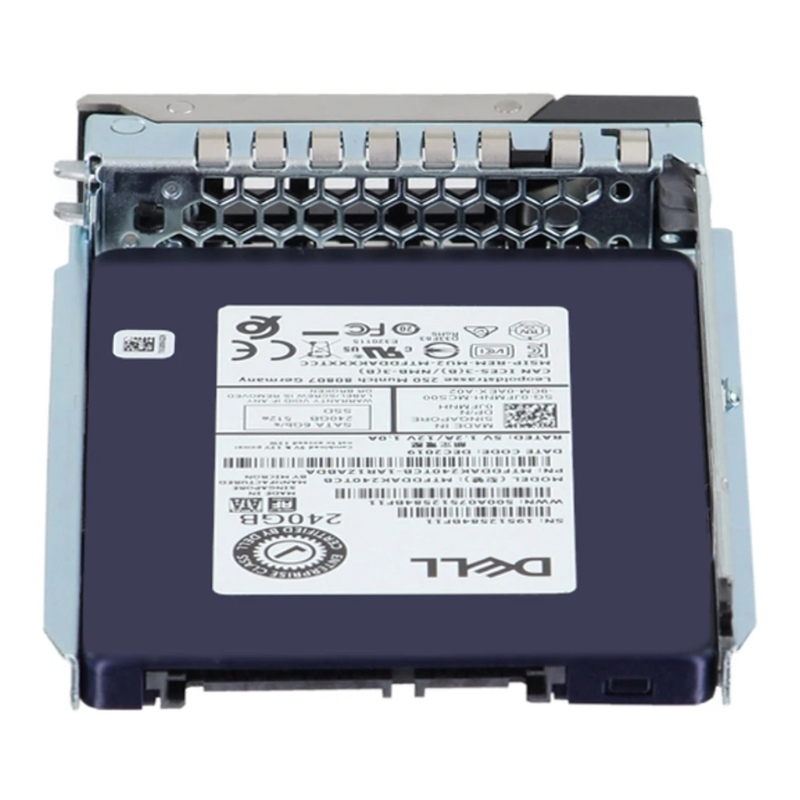
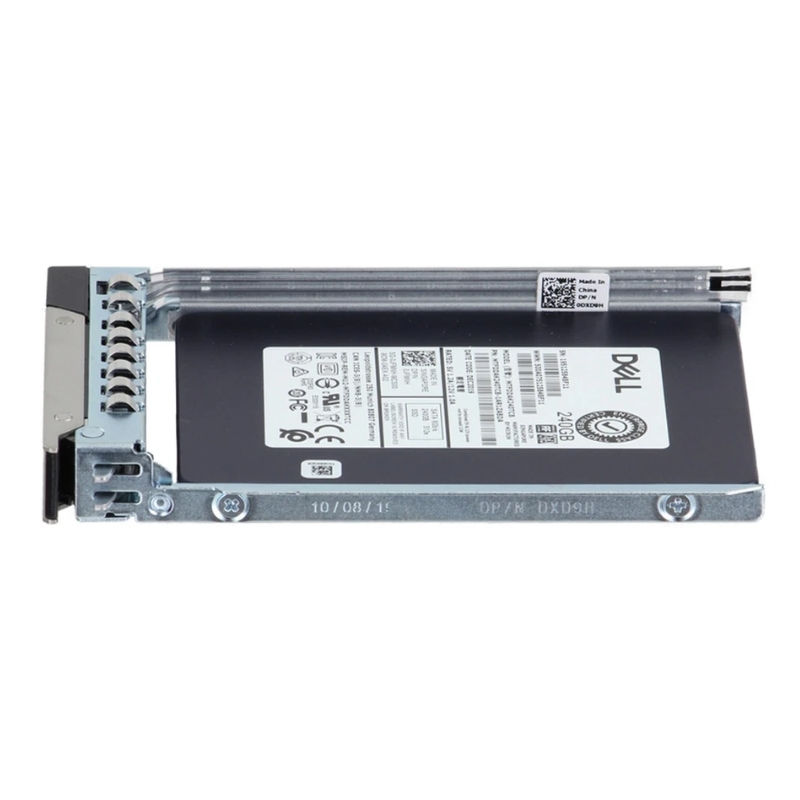
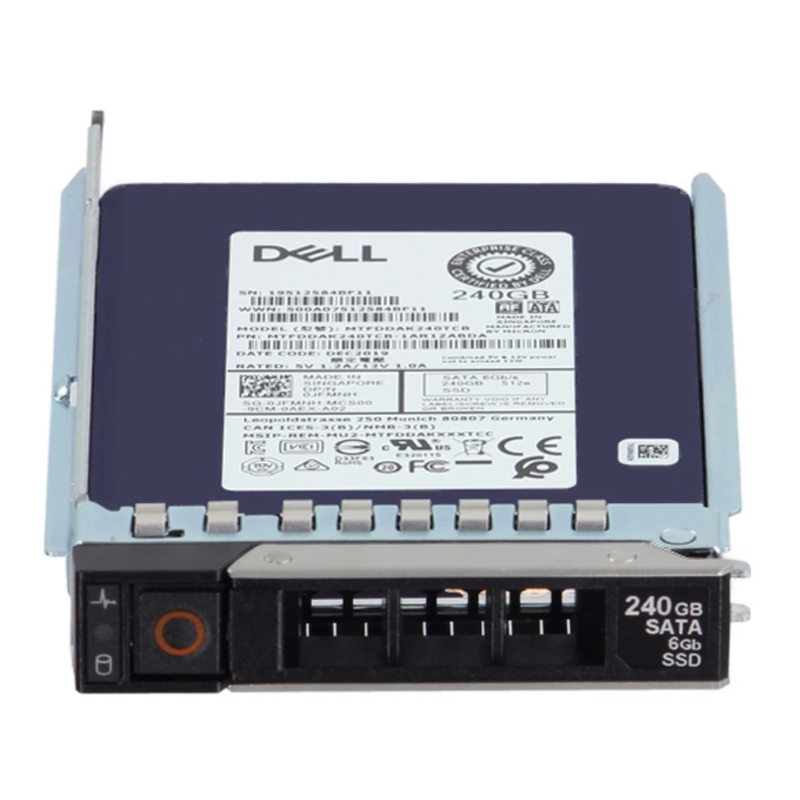
Dell 345-BDUK 240GB SATA-6GBPS Mixed-Use TLC 2.5Inch SSD with Tray. Excellent Refurbished with 1 Year Replacement Warranty
The Dell 345-BDUK 240GB SATA SSD is a dependable, Mixed-Use solid state drive designed to enhance system responsiveness, data integrity, and overall performance. Equipped with 3D NAND TLC flash and a SATA 6GBPS interface, this 2.5-inch SSD is ideal for enterprise servers, storage arrays, and performance-driven workloads.
The Dell 345-BDUK 240GB SATA 6Gbps Mixed Use TLC 2.5-Inch 7mm SSD with Tray occupies a specialized position within the enterprise solid state storage ecosystem, offering a combination of reliability, balanced endurance, efficient performance, and compatibility with Dell’s server and workstation platforms. As part of the broader category of enterprise-grade SATA SSDs, this drive is engineered to meet the demanding needs of mixed-use workloads, encompassing read and write operations with equal efficiency. Businesses that rely on stable, predictable, and cost-effective storage performance find this category essential for supporting a wide variety of enterprise applications, from transactional databases and virtual machine boot workloads to file hosting, operational software acceleration, and distributed storage architectures. The inclusion of a Dell-supplied tray enhances installation efficiency and ensures seamless integration with Dell PowerEdge systems, providing a complete and ready-to-deploy storage solution.
The mixed use SATA SSD category represents storage products that balance endurance with high read performance, making them suitable for enterprise environments where daily workloads involve both moderate write operations and extensive read tasks. The 6Gbps SATA interface remains one of the most widely compatible and reliable storage interfaces in corporate IT systems, enabling businesses to maintain backward compatibility with legacy infrastructures while still benefiting from the speed and stability of modern SSD technology. Within this category, the Dell 345-BDUK SSD stands out for its efficiency, durability, and consistency, ensuring that critical business functions operate smoothly without unnecessary delays or performance bottlenecks. The TLC NAND architecture provides a balance between performance and cost-effectiveness, making the drive an attractive option for medium-sized enterprises, departmental servers, and professional workstation environments.
The SATA interface continues to play a significant role in enterprise storage due to its universal compatibility, ease of deployment, and energy-efficient operation. In many IT architectures, SATA SSDs act as dependable workhorses, supporting user applications, server operating systems, and internal storage operations. This category benefits from the consistent transfer rates, simplified connectivity, and broad server support that SATA 6Gbps provides. Despite being slower than SAS or NVMe alternatives, the SATA class excels in cost efficiency and well-rounded performance stability, making it an ideal choice for applications that prioritize reliability and predictable performance over extreme data transfer speeds. For business systems requiring rapid boot sequences, fast data retrieval, and reliable storage for mixed workloads, SATA SSDs like the Dell 345-BDUK deliver dependable results while remaining budget-friendly.
The 2.5-inch 7mm form factor is a compact, lightweight design standard widely used across modern enterprise hardware. This category leverages the benefits of this form factor, which include space efficiency, power reduction, and simplified maintenance. The slim profile enables organizations to maximize storage density within server racks or workstation bays. This is especially beneficial in data centers in which high-density drive configurations are essential for optimizing available physical space. The form factor’s compatibility with hot-plug trays, including the Dell tray provided with the 345-BDUK model, facilitates quick service operations, smooth drive replacements, and scalable storage implementations.
The SSD’s solid-state architecture removes the mechanical limitations of traditional spinning hard drives. This eliminates vibration sensitivity, reduces risk of mechanical failure, and enhances overall drive resilience. In servers and workstations where continuous operation is expected, this durability becomes a crucial advantage. Data centers that deploy these drives benefit from the long lifespan and consistent reliability of SSD technology, protected by error correction and advanced data integrity features.
The internal circuitry and NAND-based architecture are engineered to consume less energy compared to traditional hard drives. This power efficiency lowers overall operating costs for enterprises, decreases heat output, and reduces cooling requirements for rack-mounted hardware. Over extended operational periods, this translates into substantial savings and environmental benefits for large-scale IT deployments.
The mixed use classification of this category highlights its optimization for environments where read and write operations occur with relatively balanced frequency. Unlike read-intensive SSDs that are optimized mainly for retrieval tasks or write-intensive SSDs designed for heavy write environments such as data logging or high-frequency transaction systems, mixed use drives provide a middle ground. This makes the Dell 345-BDUK a versatile option that can support a wide variety of enterprise workloads without sacrificing endurance or performance.
TLC NAND stores three bits of data per cell, offering higher storage density and better cost scalability than SLC or MLC alternatives. Although TLC has slightly slower write speeds compared to other NAND types, modern enterprise controllers and firmware optimization techniques ensure that performance remains stable and reliable across daily tasks. The category benefits significantly from this architecture, as TLC NAND supports larger storage capacities at more affordable price points while preserving the durability and performance needed for mixed enterprise workloads. The Dell 345-BDUK leverages optimized TLC technology to deliver rapid load times, efficient background operations, and predictable read/write behavior.
Drives in this category implement sophisticated wear-leveling algorithms that evenly distribute write cycles across the NAND cells. This ensures longer drive lifespan, reduces wear concentration, and minimizes the risk of premature failure. Combined with advanced error correction mechanisms, these drives maintain data integrity throughout their operational lifetime, even under moderate write-intensive workloads typical of enterprise environments.
Integrated caching technologies and controller-level optimizations enable the SSD to sustain stable write performance even in demanding mixed-use scenarios. By buffering write operations through specialized cache layers, the drive reduces latency and preserves long-term endurance. This consistency enhances application responsiveness and improves the reliability of data transactions.
The inclusion of a Dell-specific tray elevates the usability and deployability of the 345-BDUK SSD. These trays are engineered for tool-less installation within Dell PowerEdge systems, ensuring that IT technicians can quickly mount, replace, or upgrade drives with minimal effort. Hot-swap compatibility means that administrators can perform maintenance without shutting down the server, preserving uptime, and maintaining service continuity. This is especially beneficial for mission-critical operations, such as database servers, virtualization hosts, or cloud nodes, where system interruption is unacceptable.
Using the Dell tray included with this SSD ensures proper airflow, electrical contact, and drive alignment within server bays. This level of engineering precision eliminates common issues associated with third-party trays, such as misalignment, loose connections, or improper thermal integration. As a result, the drive achieves maximum reliability and performance when deployed within Dell PowerEdge infrastructures.
The tray system in this category facilitates scalability in multi-drive setups. When new storage capacity is required, IT teams can simply populate additional bays using identical trays, maintaining organizational uniformity and reducing the risk of misconfiguration. Large enterprises that cycle drives frequently benefit from this modular design philosophy, which reduces maintenance times and simplifies the storage expansion process.
Hot-swap compatibility enhances serviceability by enabling technicians to replace drives while protecting the integrity of storage arrays. RAID systems, in particular, rely on hotswap functionality to maintain redundancy during drive failures. By supporting rapid drive replacement within the tray system, organizations reduce risks associated with downtime, data loss, and interrupted workflows.
Although 240GB may appear modest compared to multi-terabyte enterprise SSDs, this capacity is ideally suited for specific operational roles within servers and workstations. Operating system boot partitions, application storage, logging systems, and virtualization nodes frequently require fast and reliable medium-sized drives rather than excessively large storage volumes. The Dell 345-BDUK SSD fulfills these niche yet essential roles with a performance profile optimized for responsiveness and stability.
This category significantly reduces system boot time, enabling faster startup sequences for servers and workstations. Applications hosted on the SSD load more rapidly, and overall system performance becomes smoother and more predictable. Organizations using hypervisors gain noticeable improvements in VM boot operations, snapshot handling, and resource provisioning.
Business applications such as ERP systems, CRM platforms, financial processing tools, and administrative software benefit from the quick access times of SATA SSDs. The category ensures that performance-intensive tasks, such as database read/write operations or application updates, occur seamlessly.
Enterprise workloads rely heavily on predictable latency. The SSD’s design ensures minimal read and write delays, improving user satisfaction and contributing to smoother multitasking in professional environments.
The Dell 345-BDUK SSD category suits a diverse range of enterprise applications, making it a versatile option for organizations seeking reliable mixed-use storage.
These drives are frequently deployed as dedicated boot volumes for server operating systems. Their reliability and speed ensure that critical server functions remain accessible and responsive.
Workstations benefit from hosting resource-intensive software on SSDs, improving load times and elevating user productivity. Graphic design suites, development environments, and financial tools all experience improved responsiveness.
Hypervisors depend on fast storage to spin up virtual machines efficiently. The mixed-use classification ensures that VM reads and writes perform reliably across various demands.
The category integrates essential enterprise features such as SMART monitoring, error correction, and durability metrics to ensure long-term reliability.
SMART technology enables organizations to detect issues early, plan maintenance, and avoid unexpected downtime.
ECC algorithms prevent data corruption and protect against bit-level errors, ensuring consistent reliability.
Custom firmware ensures that the drive operates consistently under mixed workloads, improving enterprise dependability.
The Dell 345-BDUK category contributes to lower operational costs through energy savings, simplified maintenance, and optimized storage usage.
Low power draw decreases cooling requirements and directly reduces energy expenses.
The mixed use category offers balanced performance without the higher costs associated with SAS or NVMe drives.


 Contact Us
 Information
 Catalog
 Solid State Drives (SSD)
 Network Switches
 Hard Disk Drives
 HBA & Controllers
 PC & Servers
 PC & Server Memory
 CPU & Processors
 Network Routers
 Power Supplies
 Tape Drives & Libraries
 Network Devices
 Computer & Network Cables