(7% discount is applied at checkout)
Cart is empty
Your go-to destination for cutting-edge server products
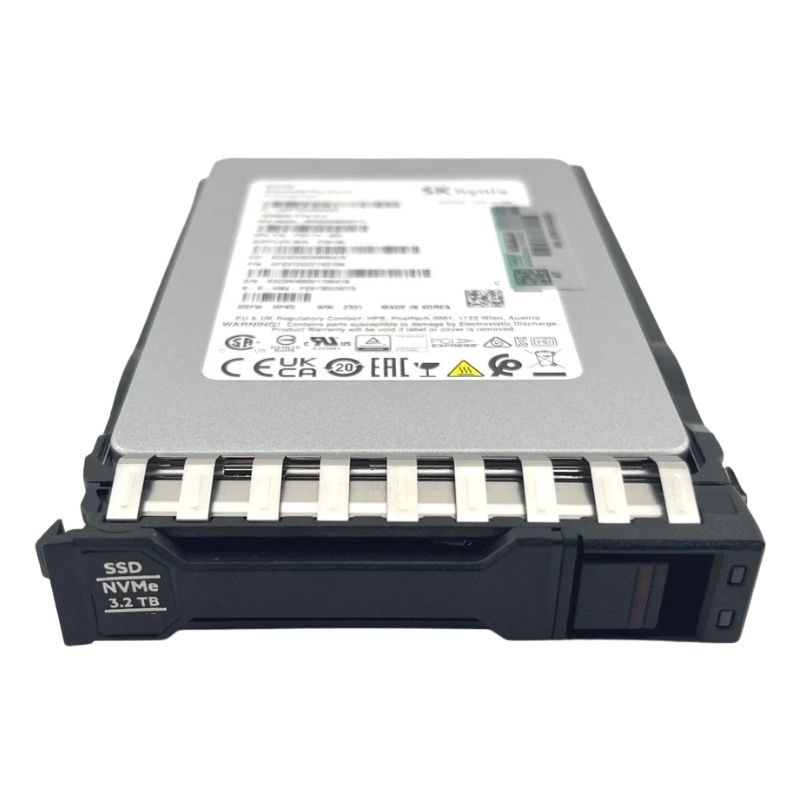


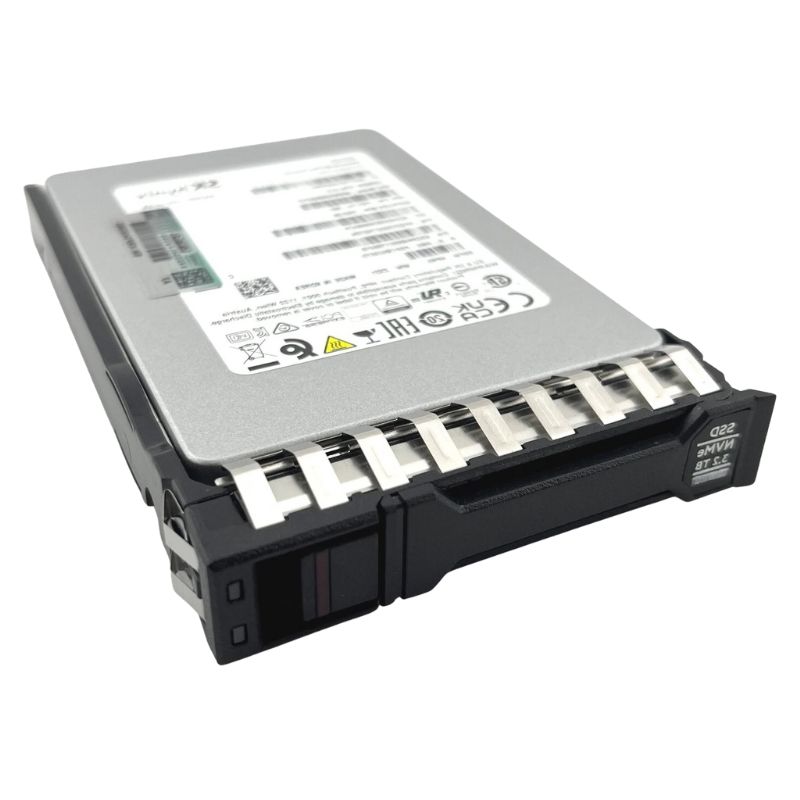
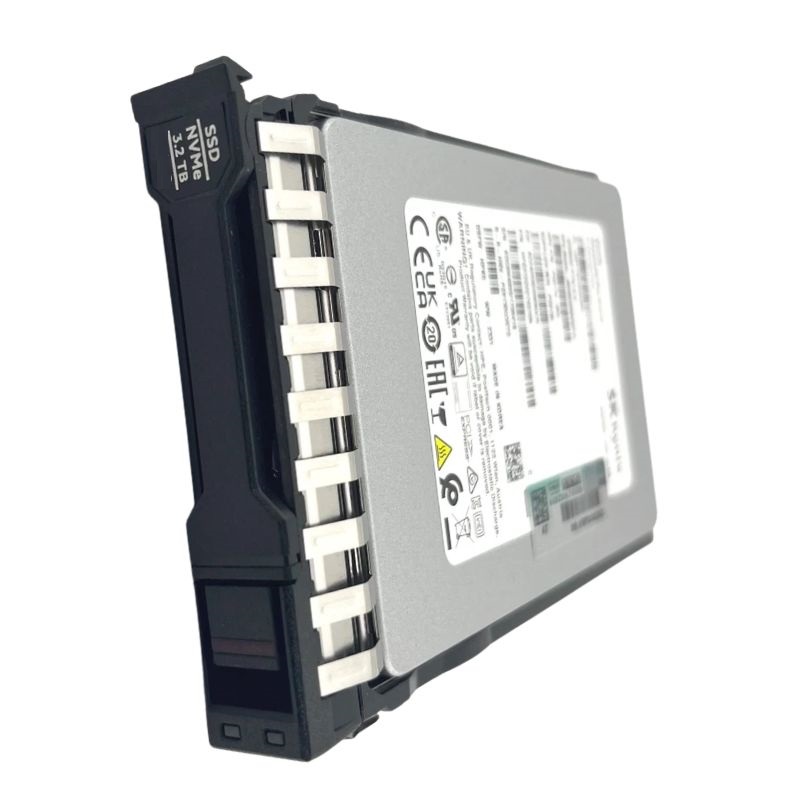
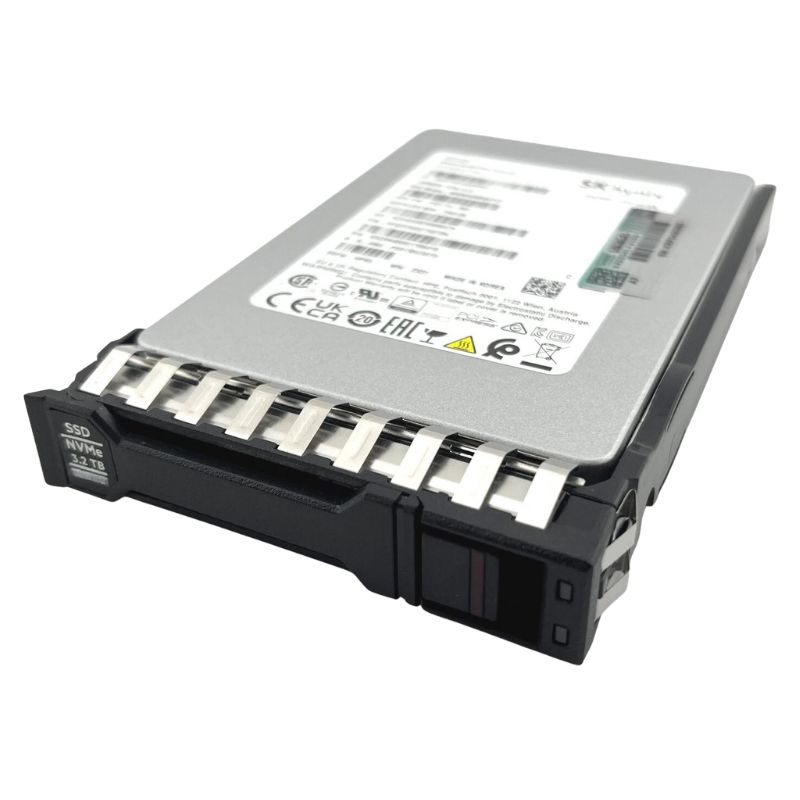
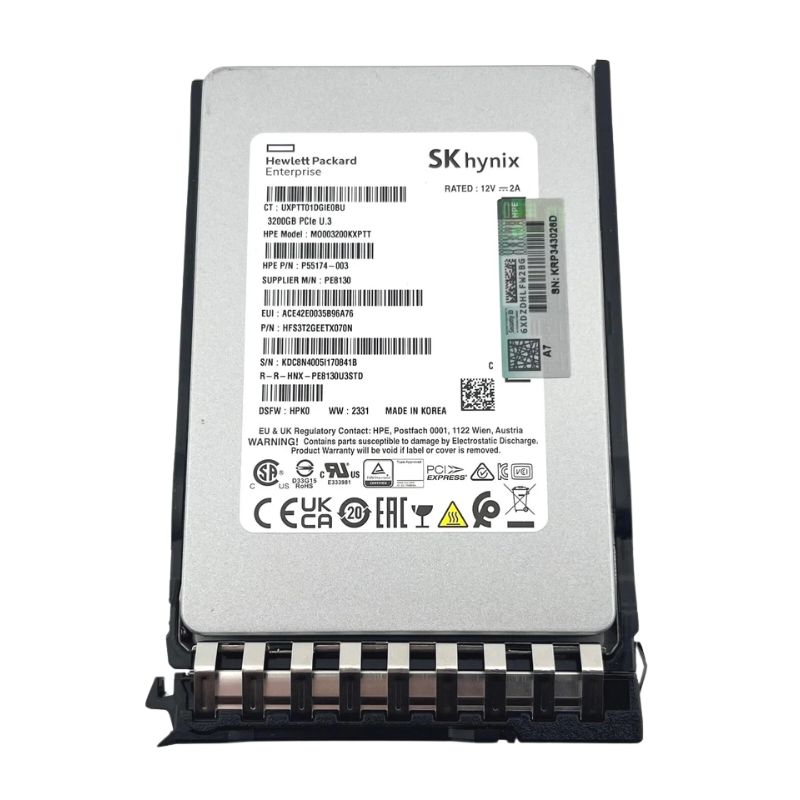
HPE P41005-001 Pm1735 3.2TB PCI Express 4.0 NVMe Mixed Use Bc 2.5Inch SFF U.3 Enterprise Internal Solid State Drive. Excellent Refurbished with 1 Year Replacement Warranty
This advanced HPE solid-state drive is engineered for organizations seeking exceptional durability, rapid data accessibility, and dependable mixed-workload performance. Designed around PCI Express 4.0 NVMe architecture, the drive ensures minimized latency, increased throughput, and seamless operation in demanding server environments.
This SSD integrates seamlessly with a wide range of HPE ProLiant servers, delivering powerful throughput and dependable performance across modern datacenter infrastructures.
The HPE P41005-001 PM1735 3.2TB PCI Express 4.0 NVMe Mixed Use BC 2.5-inch SFF U.3 enterprise internal solid state drive redefines platform responsiveness for modern data centers that demand a balance of high performance, predictable latency, and long life under mixed workloads. Built for mixed use, this PM1735 U.3 drive brings together PCIe Gen4 bandwidth, native NVMe command sets, and enterprise-grade durability to support transactional databases, virtual machine density, mixed read/write caching, HCI nodes, and latency-sensitive applications. The 3.2TB capacity slot balances usable capacity with strong performance and endurance characteristics, making the P41005-001 a practical choice for servers, storage arrays, and converged infrastructure that need low-latency persistent storage without sacrificing drive lifetime.
The PM1735 is packaged in a 2.5-inch small form factor (SFF) and uses the U.3 connector to deliver NVMe over PCIe Gen4 lanes. The U.3 form factor provides hot-swap compatibility and backwards electrical compatibility with U.2 and certain U.3 backplanes, allowing easy integration into modern enterprise servers and storage enclosures while leveraging improved connector standards for future-proof deployments.
As a PCIe 4.0 NVMe drive, the HPE P41005-001 utilizes the NVMe 1.x command set over multiple PCIe Gen4 lanes to realize substantially higher sequential I/O throughput and lower I/O latency than earlier SATA or PCIe Gen3 NVMe devices. The Gen4 interface is especially beneficial for workloads that require sustained high throughput and parallelism, enabling faster booting, quicker large file transfers, and improved database transaction rates.
The 3.2TB capacity provides a balance between raw storage density and enterprise reliability. This size suits use cases where resilient performance is required without stepping into the highest capacity tier. In high-density server configurations, multiple 3.2TB devices can be combined to deliver multi-terabyte local storage with predictable latency, which is useful for scale-out clusters and node-local NVMe caching tiers.
Mixed use means the drive is engineered to handle a combination of read and write patterns typical in enterprise environments: random reads and writes, sequential transfers, metadata operations, and sporadic bursts common in virtualization and database environments. The PM1735’s controller firmware balances garbage collection, wear leveling, and I/O prioritization to deliver steady IOPS and consistent latency across shifting workload mixes.
Real-world performance depends on system topology, queue depths, and host controller configuration, but users can expect the PM1735 to provide high sustained throughput for large sequential reads and writes while maintaining strong random IOPS for transactional workloads. NVMe queueing and PCIe Gen4 lanes reduce host-side bottlenecks and bring down average and tail latencies, improving application responsiveness for databases and user-facing services.
Enterprise deployments care as much about worst-case latency (tail latency) as average throughput. The drive’s firmware and enterprise feature set aim to minimize long latency spikes by scheduling background tasks and implementing power loss protections and deterministic internal housekeeping to prevent unacceptable response time outliers during heavy sustained operations.
Endurance for mixed-use drives is typically expressed in drive writes per day (DWPD) or total bytes written (TBW) over a warranty period. The PM1735 3.2TB is designed with endurance targets suited for enterprise mixed workloads—meaning it supports rigorous write activity rates while providing predictable lifetime. Selecting an appropriate endurance rating for your workload is a critical part of capacity planning and lifecycle management.
Enterprise NVMe drives incorporate power loss protection to help ensure in-flight data is safely committed to non-volatile media during unexpected power events. The PM1735 includes mechanisms to protect metadata and user data from corruption on abrupt power loss events, improving recovery reliability and minimizing the risk of file system or database inconsistency after an outage.
Smart monitoring and telemetry features deliver health indicators such as media wear, temperature, error counts, and percentage of life used. Integrating this telemetry into host monitoring systems enables predictive maintenance and automated drive replacement workflows, which are essential for maintaining data center availability and minimizing unplanned downtime.
Many enterprise NVMe drives support hardware-based encryption to protect data at rest. The PM1735 series often includes support for crypto engines and encryption key management to secure sensitive data without imposing host CPU overhead. When combined with enterprise key management systems, hardware encryption simplifies compliance with data protection regulations and simplifies secure drive decommissioning.
Secure erase capabilities allow for cryptographic or physical sanitization of the drive at end of life. Proper secure erase prevents data remanence and is part of an enterprise’s governance for hardware retirement and asset disposal. The U.3 form factor and firmware support make secure erase processes straightforward in managed data center environments.
For virtualization and virtual desktop infrastructure, predictable random IOPS and low latency are critical. The PM1735’s mixed-use profile helps maintain acceptable boot storm behavior and steady VM performance under varying I/O patterns, making it well suited for virtualization hosts that need to maximize VM density while retaining consistent service levels.
Transactional databases with balanced read/write behavior benefit from mixed-use NVMe drives. The PM1735 can sustain the transactional throughput required for OLTP systems and provide low latency for query responses. For analytics workloads that include heavy sequential reads, the Gen4 PCIe interface delivers the throughput necessary to accelerate large dataset scans.
When used as a cache tier or local content store, the PM1735 provides fast access to hot content, reducing network fetches and improving application responsiveness. In edge compute scenarios where space and power are constrained, a high-performance 2.5" NVMe U.3 drive with strong mixed-use characteristics is a practical choice for durable local storage.
Containers and microservices often spawn many small I/O operations and can generate mixed access patterns. The drive’s low latencies and robust handling of mixed I/O make it suitable for container hosts where many ephemeral and persistent containers share local storage resources.


 Contact Us
 Information
 Catalog
 Solid State Drives (SSD)
 Network Switches
 Hard Disk Drives
 HBA & Controllers
 PC & Servers
 PC & Server Memory
 CPU & Processors
 Network Routers
 Power Supplies
 Tape Drives & Libraries
 Network Devices
 Computer & Network Cables