(7% discount is applied at checkout)
Cart is empty
Your go-to destination for cutting-edge server products
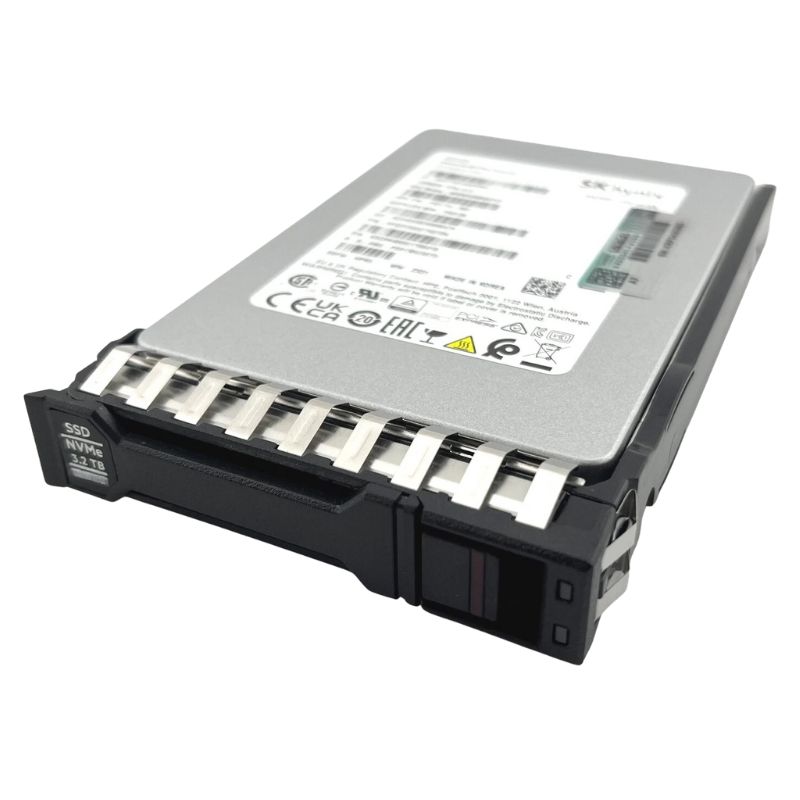


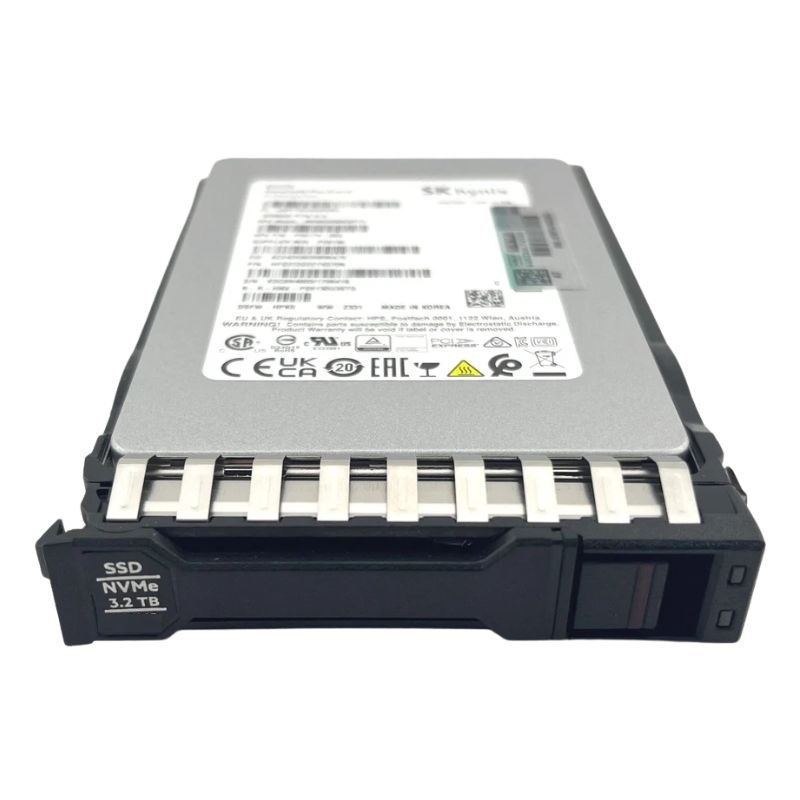
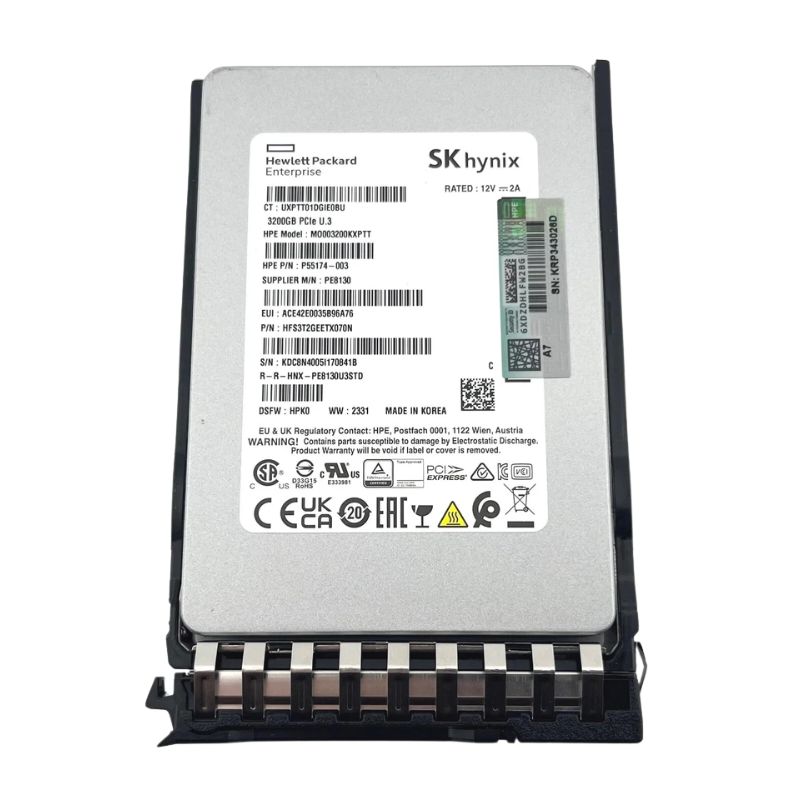
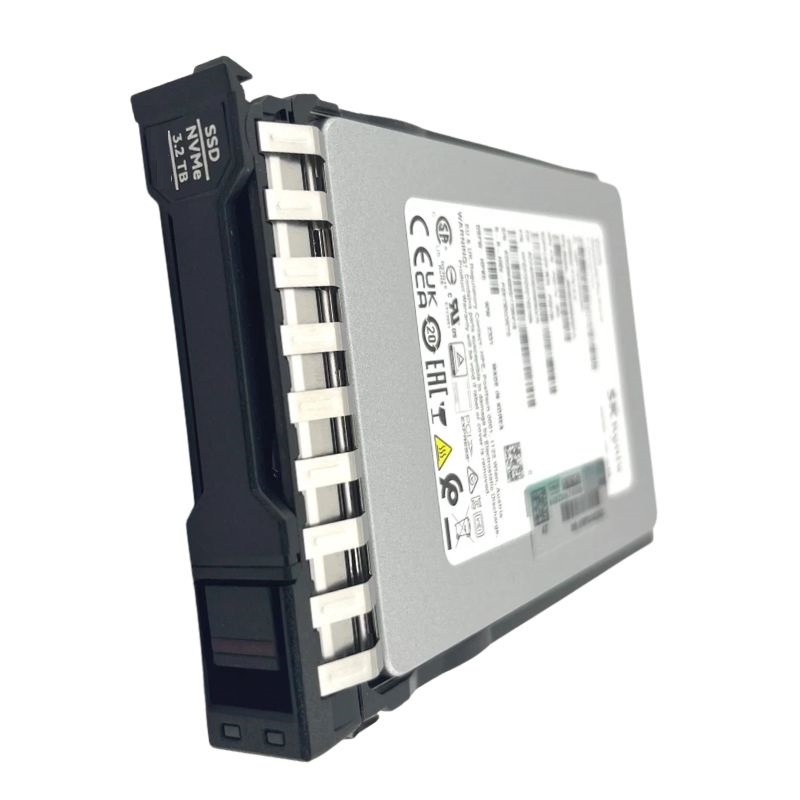
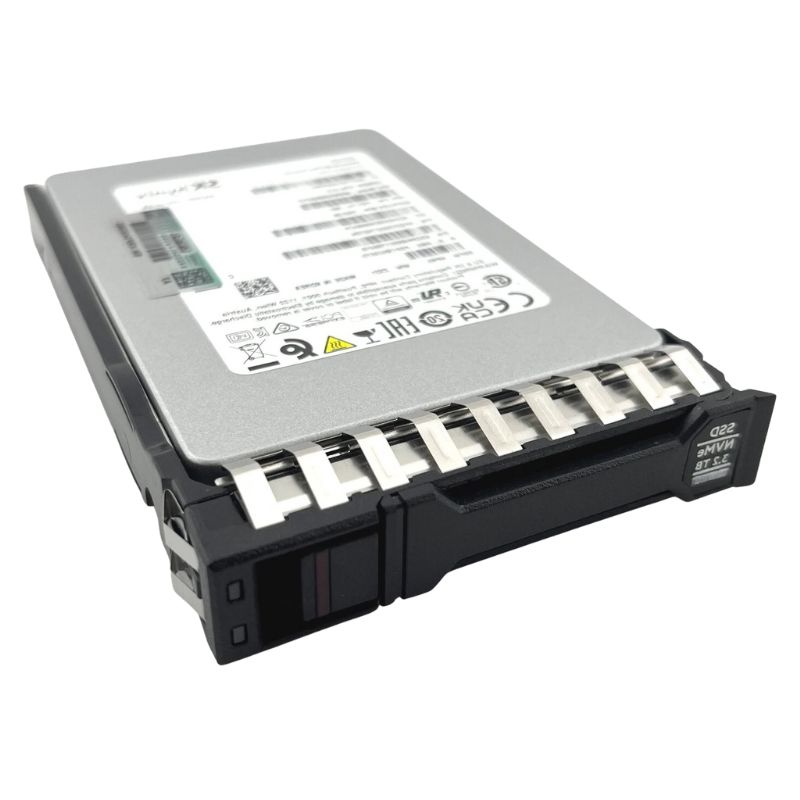
HPE P41519-001 3.2TB NVMe Gen4 High Performance Mixed Use 2.5 Inch SFF Bc U.3 Cm6 Solid State Drive. Excellent Refurbished with 1 Year Replacement Warranty
The HPE P41519-001 3.2TB NVMe Gen4 SFF drive delivers exceptional mixed‑workload capabilities, designed for environments requiring rapid data access, consistent responsiveness, and enterprise‑grade reliability. Its U.3 interface ensures seamless integration with modern infrastructures while maintaining outstanding endurance and throughput.
This SFF NVMe Gen4 module accelerates read/write operations with extremely low latency, ensuring smooth performance across virtualized platforms, data‑intensive applications, and enterprise datasets.
The combination of rapid queue processing and consistent latency positions this SSD as a dependable choice for environments demanding both efficiency and high responsiveness.
Engineered with Gen4 NVMe architecture, the drive pushes large‑file sequential workloads with impressive speed while ensuring stable performance across extensive operational cycles.
The HPE P41519-001 integrates seamlessly into the latest HPE server infrastructure, enabling optimized performance in enterprise environments.
The HPE P41519-001 3.2TB NVMe Gen4 High Performance Mixed Use 2.5 Inch SFF Bc U.3 CM6 Solid State Drive represents a class of enterprise-grade storage engineered for demanding mixed-use workloads that require a balance of high throughput, low latency, and strong endurance. This category description focuses on the traits that make the HPE P41519-001 and its subcategory compelling for modern data centers: the use of the NVMe Gen4 interface, the 2.5-inch small form factor (SFF) with U.3 connector compatibility, and firmware and hardware design tuned for mixed use (MU) workload profiles. The category is positioned for systems where consistent performance under concurrent read/write operations, secure data handling, and integration with server and storage arrays are essential priorities. Keywords central to this category include NVMe Gen4 performance, mixed use endurance, 2.5-inch U.3 enterprise SSD, HPE CM6 platform drives, and 3.2TB high-capacity SSDs.
This drive belongs to the 2.5-inch SFF (small form factor) family, using the U.3 (SFF-TA-1001) connector which enables compatibility with both U.2 and U.3 backplanes and supports hot-swap operation in modern server and storage chassis. U.3 provides the flexibility to deploy the drive in mixed SAS/SATA/NVMe environments when appropriate backplane support is available, simplifying upgrades and cross-platform replacement strategies. The Gen4 PCIe NVMe interface delivers a doubled per-lane bandwidth compared to Gen3 implementations, enabling substantially higher sequential throughput and improved random IOPS performance when paired with Gen4 host controllers.
The 3.2TB capacity point is a strategic balance for organizations that need substantial usable capacity while maintaining high performance and endurance characteristics. Mixed use designation indicates that the drive’s firmware, over-provisioning, and NAND selection are optimized to handle both frequent reads and significant write activity without sacrificing responsiveness. Mixed use SSDs are commonly selected by virtualization platforms, database systems, and general-purpose storage tiers that experience a blend of transactional and sequential operations. At 3.2TB, this drive supports dense deployments where rack-level capacity must be maximized without moving to larger physical drive sizes.
Performance expectations for the HPE P41519-001 class drives include high sequential read and write throughput consistent with Gen4 NVMe capabilities, coupled with robust random read/write IOPS that sustain multi-tenant workloads. Crucial to enterprise deployments are steady-state performance characteristics under sustained loads and QoS considerations that minimize latency spikes. Mixed-use drives emphasize predictable tail latencies across varied IO patterns. When sizing and benchmarking, operators should evaluate both peak and sustained performance numbers, measure latency percentiles such as p99 and p99.9 under realistic workload simulations, and validate performance on their targeted server platforms and drivers to ensure the drive meets application SLAs.
Endurance in this category is specified to support tenant and application mixes that generate continuous host writes without frequent drive replacement. The mixed-use rating communicates manufacturer-validated drive write endurance expressed either as drive writes per day (DWPD) or TBW (terabytes written) over the warranty period. Such drives typically include controlled background garbage collection, wear-leveling algorithms, and power loss protection to ensure data integrity after a sudden loss of power. The endurance profile is a core consideration when projecting drive lifecycle, procurement cadence, and capacity planning for write-intensive projects such as logging clusters, virtual machine disk images, and database transaction logs.
Enterprise NVMe drives in this category integrate several layers of data integrity and security features. End-to-end data path protection ensures that data moved between host and NAND is covered by CRC checks and protection codes, minimizing corruption risk. The drive firmware typically supports S.M.A.R.T. attributes, telemetry reporting, and advanced diagnostic reporting that can be consumed by server management tools and HPE-specific instrumentation. Drives also often include support for TCG Opal and secure erase capabilities for use in environments where data sanitization is mandatory between repurposing or decommissioning. These features combine to reduce risk in multi-tenant and compliance-sensitive environments.
Thermal performance is integral to reliability and sustained throughput. The HPE P41519-001 class drives are engineered for effective heat dissipation in 2.5-inch chassis environments. Thermal throttling behaviors are defined to prevent damage while preserving predictable performance under heavy sustained loads. Power loss protection circuitry—implemented either through onboard capacitors or firmware-managed flushing—protects in-flight data and metadata by ensuring critical buffers and mapping tables are committed to media in the event of sudden power interruption. For data center operators, balancing airflow, ambient temperature, and drive placement helps maintain the drive within its specified operational envelope and extends service life.
In virtualization platforms where multiple VMs share the same physical storage tier, mixed-use Gen4 NVMe drives provide the responsiveness and endurance to handle varied IO profiles from many guests. The 3.2TB capacity allows administrators to consolidate more VM images per drive, reducing footprint and simplifying management. Mixed-use tuning is particularly valuable where write amplification from snapshot operations and deduplication can increase write pressure on drives. When integrated into hyperconverged systems, these SSDs contribute to improved boot times, faster VM migration, and more consistent quality of service across multi-tenant workloads.
Transactional databases that require low latency for both reads and writes benefit from the balance this category offers. Mixed-use drives handle concurrent read/write queries and background compaction/maintenance tasks more gracefully than read-biased devices, which can suffer under heavy write loads. Analytical workloads that ingest data continuously and require timely query results also find value in this class of SSDs, where high sequential throughput and strong random IOPS enable efficient indexing, faster ETL operations, and improved query response times.
Content-heavy services such as CDN edge nodes and caching layers require drives that deliver consistent throughput under unpredictable traffic patterns. The HPE P41519-001 category supports read-heavy bursts and mixed reads/writes inherent to cache warm-up and content updates. The 2.5-inch SFF form factor and U.3 support make these drives practical for denser edge appliances where physical space and power budgets are constrained but performance cannot be sacrificed.


 Contact Us
 Information
 Catalog
 Solid State Drives (SSD)
 Network Switches
 Hard Disk Drives
 HBA & Controllers
 PC & Servers
 PC & Server Memory
 CPU & Processors
 Network Routers
 Power Supplies
 Tape Drives & Libraries
 Network Devices
 Computer & Network Cables