(7% discount is applied at checkout)
Cart is empty
Your go-to destination for cutting-edge server products
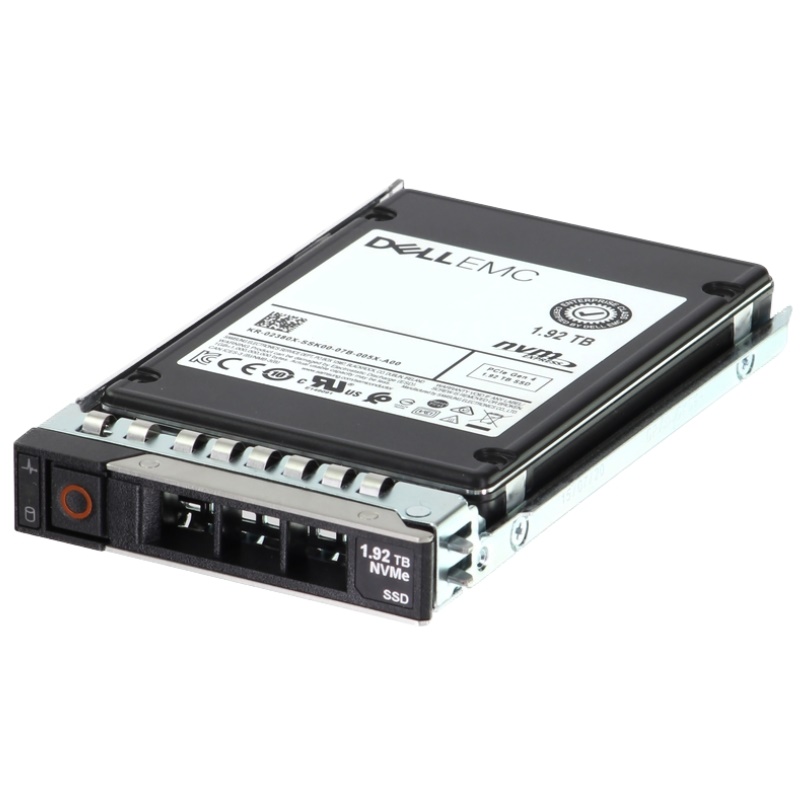


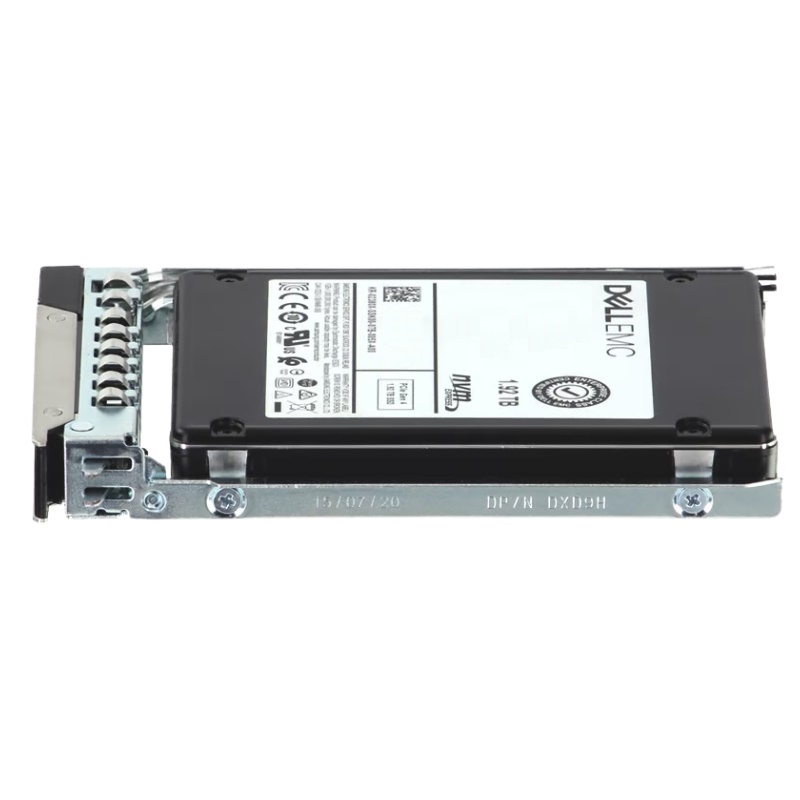
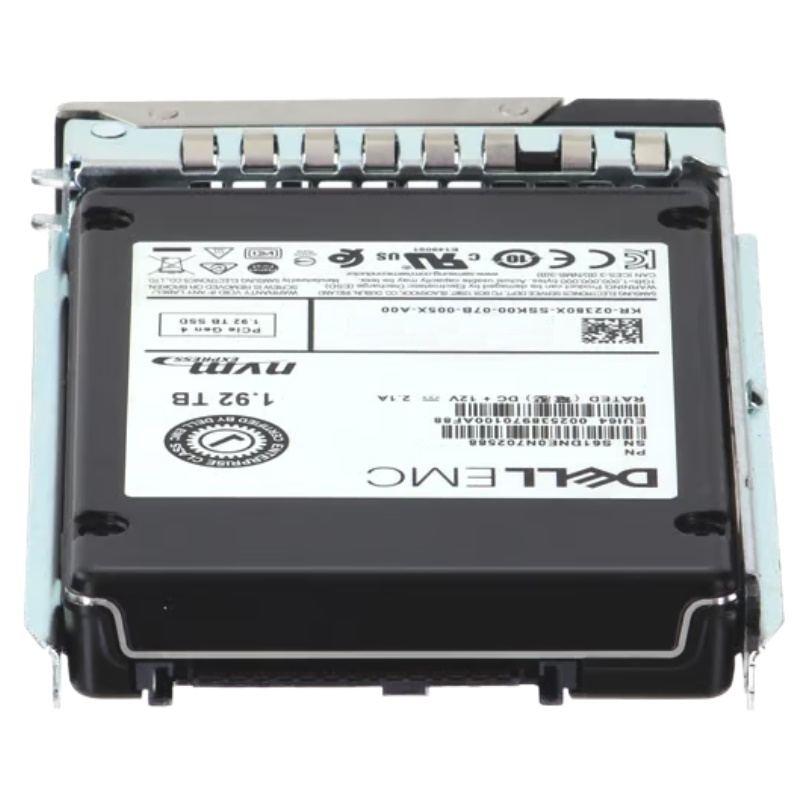
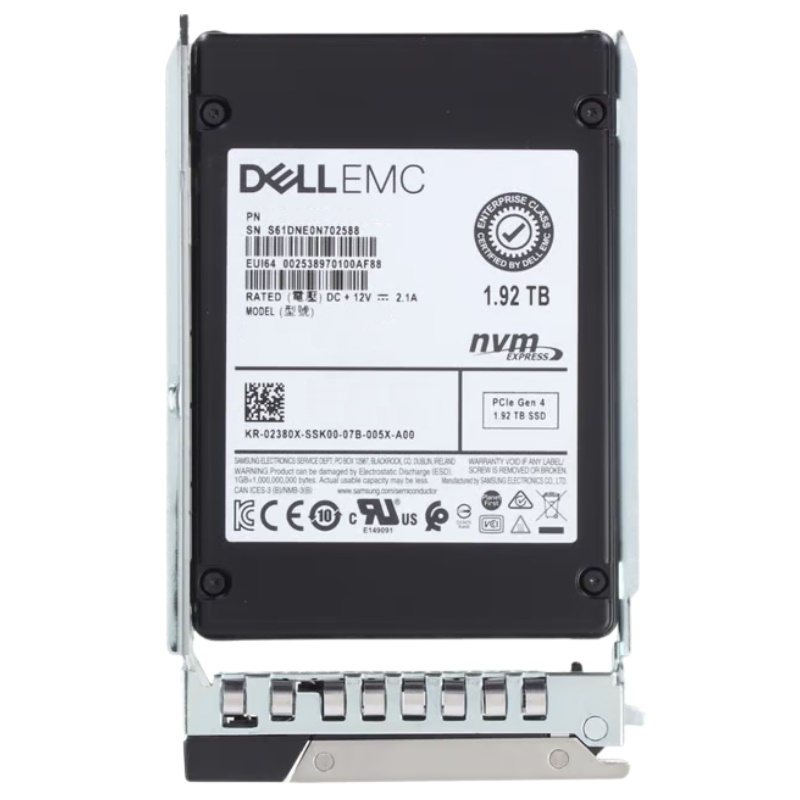
Dell 400-BSJB 1.92TB PCI-Express Gen 4.0 X4 NVMe U.2 SFF 15mm Read-Intensive TLC 3D-Nand for Poweredge Server Solid State Drive. New Sealed in Box (NIB) with 1-Year Replacement Warranty
Dell 480GB M.2 (2280) PCI-Express 4.0 X4 (NVMe) Read-Intensive TLC Enterprise Class Solid State Drive for Poweredge Server. Dell Solid State Drive engineered for enterprise-grade servers. Generous 1.92TB storage capacity with PCI-E Gen4.0 x4 NVMe interface. Compact U.2 15mm form factor designed for Poweredge systems. Advanced TLC 3D-NAND technology ensuring durability and efficiency.
The compatibility list is extensive but not exhaustive. Additional Dell Poweredge models and certain MD Powervault arrays may also support this SSD.
The Dell 400-BSJB 1.92TB PCI-Express Gen 4.0 x4 NVMe U.2 SFF 15mm solid state drive represents a class of read-intensive, high-density storage designed specifically for Dell PowerEdge servers and enterprise storage arrays. Built on TLC 3D NAND technology and optimized for NVMe protocol over a U.2 2.5-inch form factor with a 15mm height, this drive aims to deliver predictable latency, consistent throughput, and high read endurance characteristics required by large-scale virtualization, caching, content delivery, analytics, and database acceleration. The product category centers on the intersection of Gen4 PCIe bandwidth, NVMe command efficiency, and data center-grade durability, making it a compelling choice for system architects seeking to balance capacity, cost per GB, and operational reliability.
At the core of the Dell 400-BSJB is support for PCIe Gen4 x4 lanes, which doubles the per-lane bandwidth compared to Gen3 and enables higher sustained sequential read and write rates when paired with Gen4-capable host controllers. This category emphasizes how Gen4 NVMe drives reduce I/O bottlenecks for demanding read-heavy workloads by providing greater headroom for random I/O and sequential transfers. For enterprise administrators, that translates to faster boot times for virtual machines, improved response times for OLAP queries, and more efficient replication and backup windows.
The NVMe architecture embedded in the Dell 400-BSJB drive minimizes protocol overhead through a streamlined command set and parallel queue structure. NVMe’s low-latency queuing model reduces I/O wait times compared to legacy SCSI-based SSDs, enabling higher IOPS at lower CPU cost. In a PowerEdge environment, this means hypervisors and databases achieve improved concurrency handling, and storage subsystems experience reduced tail latency. The result is smoother performance for multi-tenant environments, denser virtualization hosts, and latency-sensitive applications that cannot tolerate unpredictable storage delays. NVMe is architected to take full advantage of the parallelism and low-latency characteristics of PCI Express. The protocol replaces a chatty, legacy SCSI translation layer with a compact, purpose-built command set and completion model that is tightly aligned with modern CPUs and system fabrics. Submission and completion queues are implemented in host memory and managed directly by the device, eliminating many of the context switches and software path traversals that used to inflate latency in traditional storage stacks. Each queue pair can service thousands of outstanding commands in parallel, which transforms the way storage devices saturate both raw bandwidth and IOPS in multi-core systems. The Dell 400-BSJB leverages these NVMe benefits by exposing maximum queue depth to the host and by implementing efficient doorbell mechanics and interrupt moderation that reduce CPU interrupts per I/O operation. The combined effect is a lower per-I/O CPU cost and a significantly higher operations-per-second ceiling, making NVMe the preferred choice for modern enterprise workloads that demand responsiveness at scale.
With a 1.92TB capacity in a U.2 SFF 15mm form factor, this Dell 400-BSJB product line targets racks and chassis where capacity per slot and serviceability matter. The 15mm height enables higher capacity per sled when deployed in multi-bay servers or storage enclosures designed to accept thicker drives, while still retaining the hot-swap convenience of a 2.5-inch design. From an economic standpoint, this class of read-intensive TLC 3D NAND drives offers a competitive cost-per-terabyte while maintaining endurance characteristics tuned for workloads dominated by reads.
TLC 3D NAND technologies used in the Dell 400-BSJB series are optimized for read-intensive use cases by employing firmware strategies and overprovisioning to extend drive life under heavy read patterns. Unlike mixed-use or write-intensive SSDs, read-intensive models are tuned to provide long-term stable performance where reads dominate and writes occur at comparatively lower rates. Firmware-level wear leveling, background garbage collection, and intelligent write buffering are configured to maximize effective lifetime while sustaining predictable throughput.
The Dell 400-BSJB designation signals compatibility and validation within Dell’s PowerEdge ecosystem. Compatibility extends beyond mechanical fit to firmware interoperability, secure erase functions, SMART telemetry integration, and support within Dell OpenManage systems for monitoring drive health and predictive failure analysis. Leveraging drives that are validated for a specific server family simplifies lifecycle management, ensures firmware updates are coordinated, and eases troubleshooting when drives participate in RAID controllers, NVMe-oF fabrics, or direct-attach NVMe partitions. Organizations benefit from streamlined support processes and clearer warranty coverage when selecting drives explicitly specified for their server models.
The Dell 400-BSJB 1.92TB NVMe U.2 drives can be deployed as individual NVMe volumes for direct-attach performance or combined within software RAID constructs to provide redundancy and larger logical volumes. Software-defined storage platforms can leverage these drives to create tiered storage pools where read-intensive NVMe drives act as a performance tier while denser HDDs or QLC-based arrays serve as capacity tiers. For architects, this provides flexibility to prioritize throughput for hot data while controlling overall infrastructure costs.
Enterprise adoption of the Dell 400-BSJB series hinges not only on raw performance but also on reliability metrics that influence service-level agreements. Enterprise SSDs in this category include SMART attributes for real-time telemetry, power-loss protection to reduce data corruption risks during unexpected outages, and robust error correction codes (ECC) to maintain data integrity over long operational periods. Proactive health monitoring integrates with Dell management suites to surface metrics such as percent life used, host writes, media errors, and thermal events. These capabilities allow IT teams to plan non-disruptive maintenance and replace drives before failures impact workloads, thereby improving uptime and predictable performance.
High-performance NVMe drives operating at Gen4 speeds can generate more heat than older Gen3 devices, especially under sustained workloads. The 15mm U.2 form factor of the Dell 400-BSJB provides mechanical allowance for thermal throttling and heatsink integration where server designs accommodate additional airflow or passive cooling elements. Data center engineers should consider placement, airflow patterns, and drive bay density to prevent thermal throttling that could reduce throughput during peak periods. Aligning rack airflow design with thermal profiles of modern NVMe drives ensures consistent performance and prolongs component lifetimes.
Security is a fundamental requirement for enterprise storage. Drives in the 400-BSJB family support industry-standard security features such as TCG Opal or other drive-level encryption mechanisms, secure erase functions for data sanitization, and firmware authentication to prevent unauthorized code from executing on the device. Integrating these drives into a comprehensive security strategy enables organizations to enforce encryption at rest, comply with regulatory data protection standards, and reliably decommission or repurpose drives without residual data risk. For regulated industries, these features contribute to audit compliance and enable consistent lifecycle procedures for media handling.
Maintaining firmware currency across a fleet of NVMe drives is an operational necessity to mitigate bugs, improve compatibility, and unlock performance improvements. Dell manages validated firmware releases for drives like the 400-BSJB to ensure compatibility with PowerEdge BIOS and management tools. IT teams should implement controlled firmware update processes that coordinate updates across hosts and storage stacks to prevent compatibility mismatches and to leverage release notes that explain fixes and enhancements. A disciplined firmware lifecycle reduces risk and takes advantage of incremental improvements provided by the drive vendor and platform manufacturer.
This product category excels in specific workload patterns where read operations dominate and predictable latency is paramount. Common high-value use cases include read replicas for transactional databases, cache tiers for object stores, virtual desktop infrastructure where many instances perform frequent read requests, media streaming origin servers, and analytics systems that scan large datasets predominantly for reads. Because the drive is tuned for read endurance and throughput, it is often placed as a tier for frequently accessed files and indexes, reducing read pressure on slower tiers and accelerating application response times. Architects can combine these drives with write-optimized drives in hybrid tiers to get balanced performance for mixed workloads.
Virtualization hosts supporting hundreds of VMs benefit from the low-latency NVMe paths and high IOPS density offered by 1.92TB NVMe U.2 drives. During boot storms or patch windows, the Gen4 bandwidth and NVMe queueing can reduce contention and improve VM startup times. In VDI environments where read patterns are heavy and many VMs access shared golden images, caching those images on read-intensive NVMe drives creates a smoother user experience and lowers the load on backend arrays. Capacity per drive in a 15mm U.2 package allows administrators to host large pools of VDI images without consuming excessive bay counts.
Operational readiness requires stocked spares, consistent staging procedures, and hot-swap policies aligned with the server chassis design. The U.2 SFF interface supports hot-swap replacement in many PowerEdge models, allowing technicians to replace a failed drive without extended downtime. Staging drives with the correct firmware version and configuration reduces risk during replacements.


 Contact Us
 Information
 Catalog
 Solid State Drives (SSD)
 Network Switches
 Hard Disk Drives
 HBA & Controllers
 PC & Servers
 PC & Server Memory
 CPU & Processors
 Network Routers
 Power Supplies
 Tape Drives & Libraries
 Network Devices
 Computer & Network Cables