(7% discount is applied at checkout)
Cart is empty
Your go-to destination for cutting-edge server products
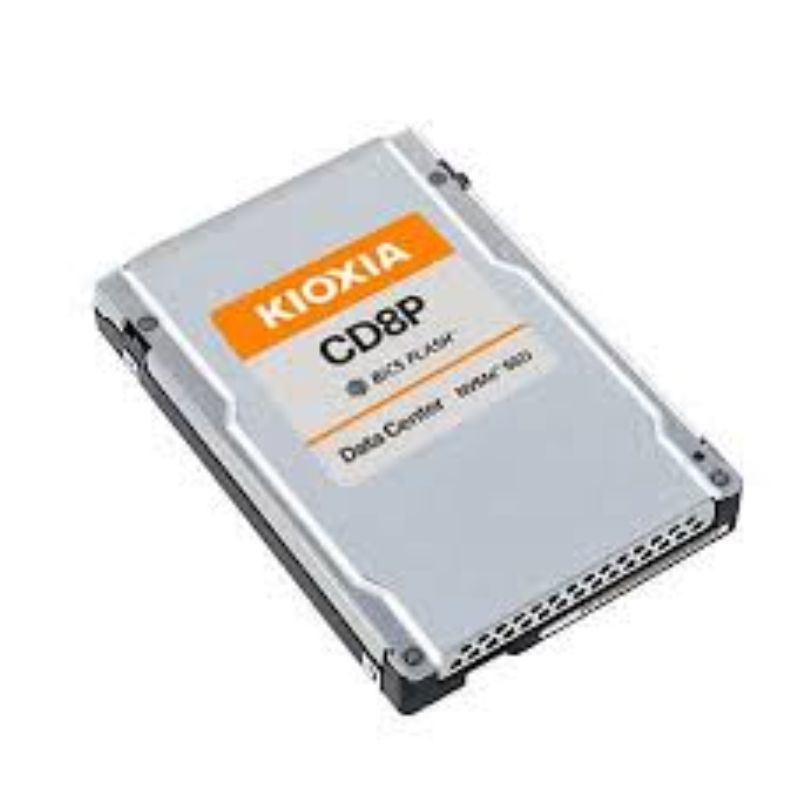


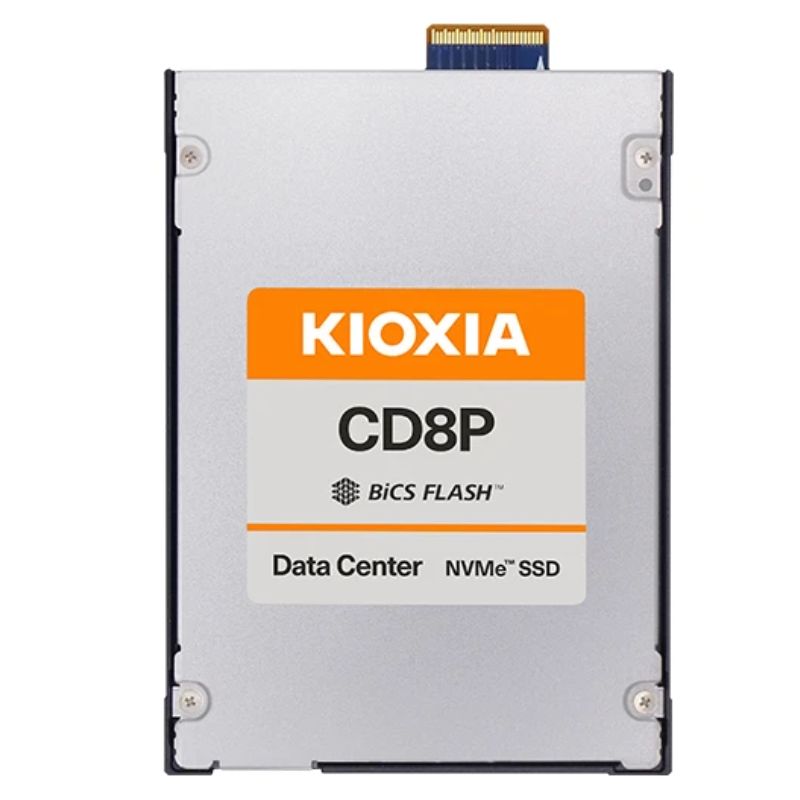
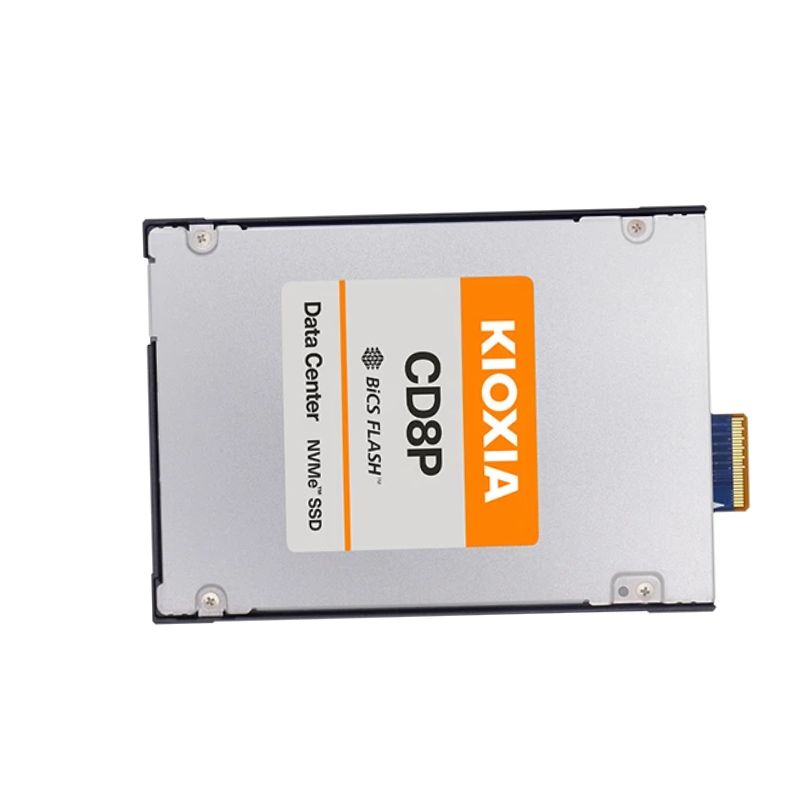
Kioxia KCD8DPUG1T92 1.92TB Read Intensive PCI-E 5.0 NVMe 2.0 SED SFF SSD. New Sealed in Box (NIB) with 3 Years Warranty
Overview of KIOXIA CD8P-R 1.92TB PCIe 5.0 NVMe SSD
The KIOXIA CD8P-R Series 1.92TB SSD offers a refined blend of high-speed data handling, rock-solid reliability, and modern NVMe 2.0 architecture. Designed for environments that demand fast query responses, consistent throughput, and dependable uptime, this read-intensive enterprise drive ensures smooth business operations across diverse workloads. Its 2.5-inch (15mm) form factor and advanced BiCS FLASH™ TLC architecture provide a balanced foundation for cloud servers, virtualized systems, and hyperscale infrastructures looking to elevate storage efficiency.
The Kioxia KCD8DPUG1T92 1.92TB Read-Intensive PCIe 5.0 NVMe 2.0 SED SFF SSD represents a modern class of high-density, high-efficiency storage designed for demanding enterprise and data center workloads. Engineered for read-intensive applications, this small-form-factor (SFF) solid state drive combines the bandwidth advantages of PCIe 5.0 with the protocol improvements of NVMe 2.0 to deliver low latency access, predictable throughput, and built-in security through Self-Encrypting Drive (SED) functionality. Below we expand the category scope, outline core features, list the practical use cases, and break down technical considerations for procurement, deployment, and lifecycle management.
This category describes storage products optimized for workloads where read operations dominate. Key characteristics include:
Read-optimized endurance profile — designed to support significantly higher ratio of reads to writes while maintaining data integrity and long-term reliability.
High throughput via PCIe 5.0 — leveraging the doubled per-lane bandwidth of PCIe Gen5 to reduce I/O wait times and improve parallelism across NVMe queues.
NVMe 2.0 protocol features — newer command sets, namespace management, and enhanced power management for enterprise orchestration and firmware control.
SED (Self-Encrypting Drive) — hardware-based AES encryption that secures stored data without heavy CPU overhead and supports common management interfaces for key lifecycle operations.
SFF packaging — small physical footprint suitable for high-density server sleds, hyperscale racks, and compact compute platforms.
PCIe 5.0 doubles the per-lane bandwidth relative to PCIe 4.0, enabling higher sequential and random transfer rates for NVMe SSDs. For read-intensive use cases, greater bandwidth translates into:
Faster cold-start data retrieval and boot times for large-scale clusters.Improved responsiveness of read-heavy databases, key-value stores, content delivery nodes, and analytics pipelines.
Reduced queueing and contention under parallel workloads.
NVMe 2.0 introduces enhancements that matter to enterprise deployers: improved namespace and reservation features, expanded vendor-unique command support, power state optimizations, and stronger telemetry hooks. These protocol-level improvements make firmware integration and monitoring more robust and allow for tighter orchestration by storage management software.
Hardware-based encryption (SED) secures data at rest using onboard cryptographic engines. Key benefits for enterprises:
Transparent encryption that doesn’t rely on host CPU cycles.Ease of compliance with regulations (e.g., data privacy frameworks) through provable encryption mechanisms.
Secure decommissioning and instant secure erase options supported by many management suites.
Small form factor designs maximize rack-level storage density and are compatible with blade servers, half-width sleds, and compact NVMe carriers. The Kioxia SFF SSDs are ideal where space is a premium but performance and security must not be compromised.
When evaluating any drive in this category, attention should be paid to the following technical points. These are presented here as category-level guidance — specific model datasheets should be consulted for exact numbers.
1.92TB nominal capacity typically reflects user-addressable storage after reserved blocks and any factory over-provisioning. Over-provisioning contributes to steady performance and endurance by allowing the controller to manage wear leveling and garbage collection more effectively.
Read-intensive drives often advertise lower TBW or DWPD values than mixed-use or write-intensive enterprise SSDs. For workload planning, map expected write amplification and daily write volumes against the manufacturer’s TBW figure to estimate service life.
Power draw and thermal design power (TDP) affect cooling strategies in dense enclosures. NVMe Gen5 controllers can be more thermally demanding; note manufacturer recommendations for airflow and heat sinks for optimal longevity.
Read-intensive SSDs are a natural fit for CDNs and caching layers that require sustained high read throughput with modest write cycles. The SED capability also helps secure cached content where required.
For analytic workloads where “hot” partitions experience many more reads than writes (OLAP queries, BI dashboards, time-series aggregations), these drives deliver timely query responses while maintaining cost-efficiency compared to write-optimized SSDs.
VDI environments often see intense read bursts during boot storms. A read-optimized NVMe drive reduces VM boot times and improves user-perceived performance during peak events.
Small-block random read performance benefits search indexes, object storage metadata layers, and directory services where quick key-value lookups are frequent.
SFF (e.g., U.2, NF1, E3.S) vs M.2 vs EDSFF: choose based on server slot availability, thermal headroom, and density needs. The Kioxia KCD8DPUG1T92’s SFF packaging targets high-density server trays and storage arrays.
SED variants in this category simplify encryption management; however, certain buyers may prefer software-managed encryption to maintain centralized key control in their KMS. Evaluate integration points and key lifecycle policies carefully.
NVMe 2.0 compliance increases compatibility with contemporary host buses and operating systems. Still, verify firmware interoperability matrices, BIOS/UEFI NVMe driver support, and HBA compatibility, particularly when migrating from PCIe Gen4 to Gen5 environments.
Decide whether to rely on factory over-provisioning or to allocate additional over-provisioning via vendor tools depending on the Write Amplification Factor (WAF) expected in production.
Assess airflow in server chassis and consider heatsinks or conduction plates for NVMe Gen5 SSDs—sustained high throughput can push the controller into thermal throttling if proper cooling isn’t provided.
Enterprise SSDs benefit from frequent firmware updates that resolve performance edge cases, security issues, and feature upgrades. Use vendor provisioning tools or your centralized configuration management to track firmware levels and apply updates during maintenance windows.
Over-provisioning, cache layering, and tiered storage architectures can minimize the number of high-performance NVMe drives required in a cluster. By aligning drive class (read-intensive) with actual I/O profiles, organizations can optimize spend without sacrificing performance.
For NVMe drives, matching application block sizes to the device’s internal block mapping and utilizing sufficient queue depth can improve parallelism and reduce latency. When designing storage stacks, profile typical I/O sizes (e.g., 4K vs 128K) to tune OS and application buffers.
Leverage namespace management, reservations, and telemetry provided by NVMe 2.0 to optimize multi-tenant or clustered deployments. Those features help isolate workloads and manage endurance across shared hardware pools.
Monitor SMART attributes, media health indicators, and telemetry streams to predict failing drives before they become critical. Integrate alerts into your orchestration tools to automate replacement and data migration with minimal disruption.
Compared to SATA or SAS SSDs, PCIe Gen5 NVMe drives provide dramatically higher throughput and lower latency, making them preferable for high-concurrency read-centric services. Against PCIe Gen4 NVMe SSDs, Gen5 offers more future headroom for throughput but requires host platforms that support PCIe 5.0 lanes.
Choose read-intensive models when write volume is predictably low and cost per TB is a priority. If writes will be significant or unpredictable (e.g., heavy logging or ephemeral writes), evaluate mixed-use models with higher TBW to avoid premature replacement.
Latest major specification update to the Non-Volatile Memory express protocol introducing improved namespace management, new command sets, and enhanced telemetry.
Fifth generation of the PCI Express interface providing doubled per-lane bandwidth compared to PCIe 4.0.
Drive with embedded hardware encryption that secures data at rest and supports key-management operations without relying on software encryption agents.
Manufacturer-specified endurance metric indicating the total amount of data that can be written to the drive over its warranty period before wear-out.
Compact physical drive format optimized for higher density deployments in servers and storage arrays.


 Contact Us
 Information
 Catalog
 Solid State Drives (SSD)
 Network Switches
 Hard Disk Drives
 HBA & Controllers
 PC & Servers
 PC & Server Memory
 CPU & Processors
 Network Routers
 Power Supplies
 Tape Drives & Libraries
 Network Devices
 Computer & Network Cables