(7% discount is applied at checkout)
Cart is empty
Your go-to destination for cutting-edge server products
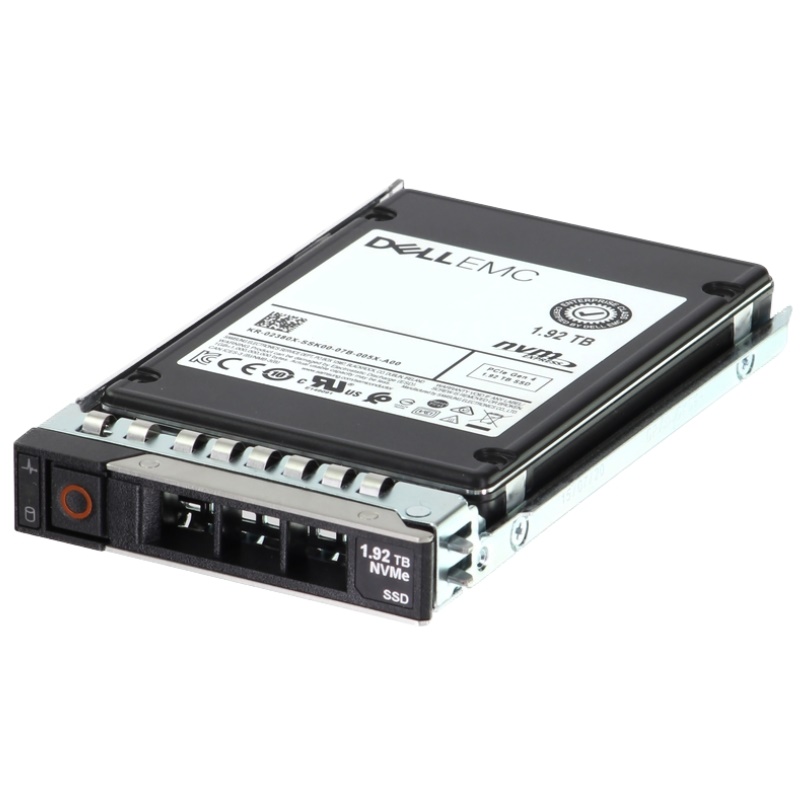


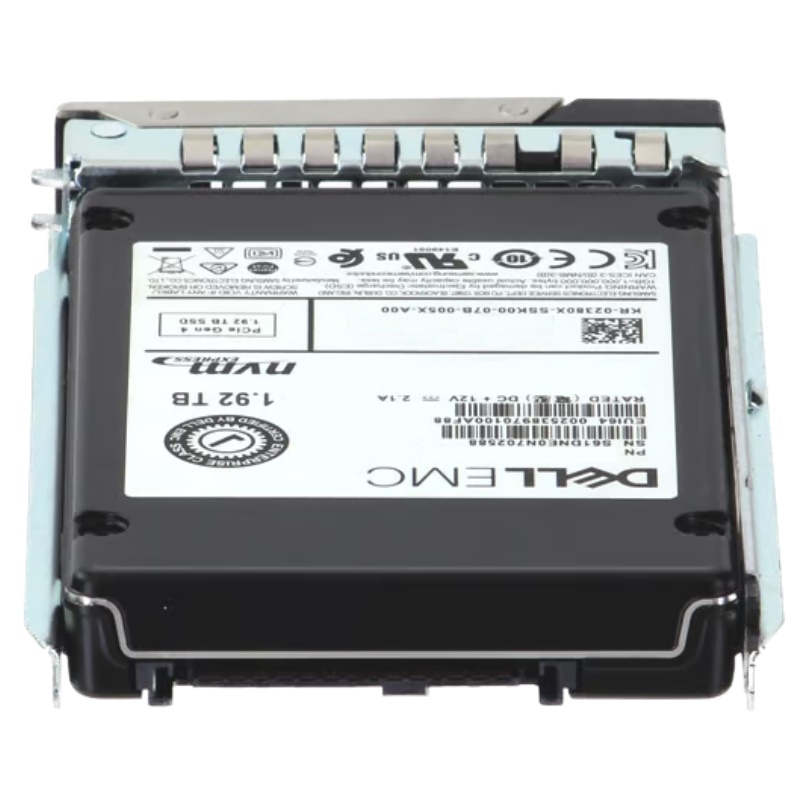
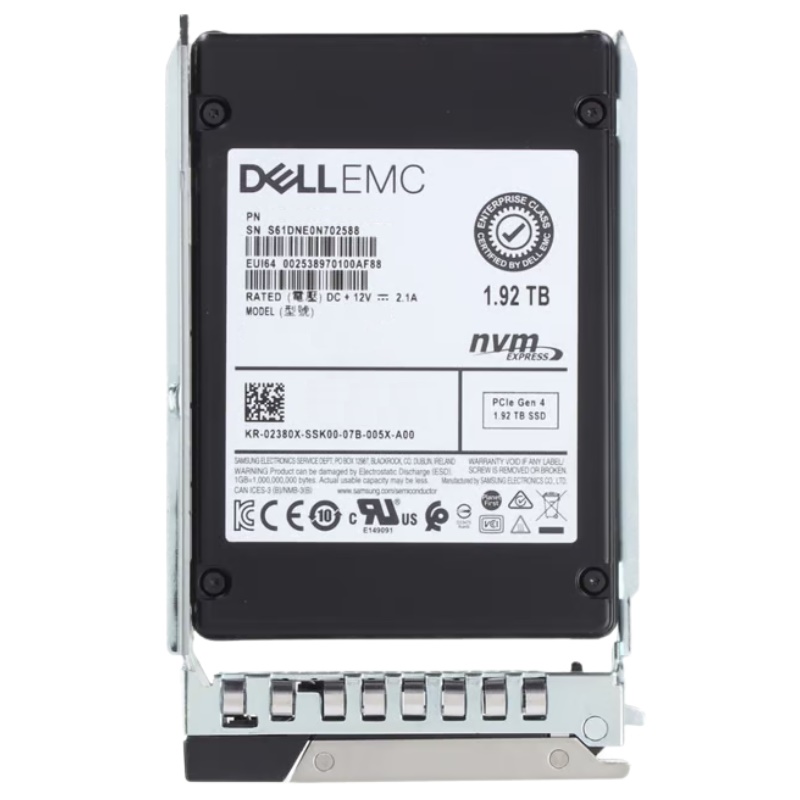
Dell 400-BSJJ 1.92TB PCI-Express Gen 4.0 X4 NVMe U.2 SFF (Small Form Factor) 15mm Read-Intensive TLC (Triple Level Cell) 3D-Nand for Poweredge Server Solid State Drive. New Sealed in Box (NIB) with 1-Year Replacement Warranty
The Dell 400-BSJJ Solid State Drive delivers 1.92TB of reliable storage, engineered with PCI-Express Gen 4.0 x4 NVMe technology and a U.2 15mm form factor. Designed for Read-Intensive workloads, it utilizes advanced TLC 3D NAND architecture to ensure consistent performance and durability. This Enterprise-Grade SSD is tailored for PowerEdge servers, offering exceptional speed, robust endurance, and seamless integration for modern data-driven environments.
This compatibility list is extensive but not exhaustive. Certain Powervault arrays and additional PowerEdge models may also support the Dell 400-BSJJ SSD, ensuring flexibility across diverse enterprise infrastructures.
The Dell 400-BSJJ 1.92TB PCI-Express Gen 4.0 x4 NVMe U.2 SFF 15mm drive is a focused solution for enterprises that need a read-optimized solid state drive for modern PowerEdge server deployments. Engineered as a read-intensive TLC 3D NAND NVMe U.2 drive, this model combines the form factor and thermal tolerances expected in rack and blade servers with the low-latency benefits of NVMe over a Gen 4 PCIe interface. As a 1.92TB capacity device, it fits perfectly in use cases where fast sequential and sustained random reads accelerate analytics, indexing, database query response, content delivery, caching layers, and read-heavy virtualized workloads.
With a PCI-Express Gen 4.0 x4 connection, the 400-BSJJ drive benefits from a wider and faster PCIe lane compared with earlier generations, delivering substantially improved bandwidth headroom for parallel IO. NVMe as a protocol is optimized for non-volatile memory: it reduces command overhead, uses deep command queueing, and supports many parallel submission and completion queues. This architecture reduces host CPU cycles per IO and scales efficiently as multi-core servers generate concurrent IO streams. For read-intensive workloads, the Gen 4 interface allows the drive to saturate the link at higher sustained rates, minimizing bottlenecks between the storage media and application compute layers. In practice, this translates to smoother query latency, accelerated index scans, and reduced tail-latency for read-heavy microservices.
The U.2 form factor in a 15mm profile preserves enterprise-class serviceability while allowing denser storage configurations than larger drives. U.2’s standard connector provides a secure mechanical and electrical interface suitable for frequent swaps and hot-swap procedures in production environments. The increased z-height of a 15mm U.2 device provides room for more robust heat spreaders and thermal solutions, which is important in PowerEdge servers that push sustained throughput for long periods. This drive design considers airflow channels and carrier-based heat transfer so rack-level deployments can maintain consistent performance under continuous read loads without thermal throttling.
Using read-optimized TLC 3D NAND flash, the 400-BSJJ is tuned to deliver high read performance at a competitive cost per gigabyte. Triple-level cell (TLC) 3D NAND stacks more bits per die than planar flash, enabling larger capacities and better economics while modern controller firmware and wear-leveling algorithms mitigate TLC’s write endurance characteristics. For read-dominant workloads such as content repositories, analytics data stores, search indexes, and large-scale VM template libraries, read-intensive TLC is an ideal compromise that yields significant savings without sacrificing the predictable read responsiveness required by mission-critical applications.
Dell designs its PowerEdge servers to be interoperable with a wide range of storage options. This particular NVMe U.2 drive integrates readily into PowerEdge chassis that support U.2/U.3 carriers and NVMe backplanes, and the drive’s firmware is commonly validated to work with Dell storage tool chains for firmware updates, drive health reporting. Administrators can monitor SMART telemetry and drive-level health indicators through iDRAC and OpenManage interfaces to proactively manage spare capacity, schedule maintenance, and prevent incidents. Because the drive conforms to industry NVMe standards while being tailored for Dell systems, it is straightforward to deploy at scale across enterprise clusters, hyperconverged nodes, and database servers where consistent read performance is essential.
When planning deployment, it is important to verify that the specific PowerEdge model and its backplane support U.2 NVMe drives at PCIe Gen 4 speeds. Some older host platforms may negotiate to lower link speeds or may require firmware updates to fully enable Gen 4 capabilities. Additionally, the physical carrier, sled, or caddy used in a given server should match the U.2 15mm profile to ensure retention clips, hot-swap latches, and thermal pads align properly. When migrating from SATA or SAS drives, administrators should consider drive topology, boot device needs, and any RAID or hardware-level controllers; many modern NVMe deployments use software or host-based RAID and rely on NVMe-aware stack features to maximize performance.
This drive excels in scenarios where reads dominate overall IO. Examples include analytics clusters performing heavy ad-hoc reads against columnar stores, content delivery platforms where large numbers of small read requests are common, metadata servers serving large object stores, search index nodes for web and enterprise search, and certain virtualization workloads where many guests read common OS images or application binaries. The economics of read-intensive TLC flash make it attractive for tiered storage architectures: use the 400-BSJJ for hot read tiers to accelerate application throughput, while cheaper bulk storage or archival tiers handle colder data. When architected correctly, this tiering strategy lowers total cost of ownership while retaining the responsiveness demanded by end users and automated pipelines.
Reliability expectations for enterprise SSDs encompass consistent performance under load, predictable wear characteristics, and rich telemetry for proactive maintenance. The drive’s firmware integrates wear-leveling, error correction, and garbage collection strategies designed for TLC 3D NAND, ensuring predictable performance across the product lifecycle. Administrative interfaces expose SMART attributes and NVMe health logs for integration into monitoring frameworks, enabling operations teams to track media wear, temperature trends, and error counts.
Dell’s ecosystem typically provides validated firmware packages, and administrators should use supported toolchains to apply updates that improve performance, reliability, and compatibility. Telemetry such as percentage endurance used, media errors, power cycles, and temperature statistics informs lifecycle planning. Automated alerting based on these signals enables teams to schedule nondisruptive replacements before performance degradation or failures occur, strengthening overall data availability and simplifying capacity lifecycle renewal strategies.
Because NVMe devices are block-level devices appearing as local storage to the host, common enterprise data protection patterns apply. RAID topologies, whether implemented by hardware, dedicated offload controllers, or software-defined storage layers, provide redundancy and rebuild semantics suitable for NVMe media. For read-heavy environments, RAID configurations optimized for read performance and rapid rebuilds can minimize the impact of failed devices. Snapshots, replication, and backup workflows complement redundant arrays by protecting against logical errors and data corruption. When designing protection strategies, consider the rebuild IO profile and how it interacts with production read traffic to avoid unexpected performance impacts.
Performance and longevity of NVMe SSDs depend on several host-side factors including queue depth, IO pattern, driver and firmware versions, temperature, and workload mix. To extract consistent read performance from the 400-BSJJ, tune application-level IO threads to take advantage of NVMe’s parallel queueing while avoiding pathological queue saturation that can increase tail latency. Host OS and NVMe driver updates sometimes introduce optimizations for multi-queue performance; administrators should test updates in staging before rolling them into production. Thermal design is also critical: ensure chassis airflow and drive placement allow heat to be carried away from the devices, and consider adding blanking panels or airflow baffles where necessary to maintain manufacturer-recommended operating temperatures.
In dense server configurations, heat density can be significant. The 15mm U.2 design helps accommodate thermal spreaders, but architects should still account for ambient temperatures inside the chassis, the placement of the drive relative to high-power GPUs or CPUs, and the effect of neighboring drives. Power provisioning is also important; NVMe drives draw different power profiles during peak sustained throughput versus idle. Ensuring that backplanes and power delivery circuits are rated for an expected mix of drives and compute resources will prevent undervoltage conditions and maintain consistent performance.
Effective enterprise storage architecture uses multiple tiers to align cost, performance, and endurance characteristics with workload requirements. The Dell 400-BSJJ 1.92TB NVMe drive is well-suited to the hot read tier where frequent access patterns demand low latency and high read throughput. Above or alongside this tier may sit ultra-high-performance NVMe drives tuned for mixed or write-intensive workloads, and below it the warm or cold tiers built on higher-capacity SATA SSDs or HDDs for archival.


 Contact Us
 Information
 Catalog
 Solid State Drives (SSD)
 Network Switches
 Hard Disk Drives
 HBA & Controllers
 PC & Servers
 PC & Server Memory
 CPU & Processors
 Network Routers
 Power Supplies
 Tape Drives & Libraries
 Network Devices
 Computer & Network Cables