(7% discount is applied at checkout)
Cart is empty
Your go-to destination for cutting-edge server products
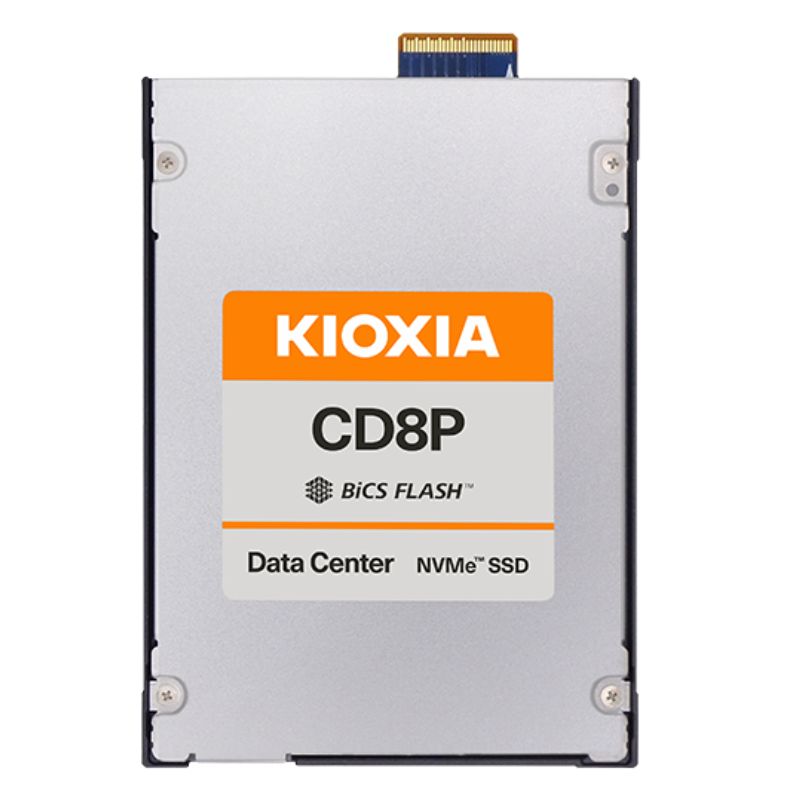


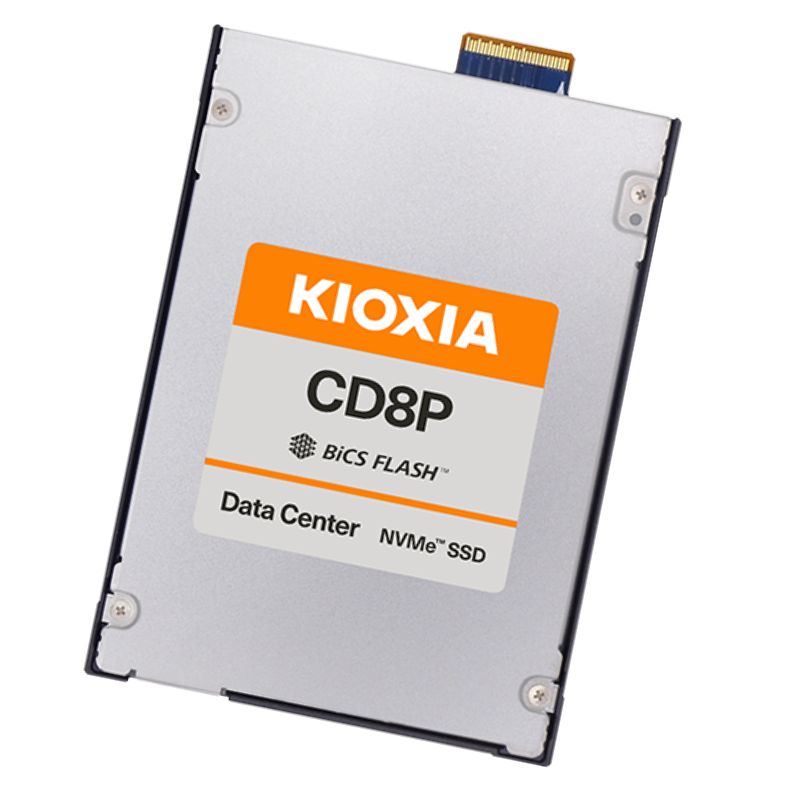
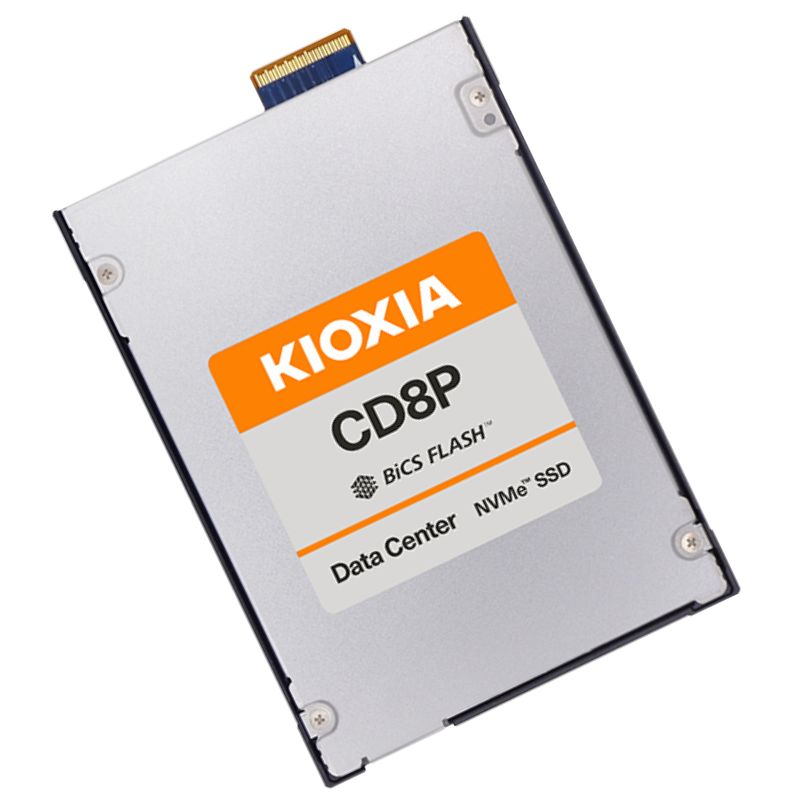
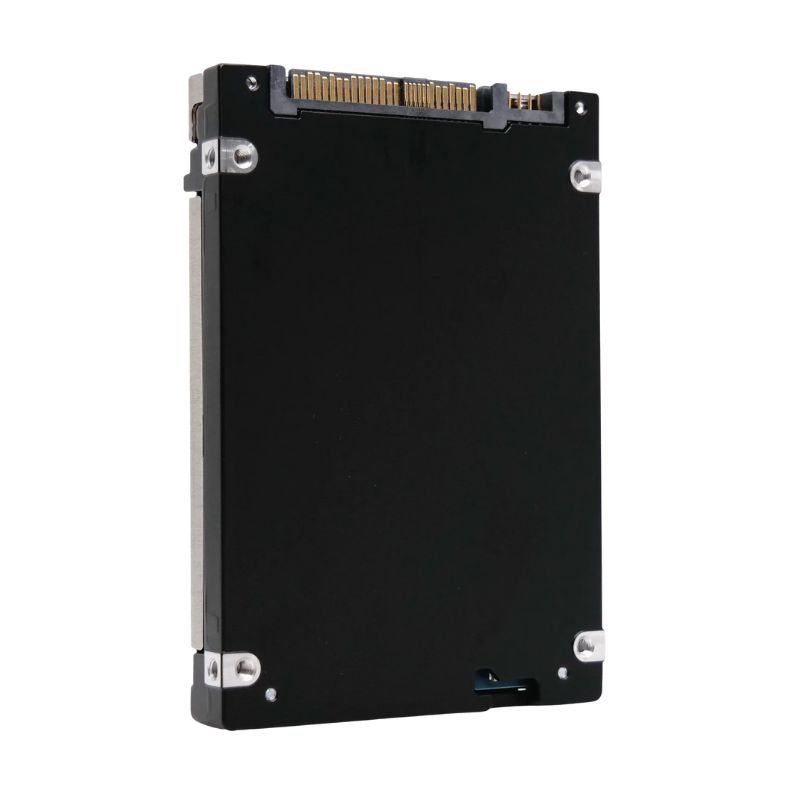
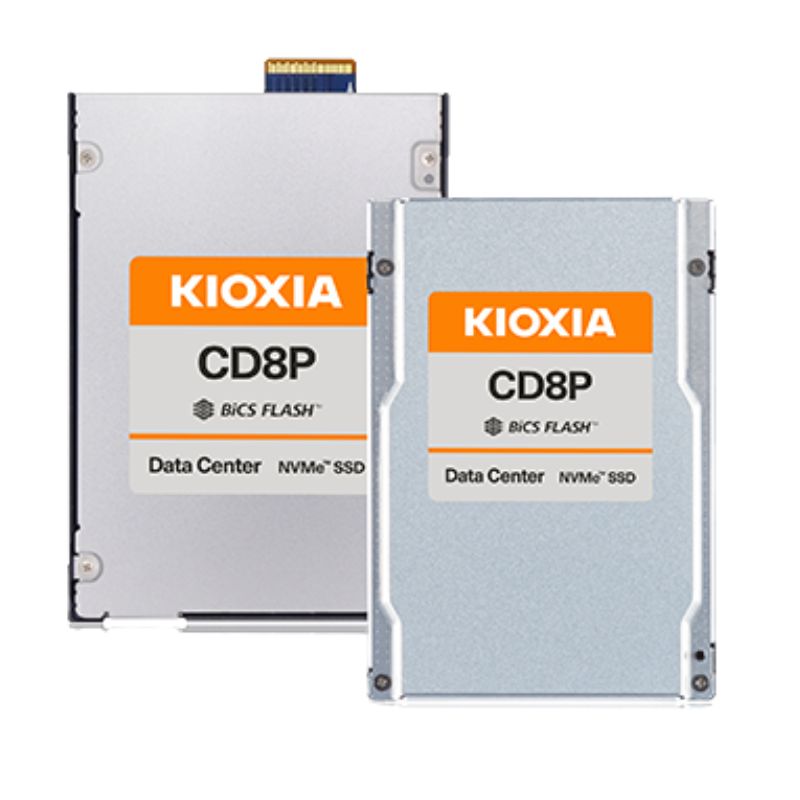
Kioxia KCD8XPJE1T92 CD8P-R 1.92TB E3.S PCI-E 5.0 NVMe 2.5 Inch Read Intensive Enterprise Solid State Drive. Excellent Refurbished with 1-Year Replacement Warranty. Dell Version
The Kioxia KCD8XPJE1T92 CD8P-R 1.92TB solid-state storage device belongs to the advanced CD8P series, offering robust read-intensive performance for demanding data-center infrastructures. Designed for enterprise-grade reliability, this 2.5-inch E3.S NVMe drive combines high-speed PCI Express 5.0 technology with durable BICS TLC NAND architecture to support heavy workloads and mission-critical systems.
Engineered with next-generation flash and controller technologies, the Kioxia CD8P-R 1.92TB SSD is built to deliver rapid data throughput, consistent latency, and optimized input/output operations per second. Its advanced PCIe interface helps drastically improve system responsiveness while reducing bottlenecks for applications that rely on large datasets.
The Kioxia CD8P-R 1.92TB SSD delivers exceptional read-intensive performance, making it particularly suitable for cloud computing, high-traffic databases, big-data analytics, virtualization ecosystems, and server applications where consistent throughput is crucial. With its ability to reach extremely high read speeds and strong random access capability, this enterprise-class SSD ensures predictable performance across a wide range of demanding operations.
Power efficiency is a crucial aspect of enterprise storage. The Kioxia KCD8XPJE1T92 is built to optimize performance-per-watt while delivering top-tier speed, ensuring it fits seamlessly into energy-conscious server infrastructures.
The CD8P-R family is recognized for its forward-thinking storage features, enabling organizations to produce faster results, reduce operational delays, and manage extensive data sets with ease. By adopting NVMe 2.0 and PCIe Gen5 standards, this SSD ensures a long lifecycle of compatibility and exceptional performance quality.
The Kioxia KCD8XPJE1T92 CD8P-R 1.92TB E3.S PCI-E 5.0 NVMe 2.5 Inch Read Intensive Enterprise Solid State Drive belongs to a highly specialized class of modern storage hardware engineered for exceptional read performance, maximum reliability, and advanced power efficiency within dense server infrastructures. This category of enterprise-grade NVMe SSDs is designed to meet the ongoing demands of cloud workloads, hyperscale environments, high-throughput transaction systems, and data-intensive applications that rely heavily on rapid access speeds. Built around PCI Express 5.0 technology and aligned with the E3.S form factor, SSDs like the KCD8XPJE1T92 represent a leap forward in performance, endurance optimization, heat management, and scalability for evolving data center architectures. As organizations continue to adopt AI-driven solutions, virtualization workloads, distributed computing, and large-capacity datasets, this category of Kioxia CD8P-R series drives provides a stable, future-ready infrastructure foundation.
The category of Kioxia CD8P-R drives integrates PCI-E Gen 5.0 technology with the innovative E3.S form factor to deliver an optimal balance of performance density and thermal control. The E3.S interface aligns with modern server designs that require greater airflow efficiency and improved heat dissipation compared to legacy 2.5-inch U.2 and M.2 designs. These improvements allow hardware manufacturers and data center architects to utilize higher-power SSDs without compromising reliability or reducing the lifespan of critical components. The 1.92TB capacity offered in this specific model demonstrates a balance between storage density and read-intensive workload optimization, making it ideal for scenarios requiring sustained throughput rather than extremely high endurance.
This category of drives is purpose-built around PCI Express 5.0 lanes, doubling the bandwidth capacity compared to PCI-E Gen4 while reducing latency and optimizing queue handling. The NVMe 2.0 protocol further enhances low-latency command execution, making each drive capable of handling massive parallel processing workloads with unmatched responsiveness. By combining PCI-E Gen5 with NVMe 2.0, SSDs in the CD8P-R series can support next-generation server CPUs and advanced motherboard designs, ensuring that enterprises are ready to scale into the future without experiencing I/O bottlenecks. The architecture supports an increase in IOPS and sequential data transfer rates, maximizing performance for read-heavy enterprise tasks.
The Kioxia KCD8XPJE1T92 CD8P-R and its category peers deliver exceptional performance metrics that are especially beneficial for systems where rapid data retrieval is more important than heavy writing activity. Read-intensive drives such as this one deliver high sustained read speeds, impressive queue depth performance, and consistently low latency across variable workloads. By employing 3D NAND flash technology, advanced firmware algorithms, and precise controller tuning, this class of drives supports real-time analytics, log processing, search indexing, virtual machine provisioning, and latency-sensitive cloud applications with ease.
The implementation of PCI-E Gen5 lanes boosts sequential read performance far beyond previous generations. This category’s engineering supports multi-gigabyte-per-second read throughput, enabling ultra-fast boot times, accelerating database cache operations, and enhancing the speed of distributed access environments. These improvements contribute significantly to reducing processing time in modern enterprise environments where milliseconds matter, especially during peak data loads.
This category of Kioxia enterprise SSDs optimizes random read speeds to support applications that require continuous data retrieval from scattered storage locations. With NVMe queue depth management improvements, the drive is capable of handling a remarkably high number of read commands simultaneously. This makes the category suitable for virtualized infrastructures, web hosting servers, container environments, and microservices platforms where high user concurrency demands rapid response from the storage subsystem.
Reduced latency is a signature advantage of this SSD category, providing consistent access times even under demanding conditions. NVMe 2.0 enhancements ensure that command handling remains efficient, reducing overhead and improving delivery consistency for time-critical workflows. This reliability is crucial for enterprise operations that depend on predictable performance such as transaction processing, data delivery networks, and rapid software deployment pipelines.
Solid state drives in this Kioxia CD8P-R category are engineered for long-term durability and superior data integrity through sophisticated error correction, power-loss protection, and internal monitoring systems. Because enterprise infrastructures require maximum uptime and continuous data accessibility, this category integrates technologies that ensure resilience against flash memory degradation, unexpected shutdown events, and environmental hazards common in dense rack architectures.
The category incorporates advanced ECC algorithms designed to detect and correct data inconsistencies before they reach the host system. This process extends the lifespan of the 3D TLC NAND flash used in these drives by minimizing wear-related data loss. Additionally, real-time metadata checksums, end-to-end data path protections, and background scanning mechanisms play a vital role in maintaining top-tier reliability across all operational cycles.
Ensuring data stability during sudden power interruptions is an essential feature within this category. The onboard capacitors preserve in-flight data by giving the storage controller time to commit critical operations to nonvolatile memory. This prevents partial writes, corrupted files, and incomplete transactions which can severely impact enterprise operations. The power-loss protection framework is engineered to perform reliably even in large-scale server infrastructures with complex power distribution setups.
Maintaining optimal temperature avoids performance throttling and extends drive longevity. E3.S designs within this category offer improved ventilation, heat spreader integration, and surface optimization to ensure cooling efficiency. These improvements reduce the risk of thermal overload during prolonged read-heavy operations. Thermal monitoring sensors further enhance this protection by adjusting performance dynamically or alerting administrators to environmental changes.
This category of Kioxia enterprise SSDs is suited for numerous large-scale and time-sensitive applications that depend heavily on read operations. With the advanced architectural benefits of NVMe 2.0, E3.S form factor improvements, and PCI-E Gen5 bandwidth, these drives provide significant advantages across virtualization, AI-driven analytics, distributed processing systems, edge computing environments, and operational databases that require ultra-fast read cycles.
Hyperscale infrastructures rely on extensive fleets of SSDs optimized for predictable performance and efficient power usage. The category’s ability to deliver high read speeds with low latency enables quick retrieval of distributed datasets, high-speed content delivery, and seamless multi-tenant processing across cloud platforms. These drives are ideal for large service providers that require consistent throughput with minimal downtime.
Read-intensive SSDs excel in analytical systems that rely on fast querying capabilities to process massive volumes of structured and unstructured data. This category improves workflow efficiency for real-time analytics, business intelligence platforms, indexing engines, and event processing systems. Rapid access to data accelerates decision-making and shortens application runtime.
Virtual machine clusters and container-based microservices benefit immensely from this category of SSDs due to their low latency and optimized command parallelism capabilities. Faster read access reduces VM boot time, accelerates application deployment, and ensures consistent performance under multi-user loads. This reliability is especially important for high-availability systems, load balancing clusters, and cloud-native technologies.
The category includes strong hardware-level encryption, typically AES-256, which encrypts all stored data automatically. Because this process is conducted through dedicated circuitry in the SSD controller, encryption does not create performance bottlenecks. SED functionality simplifies compliance with security policies and enhances protection in multi-tenant environments or systems where sensitive data is frequently cached.
Administrators deploying SSDs in highly regulated industries benefit from the category’s secure erase functions, which allow quick and irreversible deletion of stored data. Cryptographic erase methods simply destroy the encryption keys, rendering data inaccessible without requiring lengthy overwrite processes. This feature is especially valuable for asset decommissioning, repurposing, or emergency data sanitization.
Maintaining secure firmware is essential for preventing vulnerabilities that could compromise system stability. This category incorporates authenticated firmware access, ensuring only verified updates can be applied. This protects against tampering and unauthorized modifications, reinforcing the long-term reliability of mission-critical infrastructures.
Compared to older storage technologies, PCI-E Gen5 NVMe drives in the CD8P-R category utilize more efficient power draw mechanisms while delivering significantly higher throughput. This results in a lower cost-per-performance ratio while helping organizations meet sustainability goals. The reduction in server cooling requirements also plays a major role in lowering overall energy usage.
Enterprise workloads often require sustained performance even during peak demand. This category of SSDs brings stable I/O handling, thermal consistency, and minimal throttling. The firmware is designed to provide consistent throughput and latency even under prolonged reading activity, ensuring predictable behavior for mission-critical operations.
Compatibility is a foundational requirement for enterprise deployments, and this category of Kioxia CD8P-R SSDs supports broad integration with modern server platforms, including next-generation rackmount servers, scalable modular systems, high-performance compute nodes, and hyperconverged infrastructure. The E3.S form factor aligns with server manufacturers’ shift toward highly optimized cooling and density arrangements, enabling straightforward installation and maintenance workflows.
The increasing number of PCI-E Gen5 lanes in contemporary processors allows servers to harness the full bandwidth capabilities of this SSD category. Intel and AMD server platforms both benefit from the high throughput and low latency provided by NVMe 2.0. This ensures that enterprises can deploy these drives without bottlenecking the CPU or memory subsystems.
Storage virtualization software and hyperconverged platforms require predictable, high-performance storage to function efficiently. This category is compatible with a wide range of software-defined storage solutions used in clusters that consolidate compute and storage layers. The result is simplified scalability, accelerated data mobility, and improved resource utilization across the entire deployment.
Even when used alongside other NVMe or SAS drives, this category ensures smooth interoperability due to standardized command sets and firmware behavior. This is ideal for environments transitioning gradually to PCI-E Gen5 E3.S storage while maintaining consistency with legacy infrastructure components.


 Contact Us
 Information
 Catalog
 Solid State Drives (SSD)
 Network Switches
 Hard Disk Drives
 HBA & Controllers
 PC & Servers
 PC & Server Memory
 CPU & Processors
 Network Routers
 Power Supplies
 Tape Drives & Libraries
 Network Devices
 Computer & Network Cables