(7% discount is applied at checkout)
Cart is empty
Your go-to destination for cutting-edge server products
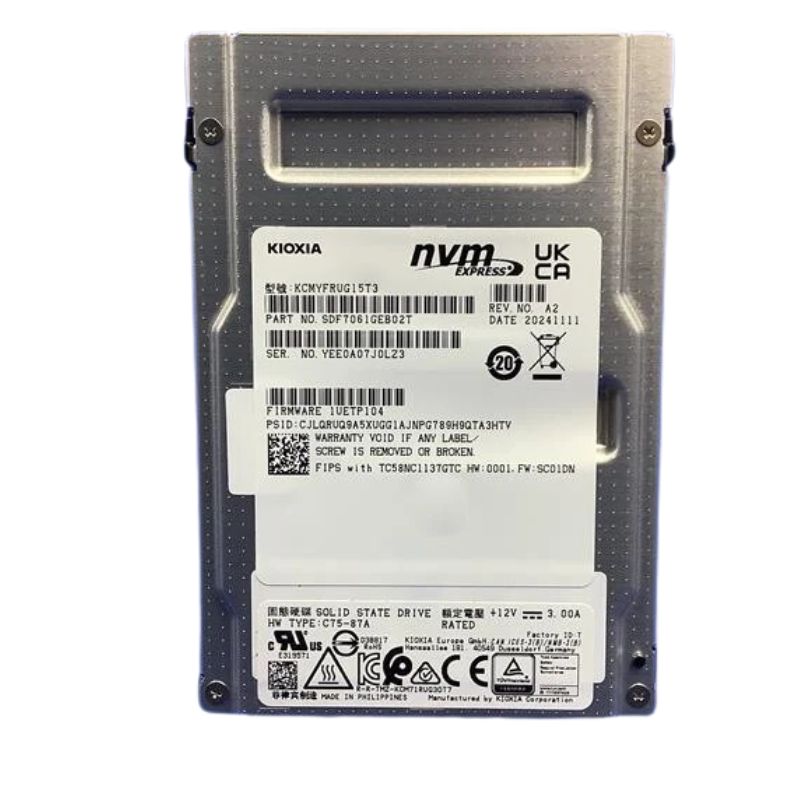


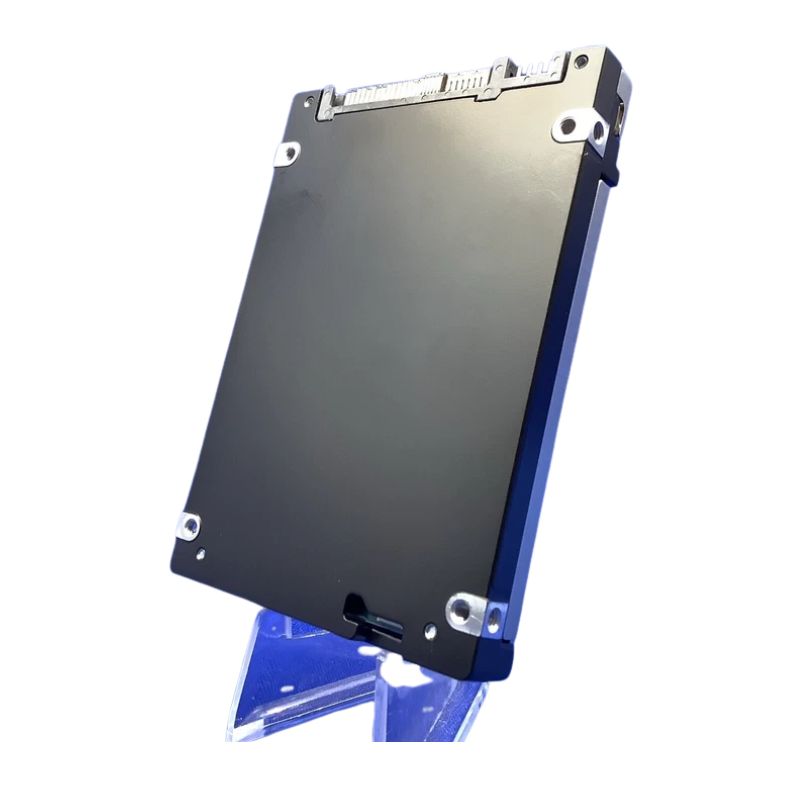
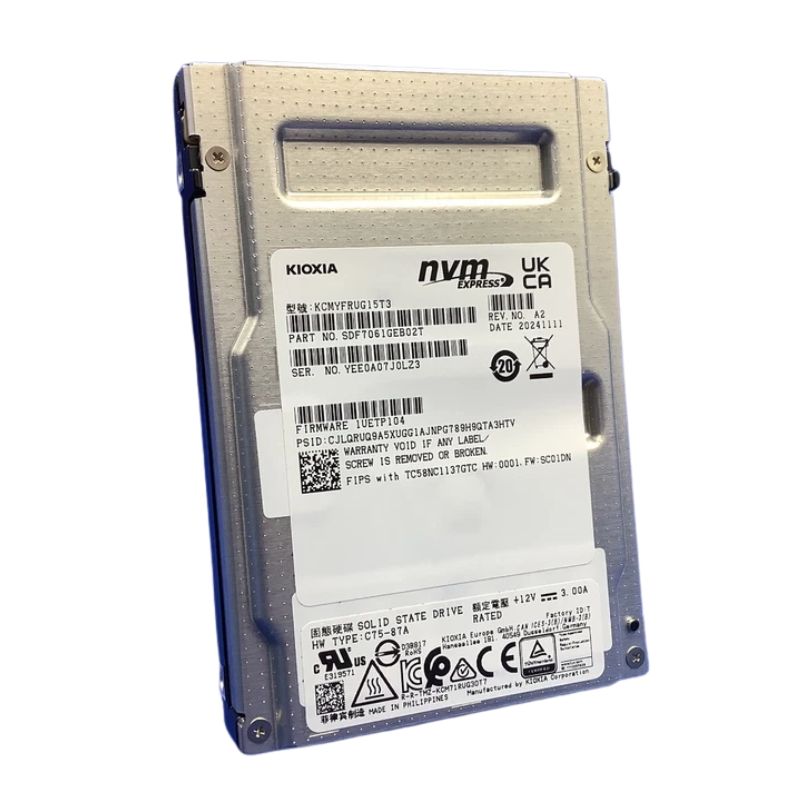
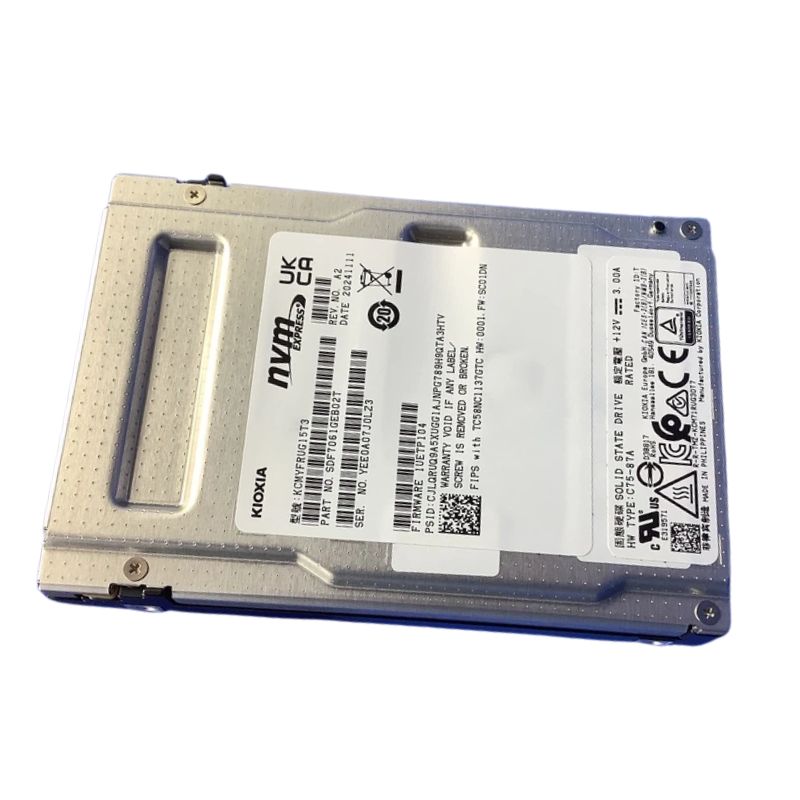
Outline of Kioxia KCMYFRUG15T3 CM7-R Series SSD
The Kioxia KCMYFRUG15T3 15.36TB CM7-R Series PCIe Gen5 NVMe SSD brings a new level of efficiency and read-intensive performance to modern data-center infrastructures. Designed for workloads that demand high responsiveness, consistent throughput, and rigorous data protection, this drive blends advanced BiCS FLASH™ TLC technology with next-gen connectivity, ensuring superior reliability and streamlined operations across enterprise servers, cloud environments, and hyperscale architectures.
The Kioxia KCMYFRUG15T3 15.36TB is a high-capacity, enterprise-grade NVMe SSD in the CM7-R family designed specifically for read-intensive workloads. It combines PCIe® Gen5 performance and NVMe™ 2.0 protocol advances with 3D TLC NAND to deliver very high sequential and random read throughput, enterprise endurance tuned for data center read-heavy applications, and hardware-level security options such as FIPS-certified self-encrypting drive (SED) variants. The CM7-R lineup supports the U.3 / 2.5-inch (15 mm) form factor commonly used in modern rack servers and storage arrays, enabling straightforward retrofit and new-build deployments in dense enterprise environments.
PCIe Gen5 doubles the per-lane bandwidth compared with Gen4, and the CM7-R leverages a x4 lane implementation to unlock extremely high aggregate throughput. In practical terms, this enables up to the low-to-mid tens of gigabytes per second for sequential reads and writes in a single drive under ideal conditions; random read IOPS for small block sizes can scale into the millions depending on host and platform architecture. NVMe 2.0 also brings protocol refinements and improved efficiency for low-latency, multi-queue operations commonly used by modern kernels and storage stacks.
For system architects that consolidate hot read datasets (search indexes, OLTP read replicas, analytics read caches), the throughput headroom of PCIe Gen5 paired with the CM7-R helps reduce application-visible latency and increases transaction throughput without adding many drives — lowering rack-level power and cooling costs for a target level of performance.
When evaluating CM7-R for a deployment, prioritize the metrics that match your workload. The drive excels at:
Small random reads (4 KiB): Extremely high IOPS make it ideal for read-heavy OLTP, name-node metadata, and CDN metadata stores.
Large sequential transfers (128 KiB+): High sequential throughput supports bulk restores, data set scanning, and content streaming.
Write performance is competent for a read-intensive class (sustained write bursts and background garbage collection are well managed), but if an application requires heavy or sustained multi-DWPD writes, consider write-optimized enterprise families instead. Typical sustained sequential write figures for the CM7-R family still allow efficient staging and caching tasks.
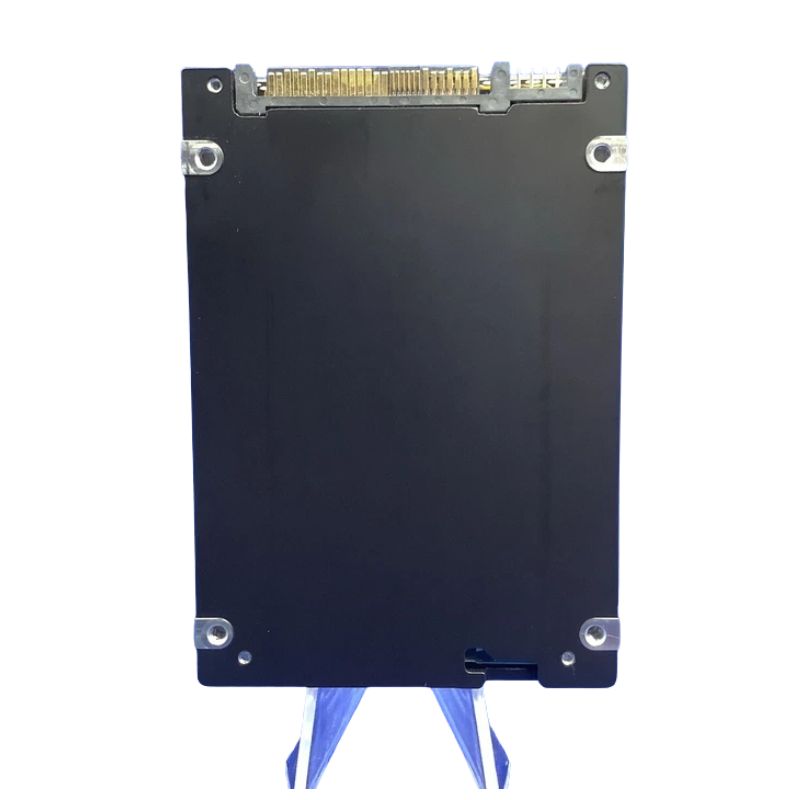
The KCMYFRUG15T3 comes in the 2.5-inch U.3 / 15 mm height form factor — a workhorse standard across servers and many enterprise JBODs. The thicker 15 mm height allows higher NAND density, enabling the 15.36 TB capacity in a single U.3 drive footprint. That makes it easier to rack large aggregate capacity while retaining hot-swap convenience in modern servers.
High bandwidth operation on Gen5 hardware drives more power and thermal load than previous generations. Expect thermal management best-practices including:
Proper cooling ensures the drive achieves published throughput without thermal throttling while maintaining long life for NAND cells and controller electronics.
Security is often a gating requirement for enterprise procurement. The CM7-R family includes models with self-encrypting drive capabilities and FIPS certification options. These features provide hardware-based data-at-rest protection to satisfy regulatory or internal compliance — particularly useful for multi-tenant infrastructure, government workloads, and financial services. When selecting drives, confirm the exact FIPS version, key management compatibility (KMIP, enterprise KMS implementations), and whether host-based encryption alternatives are required. {index=6}
Analytics engines that scan large datasets but execute many read operations (OLAP queries, columnar database scans, materialized view access) benefit from the CM7-R’s combination of capacity and read throughput. High sequential throughput accelerates initial table scans; high random reads accelerate selective queries and index operations.
Search engines and index servers (Elasticsearch, Solr, search appliances) see large benefit from low latency and high IOPS for index lookups, metadata queries, and small random read operations. Replacing older SATA or Gen3 drives with CM7-R Gen5 NVMe drives often yields disproportionate latency reductions and throughput gains for search workloads.
Hosts that serve many read-dominant VMs or container instances can use CM7-R devices as a consolidated hot tier. The drive’s capacity allows many more cached images or frequently accessed datasets to live on fast NVMe rather than slower mid-tier storage. For stateless VDI or microservice images, this results in faster boot storms and better overall end-user experience.
The CM7-R is classified as a read-intensive drive with endurance optimized around 1 DWPD over its warranty window (typical for the family). That means the drive is expected to sustain whole-drive writes at roughly once per day for the warranty duration without exceeding its designed program/erase cycles. For read-dominated deployments (where write amplification is controlled), this offers significant cost savings in $/TB compared to higher-endurance, write-optimized variants.
Enterprise SSDs like the CM7-R implement strong ECC, background media management, and end-to-end data path protection to preserve data integrity across NAND cycles and controller operations. Coupled with power-loss protection features at the platform level (power capacitors or server backplane protections), these drives are suitable for critical workloads where silent data corruption is unacceptable.
NVMe is broadly supported across modern Linux, Windows Server, and hypervisor platforms. To maximize performance, ensure:
Firmware and BIOS/UEFI on the host are Gen5-ready and expose PCIe Gen5 lanes properly.Kernel NVMe drivers are up to date (many OS distributions shipped updated NVMe stacks in the last few releases to support NVMe 2.0 features).
Host BIOS settings (ASPM, SR-IOV, SRIS etc.) follow vendor guidance for NVMe Gen5 operation.
Also validate compatibility with storage arrays, backplanes, and HBAs — some legacy backplanes may not fully pass Gen5 signal integrity requirements or may need specific firmware. For multi-drive arrays, consider whether the backplane supports the drive’s thermal/power profile at scale.
CM7-R drives are commonly used in read-heavy cache tiers in front of persistent object or erasure-coded tiers. When used behind RAID controllers or software RAID, configure rebuild policies and stripe sizes to reflect the read pattern: smaller stripes for random-read dominated workloads; larger stripes for bulk sequential scans. If used in erasure-coded object stores, balance the tradeoffs between capacity efficiency and rebuild network/read amplification during failure events.
Compared to write-optimized drives (higher DWPD, more over-provisioning), the CM7-R delivers lower per-TB cost but less sustained write endurance. Compared to mixed-use models, it strikes a balance: excellent read performance and adequate writes for caching and staging, but not intended as the primary heavy write layer for log-intensive databases. When architecting a storage stack, pair read-intensive drives like the CM7-R with write-oriented tiers or cloud archival tiers depending on the workload’s read/write profile.
Gen5 provides greater headroom for future scale and reduces the number of drives required to hit a performance target. If your environment cannot yet support Gen5 (host, backplane, or OS), Gen4 drives remain a valid choice, often at lower cost. However, for new builds planning multi-year lifecycle, Gen5 drives are forward-looking and can reduce lifecycle churn by meeting performance requirements longer.
Enterprise NVMe controllers in the CM7-R family implement multi-core microprocessors, advanced wear-leveling, hardware ECC, and robust garbage collection algorithms tuned for TLC media. Firmware typically exposes vendor namespaces for telemetry, health, and secure erase functions. These features together maintain high performance under mixed I/O while preserving NAND health and minimizing background impact on foreground read performance.
The CM7-R supports NVMe namespaces, allowing hosts to partition capacity logically and to use namespace management for software arrays, partitioned cache pools, and multi-tenant isolation. Namespace features are useful when combining multiple service classes on a single device or when using advanced host software that orchestrates namespaces for QoS management.
Enterprise drives include data path protections to reduce the risk of in-flight data corruption on unexpected power loss. While implementation details vary, combine these drive features with server PDUs and controlled shutdown scripts to further minimize risk.


 Contact Us
 Information
 Catalog
 Solid State Drives (SSD)
 Network Switches
 Hard Disk Drives
 HBA & Controllers
 PC & Servers
 PC & Server Memory
 CPU & Processors
 Network Routers
 Power Supplies
 Tape Drives & Libraries
 Network Devices
 Computer & Network Cables