(7% discount is applied at checkout)
Cart is empty
Your go-to destination for cutting-edge server products
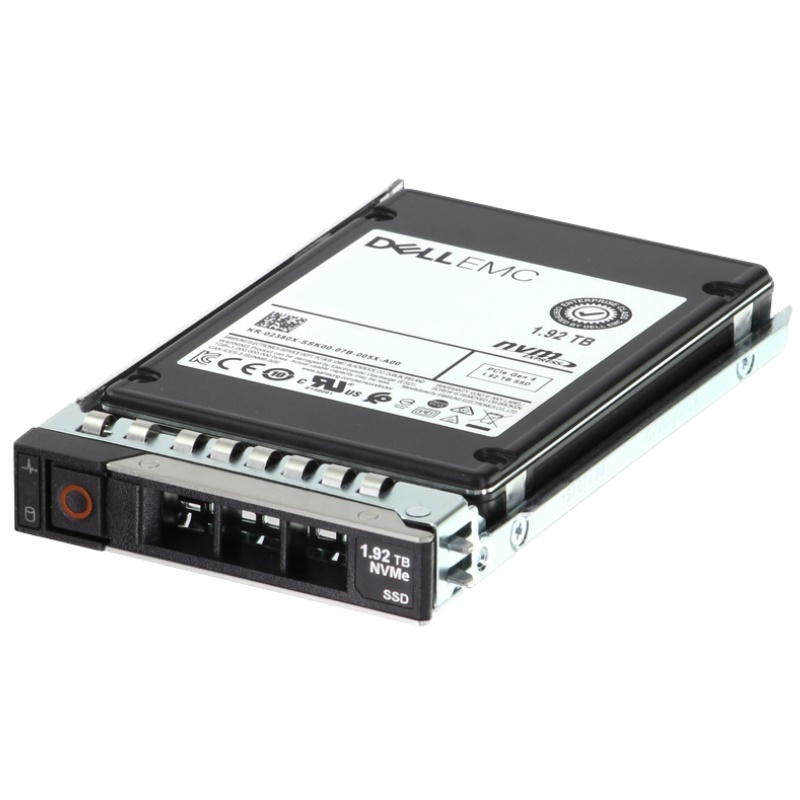


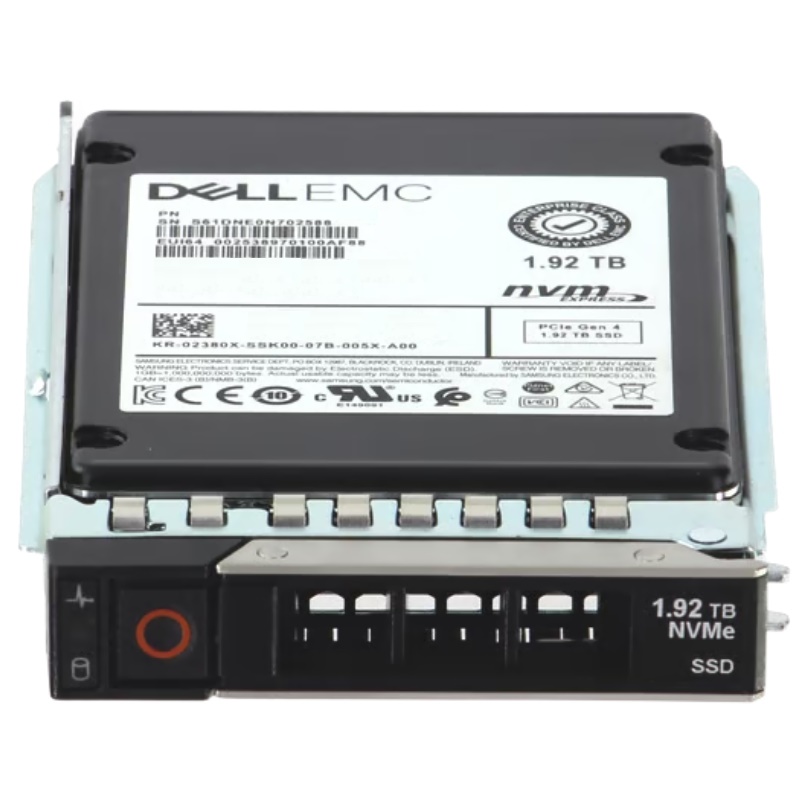
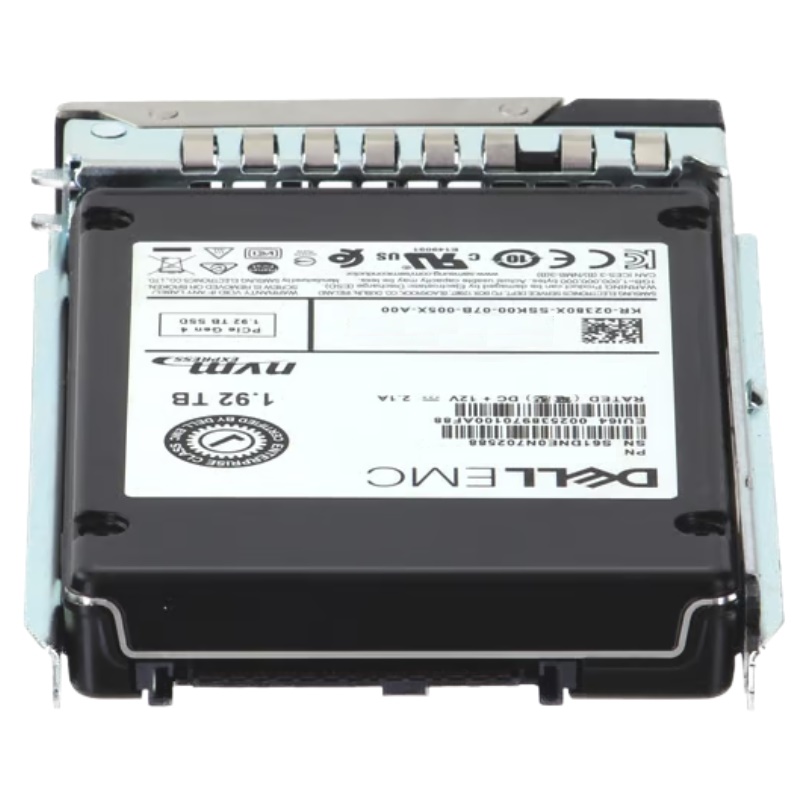
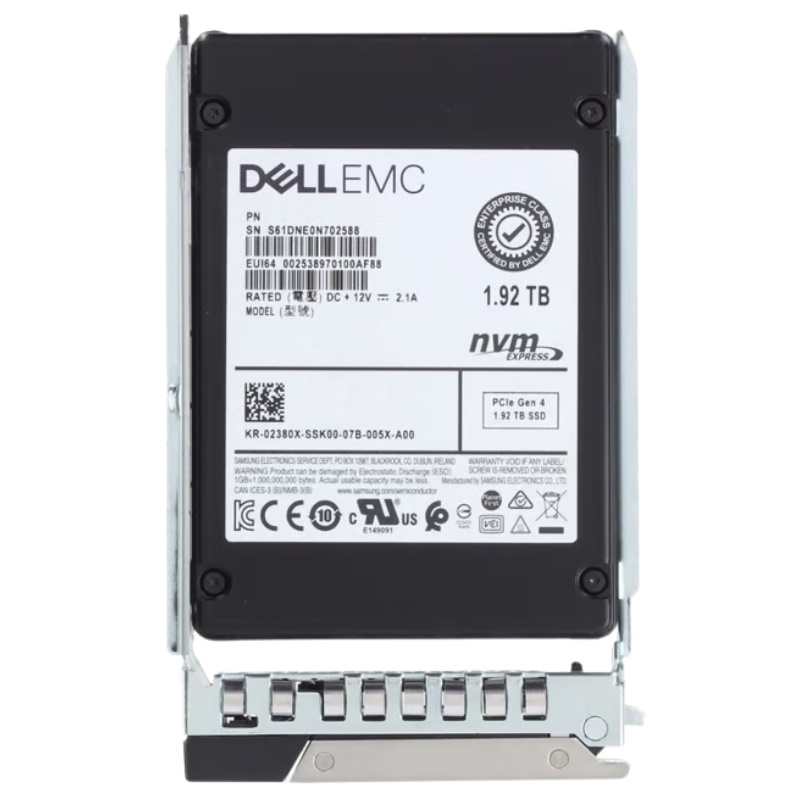
Dell 400-BTFR 1.92TB PCI-Express Gen 4.0 X4 NVMe U.2 SFF 15mm Read-Intensive TLC 3D-Nand for Poweredge Server Solid State Drive. New Sealed in Box (NIB) with 1-Year Replacement Warranty
Dell Solid State Drive engineered for Enterprise-Grade PowerEdge servers. High-capacity 1.92TB NVMe storage with PCI-E Gen 4.0 x4 interface. Compact U.2 15mm design optimized for data centers. Read-Intensive TLC 3D NAND architecture for reliability and endurance. Dell 400-BTFR 1.92TB PCI-E Gen 4.0 X4 NVMe U.2 SFF 15mm Read-Intensive TLC 3D-Nand for Poweredge Server Solid State Drive.
The Dell 400-BTFR 1.92TB PCI-Express Gen 4.0 X4 NVMe U.2 SFF 15mm Read-Intensive TLC 3D-Nand for Poweredge Server Solid State Drive sits at the intersection of enterprise-grade durability and modern NVMe performance. Designed expressly for server environments, this SSD category emphasizes the specialized combination of the U.2 SFF 15mm form factor, PCIe Gen 4.0 x4 interface, and NVMe protocol to deliver low-latency access and high sustained read throughput. These drives are tailored for read-intensive workloads where predictable performance, power efficiency and integration with Dell PowerEdge server management are foundational requirements. Within the category, buyers encounter variants of capacity, endurance ratings, firmware optimizations and compatibility matrices that collectively support data center storage tiers optimized for caching, database acceleration, virtualization hosts, and read-heavy content delivery services.
At the core of the Dell 400-BTFR 1.92TB PCI-Express Gen 4.0 X4 NVMe U.2 SFF 15mm Read-Intensive TLC 3D-Nand for Poweredge Server Solid State Drive is a high-speed PCIe Gen 4.0 connection operating with four lanes. This interface doubles the per-lane bandwidth compared to previous generations and unlocks higher sequential and random throughput for the controller and NAND to exploit. The NVMe protocol, purpose-built for flash storage, reduces host overhead and parallelizes command streams to make full use of the SSD's internal parallelism. The U.2 SFF 15mm form factor offers enterprise-quality hot-swap capability in a standard 2.5-inch footprint while providing room for thermal solutions and robust capacitors, a critical consideration for sustained high-performance workloads typical of PowerEdge server deployments.
The Dell 400-BTFR 1.92TB PCI-Express Gen 4.0 X4 NVMe U.2 SFF 15mm Read-Intensive TLC 3D-Nand for Poweredge Server Solid State Drive delivers performance characteristics tailored to data center expectations. Sequential reads and random read IOPS are engineered to remain high under mixed workload conditions. The PCIe Gen 4.0 x4 link allows controllers to sustain higher bandwidth bursts and higher steady-state performance than equivalent Gen 3 devices. In practice, the drive's firmware prioritizes read latency and queuing efficiency, ensuring consistent response times for database queries and content distribution. For read-heavy tasks, the drive's internal caching algorithms and performance-optimized firmware reduce tail latency, which is essential when meeting service-level agreements and maintaining interactive application responsiveness across multiple tenants or VMs on a PowerEdge host.
Low average latency alone is not sufficient in enterprise environments; tail latency reduction is what preserves user experience under load. The Dell 400-BTFR 1.92TB PCI-Express Gen 4.0 X4 NVMe U.2 SFF 15mm Read-Intensive TLC 3D-Nand for Poweredge Server Solid State Drive implements NVMe command queueing strategies, intelligent garbage collection scheduling, and power-loss protection mechanisms that work together to minimize outlier latencies. These capabilities mitigate the impact of background operations on foreground I/O, ensuring that critical read operations remain predictable even during sustained activity. This is particularly valuable in multi-tenant virtualization and database workloads where latency spikes on shared storage can cascade into application-level performance degradation.
The U.2 SFF 15mm form factor used in the Dell 400-BTFR 1.92TB PCI-Express Gen 4.0 X4 NVMe U.2 SFF 15mm Read-Intensive TLC 3D-Nand for Poweredge Server Solid State Drive offers a balance between compact density and thermal headroom. The 15mm height allows for additional components and cooling paths that are not feasible in thinner 7mm or 9.5mm 2.5-inch SSDs. This extra space enables larger heatsinks, more robust controller designs and capacitors for power-loss protection—elements that improve endurance and reliability in dense server racks. Administrators integrating these drives into PowerEdge enclosures should plan airflow and thermal zones accordingly, as sustained Gen 4 throughput can increase device thermals. Many PowerEdge server chassis include directed airflow channels and drive sled designs that assist in maintaining optimal temperatures for U.2 devices, but proper provisioning and monitoring remain essential for long-term stable operation.
Compatibility with Dell PowerEdge servers is a defining attribute of this category. The drives typically ship with firmware tuned and qualified for PowerEdge platforms, and they integrate with Dell's server management utilities so administrators can monitor SMART attributes, endurance metrics and temperature within the same tools used to manage the chassis and compute resources. This tight integration simplifies lifecycle management, such as firmware updates and proactive failover procedures. For large-scale deployments, this compatibility ensures that replace-and-rebuild workflows align with established operational playbooks, reducing the risk of surprises during maintenance windows and ensuring predictable interactions with RAID controllers and NVMe-aware orchestration layers.
Endurance is measured differently depending on whether the workload is read-intensive, mixed-use or write-intensive. The Dell 400-BTFR 1.92TB PCI-Express Gen 4.0 X4 NVMe U.2 SFF 15mm Read-Intensive TLC 3D-Nand for Poweredge Server Solid State Drive is classified as read-intensive, meaning the NAND and firmware are optimized for scenarios where reads vastly outnumber writes. This classification supports lower cost per gigabyte by leveraging triple-level cell (TLC) 3D NAND while maintaining enterprise-grade data protection. The drive's wear-leveling algorithms, error correction code (ECC) strategies, and over-provisioning work together to preserve data integrity over the expected service life. Power-loss protection circuits help ensure that in-flight data is not lost during unexpected power events, and host-level journaling combined with controller-level protections reduce the chance of data corruption during abrupt shutdowns.
Error correction is a multi-layered approach within this SSD category. Sophisticated ECC algorithms operate at the NAND plane level to correct bit errors, while controller firmware employs background scrubbing and integrity verification to detect and repair latent issues before they impact host reads. Some models include enhanced telemetry for read disturb and retention monitoring, enabling administrators to proactively retire increasingly aged NAND blocks. This combination of ECC, mapping strategies and predictive analysis reduces the risk of silent data corruption and extends the usable life of the drive under the read-intensive classification.
The Dell 400-BTFR 1.92TB PCI-Express Gen 4.0 X4 NVMe U.2 SFF 15mm Read-Intensive TLC 3D-Nand for Poweredge Server Solid State Drive is ideal for multiple enterprise scenarios. High-performance database read replicas, analytics query engines, virtualization storage for read-dominant VM images, software content distribution caches, and boot volumes for compute nodes are all exemplary fits for this category. Where read throughput and low latency translate directly into user experience or analytical throughput, these drives deliver measurable advantage. When used as part of a tiered storage architecture, they serve as a high-speed read tier placed in front of higher-capacity, lower-cost drives, significantly accelerating database and application response times while minimizing total cost of ownership.
In virtualization and virtual desktop infrastructure (VDI) environments, the ratio of read to write operations is typically high due to common read activity across many virtual machines. The Dell 400-BTFR 1.92TB PCI-Express Gen 4.0 X4 NVMe U.2 SFF 15mm Read-Intensive TLC 3D-Nand for Poweredge Server Solid State Drive supports dense VM consolidation by providing rapid reads for boot storms, application launches and image distribution. Better read performance reduces I/O contention and improves the number of supported concurrent users per host. When deployed alongside persistent caching software or hypervisor-level read caches, these drives can amplify user-density without disproportionately increasing storage spend.
Dell 400-BTFR class SSDs involves considerations at the server, storage and orchestration layers. Administrators should confirm firmware compatibility with the PowerEdge model and server BIOS revisions to ensure the NVMe enumeration and hot-swap behaviors are correct. Drive slot mapping, predictable device naming in operating systems and declustering for parallel I/O access patterns should be planned in advance. RAID-like configurations or NVMe namespaces can be leveraged to provide redundancy at the device level, but design choices should align with application-level redundancy to avoid double redundancy inefficiencies. Integration with configuration management tools and monitoring platforms is essential for proactive maintenance and lifecycle operations.
Compared to consumer NVMe devices or mixed-use enterprise models, the Dell 400-BTFR 1.92TB PCI-Express Gen 4.0 X4 NVMe U.2 SFF 15mm Read-Intensive TLC 3D-Nand for Poweredge Server Solid State Drive emphasizes read performance, firmware stability and server integration rather than maximum write endurance. Where write-intensive SSDs target heavy logging or transactional workloads with higher DWPD specifications, the read-intensive category trades some write endurance to achieve economical capacity with TLC NAND while still providing enterprise-level data protection. Compared to SATA-based enterprise SSDs, the Gen 4 NVMe U.2 devices offer drastically higher throughput and significantly lower latency. Against E1.S or M.2 NVMe modules, the U.2 SFF 15mm drives provide hot-swap convenience and better thermal headroom, valuable in rack-scale server deployments that favor serviceability and standardized drive bays.
Modern software-defined storage stacks and container orchestration platforms can benefit significantly from a high-performance read tier. When integrating Dell 400-BTFR class SSDs into such stacks, leverage NVMe namespaces or persistent volumes that map directly to the underlying NVMe devices for the lowest possible latency. For containerized workloads, consider placement constraints and affinity rules that pair latency-sensitive applications with the compute nodes housing the NVMe devices. Additionally, ensure that backup and snapshot strategies are adapted to the higher throughput characteristics; snapshotting technologies must be validated to ensure they do not cause unexpected performance degradation during heavy read periods.


 Contact Us
 Information
 Catalog
 Solid State Drives (SSD)
 Network Switches
 Hard Disk Drives
 HBA & Controllers
 PC & Servers
 PC & Server Memory
 CPU & Processors
 Network Routers
 Power Supplies
 Tape Drives & Libraries
 Network Devices
 Computer & Network Cables