(7% discount is applied at checkout)
Cart is empty
Your go-to destination for cutting-edge server products
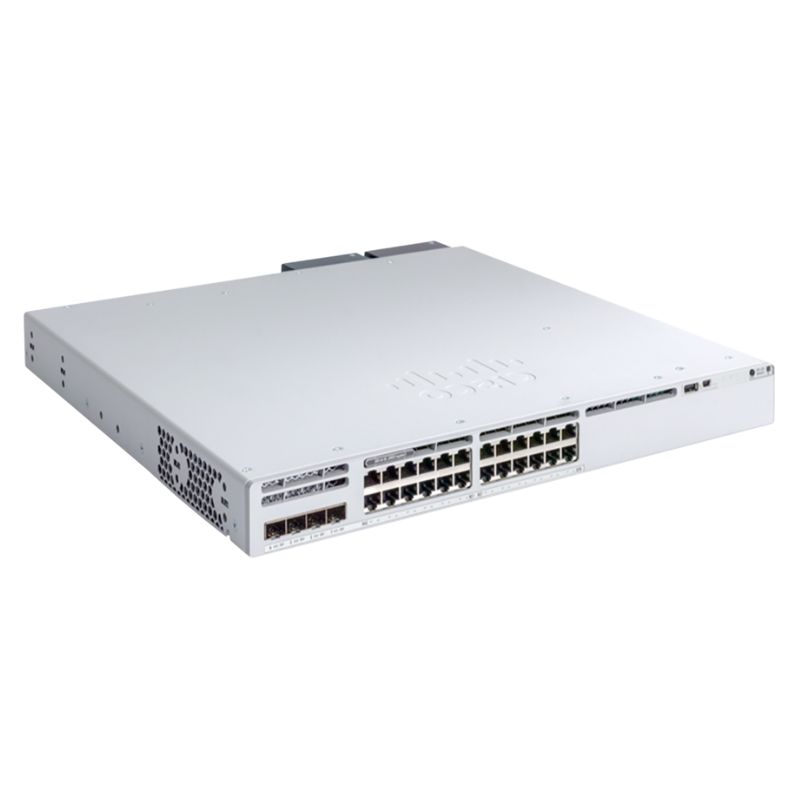


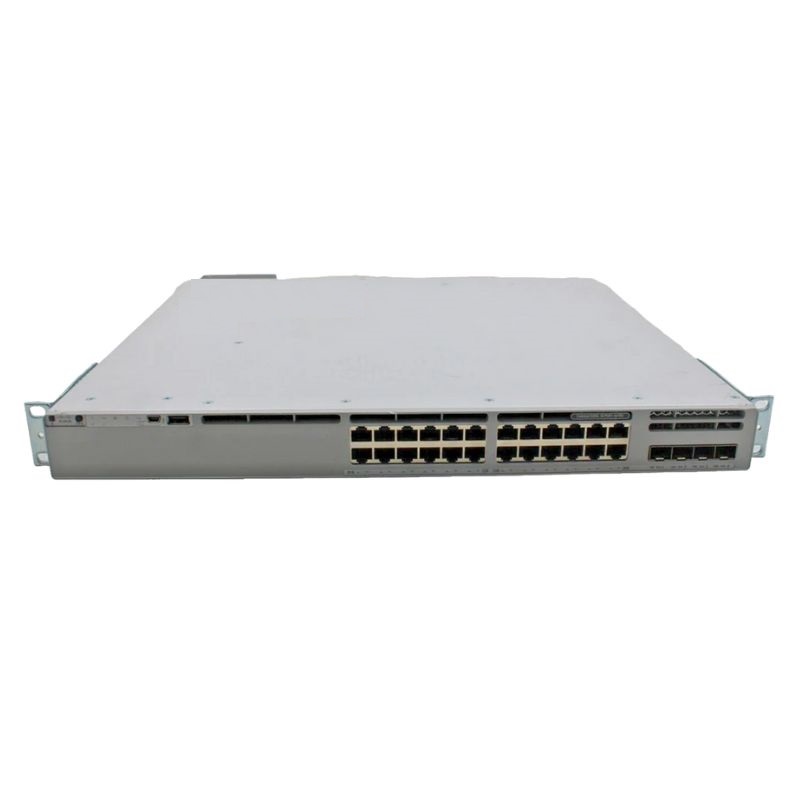
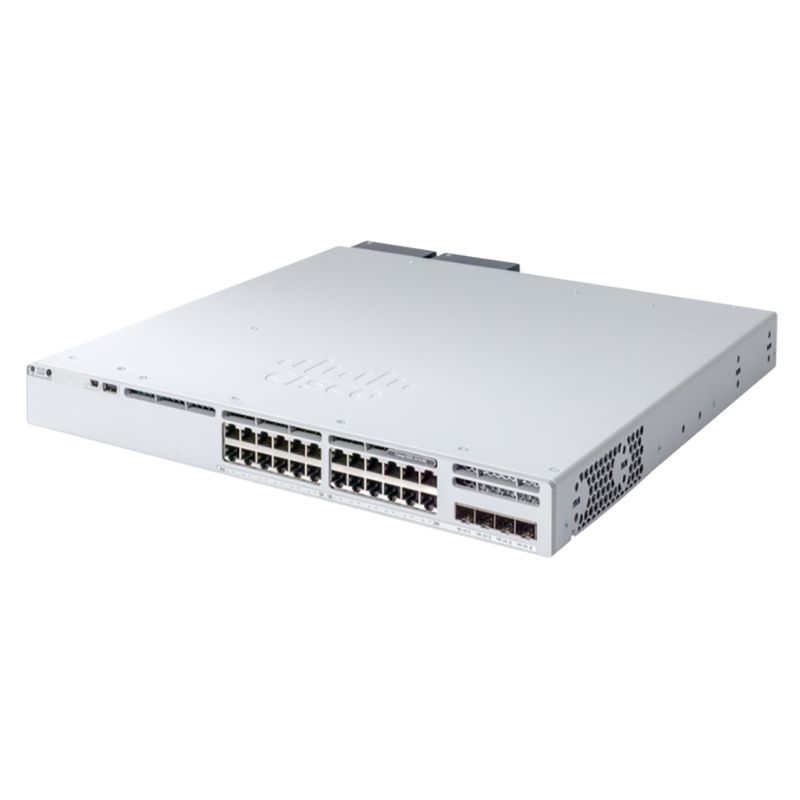
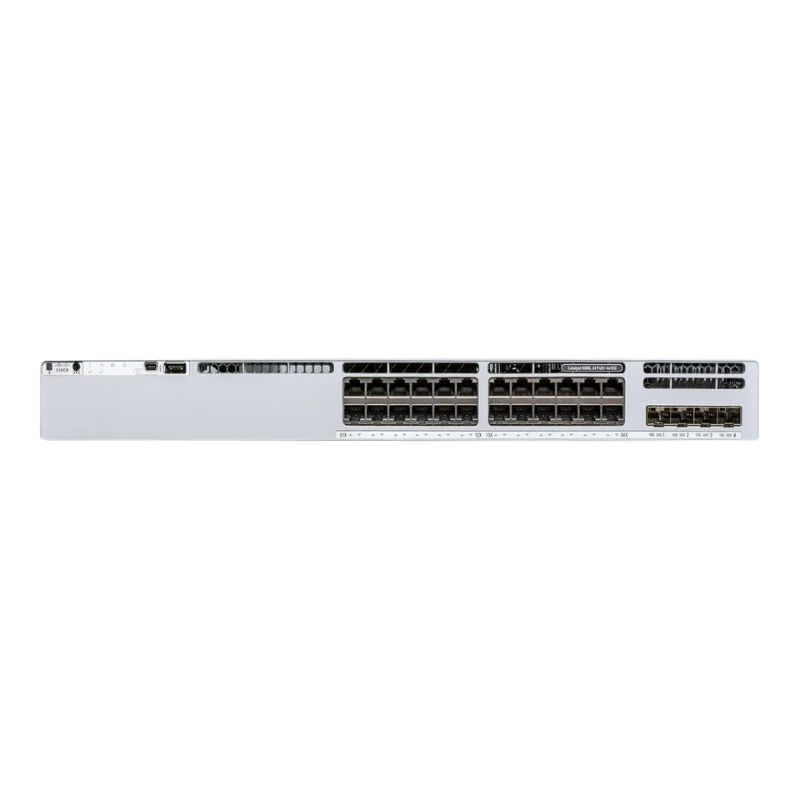
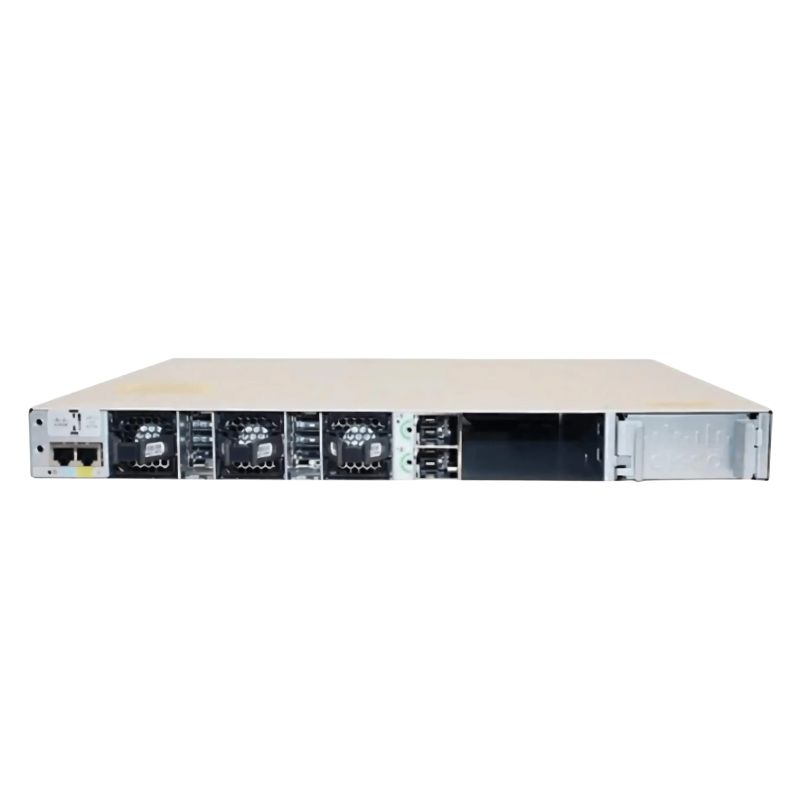
Cisco C9300L-24P-4X-M Meraki Catalyst 24 Ports Manageable 10 Gigabit Ethernet Switch. Factory-Sealed New in Original Box (FSB) with 1 Year Replacement Warranty
The Cisco C9300L-24P-4X-M is a high-performance, rack-mountable 24-port switch designed for enterprise networking environments. Combining advanced Layer 3 capabilities with robust PoE+ support, it ensures reliable connectivity and efficient network management.
The Cisco Catalyst C9300L‑24P‑4X-M represents a powerful embodiment of enterprise‑class switching technology. As part of the Catalyst 9300 series, this 24‑port managed switch is engineered to deliver robust, high‑performance connectivity with flexible uplink options, advanced Layer 3 capabilities, and comprehensive PoE support. For organizations seeking a dependable, rack‑mountable, and future‑ready network core or distribution switch, this model and its sibling variants define the standard in modern network infrastructure. The broader category of Catalyst 9300‑class switches encompasses multiple variants: non‑PoE models, larger 48‑port configurations, differing uplink modules, and various power‑budget tiers. Within this landscape, the C9300L‑24P‑4X-M stands out for balancing port density, power delivery, uplink versatility, and operational efficiency, making it ideal for campus networks, branch offices, converged data/voice/video deployments, and scalable enterprise environments.
At the heart of the C9300L‑24P‑4X-M lies its capability to support 10 Gigabit Ethernet uplinks via 10GBASE‑X modules, enabling seamless integration with a high‑speed fiber backbone. This ensures that uplink capacity is no longer a bottleneck even when the switch is handling a full load of PoE devices, Gigabit endpoints, and heavy inter‑VLAN traffic. The 10GBASE‑X interface delivers exceptional throughput and low latency, supporting core‑to‑distribution or distribution‑to‑aggregation links in enterprise networks. Whether connecting to data center switches, aggregation routers, or upstream distribution layers, the 10 Gbps uplink ensures the entire wiring closet maintains end‑to‑end performance consistency, while preserving headroom for future bandwidth requirements.
The dual support for fiber and copper uplink options elevates the versatility of this switch. The 24 fixed ports offer 10/100/1000BASE‑T connectivity for desktops, servers, wireless access points, IP phones, and other standard Ethernet devices. Meanwhile, the modular uplink slots accept 10GBASE‑X transceivers, granting access to fiber optic media and extended reach. This hybrid approach allows enterprises to deploy the switch in a variety of environments—wired office floors, data‑center edge racks, or mixed‑media distribution closets—without compromising on performance or cabling standards. The ability to mix copper and fiber uplink ports makes migration smoother when network expansions or infrastructural shifts are necessary, reducing complexity and capital expenditure over time.
A critical aspect that distinguishes the Catalyst 9300 family—and by extension the C9300L‑24P‑4X-M—is its native support for Layer 3 routing. With full support for inter‑VLAN routing, static routes, dynamic protocols (such as OSPF, EIGRP, or RIP depending on licensing), VRF segmentation, and IPv4/IPv6 dual‑stack operation, this switch operates not just as a high-capacity access layer device, but also as a capable distribution‑layer router. This ensures that segmentation, traffic isolation, and efficient routing are embedded directly into the switching hardware, reducing the reliance on external routers for many network topologies. For enterprises that demand intelligent traffic control, network segmentation for security or compliance, or optimized routing across subnets, this built-in Layer 3 functionality streamlines architecture and simplifies deployment.
The “24P” designation in C9300L‑24P‑4X-M signifies substantial PoE capability. With up to 715 watts of total power, the switch can supply standard PoE or PoE+ (and depending on Cisco licensing or optional modules even UPoE on supported ports) to a wide array of devices such as IP phones, wireless access points, security cameras, door access controls, and other powered network equipment. This total power budget allows network administrators to deploy dozens of PoE devices without deploying separate power injectors or dedicated power cabling. The integrated power supply and thermal design ensure stable operation even under full load, enabling consistent performance for power‑hungry devices across large installations.
Modern enterprise networks increasingly converge data, voice, wireless, and video traffic on a single infrastructure. The C9300L‑24P‑4X-M meets these demands head‑on. Its ample PoE budget makes it ideal for powering high‑density wireless access points overhead or in corridors, IP phones on desktops, and high‑definition surveillance cameras throughout the facility. By consolidating power and data delivery into one switch, deployments are cleaner, more manageable, and more cost‑effective. Network administrators benefit from simplified cable management, lower maintenance overhead, and centralized power budgeting, freeing up rack space and reducing reliance on external power injectors.
The rack‑mountable chassis of the Catalyst C9300L‑24P‑4X-M is designed for seamless integration in standard 19‑inch network racks. Its modular uplink architecture allows for the insertion or upgrade of 10GBASE‑X transceivers, offering future‑proofing and flexibility as network demands evolve. Whether deployed in wiring closets, centralized distribution racks, or data‑center edge enclosures, the switch’s form factor ensures clean, organized, and professional installations. Rack ears and mounting hardware are provided, facilitating straightforward deployment in existing infrastructure without the need for custom enclosures or special cabinet modifications.
Enterprise‑grade deployments require not only high performance but also reliability and manageability. The Catalyst switch chassis is engineered with efficient airflow patterns, fan modules, and thermal management to handle full PoE loads while maintaining optimal operating temperatures. Redundant or hot‑swappable power supply options (depending on configuration) make it possible to design high‑availability deployments. Maintenance tasks, firmware upgrades, and configuration backups can all be managed remotely, minimizing downtime. Such features align with the expectations for enterprise network equipment used in mission‑critical environments.
Security, traffic control, and policy enforcement are vital in enterprise and campus networks. The Catalyst 9300 series, including C9300L‑24P‑4X-M, supports advanced access layer and distribution layer features such as QoS (Quality of Service), ACLs (Access Control Lists), VLAN segmentation, SVI-based routing, DHCP snooping, dynamic ARP inspection, and IPv4/IPv6 capability. These features help administrators manage bandwidth priorities—elevating voice or video traffic over standard data—and enforce security policies down to port level. Integration with network management tools, centralized logging, and support for network automation and orchestration frameworks make it easier to maintain consistency, compliance, and visibility across the enterprise network.
For organizations that rely on continuous network availability, Catalyst 9300 switches provide redundancy and resilience through configuration options such as redundant uplinks, power supply failover (when configured), and support for stacking or virtualization technologies that allow multiple switches to operate as a unified logical device. This reduces single points of failure and simplifies network design for high uptime requirements. Combined with features like Spanning Tree Protocol enhancements, rapid convergence, and link-state monitoring, deployments can be robust against failures or unexpected load spikes.
Organizations evolve, and their networking needs expand. The Catalyst 9300 family inherently supports scalability. While the C9300L‑24P‑4X-M is a 24‑port PoE‑enabled model, the wider category includes 48‑port variants, non‑PoE models, switches with differing uplink configurations, and switches with higher power budgets. As needs grow—for example, adding more wireless access points, cameras, or edge servers—network administrators can deploy additional units within the same series, ensuring consistency in management, configuration, interface, and security standards. Because they share firmware, CLI syntax, management paradigms, and interoperability, network expansion remains smooth and predictable, reducing training overhead and configuration drift.
Many models within the Catalyst 9300 family support stacking technologies (such as Cisco’s StackWise Virtual or StackWise‑160, depending on licensing and module type), which let multiple physical switches operate as a single logical switch. This simplifies network topology, centralizes management, and improves redundancy and load balancing. For deployments that may grow beyond a single floor or rack, such stacking ensures unified configuration, consistent forwarding behavior, and seamless failover. This unified approach helps future‑proof the network fabric, allowing it to evolve from a simple access layer to a distributed, logically centralized architecture without requiring different hardware families or disruptive upgrades.
The flexibility and capabilities of this switch make it well-suited for a variety of real‑world deployments. In a large enterprise campus network, it can serve as an access or distribution layer switch, delivering Gigabit-to-host connectivity while uplinking to a 10 Gbps fiber backbone. In branch or remote offices, its all‑in‑one capabilities allow small IT teams to deploy a fully functional, enterprise-grade switch with PoE, Layer 3 routing, and management in a single box. Converged environments—such as those running VoIP phones, wireless access points, and IP cameras—benefit from its generous PoE budget combined with bandwidth-efficient uplinks. Educational institutions, hotels, hospitals, and multi‑tenant buildings that demand secure, segmented networks with robust QoS and PoE for a range of devices will find the switch highly relevant. For data centers requiring edge or top-of-rack switching with uplink capacity and power for servers or appliances, this switch offers a compelling package. Anywhere reliability, manageability, power delivery, and performance intersect, the C9300L‑24P‑4X-M delivers.
When used as a distribution or access‑distribution layer device in a campus network, the switch aggregates connections from multiple access switches, wireless controllers, and security appliances. The high-speed 10G uplink ensures that traffic from dozens of Gi‑level ports does not overwhelm the uplink, preserving low latency and consistent throughput. VLAN segmentation, inter‑VLAN routing, and Layer 3 routing capabilities ensure that traffic between subnets flows efficiently without additional routers. PoE support powers access points and IP phones directly, reducing complexity and improving manageability. As a result, the network infrastructure remains clean, scalable, and capable of accommodating future growth without substantial re‑wiring or hardware replacement.
Not every deployment requires dozens of access switches, yet many remote offices still need enterprise‑grade functionality. The C9300L‑24P‑4X‑M bridges this gap by offering Layer 3 routing, PoE, switching capacity, and 10G uplinks in a compact, manageable package. IT administrators at small remote sites can deploy this single switch to manage local traffic, power devices, enforce security policies, and uphold performance standards. This reduces the need for multiple devices—router, switch, power injectors—and lowers operational overhead. Remote sites gain the same level of control, visibility, and reliability as core offices, enabling consistent network policies across an entire organization, regardless of size or location.


 Contact Us
 Information
 Catalog
 Solid State Drives (SSD)
 Network Switches
 Hard Disk Drives
 HBA & Controllers
 PC & Servers
 PC & Server Memory
 CPU & Processors
 Network Routers
 Power Supplies
 Tape Drives & Libraries
 Network Devices
 Computer & Network Cables