(7% discount is applied at checkout)
Cart is empty
Your go-to destination for cutting-edge server products
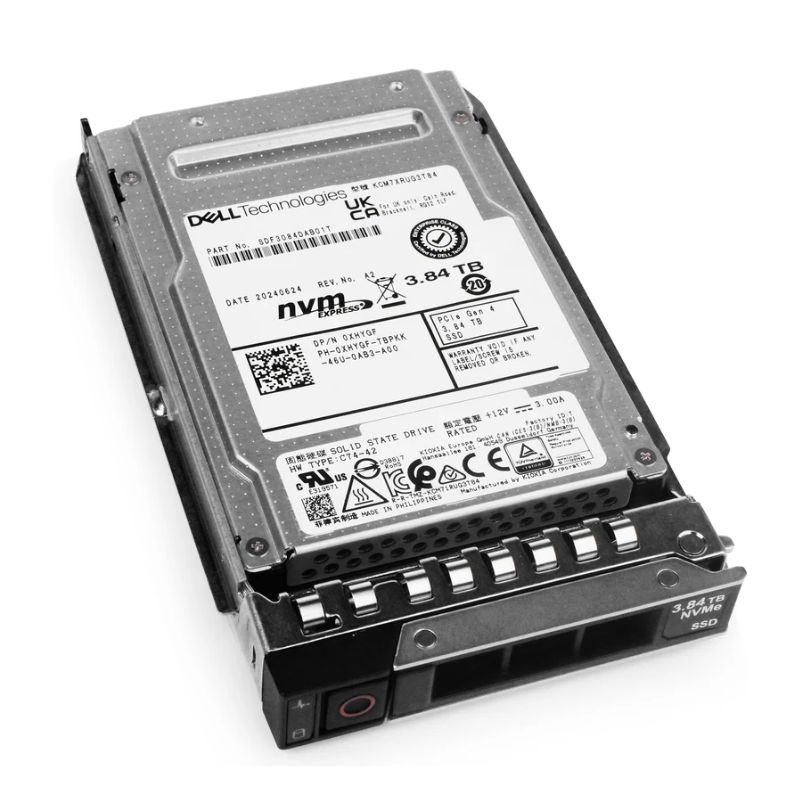


Overview of Dell Enterprise NVMe U.2 Read-Intensive SSD
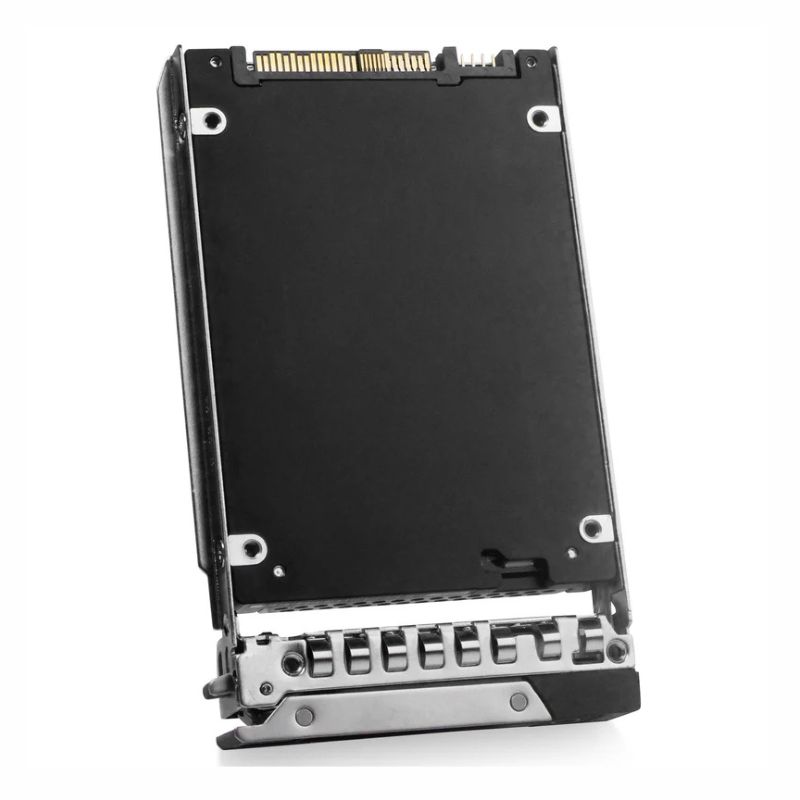
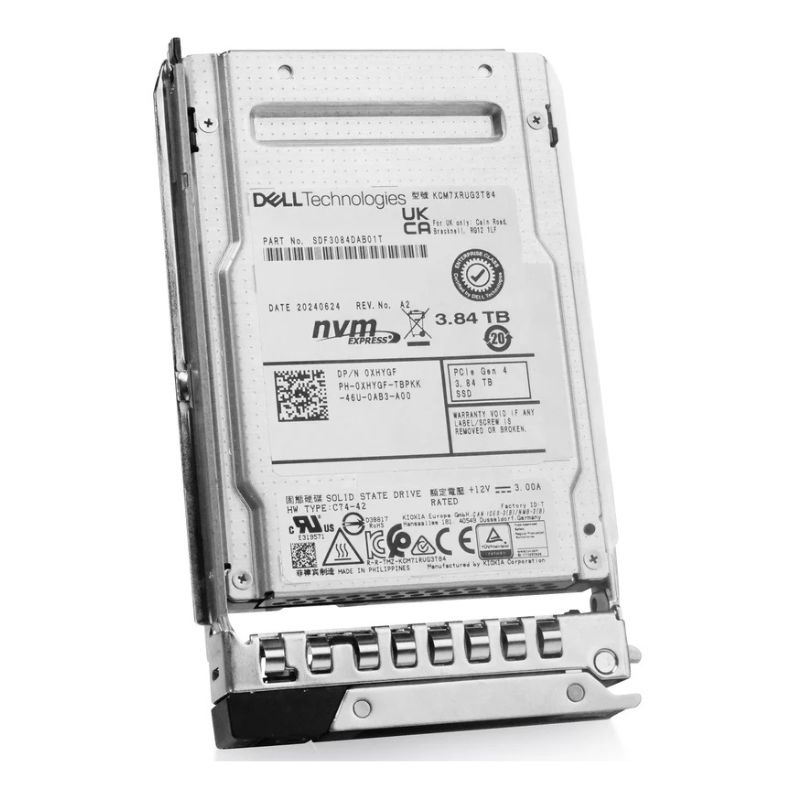
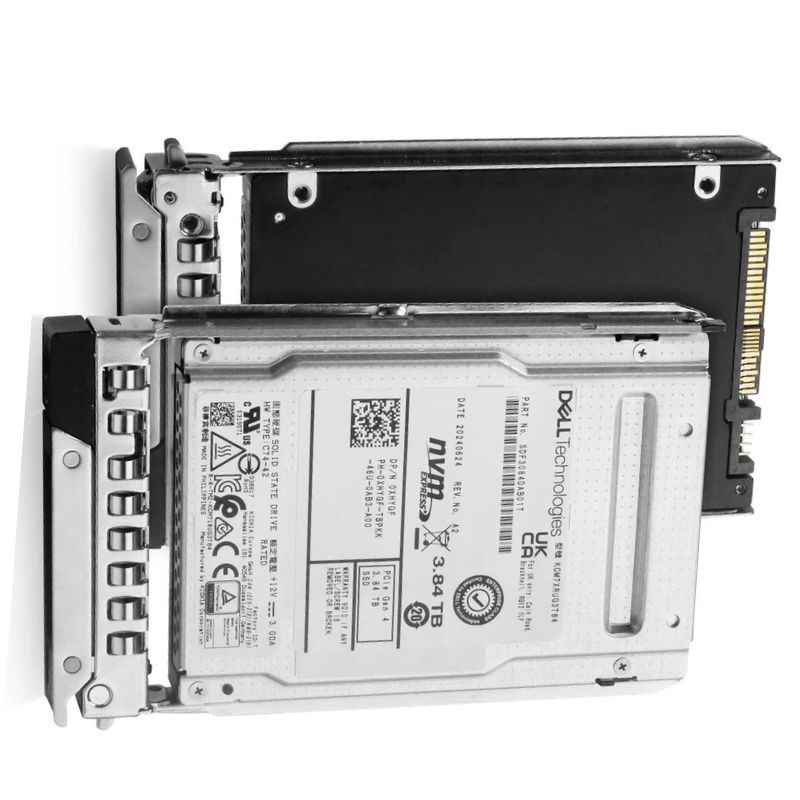
The Dell Enterprise NVMe U.2 Read-Intensive SSD with 3.84TB capacity is engineered to meet the evolving performance and reliability demands of enterprise IT infrastructures. Built for high-throughput environments, this solid-state drive supports data-heavy applications that require rapid access, low latency, and consistent responsiveness. Its enterprise-class architecture ensures dependable operation across mission-critical workloads while supporting modern server platforms.
The Dell 0XHYGF 3.84TB NVMe solid-state drive belongs to a high-performance enterprise storage category designed for modern data centers, virtualization platforms, and mission-critical workloads. This category focuses on PCIe Gen 4.0 x4 NVMe SSDs that deliver extremely low latency, high throughput, and consistent performance under sustained workloads. Products in this segment are optimized for servers and storage arrays that demand predictable quality of service, high endurance, and seamless integration with enterprise hardware ecosystems.
Enterprise NVMe drives in this category are engineered to handle intensive read and write operations while maintaining reliability over extended operational lifecycles. The combination of U.2 2.5-inch form factor and NVMe protocol ensures compatibility with a wide range of rack-mounted servers, blade systems, and hyper-converged infrastructures. This category addresses the evolving needs of organizations that rely on data-driven decision-making, real-time analytics, and high-speed transactional processing.
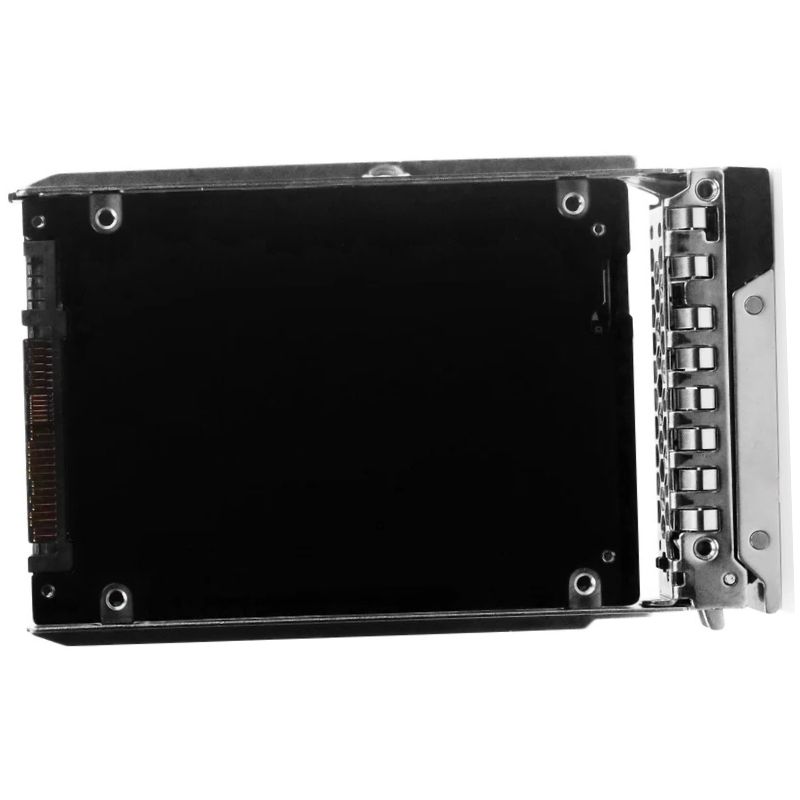
The 2.5-inch U.2 form factor represents a balance between density, cooling efficiency, and serviceability. This category emphasizes hot-swappable designs that allow administrators to replace or upgrade storage without disrupting system availability. The U.2 interface supports high-power NVMe devices while maintaining backward compatibility with existing enterprise server backplanes.
PCIe Gen 4.0 x4 connectivity is a defining characteristic of this category. It doubles the available bandwidth compared to previous generations, enabling theoretical transfer rates that approach 8GB/s. This architectural advancement allows servers to process large volumes of data with minimal bottlenecks, supporting workloads such as large-scale virtualization, high-frequency trading platforms, and advanced machine learning pipelines.
Non-Volatile Memory Express technology is central to this category, offering a streamlined command set and parallel processing capabilities that significantly reduce latency. NVMe SSDs are designed to take full advantage of the PCIe bus, eliminating the constraints associated with legacy SATA or SAS interfaces. This results in faster queue depths, improved IOPS performance, and better scalability for multi-core server environments.
In enterprise deployments, NVMe protocol efficiency translates into faster application response times and improved overall system utilization. This category prioritizes drives that maintain consistent performance even under mixed read and write workloads, ensuring stability for business-critical applications.
The 3.84TB capacity point positions this category as a mid-to-high density storage solution suitable for a wide range of enterprise use cases. It provides sufficient space for hosting large databases, virtual machine images, containerized applications, and high-resolution media assets. This capacity tier is particularly valuable for organizations seeking to optimize rack space while maintaining flexibility in storage allocation.
Drives in this category are often deployed in scale-out architectures where multiple SSDs work in parallel to deliver aggregated performance and capacity. The 3.84TB capacity allows for efficient data tiering strategies, balancing performance-sensitive workloads with cost considerations.
Three-dimensional triple-level cell NAND is a core component of this category, offering a balance between endurance, performance, and cost efficiency. 3D stacking techniques increase storage density while improving reliability compared to planar NAND designs. This enables manufacturers to deliver higher capacities without compromising on performance characteristics.
Enterprise-grade 3D TLC NAND used in this category is paired with advanced controllers and firmware algorithms that manage wear leveling, error correction, and garbage collection. These technologies ensure consistent performance and data integrity throughout the drive’s lifespan.
The endurance rating of 1 drive write per day is a key defining factor of this category. It indicates that the SSD can sustain one full drive write per day over its warranted lifespan, making it suitable for mixed-use enterprise workloads. This endurance level supports applications such as virtualization, email servers, collaboration platforms, and transactional databases.
Reliability is further enhanced through enterprise-grade components, rigorous validation processes, and firmware optimizations tailored for server environments. This category prioritizes predictable failure rates and long-term stability, which are essential for minimizing downtime and maintenance costs.
Advanced error correction mechanisms are integral to this category, ensuring data accuracy even under heavy workloads. Drives incorporate sophisticated ECC algorithms, end-to-end data protection, and power-loss protection features to safeguard data during unexpected interruptions.
These reliability features are critical for maintaining data integrity in environments where data corruption or loss can have significant operational and financial consequences. The category emphasizes drives that meet or exceed industry standards for enterprise storage reliability.
Performance consistency is a hallmark of this category. With sequential throughput capabilities approaching 8GB/s, these SSDs are designed to handle data-intensive tasks with ease. High random IOPS performance supports applications that require rapid access to small data blocks, such as online transaction processing systems and virtual desktop infrastructures.
Latency optimization is another key focus. Drives in this category deliver microsecond-level response times, reducing application wait times and improving user experience. This low-latency performance is particularly valuable for real-time analytics, financial modeling, and AI inference workloads.
The mixed-use classification of this category reflects its versatility. These drives are engineered to perform reliably under a combination of read-heavy and write-intensive operations. This makes them suitable for environments where workload patterns are dynamic and unpredictable.
Firmware-level optimizations ensure that performance remains stable even during sustained write operations, preventing performance degradation over time. This consistency is essential for maintaining service-level agreements in enterprise environments.
This category is specifically aligned with Dell enterprise server platforms, ensuring seamless integration and optimal performance. Drives are validated and certified for use in Dell PowerEdge servers, providing assurance of compatibility and reliability.
Integration with Dell management tools allows administrators to monitor drive health, performance metrics, and firmware updates from a centralized interface. This simplifies storage management and reduces operational complexity.
Hot-swappable support is a critical feature of this category, enabling drive replacement without system downtime. This capability is essential for maintaining high availability in mission-critical environments.
Serviceability considerations extend to standardized form factors and connectors, allowing for easy upgrades and replacements as storage requirements evolve. This flexibility supports long-term infrastructure planning and investment protection.
Efficient thermal design is a key aspect of this category, ensuring stable operation under sustained high-performance workloads. Drives are engineered to operate within defined temperature ranges, minimizing the risk of thermal throttling.
Power efficiency is also emphasized, balancing high performance with manageable power consumption. This is particularly important in large-scale data centers where energy efficiency directly impacts operational costs.
Advanced power management technologies allow drives to adjust power consumption based on workload demands. This dynamic behavior helps optimize energy usage without compromising performance.
These features contribute to overall system efficiency, supporting sustainability initiatives and reducing total cost of ownership for enterprise deployments.
This category is well-suited for a wide range of enterprise use cases, including virtualization, cloud infrastructure, database acceleration, and content delivery networks. The combination of high capacity, strong endurance, and consistent performance makes these drives a versatile choice for modern IT environments.
In virtualized environments, these SSDs support high virtual machine densities while maintaining predictable performance. In database applications, they enable faster query processing and improved transaction throughput.
Scalability is a defining characteristic of this category. PCIe Gen 4.0 support ensures compatibility with current and future server architectures, providing a clear upgrade path as performance demands increase.
Organizations investing in this category benefit from a storage solution that can adapt to evolving workload requirements, protecting their infrastructure investments over time.
Enterprise storage security is a critical consideration in this category. Drives incorporate secure firmware, authentication mechanisms, and support for data encryption to protect sensitive information.
Firmware integrity checks and secure update processes help prevent unauthorized modifications, ensuring that drives operate as intended throughout their lifecycle.
Support for hardware-based encryption enhances data security without impacting performance. This feature is particularly valuable for organizations that must comply with regulatory requirements related to data protection.
Encryption capabilities in this category are designed to integrate seamlessly with enterprise security frameworks, simplifying compliance and risk management.


 Contact Us
 Information
 Catalog
 Solid State Drives (SSD)
 Network Switches
 Hard Disk Drives
 HBA & Controllers
 PC & Servers
 PC & Server Memory
 CPU & Processors
 Network Routers
 Power Supplies
 Tape Drives & Libraries
 Network Devices
 Computer & Network Cables