(7% discount is applied at checkout)
Cart is empty
Your go-to destination for cutting-edge server products
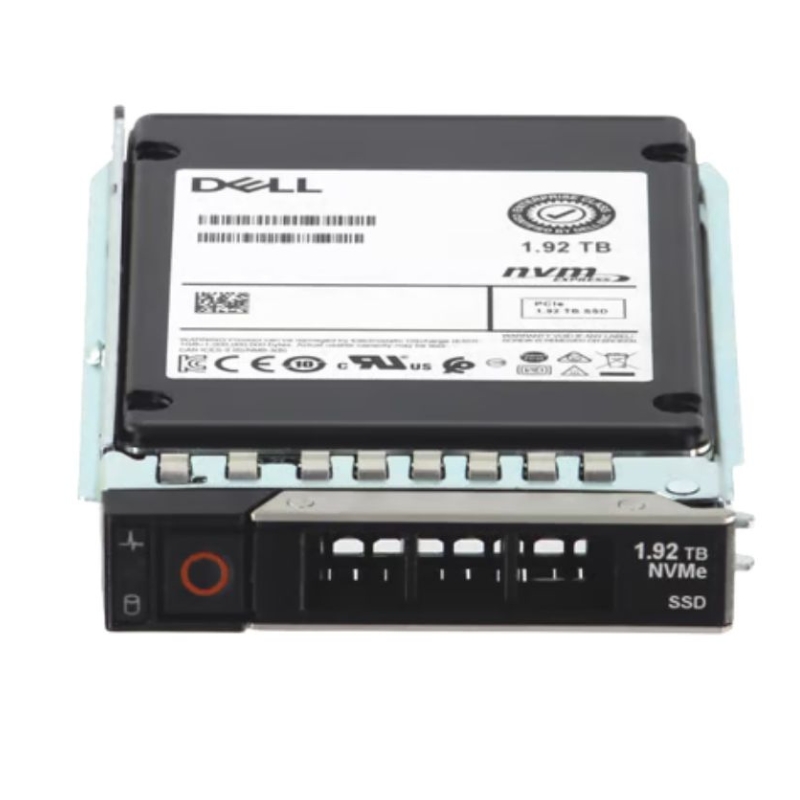


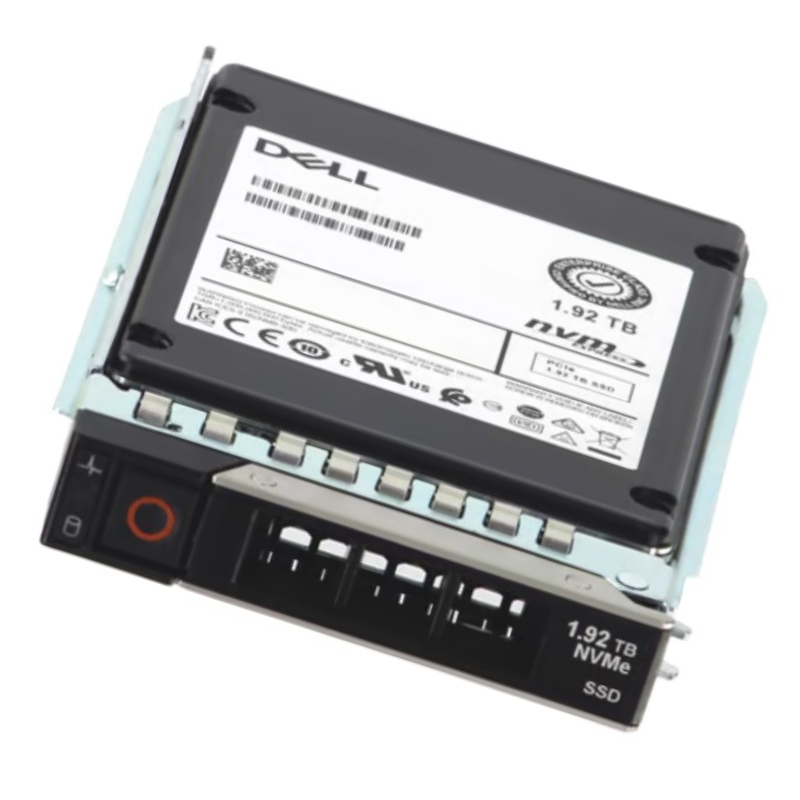
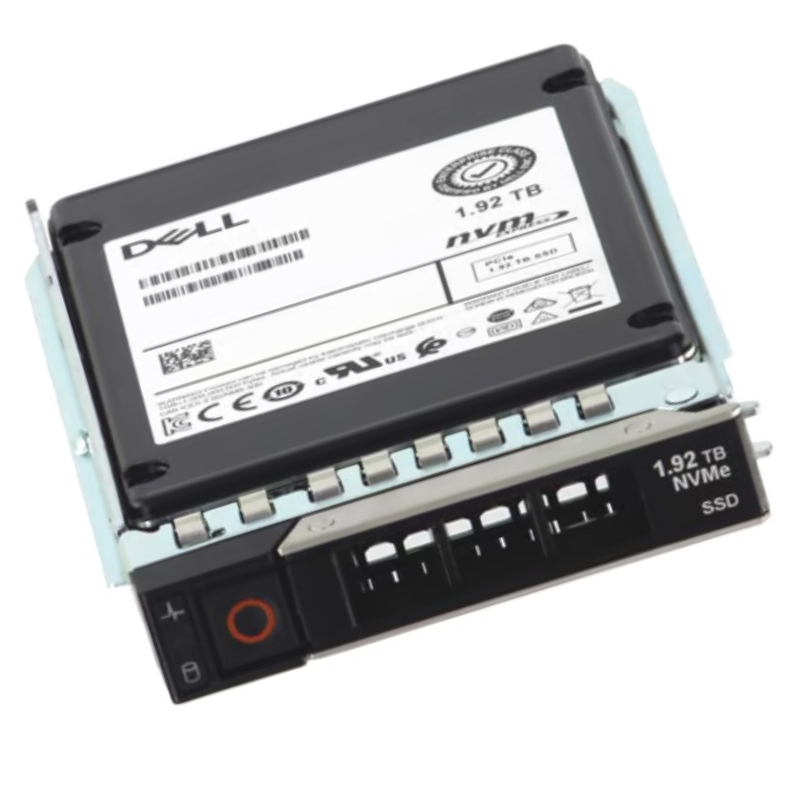
Dell 345-BJMT 1.92TB Pcie Gen 4.0 X4 Nvme U.2 2.5 Inch 15mm Read Intensive TLC 3d Nand Poweredge Solid State Drive. New Sealed in Box (NIB) with 1 Year Warranty
The Dell 345-BJMT 1.92TB Solid State Drive is a high-performance enterprise-class NVMe storage solution designed for modern Dell PowerEdge servers. Built with PCIe Gen 4.0 x4 technology and reliable TLC 3D NAND flash, this drive delivers outstanding speed, durability, and data security for data centers, cloud environments, and business-critical workloads.
The category of enterprise NVMe solid state drives represented by the 345-BJMT Dell 1.92TB PCIe Gen 4.0 x4 NVMe U.2 SSD is built for modern data centers that require extremely fast, stable, and predictable storage performance. These drives are designed to operate in high-demand server environments where large volumes of data must be processed, stored, and accessed with minimal delay. This category focuses on read-intensive workloads, which means it is optimized for applications that frequently retrieve data rather than write it. Examples include virtualization platforms, cloud hosting, web servers, content delivery systems, and large databases used for reporting and analytics.
Within this category, drives are created to meet strict enterprise standards. They are engineered to work 24 hours a day, 7 days a week, under heavy load and high temperature conditions inside rack-mounted servers. Unlike consumer NVMe drives, these enterprise models use advanced firmware, higher quality components, and enhanced error correction to ensure data integrity and reliability. This makes them suitable for mission-critical business environments where downtime or data loss can be very costly.
This category uses the PCIe Gen 4.0 x4 interface, which is one of the fastest ways to connect storage to a server. PCIe Gen 4.0 provides double the bandwidth of PCIe Gen 3.0, allowing much more data to be transferred in the same amount of time. The x4 lane configuration means that four data lanes are used simultaneously, which gives these drives extremely high throughput and low latency. In practical terms, this allows servers to load applications faster, process data more quickly, and respond to user requests with less delay.
NVMe, which stands for Non-Volatile Memory Express, is a communication protocol designed specifically for flash memory. It removes many of the limitations found in older SATA and SAS protocols. In this category, NVMe allows thousands of parallel data queues, enabling multiple applications and users to access the drive at the same time without slowing each other down. This makes these SSDs perfect for modern workloads such as virtual machines, containerized applications, and cloud-based platforms.
Drives in this category can deliver extremely high read speeds, which is ideal for read-intensive workloads. PCIe Gen 4.0 allows the SSD to handle large blocks of data quickly, which improves overall system performance. This is especially important for large enterprises and service providers that run many servers and need to keep response times low.
Another advantage is scalability. As servers and applications grow, they need more bandwidth. PCIe Gen 4.0 ensures that the storage subsystem will not become a bottleneck, even as more users and more data are added to the system.
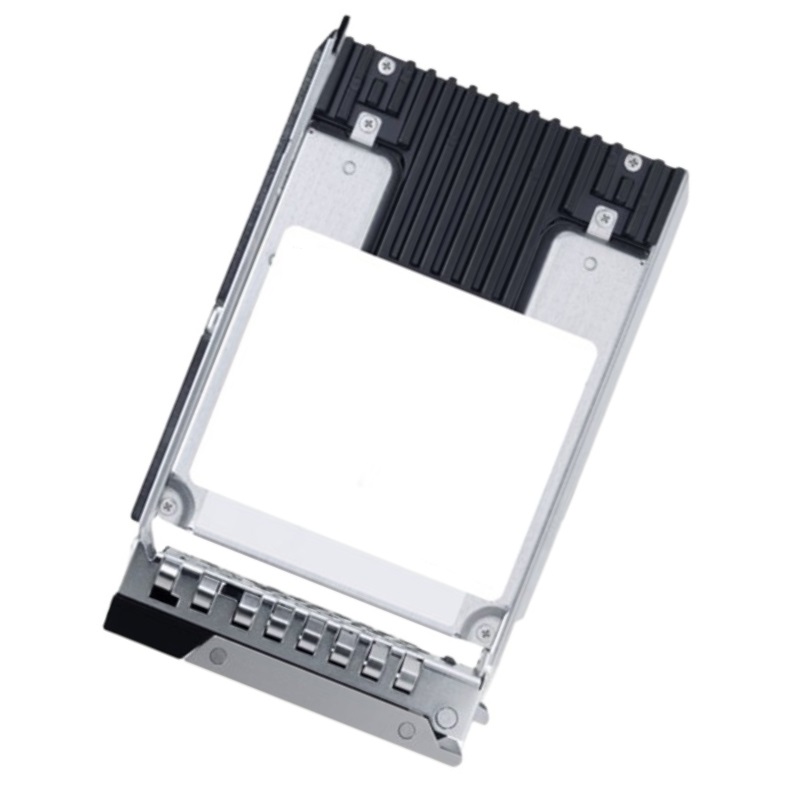
This category of SSDs uses the U.2 2.5-inch form factor with a 15mm height. This is a standard size for enterprise drives, making it easy to install and replace them in server drive bays. The U.2 interface supports PCIe, which allows NVMe drives to be used in traditional 2.5-inch hot-swap bays found in Dell PowerEdge servers.
The 15mm thickness allows for more internal components and better cooling compared to thinner drives. This helps the SSD maintain stable performance during heavy workloads. Good thermal management is very important in data centers, where many drives are placed close together in a single server chassis.
One of the key features of this form factor is hot-swap capability. This means a drive can be replaced without shutting down the server. In enterprise environments, this is critical because it allows maintenance and upgrades to be done without interrupting business operations.
This category is designed to work with Dell PowerEdge servers that support U.2 NVMe drives, making them easy to integrate into existing infrastructure.
The 1.92TB capacity offered in this category provides a good balance between storage space and performance. It is large enough to store operating systems, applications, databases, and large amounts of user data while still delivering high-speed access. This size is especially useful for read-intensive applications such as web hosting, streaming platforms, and data analytics.
By using multiple 1.92TB drives in a server, businesses can build large and fast storage pools. These can be configured using RAID or software-defined storage systems to provide both high performance and data protection.
Read-intensive SSDs are designed to handle workloads where data is read much more often than it is written. This includes scenarios such as content delivery networks, search engines, and reporting databases. In these use cases, the SSD spends most of its time retrieving information, so it is optimized to deliver high read speeds and long lifespan under these conditions.
This category provides consistent performance even when the drive is nearly full, which is important for enterprise systems that cannot afford sudden slowdowns.
This category uses TLC (Triple-Level Cell) 3D NAND flash memory. TLC stores three bits of data in each memory cell, which allows for higher storage density and lower cost compared to older types of flash. 3D NAND means the memory cells are stacked vertically, which increases capacity and improves durability and performance.
For enterprise read-intensive workloads, TLC 3D NAND offers an excellent balance of performance, endurance, and cost. It allows data centers to deploy large amounts of fast storage without the high cost of more expensive flash types.
Even though TLC stores more data per cell, modern 3D NAND technology includes advanced wear leveling, error correction, and over-provisioning. These features help ensure that the drive can handle years of continuous use in a server environment.
This category is designed to meet enterprise endurance requirements, meaning it can handle the daily read and write cycles typical of data center workloads.
This category is specifically designed to work with Dell PowerEdge servers from the 14th, 15th, 16th, and 17th generations. These server platforms are widely used in data centers around the world and support advanced storage technologies such as NVMe over PCIe.
Compatibility with multiple server generations makes these SSDs a flexible choice for businesses that are upgrading or expanding their infrastructure. They can be used in both newer and older systems, providing a smooth transition to faster storage.
This category of NVMe SSDs delivers extremely high input/output operations per second (IOPS) and low latency. This means applications can access data quickly and efficiently, even when many users or processes are active at the same time.
High performance is especially important for databases, virtualization, and cloud platforms, where storage delays can slow down the entire system. By using NVMe over PCIe Gen 4.0, these drives help remove storage as a performance bottleneck.
This category includes advanced data protection features such as error correction codes, end-to-end data protection, and power loss protection. These features help ensure that data is not corrupted or lost, even if there is a sudden power failure.
Power loss protection uses small capacitors inside the drive to provide enough energy to safely write any data in transit to the flash memory before the power is completely lost. This is a critical feature for enterprise systems.
This category of Dell NVMe SSDs is suitable for a wide range of applications. In virtualization environments, they allow many virtual machines to run smoothly by providing fast access to disk images and application data. In cloud hosting, they help deliver fast page loads and application response times to users around the world.
They are also ideal for big data analytics, where large datasets must be scanned and processed quickly. The high read speeds of these drives make it easier to run complex queries and generate reports in less time.
This category is built with the future in mind. PCIe Gen 4.0 and NVMe ensure that the drives will remain compatible with new server technologies for years to come. As workloads grow and become more demanding, these SSDs can continue to deliver the required performance.


 Contact Us
 Information
 Catalog
 Solid State Drives (SSD)
 Network Switches
 Hard Disk Drives
 HBA & Controllers
 PC & Servers
 PC & Server Memory
 CPU & Processors
 Network Routers
 Power Supplies
 Tape Drives & Libraries
 Network Devices
 Computer & Network Cables