(7% discount is applied at checkout)
Cart is empty
Your go-to destination for cutting-edge server products
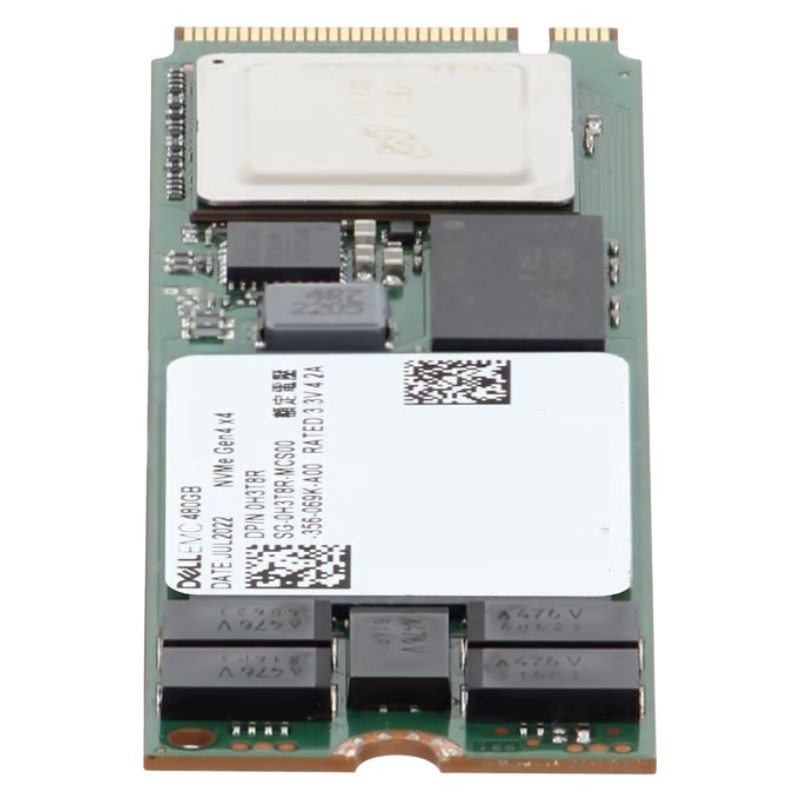


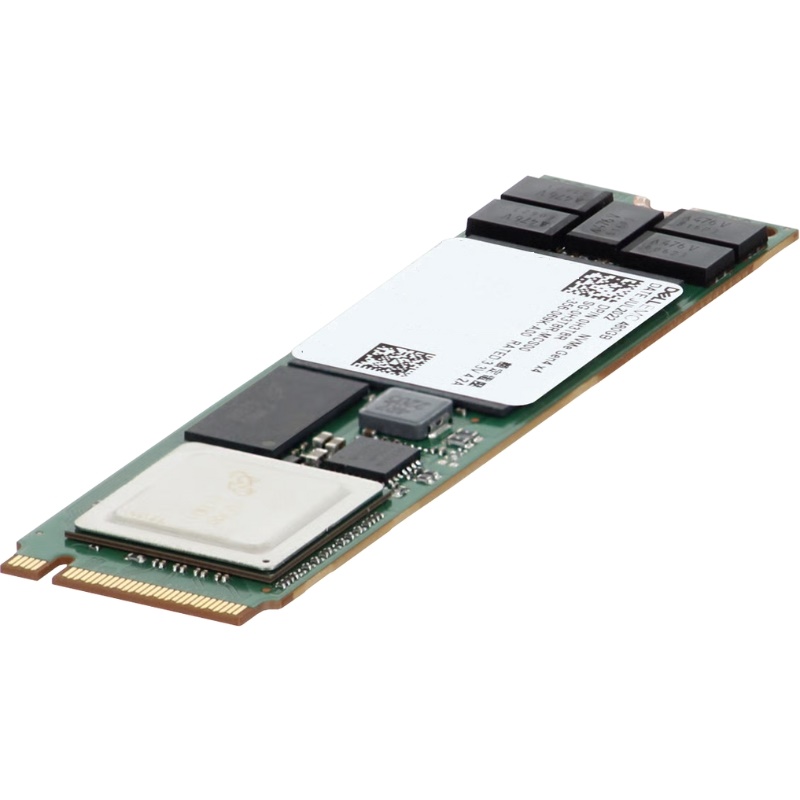
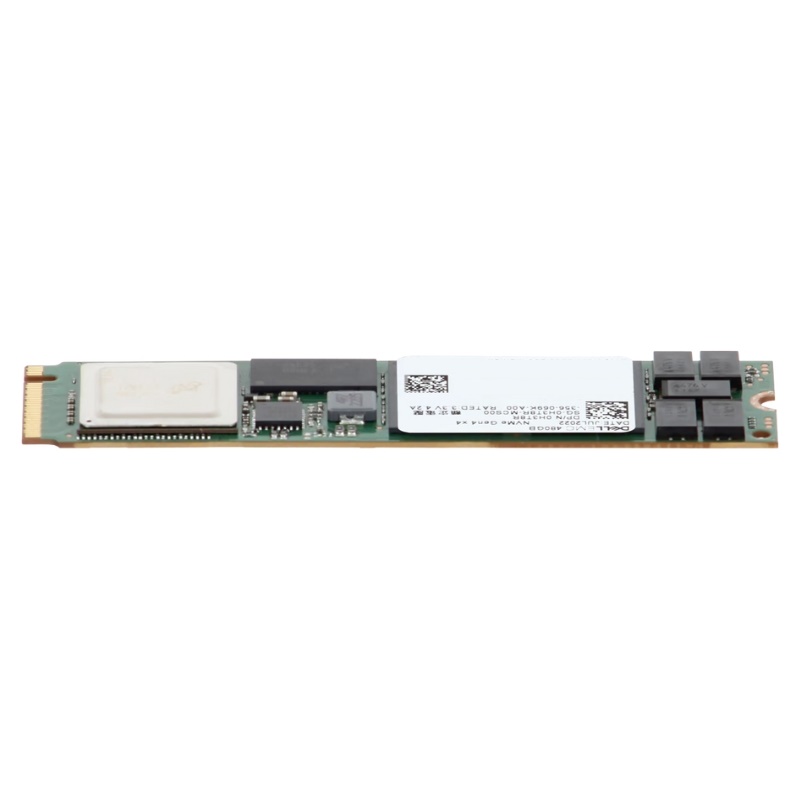
Dell 400-BPWT 480GB Self-encrypting SED M.2 PCI-E 4.0 NVMe Read Intensive TLC Enterprise Solid State Drive. Excellent Refurbished with 1 Year Replacement Warranty
The Dell 400-BPWT series represents a focused line of enterprise-grade solid-state drives engineered for the modern, security-conscious data center. As a 480GB Self-Encrypting Drive (SED) utilizing the high-speed M.2 PCI-E 4.0 NVMe interface, this model is specifically designed for read-intensive applications where data security, consistent low-latency performance, and reliability are non-negotiable.
The evolution of data center and enterprise storage has been dramatically accelerated by the NVMe protocol over PCIe interfaces. Moving beyond the bottlenecks of SATA and SAS, NVMe unlocks unparalleled levels of performance, parallelism, and low latency. Within this high-performance tier, the Dell 400-BPWT 480GB Self-encrypting Drive (SED) represents a specialized solution engineered for specific workloads that demand a blend of robust security, consistent performance, and enterprise-grade endurance.
Not all enterprise applications require the same storage profile. Write-intensive tasks, like high-frequency transaction processing or real-time analytics, demand SSDs built with extreme write endurance. The Dell 400-BPWT is meticulously designed for the vast landscape of read-intensive applications. These include operating system boot drives, web servers, virtual desktop infrastructure (VDI) boot images, content delivery networks, and application servers where data is predominantly fetched and read, not constantly overwritten. By optimizing for this profile, the drive delivers exceptional value and reliability for its target use cases.
Understanding the technical foundation of this drive is key to evaluating its fit for enterprise infrastructure.
The drive utilizes the M.2 22110 form factor (22mm wide, 110mm long) and leverages the PCI Express 4.0 x4 interface. This combination ensures maximum compatibility with modern server platforms while providing a high-bandwidth pathway for data, essential for maintaining the low latency and high queue-depth performance NVMe is renowned for.
The drive is a certified Self-Encrypting Drive (SED) that complies with the Trusted Computing Group's (TCG) Opal 2.0 standard and IEEE 1667. This means encryption is performed in real-time, at the hardware level, by a dedicated AES (Advanced Encryption Standard) crypto-processor embedded in the drive's controller. All data written to the NAND is automatically encrypted (typically using AES-256), and all data read is decrypted, transparently to the host system, with negligible performance impact.
This drive employs 3D TLC (Triple-Level Cell) NAND flash memory. In an enterprise context, TLC is engineered for reliability and is suitable for read-centric workloads. The drive's endurance is specified by its TBW (Terabytes Written) rating—a total lifetime data write threshold. For read-intensive drives like the 400-BPWT, this rating is balanced to provide ample endurance for its target workloads (such as boot drives, web servers, or content delivery) at a compelling cost-per-gigabyte, as opposed to Write-Intensive or Mixed-Use drives that utilize higher-endurance NAND for more demanding write operations.
The drive utilizes the M.2 form factor, specifically the 2280 (22mm wide, 80mm long) dimension. The 400-BPWT is configured as an HHHL (Half-Height, Half-Length) card, which means it is mounted on a dedicated PCI Express adapter card. This design provides robust mechanical retention in a server's PCIe slot, superior thermal management via the card's larger surface area for heat dissipation, and broad compatibility with server platforms that may not have native M.2 slots but offer standard PCIe slots.
At 480GB, this drive offers a balanced capacity suitable for its designated roles. It employs 3D TLC (Triple-Level Cell) NAND flash memory. In the enterprise context, TLC offers an excellent balance of cost, density, and endurance, especially when paired with sophisticated controllers and over-provisioning that mitigate wear, making it a reliable choice for read-centric workloads.
This drive is ideally deployed in scenarios where the ratio of read operations to write operations is heavily skewed towards reads (e.g., 80/20 or 70/30 Read/Write). Primary applications include operating system boot drives for servers, hosting virtual machine hypervisors, read-heavy database queries (reporting, analytics), static web content delivery, application servers, and streaming media caches. Its performance profile ensures fast data retrieval, reducing latency for end-users and applications.
While exact figures vary, a drive in this class typically delivers sequential read speeds exceeding 6,000 MB/s and sequential write speeds in the range of 2,000-3,000 MB/s. More critically, it offers high random read IOPS (Input/Output Operations Per Second), often surpassing 700,000, which is paramount for server environments handling numerous concurrent requests. Random write IOPS are respectable for its class, aligned with its read-intensive design philosophy.
Beyond raw speed, enterprise drives differentiate themselves through features that ensure data integrity, security, and predictable.
This is a cornerstone feature of the 400-BPWT model. The drive incorporates hardware-based, full-disk encryption that is always active. Compliant with TCG Opal 2.0 and IEEE 1667 standards, it transparently encrypts all data written to the NAND. The encryption keys are managed by the drive's onboard controller, minimizing performance overhead. This provides instant data sanitization through cryptographic erasure (simply deleting the encryption key), which is far faster and more secure than physical overwrites. It is a critical tool for data-at-rest security, compliance with regulations like GDPR or HIPAA, and secure drive decommissioning.
Enterprise storage cannot afford data corruption due to unexpected power loss. The 400-BPWT is equipped with advanced power-loss protection circuits. This system typically includes capacitors that provide sufficient hold-up energy in the event of a power failure. This allows the drive's controller to complete any pending writes from volatile buffers to the non-volatile NAND memory, ensuring data consistency and preventing corruption.
In regulated industries, the inclusion of a certified SED can be a mandatory requirement. The hardware-based encryption in the 400-BPWT provides a performance-neutral security solution that software encryption cannot match, making it not just a feature but a critical purchasing determinant for secure environments.
The underlying technology enables the drive's capabilities.
PCI Express 4.0 doubles the per-lane bandwidth compared to PCIe 3.0, from approximately 1 GB/s to 2 GB/s. With four lanes (x4), the interface offers a theoretical maximum bandwidth near 8 GB/s (or ~64 Gb/s). This headroom allows the drive's controller and NAND to perform at their peak without being constrained by the host interface, reducing latency and improving quality of service (QoS).
The NVMe protocol is built from the ground up for non-volatile memory, supporting 64,000 command queues each with 64,000 commands deep. This is a monumental leap over the single queue with 32 commands in AHCI (used by SATA). This massive parallelism is ideal for modern multi-core servers, allowing storage I/O to be distributed efficiently across CPU cores, eliminating bottlenecks and drastically reducing I/O wait times.
The drive employs a high-performance NVMe controller that manages wear leveling, bad block management, garbage collection, and error correction code (ECC). Advanced ECC algorithms, like LDPC (Low-Density Parity Check), are used to maintain data integrity as NAND cells age and become more prone to errors. The controller's firmware is tuned for consistent low latency, a key metric in enterprise environments where predictable performance is more valued than sporadic peak speeds.


 Contact Us
 Information
 Catalog
 Solid State Drives (SSD)
 Network Switches
 Hard Disk Drives
 HBA & Controllers
 PC & Servers
 PC & Server Memory
 CPU & Processors
 Network Routers
 Power Supplies
 Tape Drives & Libraries
 Network Devices
 Computer & Network Cables