(7% discount is applied at checkout)
Cart is empty
Your go-to destination for cutting-edge server products
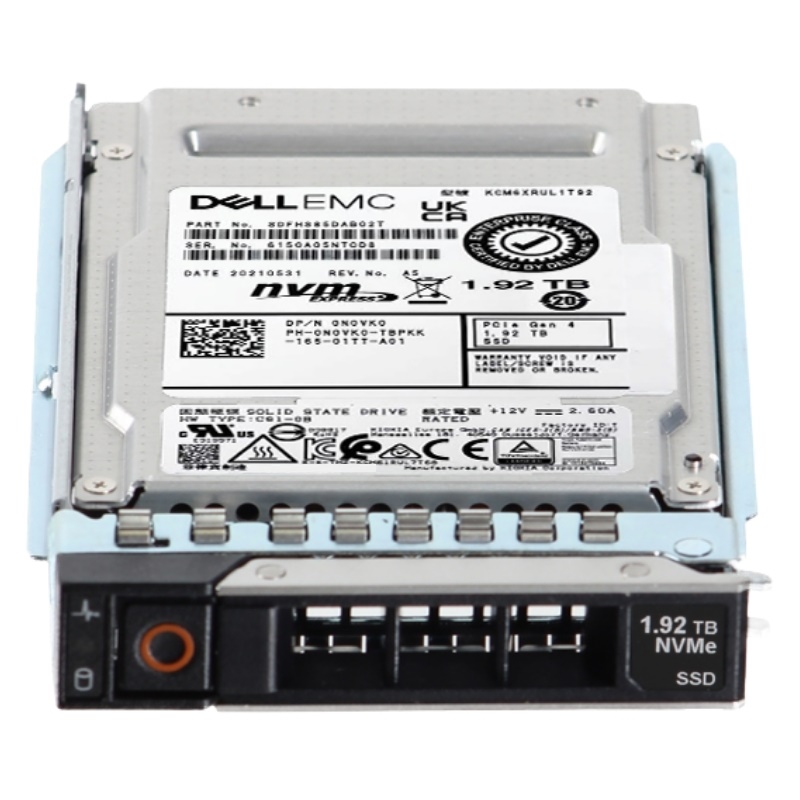


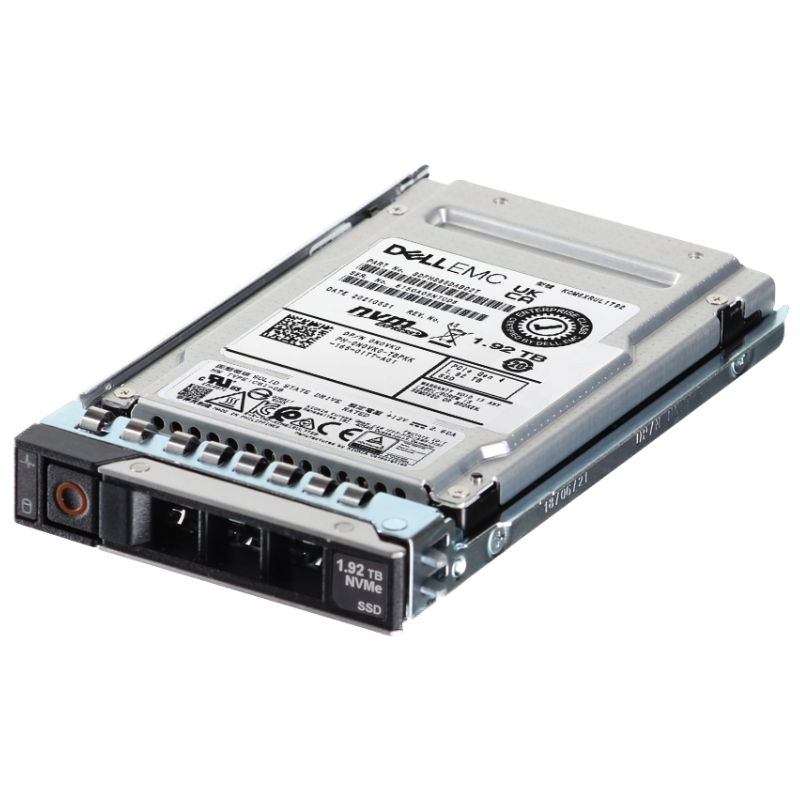
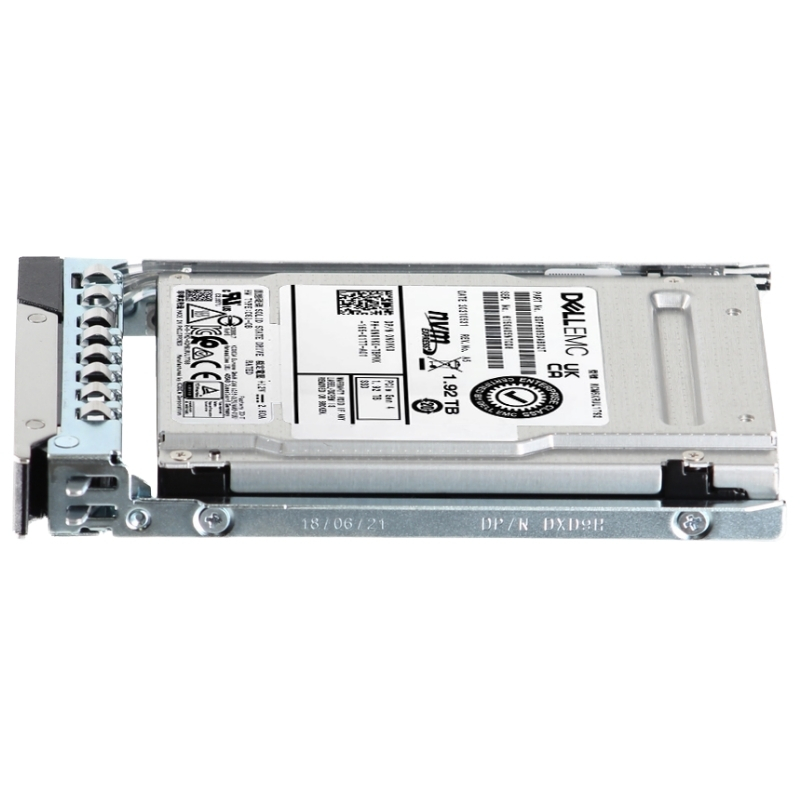
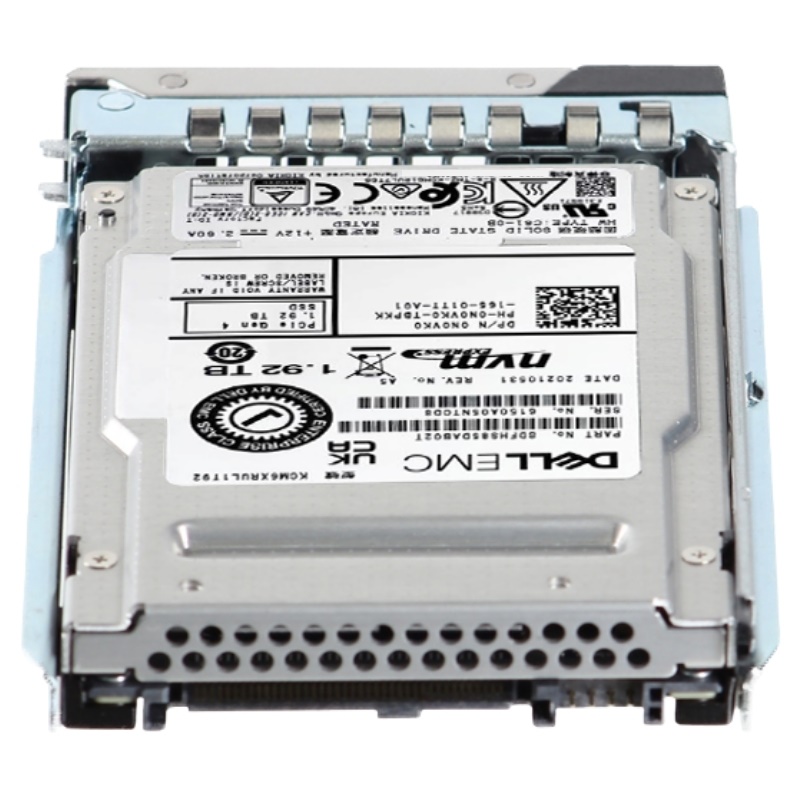
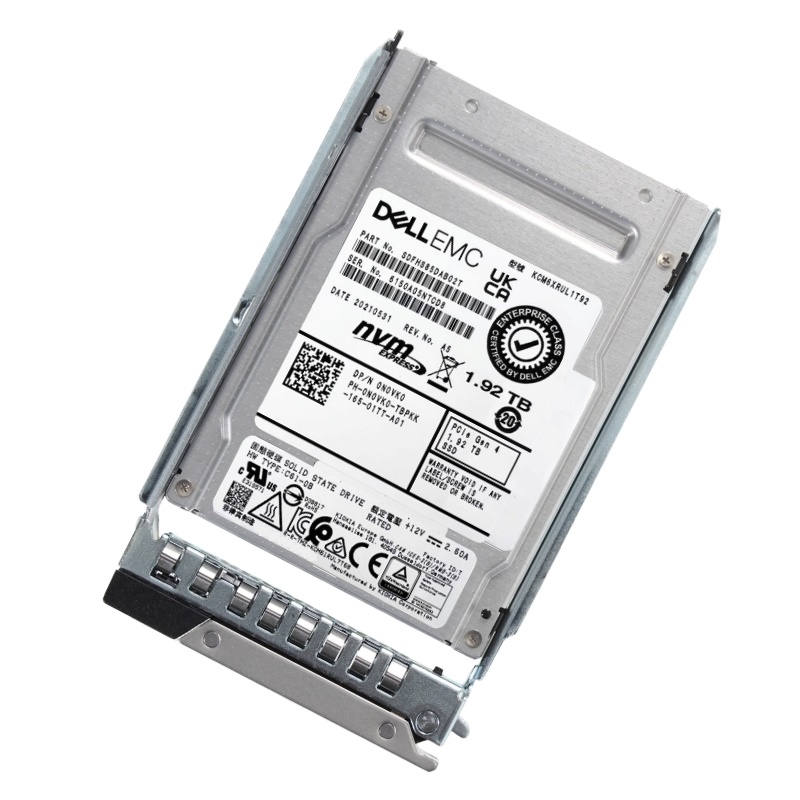
Dell 400-BTSL 1.92TB PCI-E Gen 4.0 X4 NVMe U.2 SFF 15mm TLC 3D Nand Read Intensive Solid State Drive. New Sealed in Box (NIB) with 1 Year Warranty
The Dell 400-BTSL 1.92TB PCIe Gen 4.0 x4 NVMe U.2 SFF 2.5-inch SSDs designed explicitly for Dell PowerEdge 14th, 15th, 16th, and 17th generation servers. These drives represent a critical upgrade path, delivering transformative performance, reliability, and efficiency for data-intensive workloads.
This product category represents a critical storage tier engineered for modern data center workloads within Dell's PowerEdge server ecosystem. Designed as a direct-fit, performance-optimized solution, the 1.92TB PCIe Gen 4.0 x4 NVMe U.2 SSD combines high-throughput, low-latency architecture with the reliability demanded by enterprise environments. Housed in a compact 2.5-inch, 15mm Small Form Factor (SFF) shell, this drive leverages TLC (Triple-Level Cell) 3D NAND technology in a read-intensive endurance specification, making it an ideal candidate for caching layers, boot volumes, hosting databases, and accelerating virtualization. Its seamless compatibility with Dell PowerEdge 14th through 17th Generation servers ensures straightforward integration, offering a powerful storage upgrade or expansion path that maximizes the investment in Dell infrastructure.
The fundamental design of this drive category bridges cutting-edge interface technology with a proven physical format. Understanding its architectural components is key to evaluating its fit for specific server deployments.
The 400-BTSL drive utilizes the PCI Express 4.0 bus with a four-lane (x4) configuration, doubling the bandwidth per lane compared to the previous PCIe 3.0 standard. This interface, governed by the Non-Volatile Memory Express (NVMe) protocol, is designed from the ground up for flash memory. It bypasses the legacy SATA/AHCI bottlenecks, enabling massively parallel data access through deep command queues. This results in transformative reductions in latency and substantial gains in Input/Output Operations Per Second (IOPS). For Dell PowerEdge servers with compatible backplanes and NVMe-enabled slots, this interface unlocks the full potential of the storage subsystem, ensuring that the drive does not become a system bottleneck during high-demand operations.
These drives incorporate a suite of data protection technologies. This includes end-to-end data path protection, where parity checks are maintained from the host interface all the way to the NAND media. They support T10 DIF (Data Integrity Field) and DIX (Data Integrity Extensions) standards, which help detect silent data corruption. Advanced ECC (Error Correction Code) engines and RAID-like protection within the NAND arrays themselves further safeguard data integrity against bit errors.
The 400-BTSL PCIe Gen 4.0 x4 link provides a theoretical bandwidth of up to 8,000 MB/s per direction. In practice, drives in this category deliver sequential read speeds typically in the range of 6,800 to 7,200 MB/s and write speeds from 3,800 to 4,200 MB/s, depending on the specific controller and NAND configuration. More critically, NVMe's efficiency yields random access latencies often below 100 microseconds, which is crucial for transactional databases and real-time analytics.
The stated 1.92TB is the usable, formatted capacity available to the host system. It inherently includes a level of over-provisioning—extra NAND flash not presented to the user. This over-provisioning is crucial for maintaining high performance during garbage collection, extending write endurance, and ensuring long-term reliability. It allows the SSD controller to more efficiently manage wear leveling and background maintenance tasks.
The 400-BTSL U.2 form factor, formerly known as SFF-8639, is a critical enabler for high-performance storage in enterprise servers. This single connector consolidates PCIe data lanes, SATA compatibility, sideband management, and dual-port power capabilities into one compact unit. The 2.5-inch, 15mm height profile allows these high-capacity, high-power drives to fit into standardized hot-swap drive bays across the Dell PowerEdge portfolio. This design ensures optimal airflow and thermal management within the server chassis, a vital consideration for maintaining consistent performance and longevity under constant load.
At the heart of the drive lies its storage media: Three-Bit-Per-Cell (TLC) 3D NAND flash memory. This technology stacks memory cells vertically in layers, dramatically increasing density and reliability compared to planar (2D) NAND.
The "Read-Intensive" classification defines the drive's endurance, measured in Total Bytes Written (TBW) or Drive Writes Per Day (DWPD) over its warranty period. A read-intensive SSD is engineered for workloads where data is predominantly fetched and read, with write operations being less frequent but still necessary. Typical applications include web serving, content delivery, virtualization (host OS and read-heavy VMs), business intelligence databases (where large datasets are queried), and as a boot device for numerous servers. For a 1.92TB model, a read-intensive endurance rating might correspond to a DWPD of approximately 0.5 to 1.0 over a 5-year warranty, translating to a TBW rating in the range of 1,750 to 3,500 TB. This balance offers a significant cost advantage over write-optimized drives while delivering robust performance for its target use cases.
3D TLC NAND provides an optimal balance of cost, capacity, and endurance for read-centric applications. The vertical stacking allows for larger per-die capacities, enabling a 1.92TB drive to be constructed with fewer components, enhancing reliability. Advanced error correction, over-provisioning (reserving a portion of NAND for background management), and sophisticated wear-leveling algorithms are employed to extend the drive's usable life far beyond its stated endurance rating, ensuring data integrity.
This drive category is expressly validated for seamless operation within Dell's enterprise server hardware. Compatibility spans multiple generations, protecting infrastructure investments and simplifying procurement.
For 14th Gen servers, full performance requires a PCIe 4.0-capable NVMe backplane (e.g., the BOSS-NVMe card or specific NVMe backplanes) and proper BIOS/UEFI configuration. When installed in a compatible bay, the drive will be recognized by the Dell Unified Server Configurator and can be managed through iDRAC9. It serves as an excellent performance upgrade from older SAS or SATA SSDs in these platforms.
The 15th Generation platform saw broader native integration of PCIe 4.0. These servers offer optimized airflow and power delivery for high-speed NVMe devices. The 1.92TB U.2 drive is an ideal fit for mixed storage configurations, often used in software-defined storage scenarios or as a tier-0 cache in conjunction with higher-capacity SAS or QLC NVMe drives.
With 16th Gen, Dell further refined NVMe support and thermal design. These servers are built to sustain the continuous performance of multiple PCIe 4.0 drives. The drive can be utilized in all-NVME storage pools for maximum performance, directly supporting data-intensive applications like AI/ML inferencing, high-frequency trading platforms, and large-scale virtualization clusters.
The latest generation maintains backward compatibility with U.2 form factors while also introducing support for future interfaces. Deploying this PCIe 4.0 drive in a 17th Gen server ensures optimal resource utilization, allowing the server's powerful CPUs to be fed data without delay. It represents a cost-effective, high-performance storage building block within a cutting-edge system.
The rated performance metrics of this drive category directly inform its ideal deployment scenarios within a PowerEdge server environment.
Performance is characterized by both sequential (large block) and random (small block) throughput. Sequential read/write speeds, as noted, can exceed 7,000/4,000 MB/s, making the drive excellent for large file transfers, video streaming archives, or data warehousing extracts. Random performance, often measured in IOPS (Input/Output Operations Per Second), is equally vital. A drive in this class may deliver random read IOPS of up to 1,000,000 and random write IOPS in the range of 250,000 to 300,000 at low queue depths. This high IOPS capability is what accelerates database queries, virtual machine responsiveness, and OS operations.
The specific technical profile of this SSD category makes it the ideal choice for several key enterprise and data center applications within Dell PowerEdge servers.
For database servers (SQL Server, Oracle, MySQL, etc.), this drive can store hot data, indices, or even entire transactional databases where read latency is a critical performance factor. The high IOPS and low latency significantly reduce query times for read-heavy operations.
In virtualization environments using VMware ESXi, Microsoft Hyper-V, or KVM on Dell PowerEdge, these SSDs provide excellent storage for the hypervisor itself and for placing virtual machine disks (VMDKs, VHDs) that require high I/O. They are perfect for VDI implementations where hundreds of virtual desktops boot from a common gold image stored on this fast read-optimized media.
This SSD can be effectively used as a dedicated caching layer in conjunction with larger, slower storage arrays (e.g., SAS HDDs or SATA SSDs). Software or hardware solutions can use this PCIe Gen 4.0 NVMe drive to automatically cache frequently accessed data, accelerating overall application performance while maintaining large storage capacity on more economical media.


 Contact Us
 Information
 Catalog
 Solid State Drives (SSD)
 Network Switches
 Hard Disk Drives
 HBA & Controllers
 PC & Servers
 PC & Server Memory
 CPU & Processors
 Network Routers
 Power Supplies
 Tape Drives & Libraries
 Network Devices
 Computer & Network Cables