(7% discount is applied at checkout)
Cart is empty
Your go-to destination for cutting-edge server products
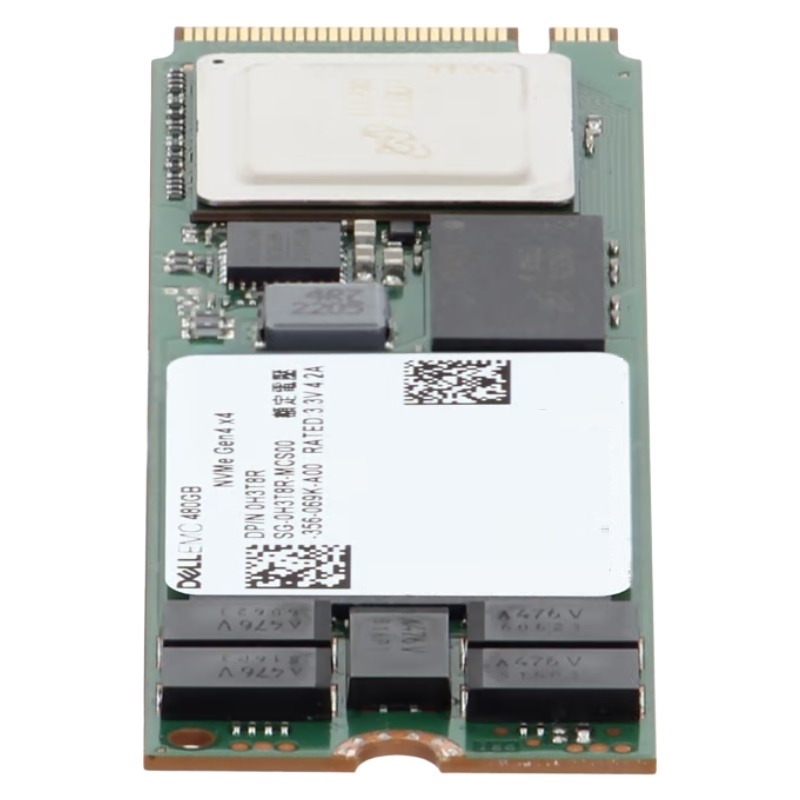


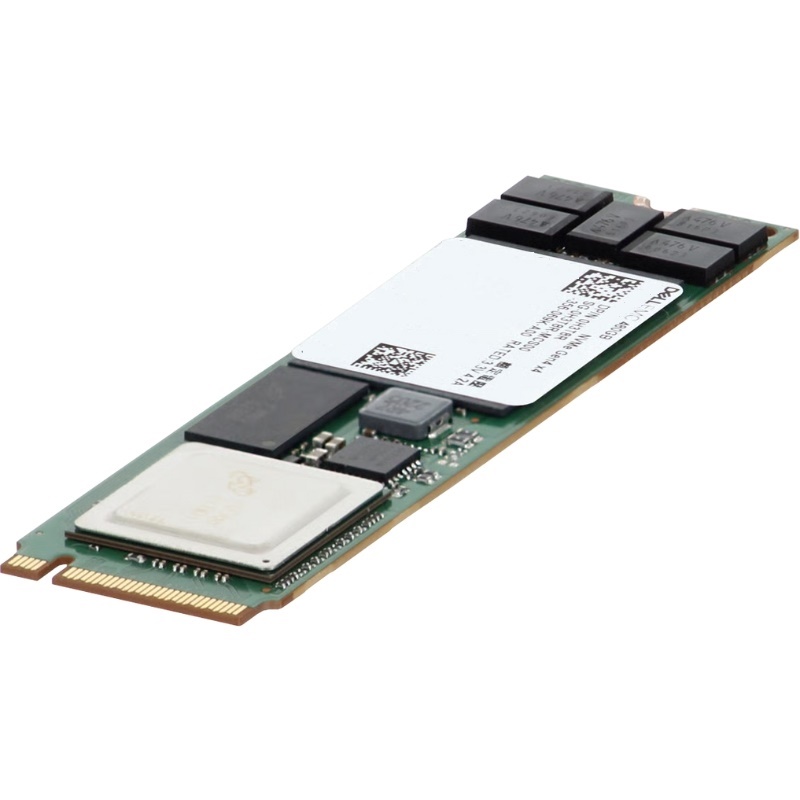
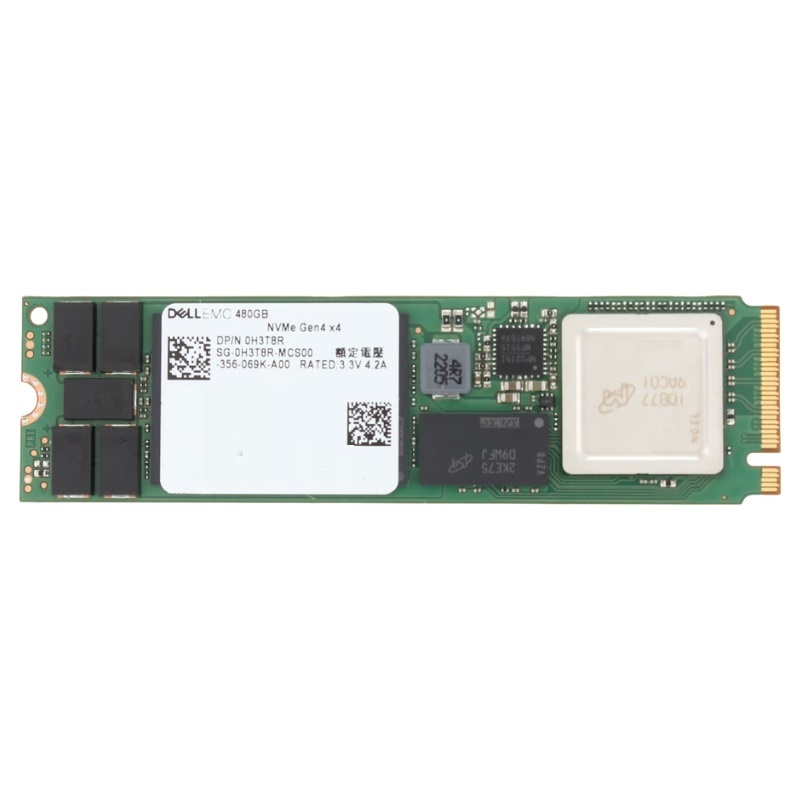
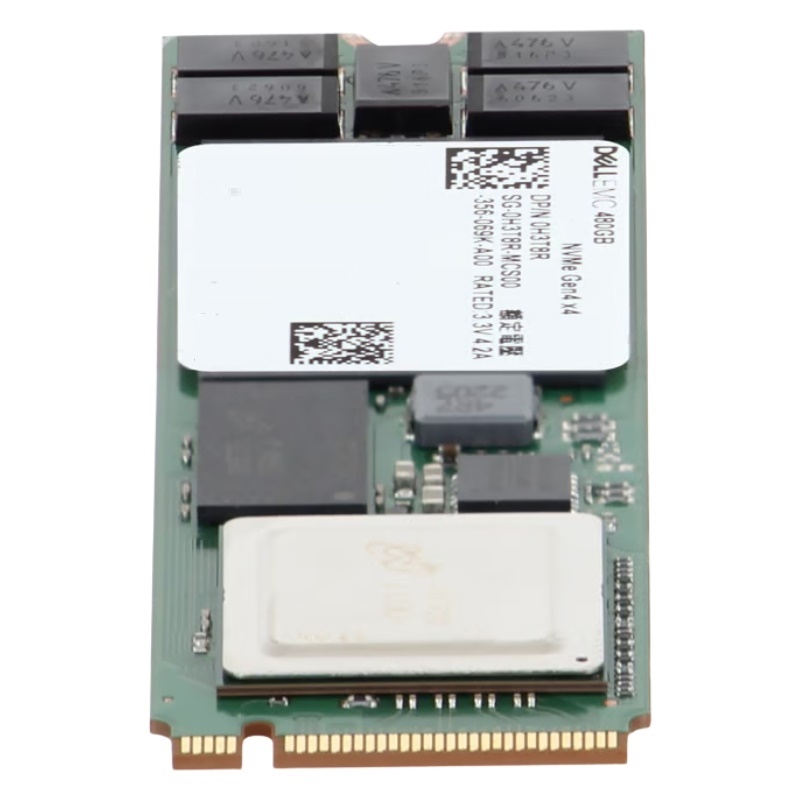
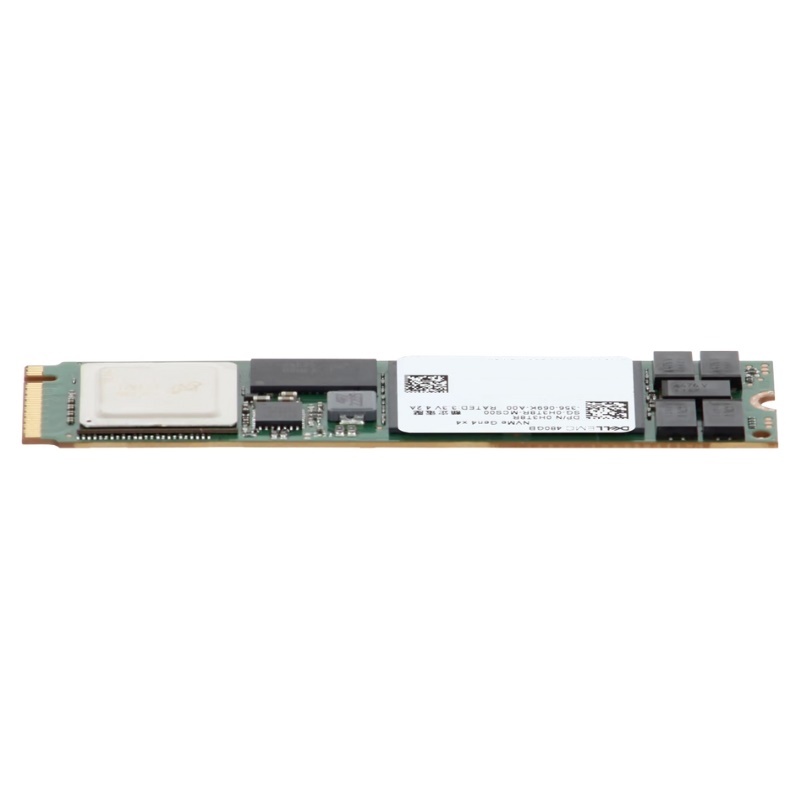
Dell 400-BPXC 480GB Self-encrypting SED M.2 PCI-E 4.0 NVMe Read Intensive TLC Enterprise Solid State Drive. Excellent Refurbished with 1 Year Replacement Warranty
The Dell 400-BPXC 480GB represents a pinnacle of enterprise-grade storage, engineered for data centers and business-critical environments where security, performance, and reliability intersect. This solid-state drive leverages the PCI Express 4.0 interface via the M.2 form factor to deliver exceptional sequential read and write speeds, drastically reducing latency and improving application responsiveness.
The Dell 400-BPXC represents a pinnacle of enterprise storage engineering, designed for data centers and workstations where security, performance, and reliability are non-negotiable. This 480GB Self-Encrypting Drive (SED) leverages the M.2 PCI-E 4.0 NVMe interface to deliver blistering data transfer speeds while embedding hardware-based security at its core. Built with Read-Intensive TLC NAND, it is optimized for workloads that demand consistent, high-speed read operations, making it an ideal solution for boot drives, application hosting, and caching layers in demanding IT environments.
At the heart of the 400-BPXC is a sophisticated architecture engineered for the enterprise. Understanding its physical and logical design is key to appreciating its capabilities within a server or storage array.
The drive utilizes the M.2 (NGFF) form factor, specifically the 2280 dimension (22mm wide, 80mm long). This compact design allows for high-density storage deployments in space-constrained servers and appliances. It connects via a PCI Express 4.0 x4 lane interface, which doubles the available bandwidth compared to the previous PCIe 3.0 generation. This interface is the foundation for its exceptional sequential read and write speeds, ensuring data flows between the drive and the CPU with minimal latency.
Adhering to the NVMe 1.4 protocol, the 400-BPXC maximizes the potential of PCIe 4.0. NVMe is designed from the ground up for non-volatile memory, significantly reducing command overhead and streamlining I/O queues compared to legacy protocols like AHCI. This results in dramatically higher IOPS (Input/Output Operations Per Second) and lower latency, which is critical for accelerating enterprise applications and virtualized environments.
The parallel, queue-based architecture of NVMe allows the drive to handle thousands of concurrent commands. For database queries, virtualization tasks, and real-time analytics, this means reduced wait times and faster processing. The protocol's support for multi-path I/O and namespace management further enhances its suitability for complex, shared storage scenarios.
Security is not an add-on but a foundational component of the Dell 400-BPXC. As a Self-Encrypting Drive, it provides full-disk, hardware-based encryption that is always active, protecting data at rest without compromising performance.
The drive is engineered to meet Trusted Computing Group (TCG) specifications, including TCG Opal 2.0 and Microsoft eDrive. This standards-based approach ensures interoperability with major management software and operating systems. The encryption engine is built into the drive's controller, performing encryption and decryption in real-time as data is written and read, with no measurable impact on performance. All user data is encrypted with AES-256-bit encryption, the benchmark for robust cryptographic security.
A critical feature for drive retirement or redeployment is Instant Secure Erase. Because the encryption key is stored internally, securely erasing the drive is as simple as deleting the encryption key and generating a new one. This process renders all previous data permanently inaccessible in a matter of seconds, as opposed to time-consuming data overwriting methods, ensuring compliance with data sanitization protocols.
Classified as a Read-Intensive drive, the 400-BPXC is optimized for workloads where read operations constitute the vast majority of activity. This specialization allows for an optimal balance of performance, endurance, and cost.
The drive utilizes Triple-Level Cell (TLC) NAND flash memory, which stores three bits of data per cell. Through sophisticated controller algorithms, including advanced wear-leveling, bad block management, and over-provisioning, the drive achieves enterprise-grade endurance. Wear-leveling distributes write and erase cycles evenly across all memory blocks, preventing any single block from failing prematurely and extending the overall lifespan of the SSD.
Endurance is quantified by Terabytes Written (TBW) and Drive Writes Per Day (DWPD). For a 480GB model like the 400-BPXC, the drive is rated to withstand a specific amount of data written over its warranty period. A typical read-intensive drive might support a lower DWPD (e.g., 0.5 to 1 DWPD) compared to a write-intensive model, meaning it is engineered to handle its full capacity being written once or less per day over its lifespan. This makes it perfect for operating systems, frequently accessed libraries, and read-heavy databases.
Enterprise environments demand protection against unexpected power loss. The 400-BPXC incorporates power loss protection circuits (also known as capacitors or PLP). In the event of a sudden power failure, these circuits provide enough reserved energy for the drive's controller to complete any in-progress write operations and flush data from volatile caches to the non-volatile NAND. This prevents data corruption and ensures transaction integrity, a must-have feature for server deployments.
The theoretical specifications of the Dell 400-BPXC translate directly into tangible performance benefits for IT infrastructure.
Leveraging PCIe 4.0, the drive delivers sequential read speeds that can exceed several gigabytes per second and write speeds in the high hundreds of megabytes to gigabytes per second. More importantly for random access workloads, it offers high random read/write IOPS. High random read IOPS ensure that an application requesting small blocks of data from various locations on the drive receives them with minimal delay, accelerating response times for virtual machines, web servers, and file servers.
Beyond peak numbers, enterprise SSDs are characterized by consistent, predictable performance under sustained loads. The 400-BPXC's architecture, including its DRAM cache and robust controller, is designed to maintain high levels of throughput and low latency even during prolonged activity, avoiding the performance dips associated with consumer-grade drives.
Latency—the time taken for a single I/O operation—is exceptionally low, often measured in microseconds. This low latency is crucial for tier-1 enterprise applications. Furthermore, good QoS metrics mean that the vast majority of I/O operations complete within a tight band of time, providing predictable application behavior, which is essential for service level agreements (SLAs) in hosted environments.
The specific design parameters of the Dell 400-BPXC 480GB make it an ideal solution for several key enterprise scenarios where security, read speed, and reliability are paramount.
Its combination of high random read performance, security, and reliability makes it an excellent choice for server boot drives. Operating systems and hypervisors benefit from the fast read speeds during boot and operation, while the hardware encryption secures the entire OS and any cached data.
In VDI environments, numerous virtual desktops boot from and read from a shared storage image. This creates an intensely read-centric workload. The 400-BPXC can deliver the golden master images to hundreds of virtual machines simultaneously with low latency, improving user login times and overall experience. The encryption also secures each desktop's data at rest.
For databases supporting business intelligence, e-commerce, or online transaction processing (where the workload is read-heavy for queries), the fast random read performance of this drive accelerates data retrieval. This reduces query response times, allowing for faster business insights and a more responsive application front-end.
Web servers and content delivery nodes primarily serve static and dynamic content to users—a classic read-intensive operation. Storing web pages, images, videos, and application code on high-performance NVMe storage like the 400-BPXC significantly reduces page load times and improves the capacity of each server to handle more concurrent users.


 Contact Us
 Information
 Catalog
 Solid State Drives (SSD)
 Network Switches
 Hard Disk Drives
 HBA & Controllers
 PC & Servers
 PC & Server Memory
 CPU & Processors
 Network Routers
 Power Supplies
 Tape Drives & Libraries
 Network Devices
 Computer & Network Cables