(7% discount is applied at checkout)
Cart is empty
Your go-to destination for cutting-edge server products
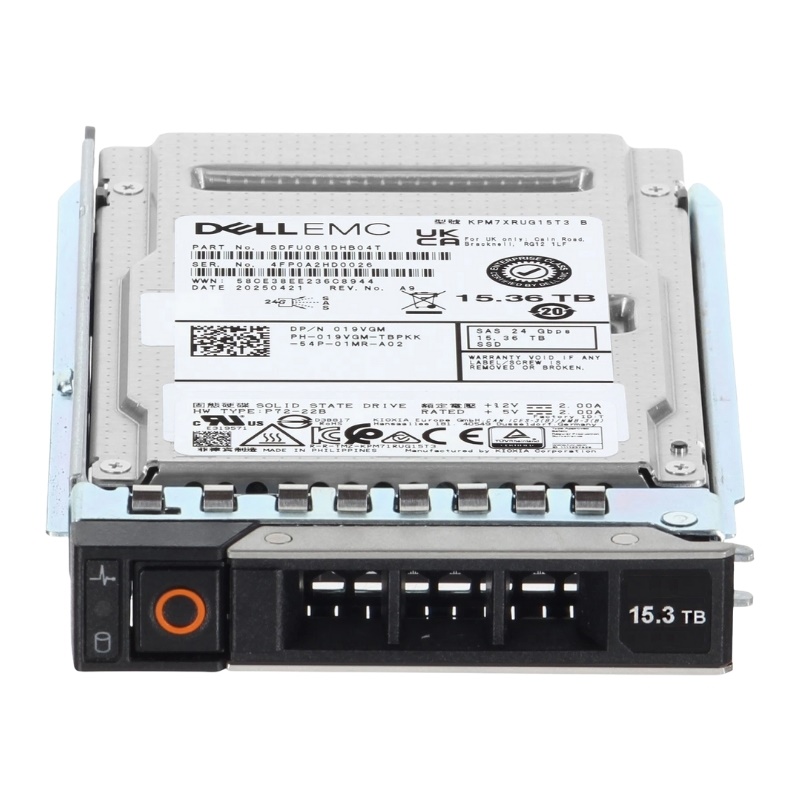


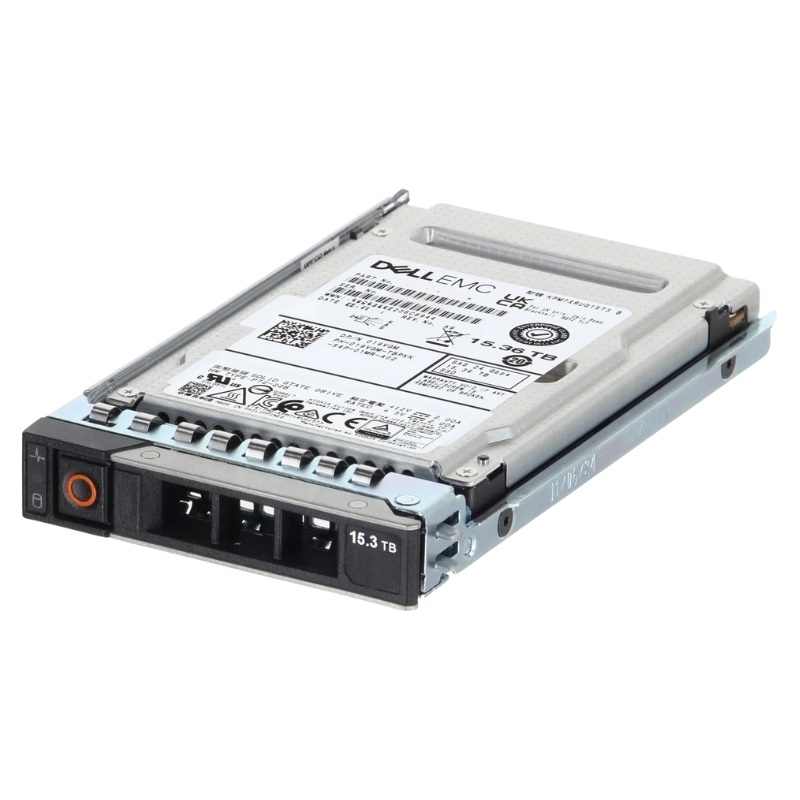
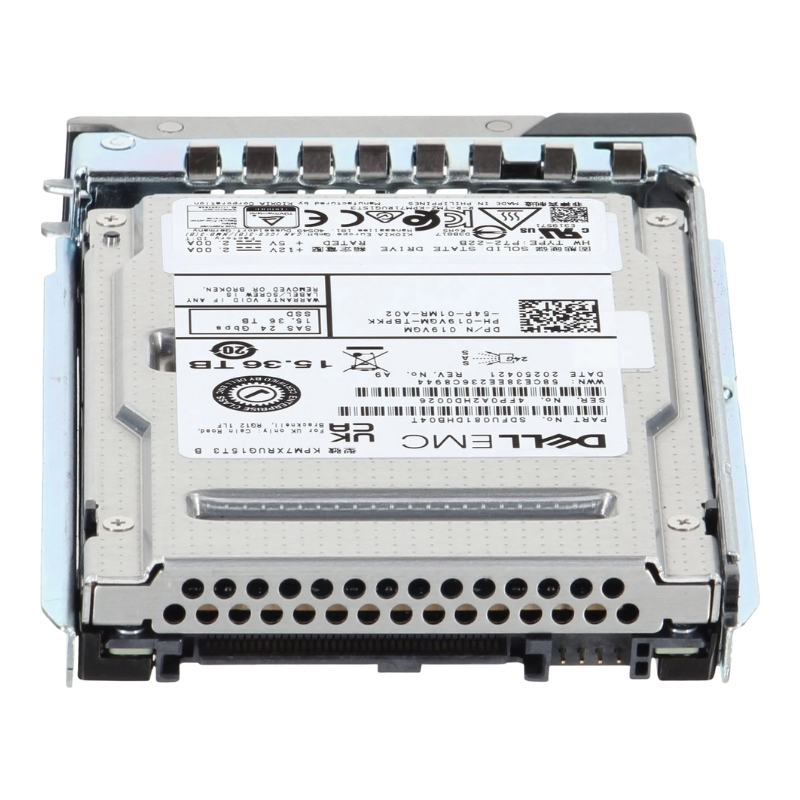
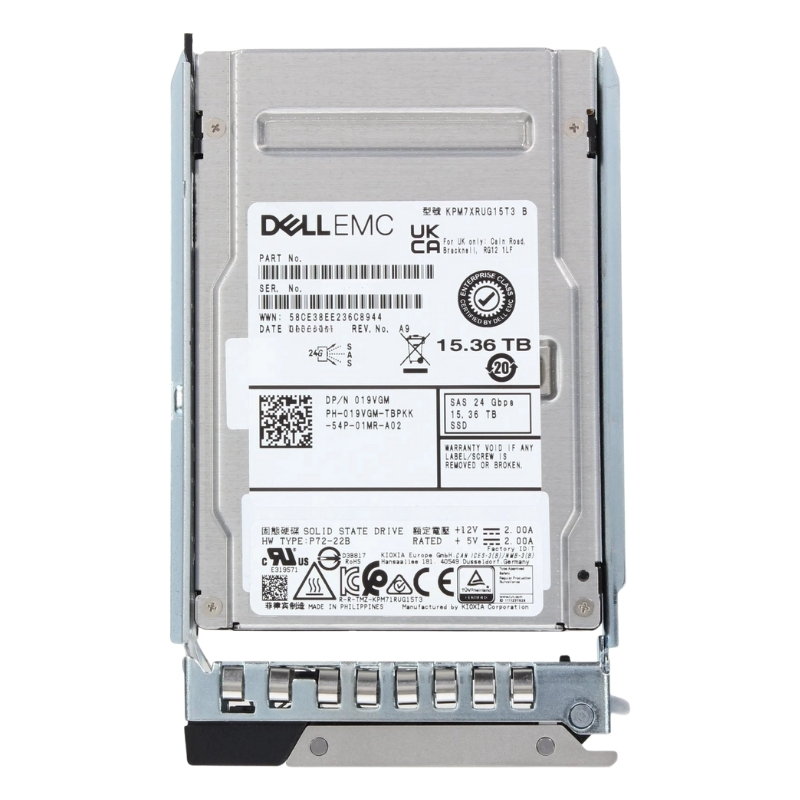
Dell 345-BLXH 15.36TB PCI Express Gen4 Read Intensive NVMe U.2 SFF Solid State Drive for Server. New Sealed in Box (NIB) with 1 year Warranty
The Dell 345-BLXH is a premium 15.36TB NVMe solid state drive engineered for enterprise server environments. Built with PCIe Gen4 technology, this read-intensive SSD delivers outstanding speed, reliability, and scalability for data centers, cloud workloads, virtualization, and database-driven applications.
This Dell NVMe U.2 SSD is fully compatible with a wide range of Dell PowerEdge servers, ensuring seamless integration and optimal performance.
To understand the value proposition of this category, one must dissect its core components and design philosophy.
The Non-Volatile Memory Express (NVMe) protocol is a revolution from the ground up. Unlike older protocols that were adapted from hard drive interfaces, NVMe is built for flash memory from the start. It supports massively parallel operations through deep command queues (up to 64,000 commands deep) compared to SAS (256) or SATA (32). When paired with a PCIe Gen4 x4 interface, this creates a data superhighway. PCIe Gen4 doubles the bandwidth per lane from Gen3's ~0.985 GB/s to ~1.969 GB/s, yielding a theoretical maximum bidirectional bandwidth near 8 GB/s (or ~64 Gb/s) for a x4 link. This raw physical layer capability is what allows drives like the 345-BLXH to deliver sequential read speeds often exceeding 6,000 MB/s.
The U.2 form factor is a 2.5-inch drive with a single connector that consolidates PCIe x4 lanes, SATA/SAS compatibility pins, and sideband signals for management. Its design prioritizes serviceability and thermal performance in dense server chassis.
Like their SAS predecessors, U.2 NVMe drives are designed for hot-swap replacement in a live server, a critical feature for maintaining uptime in 24/7 data centers. The connector and drive bay are engineered for safe insertion and removal without powering down the system.
High-performance NVMe drives can consume significantly more power than SATA SSDs, often in the 12-25W range under load. The U.2 specification supports higher power delivery (up to 25W) compared to consumer M.2 slots. Its metal casing provides superior surface area for heat dissipation, often integrated with server chassis cooling via airflow or dedicated heat sinks.
The heart of the drive is its NAND flash memory and the sophisticated controller that manages it. The 15.36TB capacity is achieved using high-density 3D TLC (Triple-Level Cell) or QLC (Quad-Level Cell) NAND. Enterprise drives employ advanced error correction (LDPC), power-loss protection capacitors, and over-provisioning (reserved NAND not visible to the user) to ensure data integrity and predictable performance under all conditions.
Enterprise SSDs are categorized by their endurance, measured in Drive Writes Per Day (DWPD) or Total Bytes Written (TBW) over the warranty period. This classification aligns drives with specific workload patterns to optimize cost and performance.
DWPD indicates how many times the entire drive's capacity can be written to per day over its warranty period. A 15.36TB drive with a 1 DWPD rating for 5 years must endure 15.36TB written *every day* for 1,825 days. That's over 28,000 TB (28 PB) of written data. The Dell 345-BLXH, as a read-intensive model, is engineered for a lower DWPD (typically 0.5-1 DWPD) compared to write-intensive models (3-10+ DWPD). This focused engineering allows for a cost-effective balance of high performance for read-centric tasks.
The application fit for this category is vast and growing, powering the most demanding digital services.
Platforms like Hadoop, Spark, and enterprise data warehouses (e.g., Teradata, Greenplum) perform large sequential scans and random reads on massive datasets. The high throughput and low latency of PCIe Gen4 U.2 drives drastically reduce query times, allowing analysts to iterate faster. The read-intensive profile is perfect as data is often ingested in batches and then subjected to intense read-oriented processing.
Streaming services and CDN edge servers store petabytes of video, audio, and software files. These assets are written once (when the movie or update is released) and then delivered to millions of users via countless read operations. The combination of high capacity (15.36TB reduces server footprint) and blistering read speeds ensures seamless, buffer-free delivery to global audiences.
While write performance is important for transaction logging, the primary working sets of large databases (indexes, frequently queried tables) are read-heavy. Placing these on a bank of read-intensive NVMe drives like the 345-BLXH accelerates transaction processing (OLTP) and complex analytical queries (OLAP) by reducing data fetch latency from milliseconds to microseconds.
Hypervisor hosts and Virtual Desktop Infrastructure (VDI) servers experience "boot storms" and "login storms," where hundreds of virtual machines request their OS and application files simultaneously. The massive parallel I/O capability and high random read performance of a U.2 NVMe array prevent I/O latency spikes, ensuring a consistent user experience.
Choosing a Dell-branded drive like the 345-BLXH, as opposed to a generic NVMe drive, brings a suite of value-added benefits crucial for enterprise deployment.
This drive is not simply a re-badged commodity SSD. Dell engineers work with the NAND and controller partners to develop and validate custom firmware. This firmware is optimized for the specific power, thermal, and performance characteristics of Dell PowerEdge servers and PowerVault storage systems. It ensures predictable behavior, prevents compatibility issues, and often includes Dell-specific telemetry hooks.
The drive is fully discoverable and manageable through the integrated Dell toolchain.
Dell's iDRAC provides out-of-band management, allowing IT staff to monitor the health, temperature, and performance of each 345-BLXH drive remotely. Predictive failure alerts based on drive telemetry can be configured, enabling proactive replacement before a failure causes downtime.
These tools offer in-band management interfaces for inventory, monitoring, and configuration. They provide a unified view of all storage devices in the system, simplifying administration.
Beyond standard SMART attributes, Dell drives often report enhanced diagnostic data. This can include detailed wear-level indicators, media error history, and performance degradation metrics. This data feeds into Dell Support's predictive analytics, potentially enabling automated case creation and parts dispatch.
The 15.36TB capacity is a standard "jumbo" enterprise point, often achieved using 1.33 bits-per-cell technologies like TLC with significant over-provisioning. This capacity allows a single 1U server with 10-12 U.2 bays to offer over 180TB of ultra-fast storage in a compact footprint.
Enterprise drives define active and idle power states. A drive like this may consume ~12-14W during active read/write and ~5-8W in idle. Dell's firmware optimizations help balance performance and power efficiency, crucial for managing data center power and cooling budgets.
This category of drive is built with enterprise-grade security:
T10 DIF/DIX (Data Integrity Field/Extended): Protects data from corruption as it moves between the host and the drive by adding and checking cyclic redundancy check (CRC) codes.
Power Loss Protection (PLP): Integrated capacitors provide hold-up power in the event of a sudden power failure. This allows the drive's controller to complete in-flight writes and commit data from volatile cache to non-volatile NAND, preventing data loss.
Encryption: Support for IEEE 1667 (eDrive) and TCG Opal 2.0 standards for hardware-based, self-encrypting drives (SED). Data is encrypted at rest with minimal performance overhead, and cryptographic erasure (instant sanitization) is possible by simply discarding the encryption key.
While these drives are extremely reliable, RAID is still essential for data protection and availability in enterprise settings.
With NVMe, software RAID (via the OS or a hypervisor) is often preferred as it avoids a potential hardware bottleneck and leverages server CPU power. Windows Storage Spaces, Linux mdadm or logical volume manager (LVM), and VMware vSAN are common choices. For traditional hardware RAID, a controller like the Dell PERC H755N is required.
For a pool of read-intensive drives: RAID 10 offers excellent performance and fault tolerance (surviving multiple drive losses if in the right mirrors) but at a 50% capacity overhead. RAID 5 is more capacity-efficient for larger arrays but can have a "write penalty" and poses a rebuild risk on drives of this capacity. RAID 6 (dual parity) is a safer choice for larger arrays, protecting against two simultaneous drive failures during a long rebuild process.


 Contact Us
 Information
 Catalog
 Solid State Drives (SSD)
 Network Switches
 Hard Disk Drives
 HBA & Controllers
 PC & Servers
 PC & Server Memory
 CPU & Processors
 Network Routers
 Power Supplies
 Tape Drives & Libraries
 Network Devices
 Computer & Network Cables