(7% discount is applied at checkout)
Cart is empty
Your go-to destination for cutting-edge server products
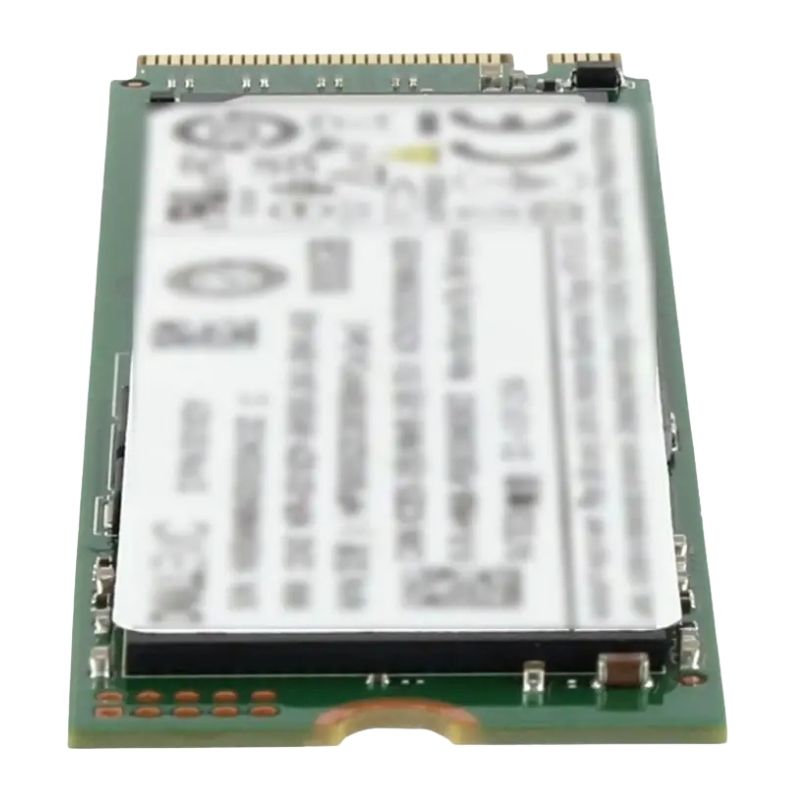


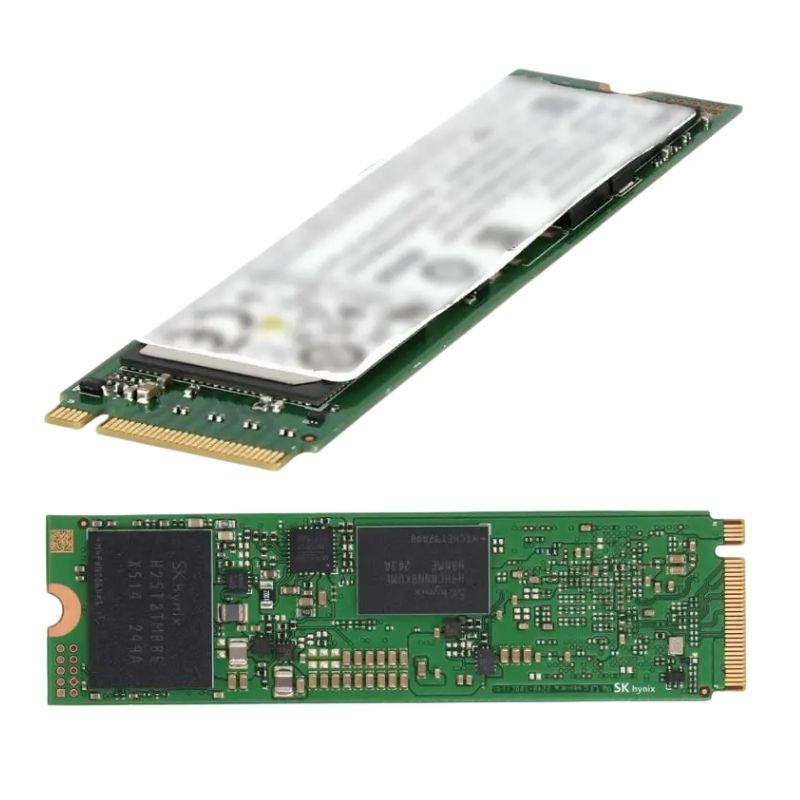
Dell GHRW8 800GB PCI-E Gen4 NVMe M.2 2280 Mixed Use TLC Solid State Drive. Excellent Refurbished with 1-Year Replacement Warranty
The Dell GHRW8 800GB PCI-Express Gen4 NVMe M.2 2280 Solid State Drive is engineered for enterprise-class environments that demand consistent speed, reliability, and efficiency. Designed as a mixed-use storage solution, this internal SSD balances read and write performance, making it suitable for data centers, cloud platforms, virtualization infrastructures, and business-critical workloads.
The Dell GHRW8 800GB PCI-E Gen4 NVMe M.2 2280 Mixed Use TLC Solid State Drive belongs to a high-performance enterprise solid state storage category engineered to meet the growing demands of modern data centers, cloud infrastructures, virtualization platforms, and performance-driven business environments. This category focuses on internal NVMe-based SSD solutions that combine compact form factors with advanced PCI Express Gen4 interfaces, enabling significantly higher bandwidth, lower latency, and improved efficiency compared to legacy SATA and SAS technologies. Within enterprise IT ecosystems, this class of storage is increasingly deployed for workloads requiring consistent performance, predictable endurance, and fast access to critical data.
Mixed use NVMe SSDs within this category are specifically designed to balance read and write performance, making them suitable for a wide range of applications that generate diverse I/O patterns. By utilizing Triple-Level Cell flash memory and optimized controller architectures, this category addresses the need for scalable, reliable, and energy-efficient storage solutions that align with modern server and workstation architectures.
The PCI-E Gen4 interface is a defining characteristic of this storage category, delivering a substantial leap in throughput over previous generations. PCI Express Gen4 doubles the bandwidth per lane compared to Gen3, enabling NVMe SSDs in this class to achieve higher sequential transfer rates and improved parallelism. For enterprise workloads such as database transactions, analytics processing, virtualization, and containerized applications, the increased bandwidth translates into reduced I/O bottlenecks and enhanced overall system responsiveness.
Within server environments, PCI-E Gen4 NVMe SSDs enable faster data ingestion and retrieval, supporting high-density compute nodes and modern CPU architectures that rely on high-speed interconnects. This category is well-suited for systems where storage performance directly impacts application efficiency, making it an integral component in performance-optimized infrastructure deployments.
Data-intensive applications benefit significantly from the high throughput and low latency provided by PCI-E Gen4 NVMe drives. Applications such as real-time analytics, artificial intelligence model training, and high-frequency transactional systems demand storage solutions capable of handling concurrent I/O operations with minimal delay. The storage category represented by the Dell GHRW8 emphasizes sustained performance under load, ensuring that mission-critical applications maintain consistent response times even during peak usage.
By leveraging the NVMe protocol, these drives reduce command overhead and optimize communication between the storage device and the host system. This architectural efficiency is essential for enterprise environments where predictable performance is required across multiple workloads running simultaneously.
The Non-Volatile Memory Express protocol is central to this category of solid state drives, offering a streamlined command set and parallel queue architecture designed specifically for flash-based storage. Unlike legacy protocols originally developed for spinning disks, NVMe enables thousands of simultaneous queues and commands, allowing enterprise systems to fully exploit the performance potential of modern SSDs.
This category of NVMe SSDs integrates seamlessly into high-performance computing environments, reducing latency and increasing IOPS capacity. As organizations transition toward software-defined storage and hyper-converged infrastructures, NVMe-based M.2 SSDs provide a scalable foundation for both primary storage and caching layers.
High queue depth support is a critical advantage of NVMe storage in enterprise scenarios. The ability to process multiple I/O requests in parallel enhances throughput and reduces wait times for applications. In mixed use workloads, where read and write operations occur concurrently, this parallelism ensures balanced performance without compromising reliability or endurance.
Enterprise IT teams benefit from the predictable behavior of NVMe drives under load, enabling more accurate capacity planning and performance tuning across virtual machines and containerized workloads.
The M.2 2280 form factor represents a compact yet powerful design that enables high-density storage configurations within servers, workstations, and embedded systems. In enterprise environments, this form factor supports space-efficient designs while delivering full PCI-E Gen4 NVMe performance. The internal M.2 interface allows direct connection to the motherboard, reducing cabling complexity and improving airflow within system enclosures.
This category of storage solutions is particularly valuable in edge computing, compact servers, and performance-focused workstations where space constraints and power efficiency are critical considerations. The Dell GHRW8 SSD aligns with industry-standard M.2 specifications, ensuring compatibility with a wide range of enterprise hardware platforms.
High-performance NVMe SSDs generate heat during sustained operation, making thermal management an important aspect of this storage category. Enterprise-grade M.2 SSDs are designed to operate reliably under elevated temperatures, with firmware and hardware optimizations that prevent thermal throttling. Proper system airflow and heatsink integration further enhance performance stability in demanding workloads.
In data center environments, maintaining optimal thermal conditions contributes to long-term reliability and consistent performance, reinforcing the suitability of this category for continuous operation.
Mixed use solid state drives are engineered to handle a balanced combination of read and write operations, making them versatile solutions for enterprise applications that do not fit strictly read-intensive or write-intensive profiles. This category is ideal for virtualization platforms, enterprise applications, content delivery systems, and transactional databases where workloads fluctuate throughout the day.
The endurance characteristics of mixed use SSDs are optimized to support sustained write activity while maintaining high read performance. This balance ensures long service life and consistent behavior across diverse operational scenarios.
Enterprise mixed use SSDs are designed with endurance ratings that accommodate frequent data updates and sustained write operations. Advanced wear leveling algorithms, error correction technologies, and over-provisioning strategies contribute to data integrity and long-term reliability. These features are essential in business-critical environments where data availability and consistency are paramount.
The category emphasizes predictable endurance metrics, allowing organizations to deploy storage solutions with confidence in their ability to withstand real-world enterprise workloads.
Triple-Level Cell flash technology is widely adopted in enterprise SSD categories due to its balance of cost efficiency, performance, and endurance. TLC flash stores three bits per cell, enabling higher storage density while maintaining acceptable endurance levels for mixed use workloads. Enterprise-grade TLC SSDs incorporate advanced controllers and firmware to mitigate the inherent limitations of multi-bit flash memory.
This category leverages sophisticated error correction codes and data management techniques to ensure reliable operation over extended periods. The result is a storage solution that delivers enterprise performance and reliability at a competitive cost per gigabyte.
The performance and reliability of TLC-based NVMe SSDs are heavily influenced by controller design and firmware intelligence. Enterprise controllers manage data placement, garbage collection, and wear leveling with precision, ensuring consistent performance across the lifespan of the drive. Firmware optimizations further enhance compatibility with enterprise operating systems and hypervisors.
This category benefits from continuous firmware refinement, addressing evolving workload patterns and improving efficiency in real-world deployments.
Enterprise NVMe M.2 SSD categories are designed for seamless integration into a wide range of Dell servers, workstations, and compatible third-party platforms. Standardized interfaces and protocols ensure interoperability across diverse hardware configurations, simplifying deployment and maintenance. This compatibility is critical for organizations managing heterogeneous IT environments.
The Dell GHRW8 SSD category aligns with enterprise validation processes, ensuring that storage solutions meet rigorous performance, reliability, and compatibility standards before deployment.
Modern enterprise operating systems and virtualization platforms are optimized to take advantage of NVMe storage capabilities. This category supports popular hypervisors and container platforms, enabling efficient storage virtualization and resource allocation. Enhanced I/O performance improves virtual machine density and application responsiveness.
By supporting industry-standard drivers and management tools, this category facilitates streamlined integration into existing IT infrastructures.
The enterprise NVMe mixed use SSD category addresses a broad spectrum of use cases, ranging from primary storage in performance-sensitive applications to caching layers in tiered storage architectures. In virtualization clusters, these drives provide fast boot times, rapid data access, and consistent performance under mixed workloads.
In database environments, the low latency and high throughput characteristics of PCI-E Gen4 NVMe SSDs enable faster query execution and improved transaction processing. Content delivery networks and web hosting platforms benefit from rapid content access and reduced load times, enhancing user experiences.
Edge computing environments require compact, reliable, and high-performance storage solutions capable of operating in constrained spaces. The M.2 2280 NVMe SSD category is well-suited for edge deployments, providing enterprise-class performance in a small footprint. These characteristics support real-time data processing and analytics at the network edge.
Remote and branch office deployments also benefit from the simplified installation and reduced maintenance requirements of internal NVMe SSDs.
Enterprise storage categories prioritize data security and integrity through advanced error detection, correction mechanisms, and secure firmware design. While mixed use NVMe SSDs focus on performance and endurance, they also incorporate features that protect data from corruption and unexpected power events.
These attributes are essential for business-critical applications where data accuracy and availability directly impact operational continuity.
Power stability features in enterprise SSDs help safeguard data during unexpected power interruptions. Although implementation varies by model, the category emphasizes firmware-level protections that minimize data loss and maintain file system integrity. This reliability contributes to the suitability of these SSDs for continuous operation in enterprise environments.
The enterprise NVMe SSD category represented by the Dell GHRW8 is designed with scalability in mind, supporting evolving storage requirements as data volumes and performance demands increase. PCI-E Gen4 compatibility ensures alignment with current and next-generation server platforms, providing a future-ready foundation for IT infrastructure investments.
As workloads continue to grow in complexity and scale, this category enables organizations to expand storage capacity and performance without fundamental changes to system architecture.
Modern data centers emphasize efficiency, performance, and flexibility. NVMe-based M.2 SSD categories align with these priorities by delivering high performance per watt, compact designs, and compatibility with software-defined storage frameworks. This alignment supports the ongoing transition toward agile, scalable, and performance-optimized data center architectures.
Enterprise NVMe SSD categories contribute to reduced total cost of ownership through improved performance efficiency, lower power consumption, and simplified infrastructure designs. Faster storage reduces processing time, enabling servers to complete tasks more quickly and efficiently. This efficiency can translate into lower operational costs and improved resource utilization.
The durability and reliability of enterprise mixed use SSDs also reduce maintenance and replacement costs, further enhancing their value proposition for organizations seeking long-term storage solutions.


 Contact Us
 Information
 Catalog
 Solid State Drives (SSD)
 Network Switches
 Hard Disk Drives
 HBA & Controllers
 PC & Servers
 PC & Server Memory
 CPU & Processors
 Network Routers
 Power Supplies
 Tape Drives & Libraries
 Network Devices
 Computer & Network Cables