(7% discount is applied at checkout)
Cart is empty
Your go-to destination for cutting-edge server products
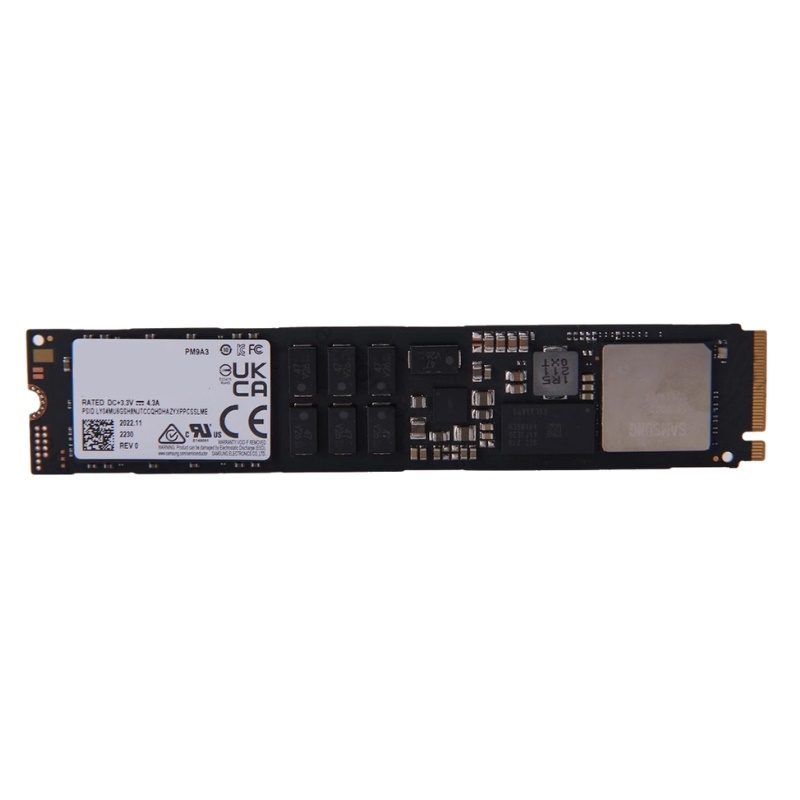


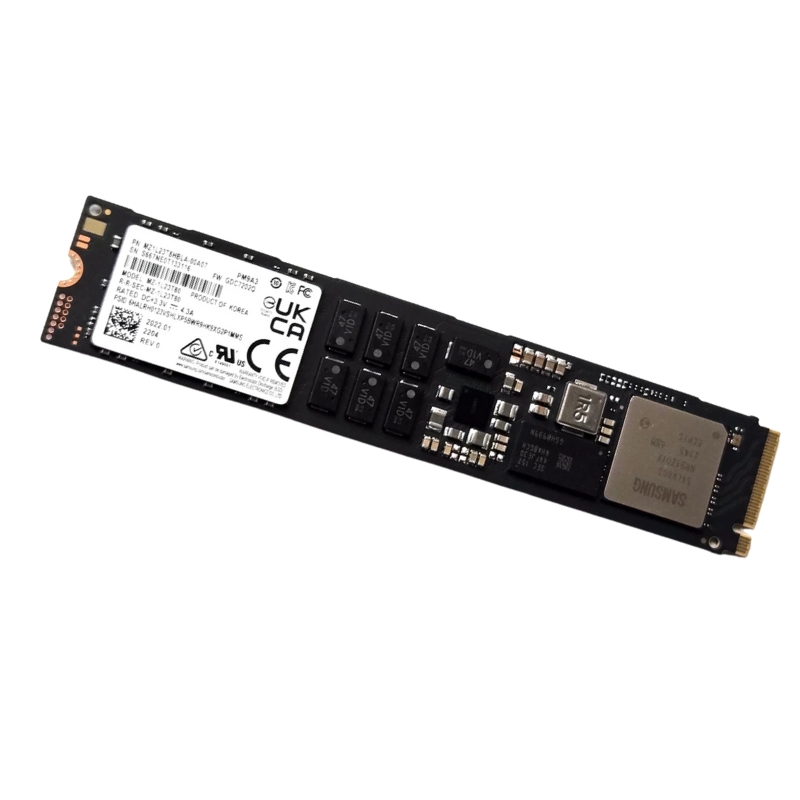
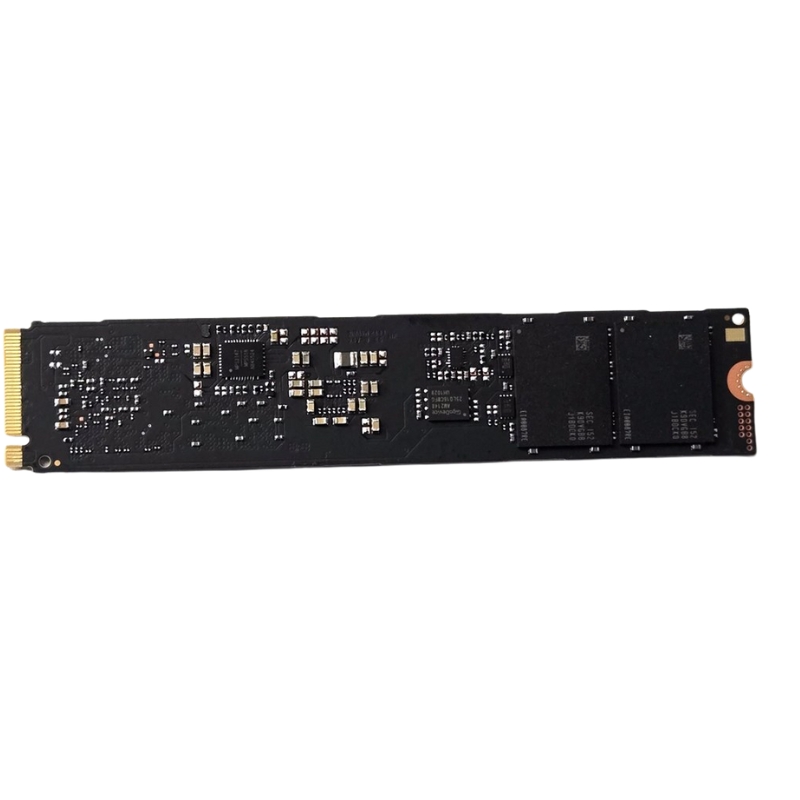
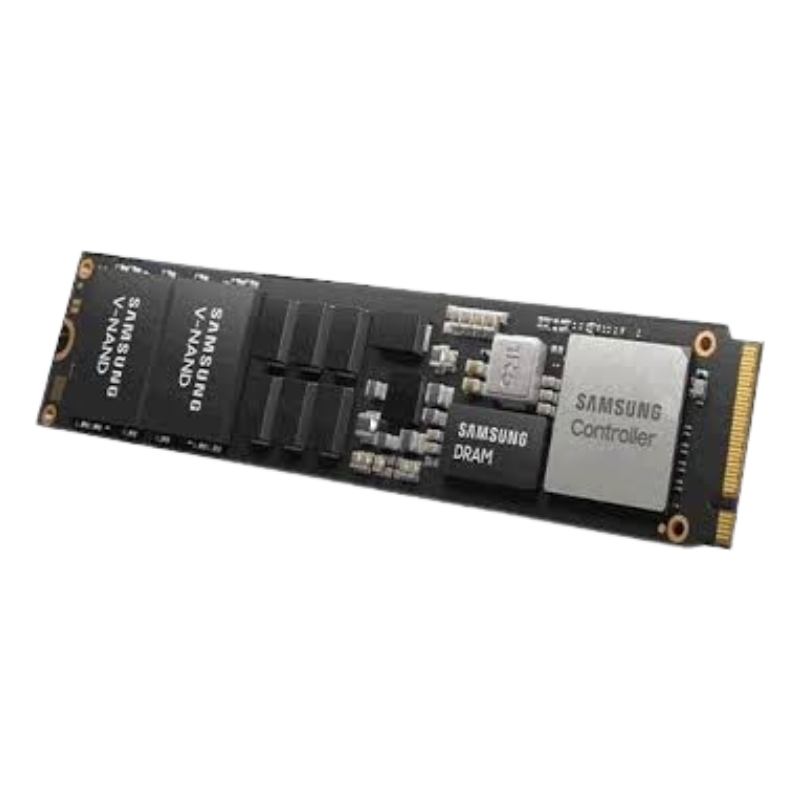
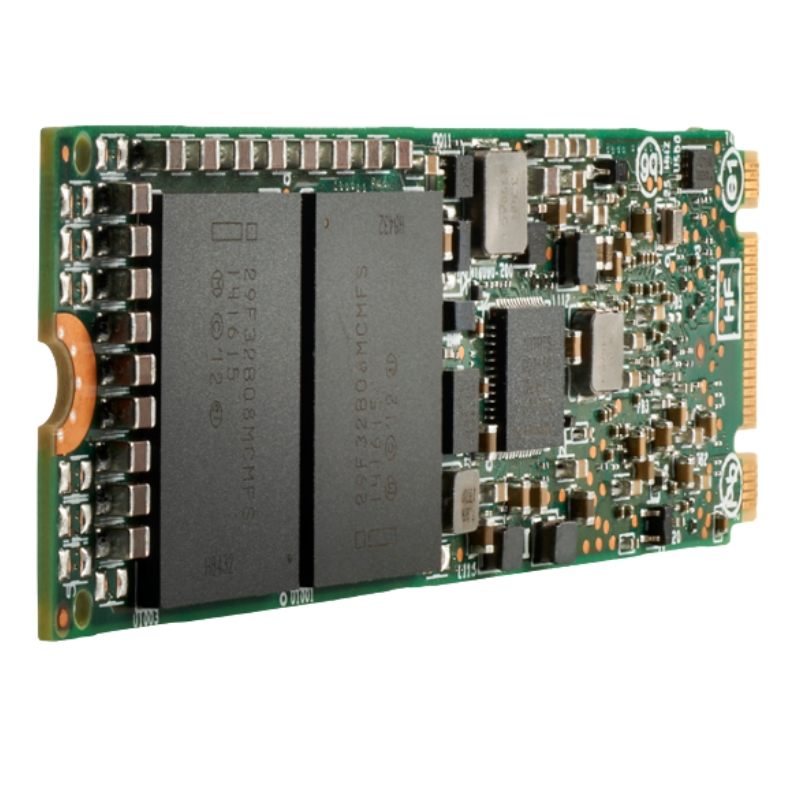
HPE P49025-B21 3.84TB NVMe Gen4 Mainstream Performance Mixed Use M.2 22110 PM9A3 SSD. Excellent Refurbished with 1 Year Replacement Warranty
Elevate data throughput and reliability with the HPE P49025-B21—an enterprise-grade NVMe Gen4 SSD engineered for mixed-use workloads. Designed in the M.2 22110 form factor, this drive delivers rapid sequential speeds, robust endurance, and seamless integration for HPE compute edge environments.
The HPE P49025-B21 3.84TB NVMe Gen4 Mainstream Performance Mixed Use M.2 22110 PM9A3 SSD belongs to a specialized enterprise storage category designed to balance performance, endurance, and efficiency for modern data center workloads. This category focuses on NVMe solid state drives built on PCIe Gen4 architecture, enabling significantly higher throughput and lower latency compared to previous SATA and SAS-based solutions. Within enterprise environments, this class of storage is widely adopted for virtualization platforms, containerized applications, cloud-native infrastructures, and high-performance databases where predictable responsiveness and sustained bandwidth are essential.
Unlike consumer-grade NVMe drives, enterprise-class NVMe Gen4 SSDs are engineered with firmware optimizations, power-loss protection features, and endurance profiles that align with continuous, mission-critical workloads. The HPE P49025-B21 fits squarely within the mainstream performance mixed-use segment, offering a balanced write endurance suitable for environments that experience both read-intensive and write-moderate activity patterns. This makes the category particularly valuable for organizations that require versatile storage without overinvesting in ultra-high-endurance models designed for extreme write workloads.
The mixed use classification represents a crucial subcategory in enterprise NVMe storage. Mixed use SSDs are designed to handle a blend of read and write operations that typically fall between read-intensive and write-intensive profiles. In real-world enterprise deployments, workloads rarely remain purely read-heavy or write-heavy, and the mixed use category addresses this reality by providing consistent performance across diverse operational scenarios.
The HPE P49025-B21 3.84TB NVMe Gen4 SSD exemplifies this category by supporting transactional databases, analytics platforms, and enterprise applications that generate moderate write amplification alongside frequent read requests. The endurance rating of mixed use drives ensures reliable long-term operation while maintaining cost efficiency. As organizations consolidate workloads and virtual machines onto fewer physical servers, mixed use NVMe SSDs play a critical role in sustaining performance consistency under variable demand.
PCIe Gen4 technology doubles the available bandwidth per lane compared to PCIe Gen3, which has a transformative effect on mixed use storage performance. NVMe Gen4 SSDs in this category leverage the increased bandwidth to minimize bottlenecks during peak I/O operations. The HPE P49025-B21 benefits from this advancement by delivering faster data access, improved queue handling, and reduced latency across simultaneous workloads.
In mixed use scenarios, where read and write operations occur concurrently, PCIe Gen4 enables smoother performance scaling. This allows enterprise applications to maintain responsiveness even as storage demand fluctuates throughout the day. The category’s reliance on Gen4 architecture ensures compatibility with modern server platforms while providing headroom for future application growth.
The M.2 22110 form factor represents a compact yet powerful storage design that is increasingly adopted in enterprise servers. Measuring 22 millimeters in width and 110 millimeters in length, this form factor allows for high-density storage integration without sacrificing performance or thermal stability. The HPE P49025-B21 utilizes the M.2 22110 design to deliver enterprise-grade NVMe performance within a space-efficient footprint.
Within this category, M.2 22110 NVMe SSDs are often deployed as boot drives, caching layers, or application-specific storage devices. However, with capacities reaching 3.84TB, they are also suitable for primary data storage in certain architectures. The form factor’s direct connection to the PCIe bus reduces latency and simplifies system design by eliminating the need for additional cables or backplanes.
Thermal management is a critical consideration in the M.2 enterprise SSD category. High-performance NVMe Gen4 drives generate substantial heat during sustained workloads, and enterprise-grade designs incorporate advanced thermal control mechanisms. The HPE P49025-B21 is engineered to operate within defined thermal envelopes, ensuring stable performance even in densely populated server environments.
Power efficiency is another defining attribute of this category. Enterprise M.2 NVMe SSDs are optimized to deliver high throughput per watt, reducing overall power consumption and contributing to lower data center operating costs. Intelligent power state management allows the drive to balance performance and energy efficiency based on workload intensity.
The mainstream performance tier occupies a strategic position within the enterprise NVMe storage landscape. This tier is designed to provide a compelling balance between cost, performance, and endurance. The HPE P49025-B21 3.84TB NVMe Gen4 SSD is positioned within this tier to address the needs of organizations that require reliable high-speed storage without the premium associated with ultra-high-performance or write-intensive models.
Mainstream performance NVMe SSDs are commonly deployed in virtualization clusters, enterprise application servers, and software-defined storage environments. The category emphasizes consistent latency, predictable throughput, and compatibility with a wide range of workloads. By focusing on mixed use endurance, this tier supports consolidation strategies that reduce infrastructure complexity while maintaining service quality.
Within the broader enterprise SSD taxonomy, mainstream performance mixed use drives sit between read-intensive and write-intensive categories. Read-intensive SSDs prioritize capacity and cost efficiency for workloads dominated by read operations, while write-intensive SSDs emphasize endurance for environments with heavy write activity. Mixed use mainstream performance drives like the HPE P49025-B21 strike a balance by offering sufficient endurance for moderate writes while delivering strong read performance.
This positioning makes the category particularly attractive for enterprises seeking versatility. Rather than maintaining multiple storage tiers for different workload types, organizations can standardize on mixed use NVMe SSDs to simplify management and procurement. The mainstream performance tier supports this approach by offering dependable performance across a broad spectrum of applications.
The PM9A3 platform represents a proven enterprise NVMe architecture that underpins this category of SSDs. Designed for data center reliability, the controller and firmware combination emphasizes sustained performance, error correction, and workload consistency. The HPE P49025-B21 leverages this architecture to deliver enterprise-grade reliability within the mainstream performance mixed use segment.
Firmware optimization plays a significant role in differentiating enterprise NVMe SSDs from consumer models. Advanced wear leveling, garbage collection, and error recovery mechanisms ensure that performance remains stable over the drive’s operational lifespan. In mixed use environments, where workload patterns can vary significantly, these firmware features are essential for maintaining predictable response times.
Enterprise NVMe SSD categories prioritize data integrity through multiple layers of protection. The HPE P49025-B21 includes features designed to safeguard data during unexpected power interruptions and system faults. These mechanisms help ensure that in-flight data is preserved and that file systems remain consistent, which is critical for enterprise applications and databases.
Error correction and end-to-end data protection technologies further enhance reliability. By detecting and correcting errors at various stages of data processing, the SSD minimizes the risk of silent data corruption. This focus on reliability distinguishes the enterprise mixed use NVMe category from lower-tier storage solutions.
The 3.84TB capacity class represents a widely adopted standard in enterprise SSD deployments. This capacity point offers an optimal balance between storage density and cost efficiency, making it suitable for a wide range of use cases. The HPE P49025-B21 leverages this capacity to provide ample storage for virtual machines, application data, and high-performance workloads within a compact M.2 form factor.
Within the enterprise NVMe category, 3.84TB drives are often selected to maximize usable capacity per server while maintaining manageable rebuild times and performance consistency. This capacity class aligns well with modern data center architectures that emphasize scalability and modular growth.
Virtualization platforms benefit significantly from the performance and capacity characteristics of 3.84TB NVMe Gen4 SSDs. Mixed use drives in this category support multiple virtual machines with diverse I/O patterns, ensuring that no single workload monopolizes storage resources. The low latency and high throughput of NVMe Gen4 technology contribute to improved VM responsiveness and reduced boot times.
Containerized environments also benefit from this category, as rapid provisioning and scaling of containers require fast storage access. The HPE P49025-B21 supports these requirements by delivering consistent performance across concurrent read and write operations, enabling agile application deployment.
The enterprise NVMe SSD category represented by the HPE P49025-B21 is designed for seamless integration with HPE ProLiant server platforms. Compatibility with Gen10 Plus and later server architectures ensures that organizations can leverage PCIe Gen4 capabilities without complex configuration changes. This alignment with HPE ecosystems simplifies deployment and enhances overall system reliability.
HPE-certified firmware and validation processes ensure that the SSD operates optimally within supported server configurations. This level of integration reduces the risk of compatibility issues and ensures consistent performance across firmware updates and system expansions.
Within HPE server environments, M.2 NVMe SSDs in this category are often used in dedicated roles such as operating system boot drives or application-specific storage. The HPE P49025-B21’s mixed use endurance and mainstream performance profile make it suitable for these roles while also supporting more demanding application data workloads.
As a cache layer, this category of SSD accelerates access to frequently used data, improving overall system responsiveness. When used for application storage, the drive delivers consistent performance that supports transactional workloads and real-time analytics.
Performance consistency is a defining characteristic of enterprise mixed use NVMe SSD categories. Unlike consumer drives that may exhibit performance degradation under sustained load, enterprise SSDs are engineered to maintain predictable throughput and latency. The HPE P49025-B21 exemplifies this approach by delivering stable performance across prolonged mixed use workloads.
This consistency is particularly important in multi-tenant environments where multiple applications and users share the same storage resources. By minimizing performance variability, the SSD helps maintain service level agreements and enhances user experience.
Latency-sensitive applications such as financial transactions, online services, and real-time analytics benefit from the low and predictable latency of NVMe Gen4 mixed use SSDs. The category’s emphasis on fast command processing and efficient queue management ensures that response times remain consistent even under heavy load.
The HPE P49025-B21 supports these requirements by leveraging NVMe protocol efficiencies and PCIe Gen4 bandwidth, enabling rapid data access and reduced I/O wait times across diverse workloads.
Enterprise NVMe Gen4 SSD categories are designed with scalability in mind. As data volumes grow and application demands evolve, storage solutions must provide a clear upgrade path. The HPE P49025-B21 fits into this strategy by offering compatibility with current and future server architectures that support PCIe Gen4 and beyond.
By standardizing on mainstream performance mixed use NVMe SSDs, organizations can build scalable storage architectures that accommodate growth without frequent hardware refresh cycles. This approach reduces total cost of ownership while maintaining performance headroom for emerging workloads.
Software-defined storage platforms rely heavily on the performance and reliability of underlying SSDs. Mixed use NVMe Gen4 SSDs in this category provide the consistent performance required for distributed storage systems, ensuring balanced data placement and efficient replication.
In private and hybrid cloud environments, the HPE P49025-B21 supports dynamic workload allocation and rapid resource provisioning. Its mainstream performance profile aligns well with cloud economics, delivering high value without unnecessary overprovisioning.
Enterprise storage categories increasingly emphasize security features to protect sensitive data. NVMe SSDs designed for enterprise use incorporate secure firmware, access controls, and data protection mechanisms that align with organizational security policies. The HPE P49025-B21 benefits from these design principles, ensuring that data stored on the drive remains protected throughout its lifecycle.
Secure erase and data sanitization capabilities are also important within this category, enabling organizations to comply with data protection regulations when decommissioning or repurposing storage devices. These features contribute to the overall trustworthiness of enterprise mixed use NVMe SSDs.
Compliance-driven industries such as finance, healthcare, and government require storage solutions that deliver both performance and reliability. The enterprise mixed use NVMe category addresses these needs by combining endurance, data integrity, and predictable performance. The HPE P49025-B21 supports compliance requirements by providing stable operation and robust error handling.
This focus on reliability ensures that critical data remains accessible and accurate, supporting auditability and regulatory compliance across diverse enterprise environments.
Operational efficiency is a key driver behind the adoption of NVMe Gen4 SSDs in enterprise categories. By delivering higher performance per drive, these SSDs enable data centers to reduce the number of storage devices required to meet workload demands. The HPE P49025-B21 contributes to this efficiency by combining high capacity, mainstream performance, and mixed use endurance in a compact form factor.
Reduced hardware footprint translates into lower power consumption, simplified cooling requirements, and improved rack density. These benefits align with modern data center strategies focused on sustainability and cost optimization.
Total cost of ownership is influenced by acquisition costs, operational expenses, and lifecycle management. Mainstream performance mixed use NVMe SSDs offer a compelling value proposition by balancing upfront cost with long-term reliability and performance. The HPE P49025-B21 supports this model by minimizing downtime, reducing maintenance overhead, and extending usable lifespan.
By investing in enterprise-grade NVMe storage within this category, organizations can achieve predictable performance and operational stability while controlling overall infrastructure costs.


 Contact Us
 Information
 Catalog
 Solid State Drives (SSD)
 Network Switches
 Hard Disk Drives
 HBA & Controllers
 PC & Servers
 PC & Server Memory
 CPU & Processors
 Network Routers
 Power Supplies
 Tape Drives & Libraries
 Network Devices
 Computer & Network Cables