(7% discount is applied at checkout)
Cart is empty
Your go-to destination for cutting-edge server products
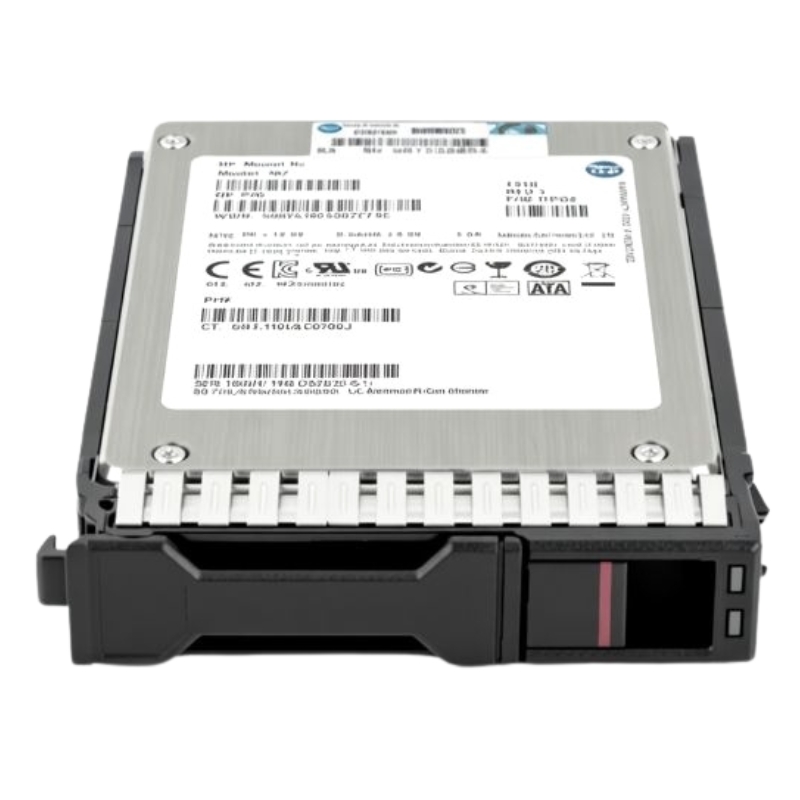


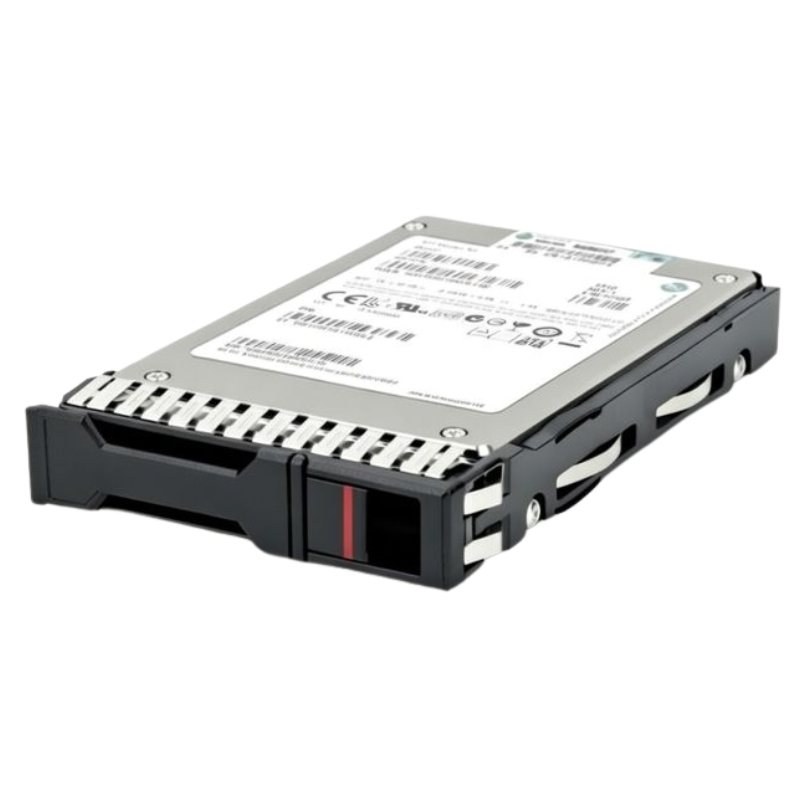
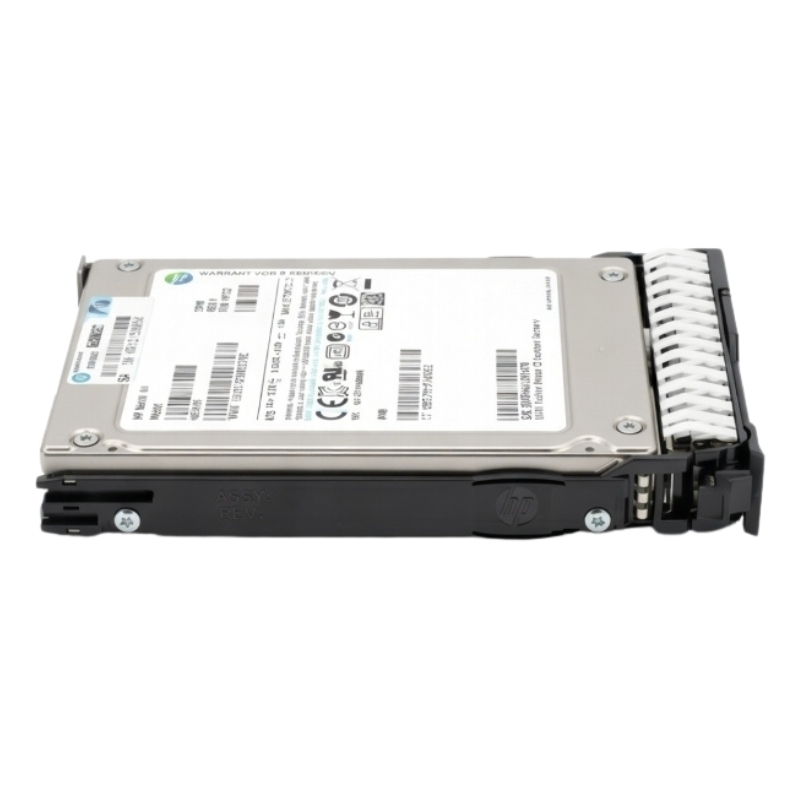
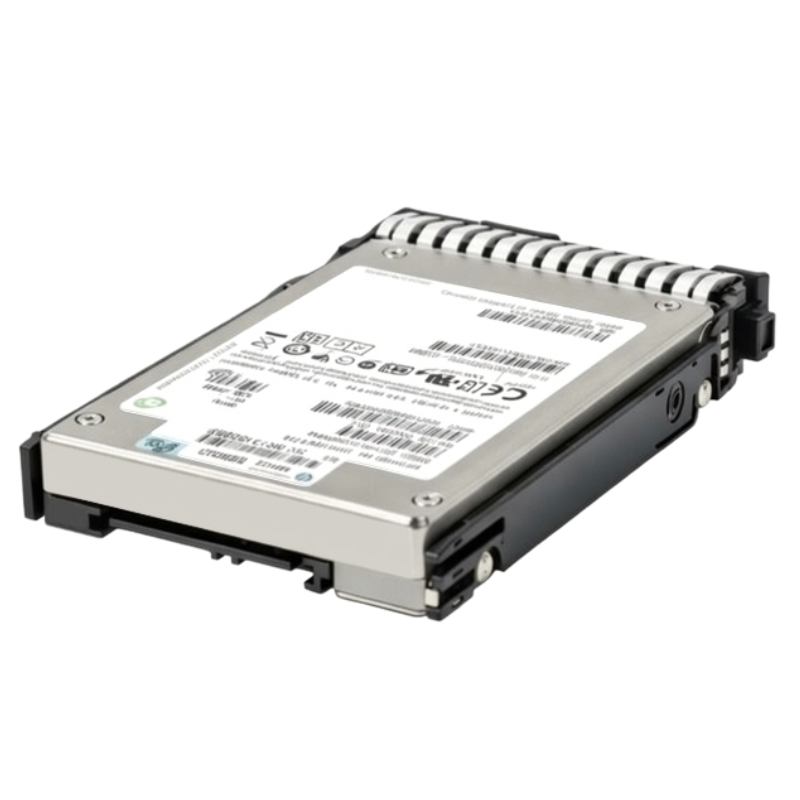
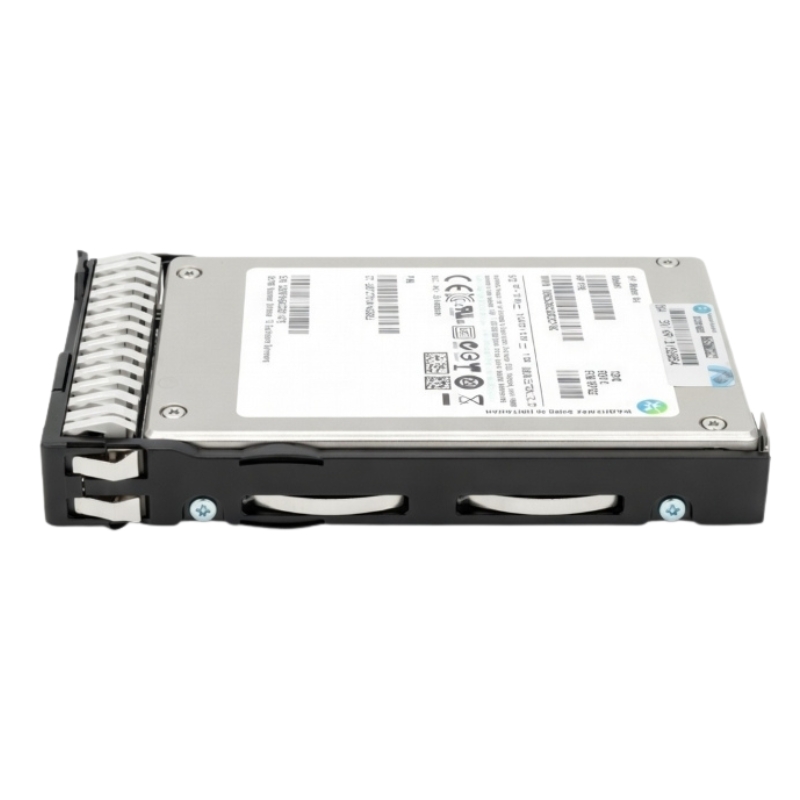
HPE P66092-002 1.92TB Read Intensive NVMe Gen4 SFF Bc U.3 Static V2 Multi Vendor Solid State Drive for Server. New Sealed with 1 Year Replacement Warranty
The HPE P66092-002 1.92TB Read Intensive NVMe Gen4 SFF U.3 Solid State Drive is a high-performance, enterprise-class storage solution designed for modern servers. Built to deliver fast data access, low latency, and reliable endurance, this SSD is ideal for read-heavy workloads in data centers and business-critical IT environments.
Not all enterprise workloads are created equal, and neither should their storage be. The "Read Intensive" classification is a crucial differentiator in the SSD market, indicating a drive engineered for endurance profiles where read operations vastly outnumber writes.
The drive utilizes 3D TLC (Triple-Level Cell) NAND flash, which offers an excellent balance of cost, capacity, and endurance for read-centric tasks. The controller and firmware are fine-tuned to accelerate read access times and queue depths, ensuring data is served to the CPU with minimal delay.
While offering robust endurance suitable for enterprise use, the drive's specified DWPD (Drive Writes Per Day) is lower than that of a Mixed-Use or Write-Intensive drive. For the 1.92TB model, this translates to a carefully calibrated TBW rating that aligns perfectly with its target workloads, providing reliable longevity without the cost overhead of ultra-high-endurance components.
The application scope for this category is vast and central to modern IT operations. Primary use cases include: Hypervisor Boot and OS Volumes, where fast server provisioning and boot times are critical; Content Delivery Networks (CDN) and static web hosting, demanding rapid delivery of media files and web assets; Data Analytics & Business Intelligence platforms, where large datasets are queried extensively; and Virtual Desktop Infrastructure (VDI) golden images, enabling rapid deployment of desktop instances. These scenarios benefit directly from the drive's high sequential and random read performance.
The transition from PCIe 3.0 to PCIe 4.0 is a generational shift, doubling the available bandwidth per lane. The HPE P66092-002 harnesses this breakthrough to eliminate storage bottlenecks.
With a PCIe 4.0 x4 interface, the drive offers a theoretical bandwidth of up to 64 Gb/s (8 GB/s) bidirectionally. In practice, this enables staggering sequential read speeds that can exceed 7,000 MB/s, effectively saturating the bandwidth of the previous generation. More importantly, the NVMe protocol's streamlined stack and massive queue depth support drastically cut I/O latency, often reducing it to microseconds. This means applications spend less time waiting for data and more time processing it, directly improving transaction times and user experience.
To appreciate the performance, a comparison is essential. A high-end SATA SSD is limited to ~600 MB/s by its interface. An NVMe Gen3 drive tops out around 3,500 MB/s. The HPE P66092-002, as a Gen4 drive, effectively doubles that throughput. This exponential gain is not just about moving large files faster; it's about handling exponentially more concurrent I/O operations, a necessity in today's highly virtualized, containerized environments.
Physical compatibility and vendor lock-in are major concerns in data center planning. This drive category directly addresses both through its forward-thinking design.
The U.3 form factor, also known as SFF Bc, is a revolutionary step in enterprise storage. It is a single, compact 2.5-inch (SFF) connector that is electrically and physically compatible with SAS, SATA, and NVMe (using PCIe) protocols. This tri-mode capability means a server backplane designed for U.3 can accept any of these drive types, offering unprecedented flexibility for IT administrators.
Data centers can now standardize on a single drive bay design while deploying a mix of storage technologies optimized for different tiers. The HPE P66092-002 plugs directly into these modern U.3 bays, future-proofing the infrastructure and simplifying spare part inventories.
This designation is a cornerstone of HPE's strategy for open, flexible infrastructure.
"Static V2" refers to a specific generation of HPE's SSD firmware and its associated management attributes within HPE iLO and HPE OneView. It ensures predictable performance, consistent telemetry, and integrated health monitoring across all HPE-branded SSDs of this generation, regardless of the underlying NAND manufacturer.
Instead of being tied to a single flash memory supplier, HPE sources NAND components from multiple leading vendors (e.g., Kioxia, Samsung, SK hynix). This multi-vendor strategy mitigates supply chain risk, promotes competitive pricing, and ensures consistent product availability. Crucially, HPE's own controller and rigorous qualification process guarantee that all drives meeting the P66092-002 specification deliver identical performance, endurance, and management features, regardless of the NAND source.
Understanding the raw specifications provides a clear picture of the drive's capabilities.
The 1.92TB capacity point is a strategic sweet spot, offering substantial storage for applications while maintaining a favorable cost-per-gigabyte ratio. Performance metrics typically include Sequential Read speeds up to 7,000+ MB/s and Sequential Write speeds appropriate for its read-intensive role (e.g., 3,800+ MB/s). Random Read performance can reach 1,000,000+ IOPS (4K blocks), which is critical for database queries and virtual machine operations. The drive's endurance is expressed as a TBW (Total Bytes Written) value, often in the range of 3.5 Petabytes written for the 1.92TB model, which aligns with a DWPD of approximately 0.5 over a 5-year warranty period.
Enterprise drives must protect data at all costs. The HPE P66092-002 includes advanced power loss protection (PLP) circuits. In the event of an unexpected power failure, stored energy in capacitors allows the drive to complete any in-flight writes and commit data from volatile caches to non-volatile NAND, preventing corruption. Furthermore, it employs end-to-end data path protection and T10 DIF (Data Integrity Field) standards to guard against silent data corruption.


 Contact Us
 Information
 Catalog
 Solid State Drives (SSD)
 Network Switches
 Hard Disk Drives
 HBA & Controllers
 PC & Servers
 PC & Server Memory
 CPU & Processors
 Network Routers
 Power Supplies
 Tape Drives & Libraries
 Network Devices
 Computer & Network Cables