(7% discount is applied at checkout)
Cart is empty
Your go-to destination for cutting-edge server products
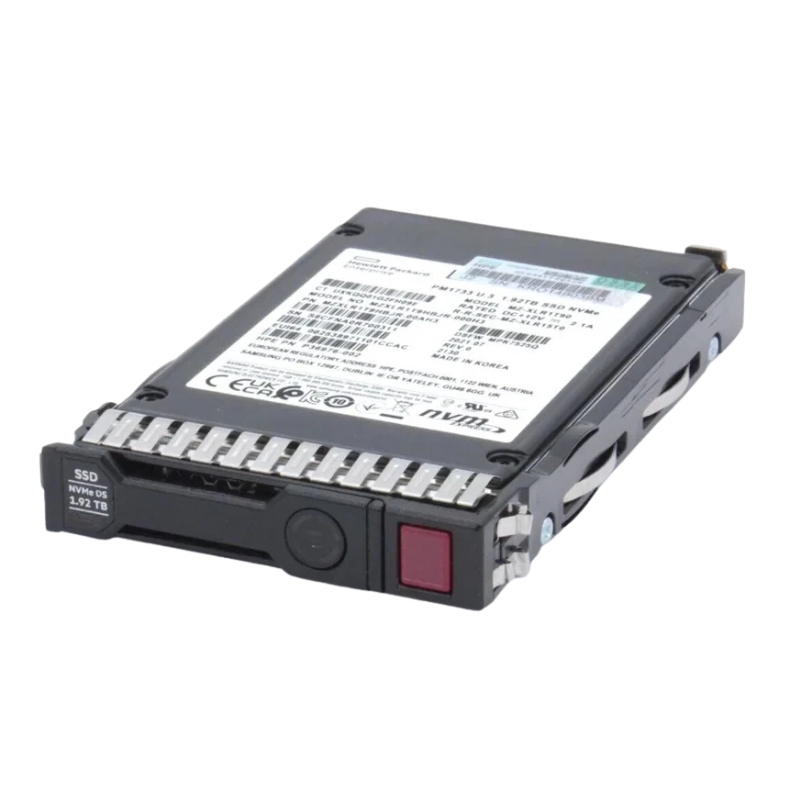


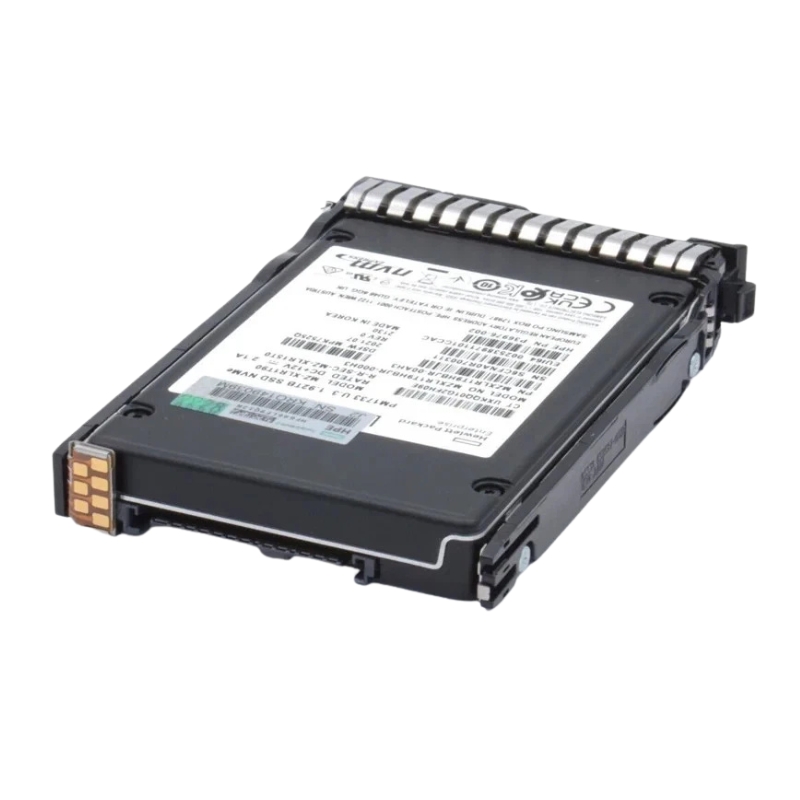
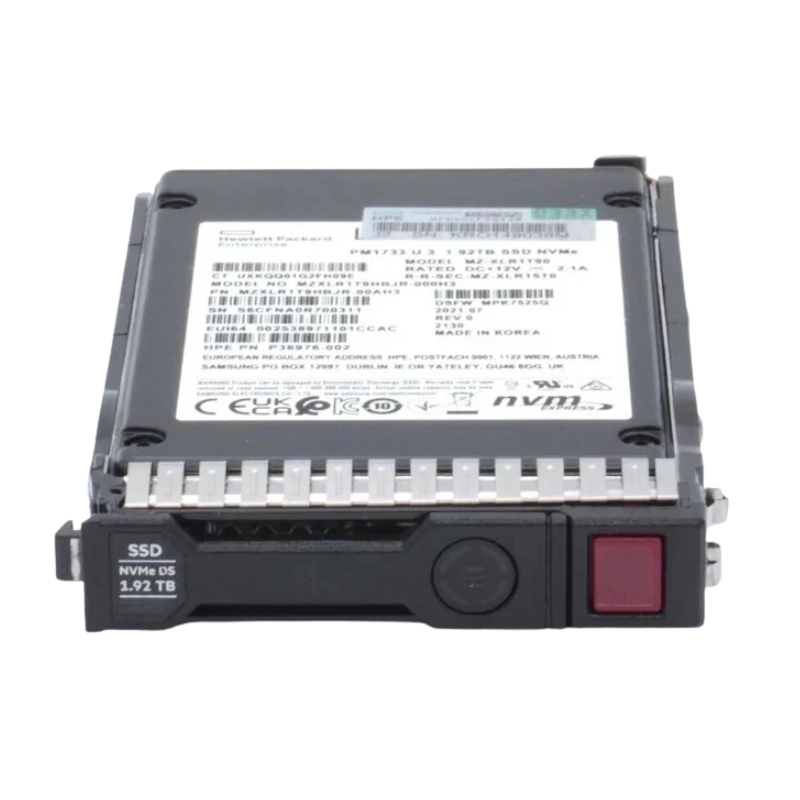
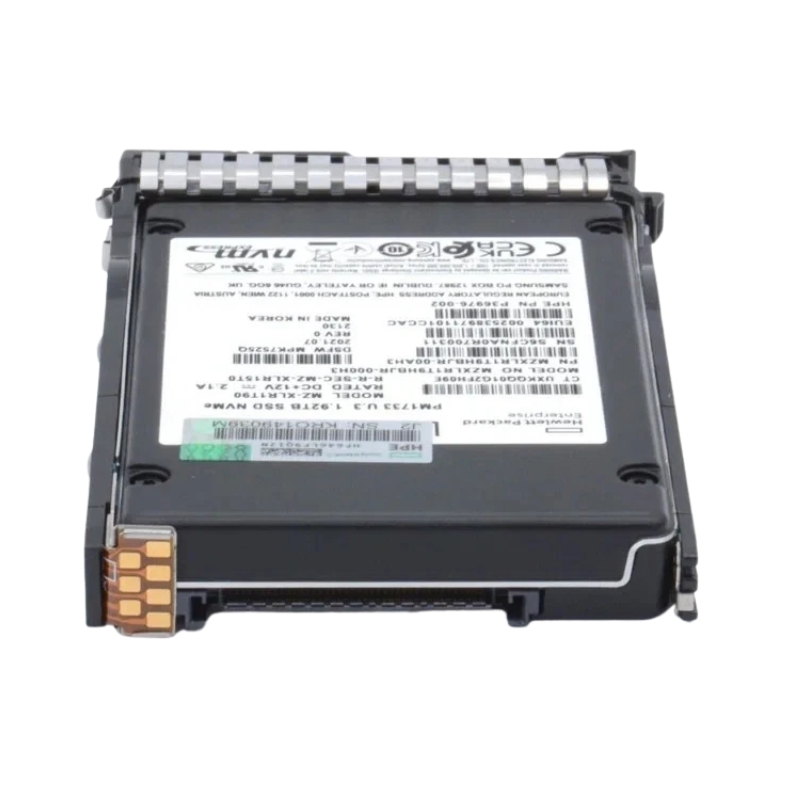
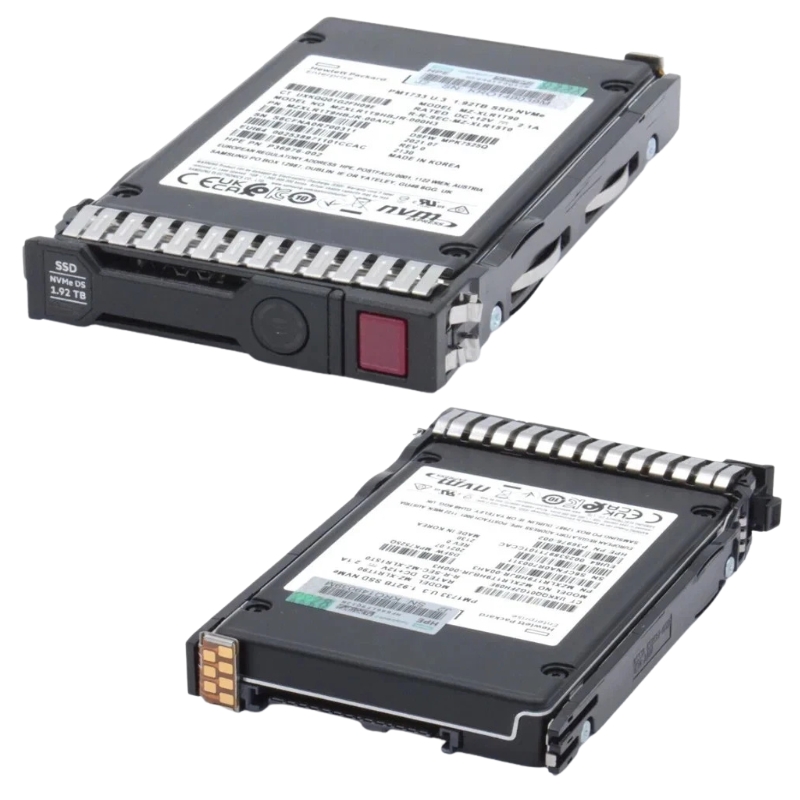
HPE P73297-B21 1.92TB Read Intensive NVMe SFF U.3 Solid State Drive. Factory-Sealed New in Original Box (FSB) with 3 years Warranty
The HPE P73297-B21 1.92TB Read Intensive NVMe SSD is a high-performance storage solution engineered for modern enterprise servers. Designed with NVMe technology and a compact SFF U.3 form factor, this solid state drive delivers fast data access, low latency, and reliable performance for read-heavy workloads.
The HPE P73297-B21 is not merely a commodity SSD; it is an HPE-engineered solution optimized for compatibility, reliability, and performance within HPE server and storage ecosystems. As a 1.92TB capacity drive, it sits in the strategic sweet spot for balancing cost-per-gigabyte with high-performance tier capacity. Its 2.5-inch Small Form Factor (SFF) and U.3 (SFF-8639) connector ensure it fits into a vast array of current-generation HPE ProLiant, Synergy, and Apollo platforms, as well as HPE storage arrays like Nimble and Alletra. The "Read Intensive" classification is key—it signifies that this drive is engineered for workloads where data is read far more frequently than it is written, offering an optimal blend of endurance and economic efficiency.
At its heart, the P73297-B21 delivers the raw speed that NVMe promises. With sequential read speeds reaching into the thousands of megabytes per second and random read IOPS (Input/Output Operations Per Second) measuring in the hundreds of thousands, it obliterates bottlenecks associated with boot drives, application hosting, and large datasets. Its endurance, measured in Drive Writes Per Day (DWPD) over its warranty period, is precisely calibrated for read-centric tasks. This ensures a long, predictable service life while keeping total cost of ownership (TCO) manageable.
The NVMe protocol, operating over a PCIe 3.0 or 4.0 x4 lane interface (depending on the host platform), is the game-changer. It supports 64,000 command queues, each capable of holding 64,000 commands simultaneously—a stark contrast to the single queue with 32 commands in AHCI used by SATA. This massive parallelism aligns perfectly with modern multi-core processors, enabling data requests to be processed with minimal latency and maximal efficiency.
The U.3 interface is a tri-mode connector. It physically accepts a U.2 (NVMe), U.3 (NVMe/SAS/SATA auto-negotiating), or SAS/SATA drive. This universality allows data center managers to deploy a homogeneous chassis infrastructure while flexibly populating it with the optimal storage media for each task, simplifying spares management and enabling non-disruptive technology refreshes.
Choosing the right storage tier is paramount for performance and cost optimization. The Read Intensive nature of the HPE P73297-B21 makes it an exceptional candidate for a wide range of applications where data retrieval speed is critical, but write cycles are moderate and predictable.
In server virtualization (vSphere, Hyper-V, KVM) and Virtual Desktop Infrastructure (VDI), boot storms and simultaneous VM operations create intense random read demands. Deploying these drives in a pool for host caching or as the primary storage tier for gold-image repositories dramatically accelerates provisioning and login times, enhancing user experience and consolidating more VMs per host.
HCI platforms like VMware vSAN or Nutanix aggregate local server storage to create a resilient, software-defined storage fabric. The low latency and high IOPS of the P73297-B21 are ideal for the capacity tier in a vSAN hybrid configuration or as a performance-optimized all-flash tier, ensuring that application responsiveness remains high even under heavy cluster load.
For web servers, content management systems, or video streaming platforms, delivering static or dynamic content quickly is paramount. A storage tier built with these read-intensive NVMe drives can serve more concurrent requests with lower latency, improving page load times and reducing video buffering.
While write-intensive databases may require a Mixed-Use or Write-Intensive SSD, many operational databases and reporting replicas are read-heavy. Using the P73297-B21 for database logs, indices, or read-only replicas in Microsoft SQL Server, Oracle, or MySQL deployments can significantly improve query performance without the premium cost of higher-endurance drives.
HPE OEM-specific drives like the P73297-B21 incorporate a suite of enhancements beyond the base NVMe specification, designed for seamless integration and unwavering reliability in 24/7 enterprise environments.
The drive is fully certified and validated by HPE for its server ecosystem. It is pre-configured to work flawlessly with HPE Smart Storage Administrator (SSA), HPE OneView, and the HPE iLO (Integrated Lights-Out) management suite. This allows for proactive health monitoring, predictive failure analysis, and firmware updates through standard HPE tools, streamlining lifecycle management.
For HPE Nimble Storage and Alletra platforms, this drive contributes data to the cloud-based HPE InfoSight system. InfoSight uses AI and machine learning to analyze drive telemetry across thousands of systems globally, predicting and preventing issues before they impact operations, often resolving problems autonomously.
Enterprise drives demand robust data protection. The P73297-B21 incorporates advanced error correction code (ECC), power-loss protection (PLP) circuits, and end-to-end data path protection. PLP capacitors ensure that in-flight data in the drive's cache is permanently written to NAND flash in the event of an unexpected power failure, preventing data corruption.
Leveraging NVMe 1.3+ features, the drive supports Namespaces, which allow a single physical SSD to be partitioned into multiple, isolated logical units. This enables more efficient storage allocation and quality-of-service (QoS) management in multi-tenant or multi-application environments.
Utilizing high-quality 3D TLC (Tri-Level Cell) NAND, the drive achieves an optimal balance of density, performance, and endurance. Sophisticated wear-leveling algorithms, bad block management, and over-provisioning (reserving spare NAND capacity) work in concert to distribute write cycles evenly across all memory cells, extending the drive's operational life far beyond its rated warranty.
HPE categorizes its solid-state drives into distinct endurance classes to match specific workload profiles. Understanding these tiers is crucial for making an informed procurement decision.
The HPE P73297-B21 belongs to the Read-Intensive family, designed for workloads with a high read-to-write ratio (typically 80/20 or higher). It offers the lowest DWPD rating among the three tiers, translating to the most attractive cost per terabyte for read-heavy applications.
HPE Mixed-Use SSDs are built for balanced workloads (approx. 50/50 read/write). They feature higher endurance (a mid-range DWPD), more over-provisioning, and are suited for general virtualization, transactional databases, and email servers.
HPE Write-Intensive SSDs (e.g., the HPE P73299-B21 series) are engineered for the most demanding write-centric tasks like high-frequency trading, write caching, or logging. They have the highest DWPD rating, use more durable NAND (often SLC or eMLC), and carry a premium price for maximum endurance.


 Contact Us
 Information
 Catalog
 Solid State Drives (SSD)
 Network Switches
 Hard Disk Drives
 HBA & Controllers
 PC & Servers
 PC & Server Memory
 CPU & Processors
 Network Routers
 Power Supplies
 Tape Drives & Libraries
 Network Devices
 Computer & Network Cables