(7% discount is applied at checkout)
Cart is empty
Your go-to destination for cutting-edge server products
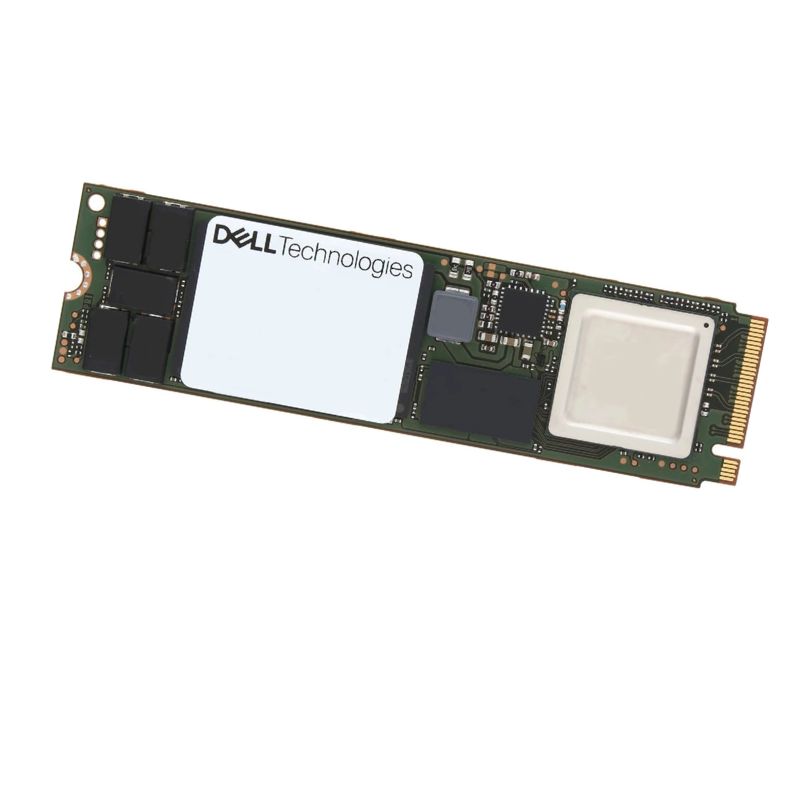


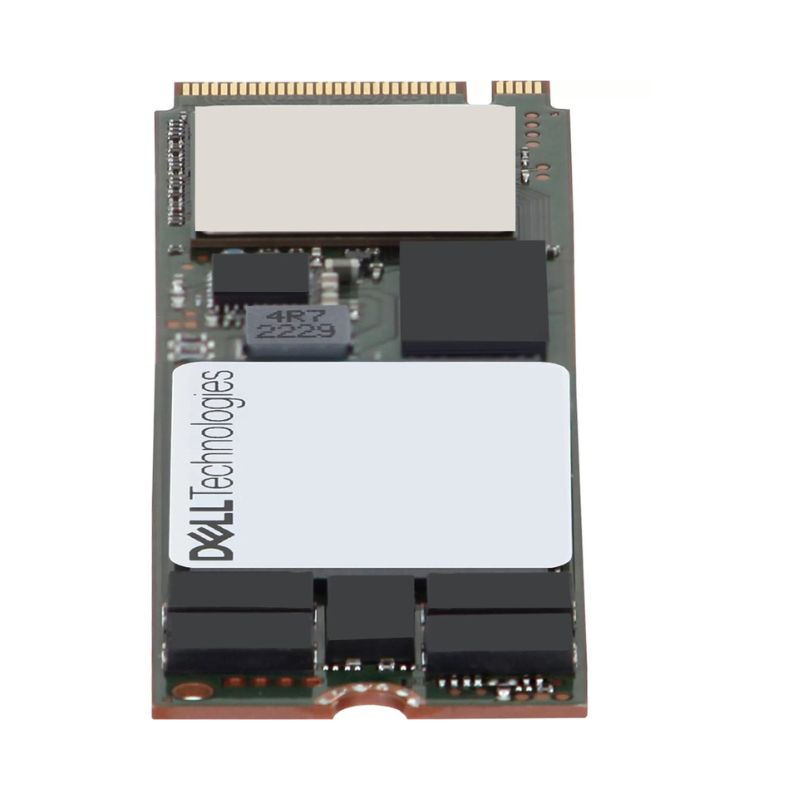
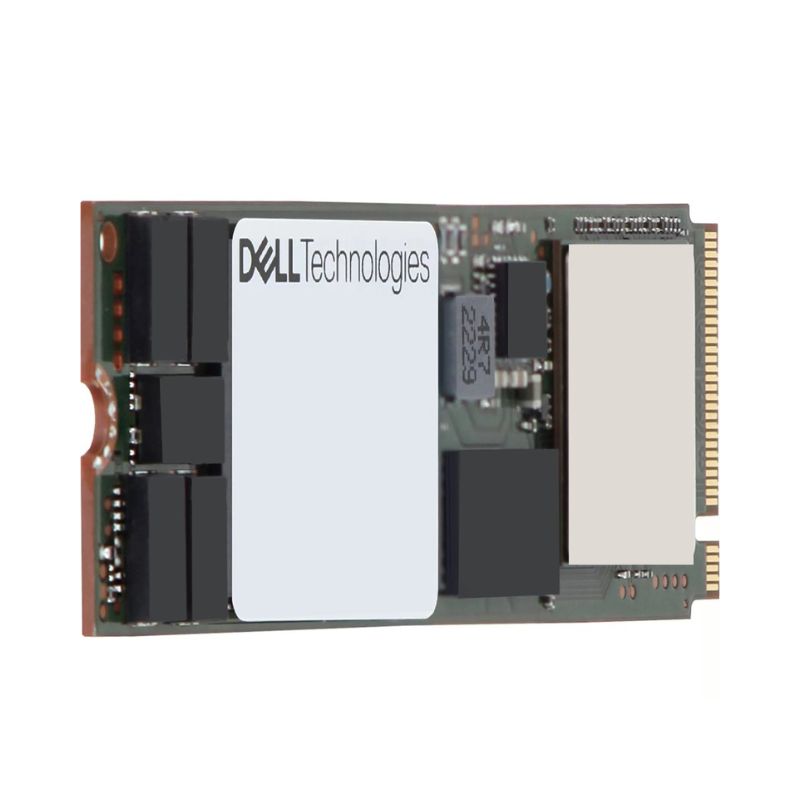
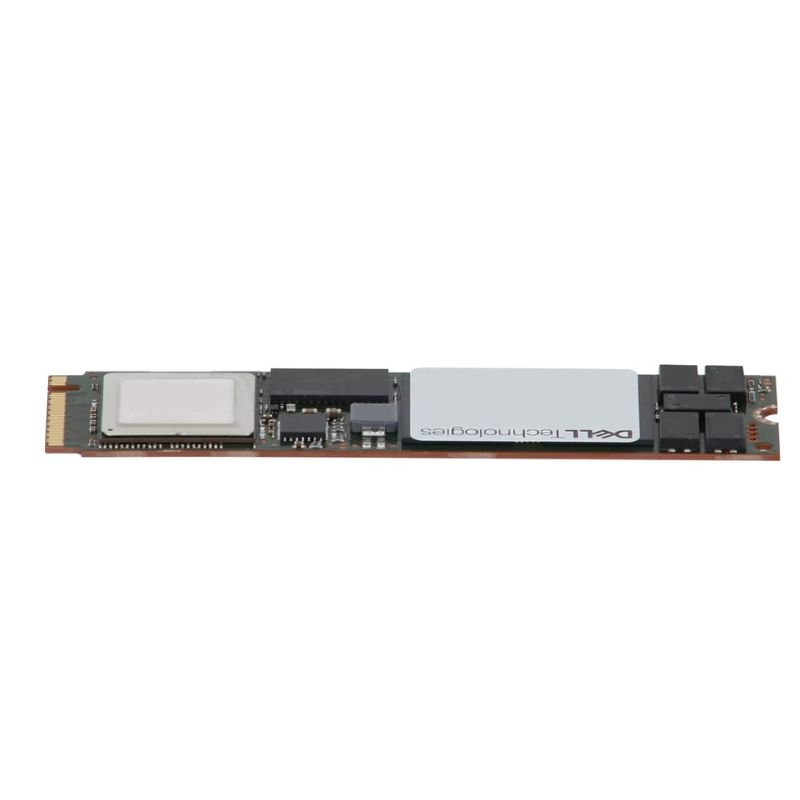
Dell VP63C 960GB PCI-E Nvme TLC M.2 Read Intensive SSD. Excellent Refurbished with 1 year replacement warranty
Product Outline of Dell Enterprise-Grade NVMe SSD
Designed for demanding data center environments, this Dell enterprise solid state drive delivers dependable performance, low latency, and consistent throughput for read-heavy workloads. Built specifically for Dell 16G and 17G PowerEdge platforms, it ensures seamless integration and optimized server efficiency.
The DELL 960GB PCIe Gen4 x4 NVMe M.2 Read Intensive 1 DWPD TLC Enterprise Solid State Drive is engineered to meet the demanding storage requirements of Dell PowerEdge 16th and 17th generation servers. This category represents a class of enterprise NVMe SSDs designed for data center environments where predictable performance, low latency, and platform-level compatibility are critical. Built around the PCIe Gen4 x4 interface, this storage solution delivers a substantial leap in bandwidth efficiency compared to previous generations, enabling servers to fully utilize multi-core CPUs and high-speed memory architectures without storage becoming a bottleneck.
The NVMe protocol at the core of this drive category is specifically optimized for solid-state media, eliminating legacy command stack limitations associated with SATA and SAS interfaces. As a result, Dell PowerEdge servers equipped with these drives benefit from higher IOPS, reduced command overhead, and consistent response times under parallel workloads. This makes the category particularly suitable for enterprise read-intensive applications, virtualized infrastructures, and high-throughput analytics platforms that demand both speed and reliability.
PCIe Gen4 x4 connectivity is a defining characteristic of this SSD category, offering a theoretical bandwidth that significantly exceeds earlier PCIe generations. In practical enterprise deployments, this translates into faster data access, improved queue depth handling, and enhanced scalability across multiple storage devices within a single PowerEdge server. Dell PowerEdge 16G and 17G platforms are architected to take advantage of this increased throughput, allowing storage subsystems to align with the performance capabilities of modern CPUs and high-speed networking.
The use of four PCIe Gen4 lanes ensures balanced data transfer, minimizing contention and maintaining stable performance during peak workloads. This interface design supports sustained read operations at scale, which is especially important for environments such as content delivery networks, large-scale virtualization hosts, and enterprise application servers that rely on rapid data retrieval rather than heavy write activity.
Within this category, NVMe technology enables thousands of parallel command queues, each capable of handling multiple commands simultaneously. This architectural advantage allows Dell PowerEdge servers to efficiently process concurrent I/O requests generated by multi-threaded applications and virtual machines. The result is reduced latency and improved overall system responsiveness, even under heavy load conditions.
For read-intensive enterprise use cases, this protocol efficiency ensures that frequently accessed datasets remain readily available, supporting real-time analytics, search indexing, and transaction processing systems without introducing storage-induced delays.
The M.2 form factor employed by this SSD category is optimized for space efficiency and direct motherboard integration. In Dell PowerEdge 16th and 17th generation servers, M.2 NVMe drives are often used for boot, caching, or high-speed application storage roles where minimal latency and reduced cabling complexity are essential. This compact design allows system architects to allocate valuable chassis space to other components while still achieving enterprise-grade storage performance.
Despite its small physical footprint, the M.2 form factor in this category adheres to stringent enterprise standards for durability and thermal stability. Dell-qualified firmware and hardware validation ensure that these drives operate reliably within the thermal envelopes of PowerEdge server designs, even in dense rack deployments.
Compatibility with Dell PowerEdge 16G and 17G servers is a key differentiator of this SSD category. Each drive is validated through Dell’s extensive testing processes to ensure seamless integration with server BIOS, firmware, and management tools. This validation reduces deployment risks and ensures consistent behavior across firmware updates and hardware configurations.
By aligning the SSD firmware with PowerEdge system management frameworks, administrators gain visibility into drive health, performance metrics, and predictive failure indicators, contributing to proactive maintenance strategies and reduced downtime.
The 960GB capacity point strikes a balance between storage density and performance efficiency for enterprise applications. In read-intensive environments, this capacity is well-suited for hosting operating systems, application binaries, frequently accessed datasets, and read-optimized databases. It allows organizations to deploy multiple drives across server nodes to achieve both redundancy and performance scaling without excessive cost.
This capacity tier is particularly effective in clustered environments where consistent read performance across nodes is required. By standardizing on 960GB NVMe SSDs, data centers can maintain predictable performance profiles while simplifying capacity planning and lifecycle management.
When deployed across multiple Dell PowerEdge servers, this SSD category supports horizontal scaling strategies commonly used in modern data centers. The consistent performance characteristics of PCIe Gen4 NVMe storage allow workloads to be distributed evenly, reducing hotspots and ensuring balanced resource utilization.
This scalability is essential for cloud service providers, enterprise private clouds, and high-availability application clusters that rely on uniform storage performance to maintain service-level agreements.
The read-intensive classification of this SSD category is defined by its 1 Drive Write Per Day endurance rating. This specification indicates that the drive can sustain a full drive write per day over its warranty period while maintaining data integrity and performance. For applications where read operations dominate and write activity is moderate, this endurance profile provides an optimal balance between durability and cost efficiency.
Typical workloads benefiting from this endurance profile include content repositories, virtualization boot volumes, data warehousing queries, and analytics dashboards. In these scenarios, the drive’s endurance is sufficient to handle background writes, metadata updates, and periodic maintenance tasks without compromising lifespan.
The use of Triple-Level Cell NAND in this SSD category reflects advancements in flash memory technology that enable higher storage densities while maintaining enterprise-grade reliability. Through sophisticated error correction algorithms, wear-leveling techniques, and over-provisioning strategies, TLC NAND is optimized to meet the endurance requirements of read-intensive enterprise workloads.
Dell-qualified firmware further enhances NAND management by optimizing garbage collection and read latency, ensuring consistent performance throughout the drive’s operational life.
Performance consistency is a defining attribute of this enterprise SSD category. PCIe Gen4 x4 connectivity combined with NVMe protocol efficiency enables high sequential read speeds and strong random read performance, which are critical for applications that rely on rapid data access. Low and predictable latency ensures that application response times remain stable, even during peak usage periods.
In Dell PowerEdge 16G and 17G servers, these performance characteristics align with modern CPU architectures that feature high core counts and advanced caching mechanisms. The result is a balanced system where storage performance complements compute and memory capabilities.
Virtualized and containerized workloads place unique demands on storage subsystems due to their highly parallel I/O patterns. This SSD category is well-suited for such environments, providing the low latency and high IOPS required to support multiple virtual machines or containers running concurrently.
By reducing storage-induced latency, these drives help improve VM density and application responsiveness, enabling more efficient use of server resources across Dell PowerEdge infrastructures.
Enterprise reliability is central to the design philosophy of this SSD category. Features such as advanced error correction, power-loss protection mechanisms, and robust firmware safeguards ensure data integrity under a wide range of operating conditions. These capabilities are essential for mission-critical applications where data availability and accuracy are paramount.
Dell PowerEdge servers equipped with these SSDs benefit from integrated health monitoring and alerting, allowing administrators to detect potential issues early and take corrective action before failures occur.
Thermal efficiency is a critical consideration in dense server environments. This SSD category is engineered to operate within the thermal constraints of PowerEdge server designs, maintaining stable performance without excessive throttling. Efficient heat dissipation and firmware-controlled thermal management contribute to sustained operation under continuous workloads.
These characteristics support long-term reliability in data centers where servers operate around the clock under varying load conditions.
Data security is an integral aspect of enterprise storage, and this SSD category incorporates features designed to protect sensitive information. Hardware-based encryption support and secure erase capabilities help organizations meet compliance requirements and safeguard data throughout the drive lifecycle.
When integrated with Dell PowerEdge security frameworks, these drives contribute to a comprehensive data protection strategy that spans from physical hardware to system-level management.
This SSD category is versatile enough to support a wide range of enterprise workloads. In database environments, it accelerates read-heavy query processing and index access. In analytics platforms, it enables rapid data scanning and aggregation. In application servers, it improves load times and user experience by minimizing storage latency.
For cloud and hybrid infrastructures built on Dell PowerEdge 16G and 17G servers, these drives provide a reliable foundation for scalable, high-performance storage tiers that support diverse service offerings.
Seamless integration with Dell server management tools enhances operational efficiency. Administrators can monitor drive health, firmware status, and performance metrics through centralized interfaces, simplifying maintenance and reducing operational overhead.
This integration ensures that storage components function as an integral part of the overall server ecosystem rather than isolated hardware elements.
The DELL 960GB PCIe Gen4 x4 NVMe M.2 Read Intensive 1 DWPD TLC Enterprise SSD category represents a strategic investment in long-term performance and reliability. By combining high-speed connectivity, enterprise-grade endurance, and platform-specific validation, it delivers consistent value across the operational lifespan of Dell PowerEdge servers.
Organizations adopting this storage category benefit from reduced latency, improved application performance, and simplified management, all of which contribute to lower total cost of ownership and enhanced data center efficiency.


 Contact Us
 Information
 Catalog
 Solid State Drives (SSD)
 Network Switches
 Hard Disk Drives
 HBA & Controllers
 PC & Servers
 PC & Server Memory
 CPU & Processors
 Network Routers
 Power Supplies
 Tape Drives & Libraries
 Network Devices
 Computer & Network Cables