(7% discount is applied at checkout)
Cart is empty
Your go-to destination for cutting-edge server products
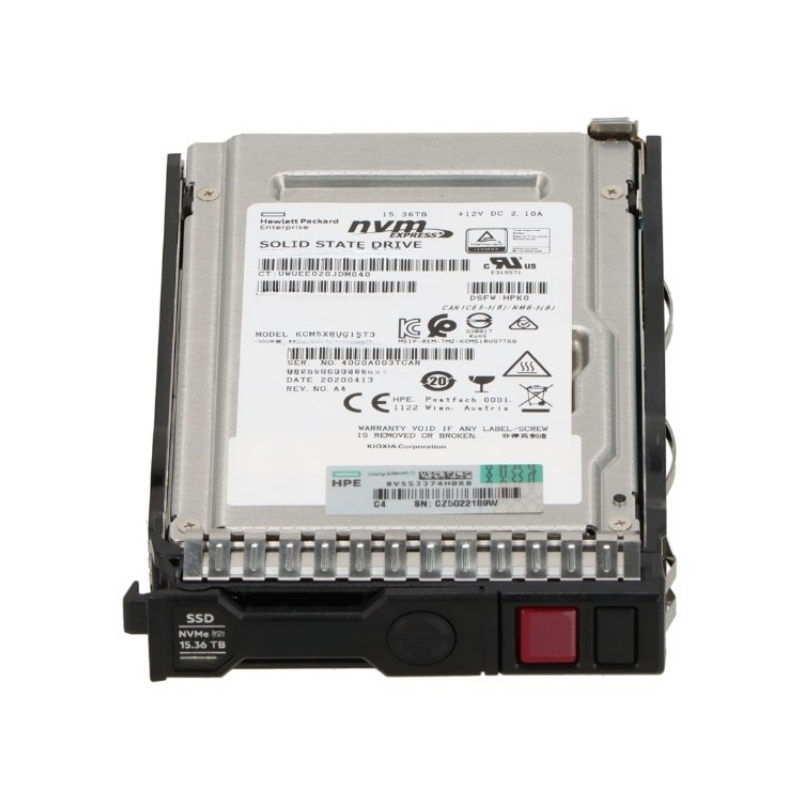


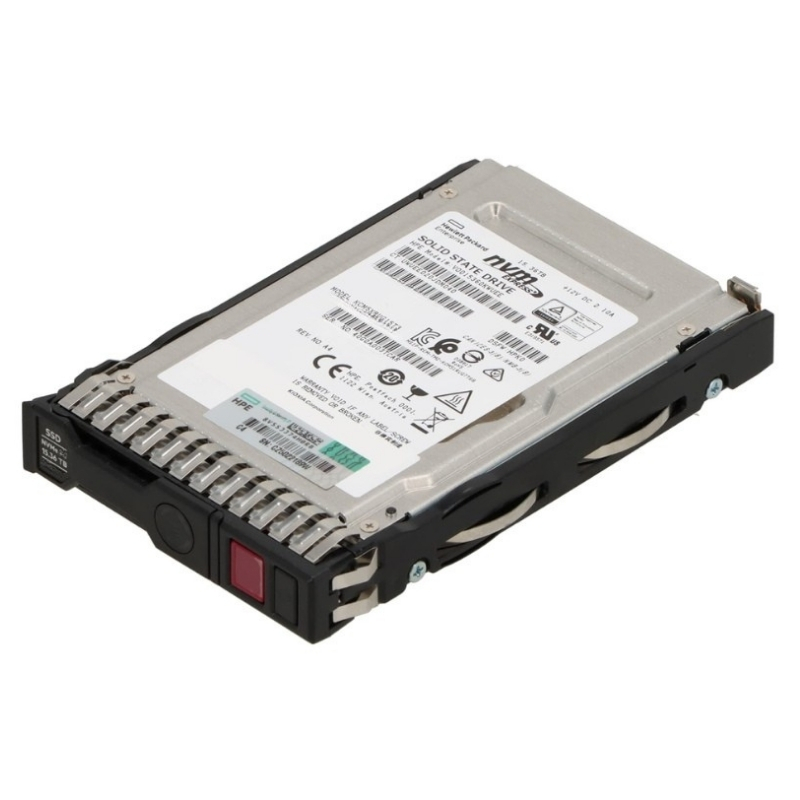
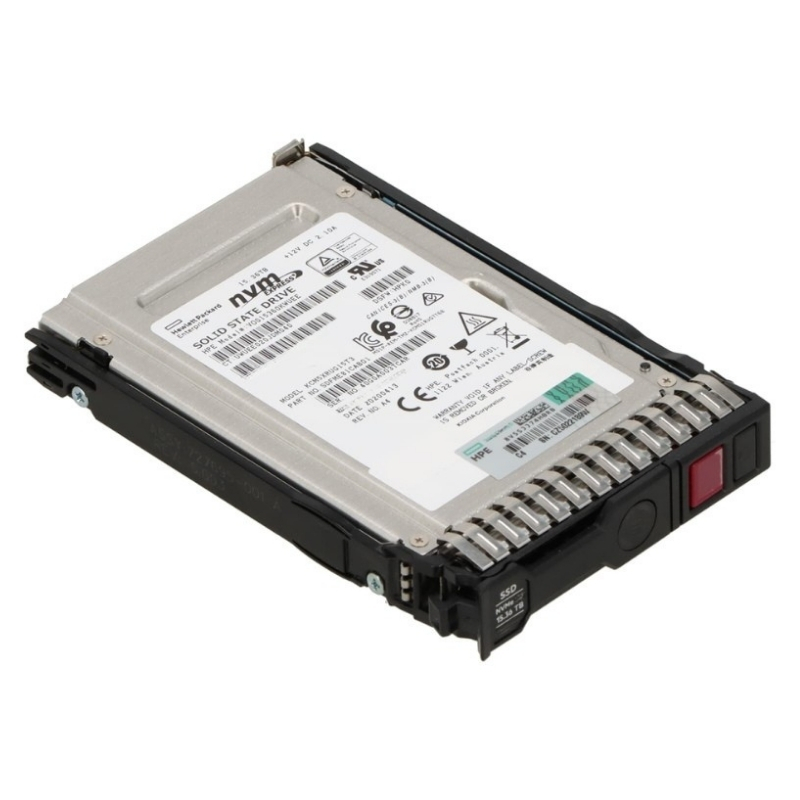
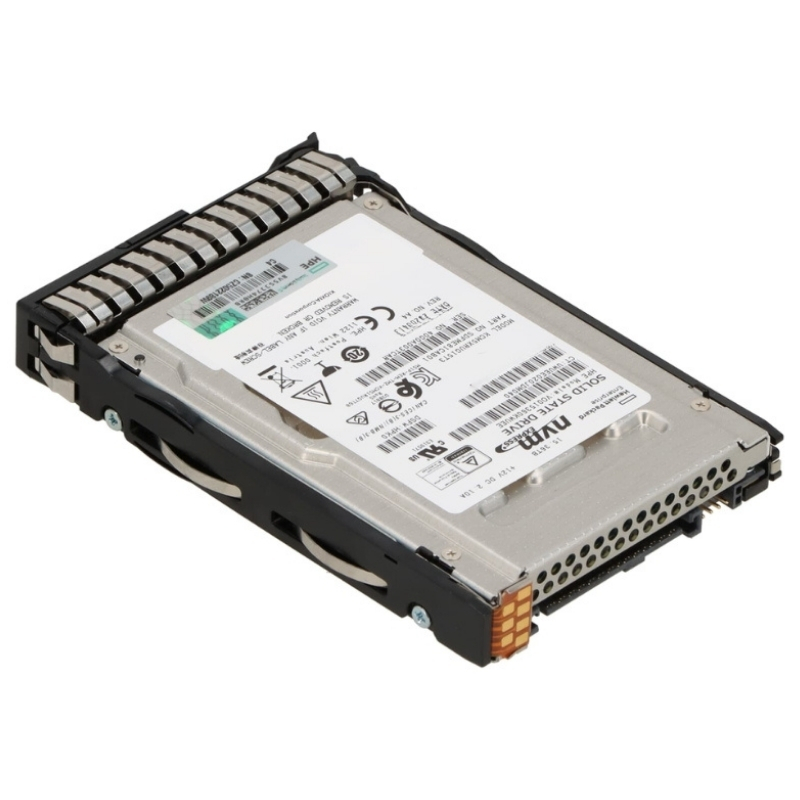
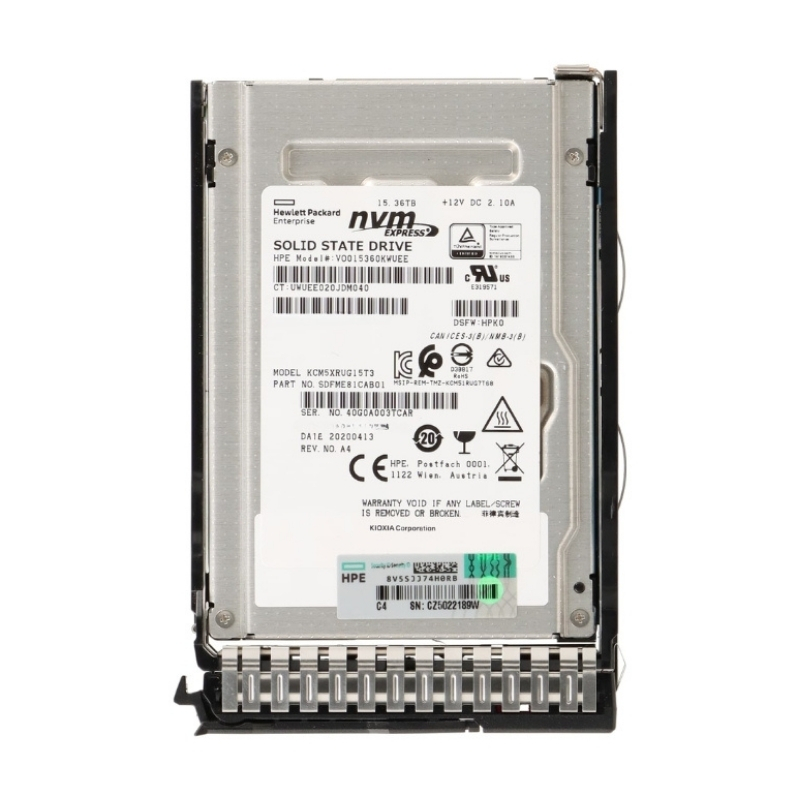
HPE P22282-B21 15.36TB NVMe Gen4 High Performance Read Intensive SFF SCN Carrier Type U.3 Gen10 Servers Single Port Flash TLC SSD. Excellent Refurbished with 1 Year Replacement Warranty
The HPE 15.36TB NVMe Gen4 high-performance read-intensive SSD is engineered for next-generation data centers and modern enterprise infrastructures. Designed specifically for Gen10.5 servers, this small form factor U.3 solid state drive delivers exceptional throughput, low latency, and consistent reliability for demanding workloads. Its hot-plug capability, advanced NVMe interface, and enterprise-grade TLC flash make it a powerful storage solution for performance-driven environments.
Enterprise NVMe solid state drives designed for Gen10 server platforms represent a specialized storage category engineered to meet the growing performance, density, and reliability demands of modern data centers. This category focuses on high-capacity, read-intensive flash storage solutions that leverage PCI Express Gen4 bandwidth and the NVMe protocol to dramatically reduce latency while increasing throughput. These drives are purpose-built for environments where rapid data access, predictable performance, and long-term operational stability are essential for business-critical workloads.
Read-intensive NVMe SSDs are optimized to handle workloads characterized by a high ratio of read operations compared to writes. This design philosophy makes them ideal for applications such as data warehousing, online transaction processing read replicas, virtual desktop infrastructure, and media streaming platforms. The use of advanced TLC NAND flash allows these drives to deliver exceptional storage density while maintaining cost efficiency and enterprise-grade endurance thresholds suitable for long-term deployment.
PCI Express Gen4 technology forms the backbone of this storage category, doubling the available bandwidth per lane compared to Gen3 implementations. When combined with the NVMe protocol, this results in significantly higher sequential read speeds and improved random I/O performance. The increased bandwidth ensures that storage devices are no longer a bottleneck in data-intensive workloads, allowing CPUs and accelerators to operate at higher utilization levels.
The NVMe protocol was designed specifically for non-volatile memory, eliminating many of the inefficiencies associated with legacy storage interfaces. It supports thousands of parallel command queues, each capable of handling thousands of commands, enabling massive concurrency. This scalability aligns perfectly with modern multi-core processors and parallelized application architectures, ensuring that storage performance scales with compute resources.In enterprise deployments, this protocol efficiency translates into higher transaction rates, faster boot times for virtual machines, and reduced I/O wait times across the infrastructure. NVMe SSDs in this category are engineered to maintain consistent performance under sustained load, making them suitable for always-on workloads that demand reliability and responsiveness.
The U.3 form factor represents a versatile and forward-compatible storage interface that supports NVMe, SAS, and SATA protocols within a single connector design. In this category, U.3 NVMe SSDs are optimized for small form factor server bays, allowing seamless integration into existing Gen10 server architectures. This flexibility simplifies upgrades and ensures compatibility with a wide range of enterprise storage backplanes.Small form factor designs enable higher drive counts per server, supporting dense storage configurations without sacrificing airflow or thermal performance. The standardized dimensions of SFF drives make them easy to deploy, replace, and scale as storage requirements evolve. This approach aligns with enterprise best practices for modular infrastructure design and lifecycle management.
Single port NVMe SSDs in this category are designed for environments where simplicity, performance, and cost efficiency are prioritized. By focusing on a single optimized data path, these drives reduce complexity while delivering high throughput and low latency. This architecture is well-suited for read-intensive workloads that do not require dual-port redundancy at the drive level.In many enterprise scenarios, redundancy and high availability are achieved through higher-level system designs such as RAID configurations, replication, and clustering. Single port NVMe SSDs integrate seamlessly into these architectures, providing reliable performance while allowing system designers to implement redundancy at the server or application layer.
High-performance NVMe SSDs generate more heat than traditional storage devices due to their increased processing capabilities and higher data transfer rates. This category incorporates advanced thermal management features to ensure stable operation within enterprise server environments. Optimized airflow paths, heat spreaders, and firmware-level thermal controls work together to maintain performance without throttling.
Power efficiency is another critical factor, as data centers seek to balance performance with energy consumption. NVMe Gen4 SSDs in this category are engineered to deliver high performance per watt, supporting sustainability goals while reducing operational costs. Intelligent power management features allow the drives to adjust consumption based on workload demands.
Read-intensive NVMe SSDs are specifically tuned to deliver exceptional performance in scenarios where data is accessed frequently but written infrequently. This optimization involves firmware algorithms that prioritize read latency and throughput while managing write operations efficiently to preserve NAND endurance. The result is a storage solution that excels in content delivery, analytics, and virtualized environments.These drives are commonly deployed in applications such as search engines, recommendation systems, and data lakes, where large datasets must be accessed quickly and reliably. The ability to serve high volumes of read requests with minimal latency directly impacts application responsiveness and user satisfaction.
Triple-level cell NAND flash provides a balance between storage density, cost efficiency, and endurance, making it a popular choice for enterprise read-intensive SSDs. While TLC NAND offers lower write endurance compared to more expensive flash types, advanced wear-leveling algorithms and error correction technologies ensure reliable operation over the drive’s intended lifespan.In read-intensive use cases, write activity is typically limited, allowing TLC-based NVMe SSDs to deliver long service life while maximizing capacity. This makes them an attractive option for organizations seeking to optimize total cost of ownership without compromising performance or reliability.
Enterprise NVMe SSDs in this category incorporate robust data integrity features designed to protect against data corruption and loss. End-to-end data protection mechanisms ensure that data remains accurate as it moves between the host system and the flash memory. Advanced error correction codes detect and correct errors at the flash level, preserving data reliability.Firmware-level monitoring and reporting capabilities provide visibility into drive health, usage patterns, and remaining lifespan. These features enable proactive maintenance and help prevent unexpected failures, supporting high availability and business continuity requirements.
Gen10 server platforms are designed to support next-generation workloads, incorporating advanced processors, memory technologies, and high-speed interconnects. NVMe Gen4 SSDs in this category are optimized to integrate seamlessly with these architectures, ensuring that storage performance complements overall system capabilities. This alignment enables balanced system performance and maximizes return on investment.The compatibility with Gen10 servers ensures that organizations can leverage existing infrastructure while upgrading storage performance. This approach supports incremental modernization strategies, allowing data centers to evolve without disruptive overhauls.
As data volumes continue to grow, scalability becomes a critical consideration in storage planning. NVMe Gen4 SSDs with high capacities provide a future-proof foundation that can accommodate expanding datasets and evolving workloads. Their compatibility with modern server architectures ensures that they remain relevant as infrastructure advances.


 Contact Us
 Information
 Catalog
 Solid State Drives (SSD)
 Network Switches
 Hard Disk Drives
 HBA & Controllers
 PC & Servers
 PC & Server Memory
 CPU & Processors
 Network Routers
 Power Supplies
 Tape Drives & Libraries
 Network Devices
 Computer & Network Cables