(7% discount is applied at checkout)
Cart is empty
Your go-to destination for cutting-edge server products
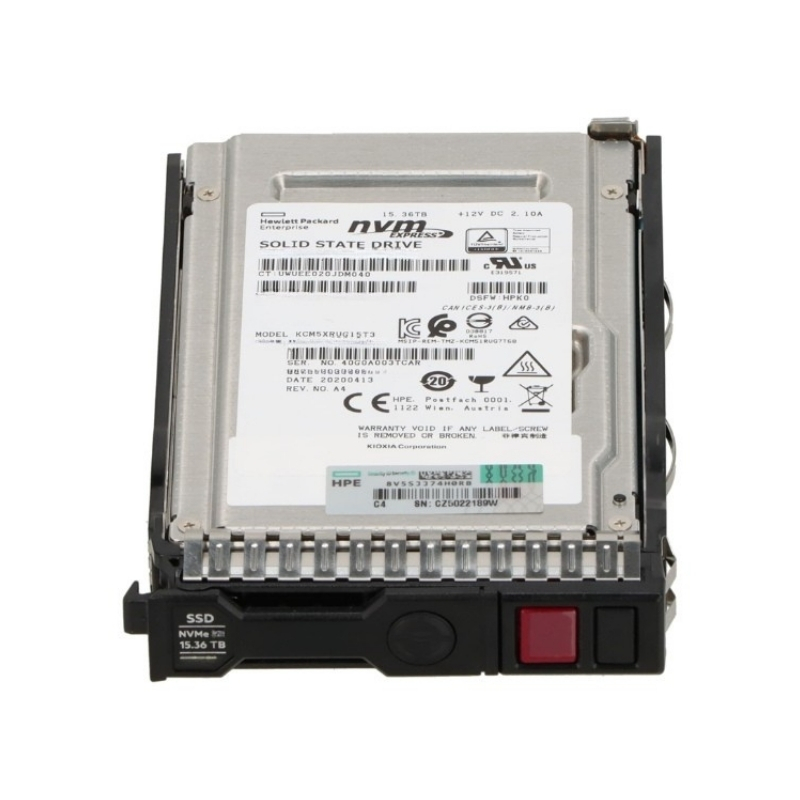


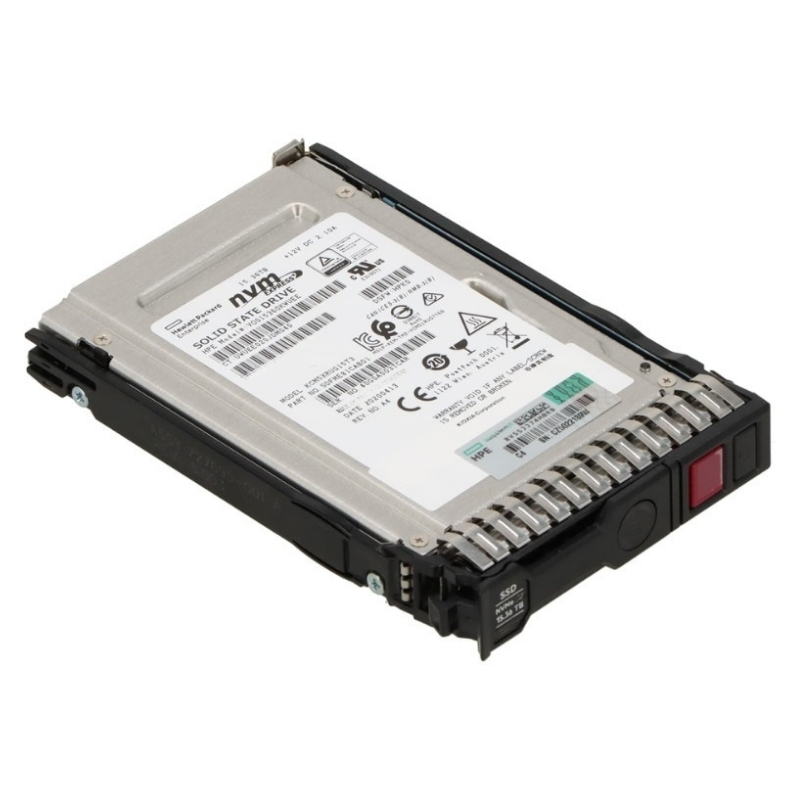
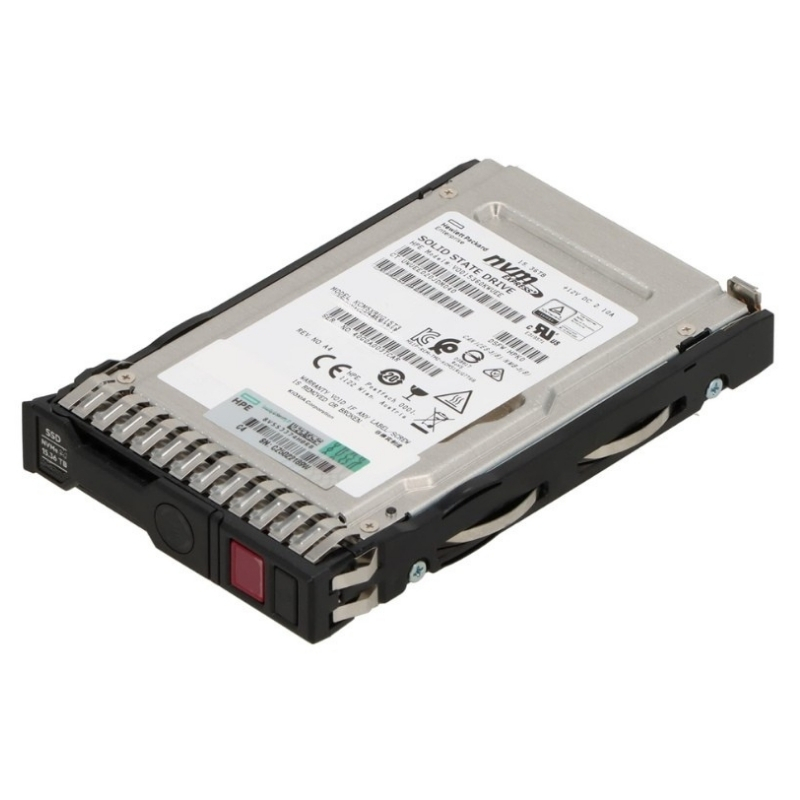
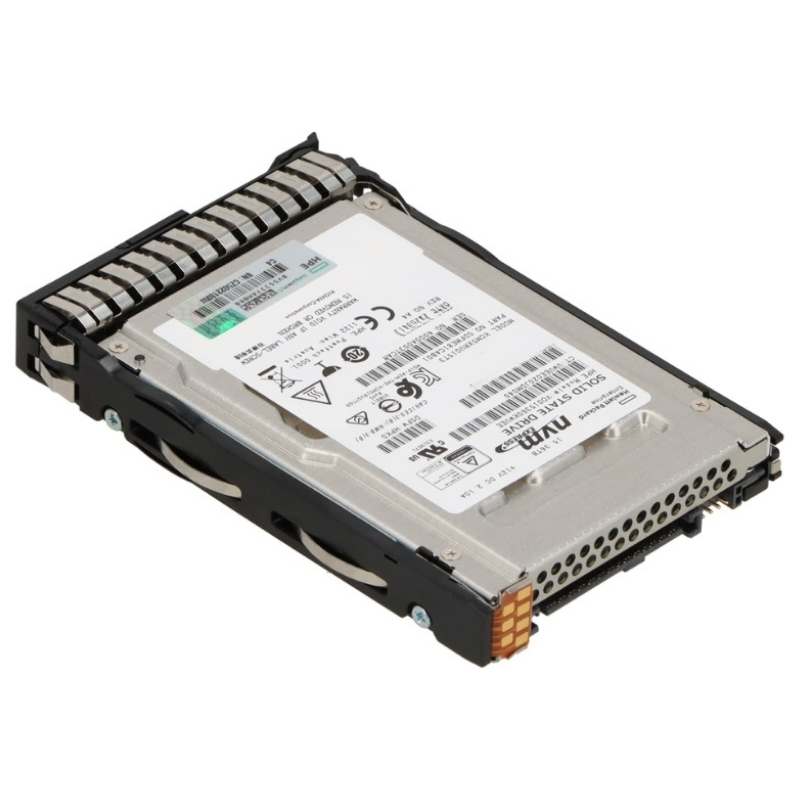
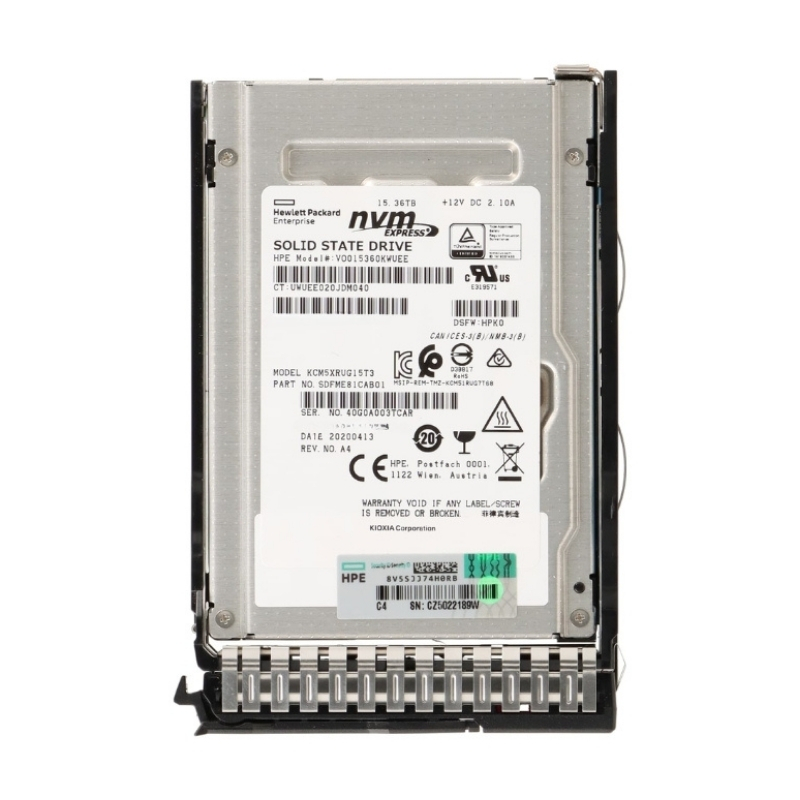
HPE P26421-001 15.36TB NVMe Read Intensive U.3 2.5Inch Gen4 High Performance SFF SCN Hot Plug For Gen10 Servers Single Port SSD. Excellent Refurbished with 1 Year Replacement Warranty
The HPE 15.36TB NVMe Gen4 SFF SSD is designed for read-intensive workloads, delivering exceptional speed, reliability, and efficiency in enterprise environments. Optimized for Gen10.5 servers, this drive ensures consistent performance for data-intensive applications and storage solutions.
The HPE P26421‑001 15.36TB NVMe Read Intensive U.3 2.5Inch Gen4 High Performance SFF SCN Hot Plug SSD is engineered to deliver exceptional performance, reliability, and scalability for enterprise‑grade storage needs. Designed for use in HPE Gen10 server environments, this SSD leverages the power of NVMe over PCIe Gen4 to deliver accelerated throughput, low latency, and high IOPS density optimized for read‑intensive workloads. The scope of this category covers advanced solid‑state drives that redefine data access speeds, improve server responsiveness, and support mission‑critical applications across cloud, data analytics, virtualization, and high‑performance computing ecosystems.
The HPE P26421‑001 series harnesses the full potential of NVMe Gen4 interface technology. With twice the data bandwidth of PCIe Gen3, Gen4 enables simultaneous multi‑queue data processing that dramatically reduces latency and increases throughput. NVMe (Non‑Volatile Memory Express) architecture is optimized for flash memory and multicore processing, enabling faster data retrieval and superior I/O performance when compared to traditional SATA or SAS SSDs.
Utilizing the U.3 (2.5‑inch) form factor, the P26421‑001 SSD provides broad compatibility with modern server systems. U.3 supports multiple protocols (NVMe, SAS, SATA) on a unified connector, offering future‑ready flexibility and simplified hardware inventory. The compact 2.5‑inch design balances high storage density with thermal efficiency and ease of deployment in data centers with limited rack space.
With a massive 15.36TB raw capacity, this SSD category supports large datasets, content libraries, and analytic workloads that require substantial storage space without performance tradeoffs. Whether consolidating data, accelerating cache layers, or provisioning virtual machines, 15.36TB remains an ideal capacity for enterprises accelerating digital transformation.
Specifically tuned for read‑intensive workloads, this SSD excels at handling large volumes of sequential and random read operations. Typical use cases include web content delivery, big data analytics, database query acceleration, virtual desktop infrastructure (VDI), and distributed file systems (DFS). The firmware and controller technology target sustained high read throughput while preserving endurance and reliability.
The Hot Plug design enables administrators to install or remove the SSD without powering down the server, ensuring minimal disruption to services and applications. Combined with the SFF SCN (Small Form Factor Storage Controller Node) design, this SSD category enhances serviceability and maintainability, crucial for 24/7 production environments.
The single port design supports straightforward integration with server backplanes, reducing complexity and cost. While dual‑port configurations are ideal for certain high‑availability architectures, a single port provides dependable connectivity for standard enterprise applications, ensuring stable data flow under peak demand.
This SSD category is explicitly validated for HPE ProLiant Gen10 servers, ensuring plug‑and‑play compatibility with server backplanes, BIOS configurations, and management utilities such as HPE Integrated Lights‑Out (iLO). Integration with HPE InfoSight further enhances predictive analysis, proactive support, and performance optimization.
Compatibility with U.3 backplanes and Gen10 storage controllers ensures that systems leveraging HPE Smart Array controllers or NVMe HBA bridges unlock full performance potential. This compatibility simplifies upgrades from legacy SAS or SATA SSDs, enabling seamless transitions to Gen4 NVMe performance tiers.
For high‑performance computing environments where data locality, throughput, and minimal latency are paramount, this SSD category ensures efficient acceleration of computation pipelines, simulation workloads, and large dataset manipulations. Gen4 NVMe facilitates faster checkpointing, intermediate dataset access, and rapid result persistence.
While optimized for read‑intensive workloads, this SSD category still provides enterprise‑grade endurance characteristics sufficient to support workloads with frequent access patterns. The NAND flash media and controller firmware combine wear‑leveling, background error correction, and optimized garbage collection to extend usable life and maintain consistent performance over time.
Advanced thermal throttling and heat spreader designs are crucial for maintaining consistent performance under demanding workloads. The category includes SSDs engineered with heat dissipation in mind, aligning with server chassis airflow patterns to prevent overheating and preserve sustained throughput.
NVMe SSDs such as the P26421‑001 outperform traditional SATA and SAS SSDs by leveraging PCIe lanes for direct CPU communication. This reduces command overhead and latency, enabling significantly higher IOPS and better scalability. For enterprises transitioning from SATA/SAS infrastructure, NVMe provides a future‑proof performance boost while maintaining enterprise reliability.
PCIe Gen4 doubles per‑lane bandwidth compared to Gen3, allowing NVMe SSDs to push data throughput higher without saturation. While Gen3 remains capable for many workloads, Gen4 is particularly advantageous for data‑intensive applications that demand peak performance and minimal bottlenecks.
NVMe SSDs generally consume less power per unit of performance compared to spinning disks. By reducing energy usage and optimizing cooling strategies, data centers can lower operational costs and mitigate thermal hotspots that degrade hardware lifespan.


 Contact Us
 Information
 Catalog
 Solid State Drives (SSD)
 Network Switches
 Hard Disk Drives
 HBA & Controllers
 PC & Servers
 PC & Server Memory
 CPU & Processors
 Network Routers
 Power Supplies
 Tape Drives & Libraries
 Network Devices
 Computer & Network Cables