(7% discount is applied at checkout)
Cart is empty
Your go-to destination for cutting-edge server products
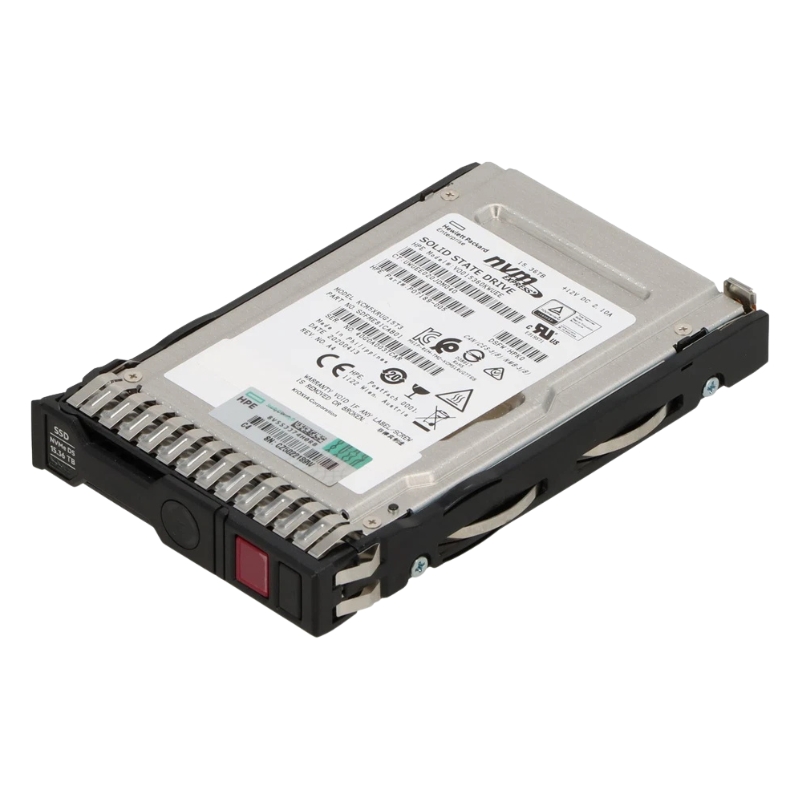


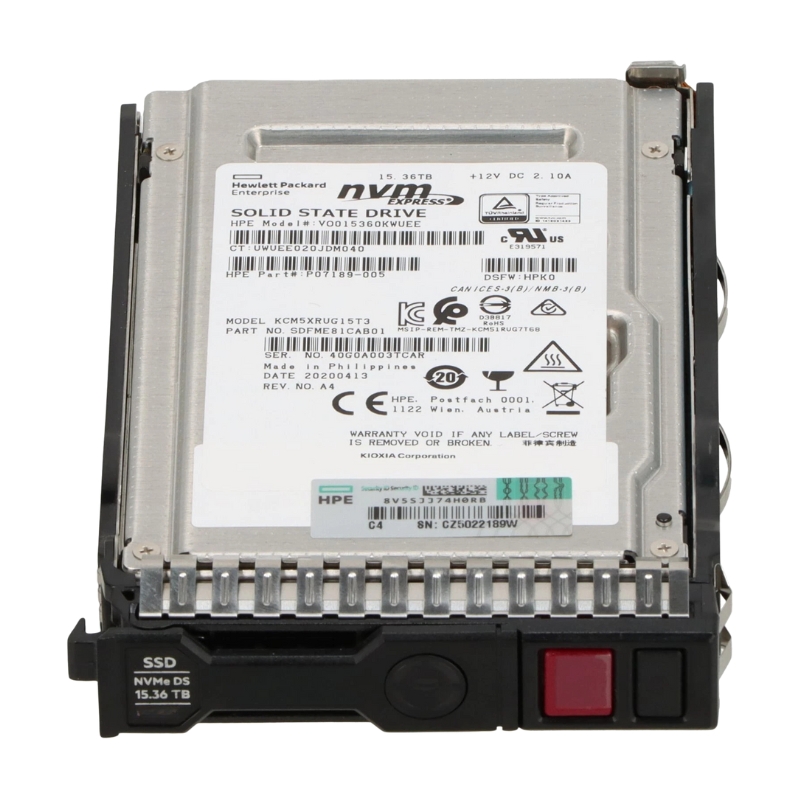
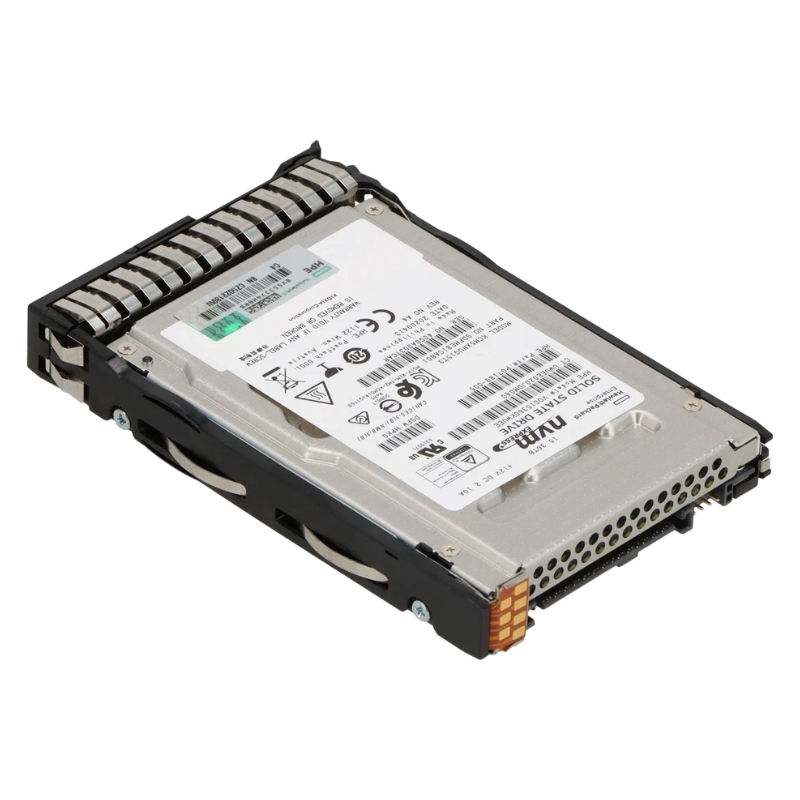
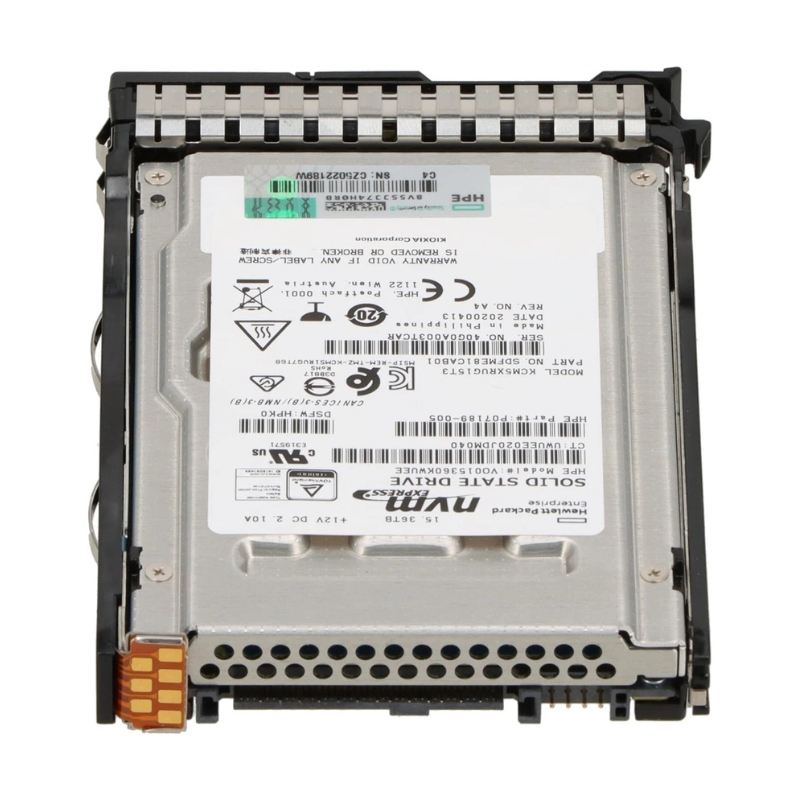
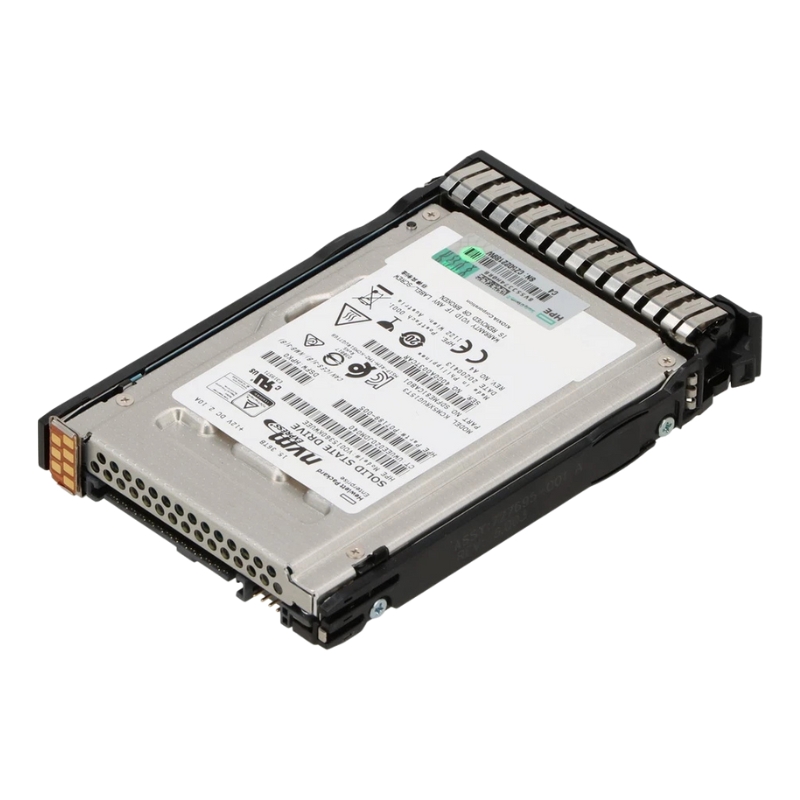
HPE P73300-B21 15.36TB NVMe Read Intensive SFF U.3 Hot Plug Solid State Drive. Factory-Sealed New in Original Box (FSB) with 3 years Warranty
The HPE P73300-B21 is a high-capacity, read-intensive NVMe solid state drive engineered for enterprise-class performance. Designed to meet the demands of data-driven workloads, this SSD delivers exceptional speed, reliability, and efficiency for modern IT infrastructures.
This specific model is not merely a storage component; it is a performance-accelerating asset engineered for reliability and integration. As part of HPE's curated SSD portfolio, it guarantees compatibility, predictable performance, and simplified lifecycle management when deployed in qualified HPE platforms like ProLiant, Apollo, and Synergy systems.
The HPE P73300-B21 is defined by a harmonious blend of specifications that cater to high-density, performance-sensitive environments.
With a formatted capacity of 15.36 Terabytes (TB), this drive provides one of the highest storage densities available in the 2.5-inch Small Form Factor (SFF). This allows organizations to drastically reduce their storage footprint, lowering power, cooling, and space costs while significantly increasing the data available per server node for in-memory databases, large datasets, and virtualized environments.
This drive leverages the NVMe (Non-Volatile Memory Express) protocol over a U.3 (SFF-8639) connector. Unlike the legacy SATA or SAS interfaces, NVMe is designed from the ground up for flash memory, communicating directly via the PCIe (Peripheral Component Interconnect Express) bus. The U.3 connector is a tri-mode interface, supporting NVMe, SAS, and SATA protocols, offering unparalleled flexibility for heterogeneous environments and future-proofing your investment. The result is a dramatic reduction in latency and a massive increase in I/O operations per second (IOPS) compared to previous generation drives.
The Hot Plug capability is a critical feature for maintaining 24/7/365 operational continuity. It allows an administrator to safely remove and replace the drive in a live system without powering down the server or interrupting services running on other drives. This is essential for mission-critical applications where planned maintenance or unexpected failures cannot result in system-wide downtime.
Not all SSDs are created equal. HPE categorizes drives based on their endurance, which is suited to specific data workloads. The P73300-B21 is classified as Read-Intensive.
A read-intensive SSD is optimized for applications where the vast majority of operations are data reads, with fewer, less frequent write cycles. These drives offer an excellent balance of high performance, large capacity, and cost-effectiveness for read-heavy tasks. They achieve this by utilizing 3D NAND flash memory types and controller algorithms tailored for this pattern.
Data Warehousing & Business Intelligence: Serving large, complex queries against massive datasets where fast data retrieval is paramount.
Content Delivery Networks (CDNs) & Media Streaming: Storing and delivering static web content, videos, and software downloads to a global audience with low latency.
Virtual Desktop Infrastructure (VDI): Hosting golden images and provisioning desktops where boot storms and application launches generate intense read traffic.
Database Read Replicas: Offloading read queries from a primary transactional database to enhance overall application performance.
The exceptional performance of the P73300-B21 is a direct result of its underlying architecture. Delving into its technical makeup reveals why it stands out in the read-intensive category.
This drive is built using 3D Triple-Level Cell (TLC) NAND flash memory. In 3D NAND, memory cells are stacked vertically in layers, increasing density and reliability compared to planar (2D) NAND. TLC stores three bits of data per cell, offering a superb balance of cost, capacity, and endurance—perfect for read-intensive workloads. This technology is the backbone of its high 15.36TB capacity in a standard form factor.
While exact figures can vary by HPE platform and configuration, drives of this class deliver:
Extremely Low Latency: NVMe drastically reduces command overhead, enabling latency measured in microseconds (µs) rather than milliseconds (ms). This is critical for real-time applications.
High Sequential Read/Write Speeds: Expect sequential read speeds reaching several gigabytes per second (GB/s), facilitating rapid data transfers for large files.
Massive Random Read IOPS: The drive can handle hundreds of thousands of random read IOPS, making it ideal for databases and virtual machines accessing scattered data blocks simultaneously.
Endurance is quantified by Drive Writes Per Day (DWPD). Over its warranty period (typically 5 years), a read-intensive drive like the P73300-B21 might offer a DWPD rating in the range of 0.5 to 1. This means you can write the entire drive's capacity (15.36TB) between 0.5 and 1 time per day, every day, for the warranty period. This is more than sufficient for its target workloads, where write activity is a fraction of read activity.
The value of the HPE P73300-B21 is magnified when deployed within HPE infrastructure, thanks to deeply integrated management and support tools.
When installed in an HPE server, the drive is fully discoverable and monitorable through HPE Integrated Lights-Out (iLO) and HPE OneView. Administrators can view drive health, temperature, SMART statistics, and predicted failure alerts from a single, unified interface, enabling proactive maintenance and simplified operations.
HPE ensures that the firmware on the P73300-B21 is tested, validated, and optimized for HPE hardware. This eliminates compatibility guesswork and ensures stability. In a HPE Synergy composable infrastructure environment, such drives provide the high-performance, flexible storage building blocks that can be dynamically allocated to compute resources as needed.
Understanding where the P73300-B21 fits relative to other drive categories helps in making the optimal selection for your specific needs.
HPE's SSD portfolio is segmented to match workload profiles:
Read-Intensive (This Drive): Highest capacity per dollar, optimized for >70% read operations. Lower DWPD (e.g., 0.5-1). Ideal for data lakes, web serving, VDI.
Mixed-Use: Balanced for near-equal read/write mixes. Moderate DWPD (e.g., 1-3). Used for transactional databases, email servers, and general virtualization.
Write-Intensive: Built for extreme write workloads like log writing, write caching, or high-frequency trading. Highest DWPD (e.g., 10+), often using more enduring SLC or eMLC NAND.
Choosing the P73300-B21 for a read-intensive scenario ensures cost-efficiency without over-provisioning for unnecessary write endurance.


 Contact Us
 Information
 Catalog
 Solid State Drives (SSD)
 Network Switches
 Hard Disk Drives
 HBA & Controllers
 PC & Servers
 PC & Server Memory
 CPU & Processors
 Network Routers
 Power Supplies
 Tape Drives & Libraries
 Network Devices
 Computer & Network Cables