(7% discount is applied at checkout)
Cart is empty
Your go-to destination for cutting-edge server products
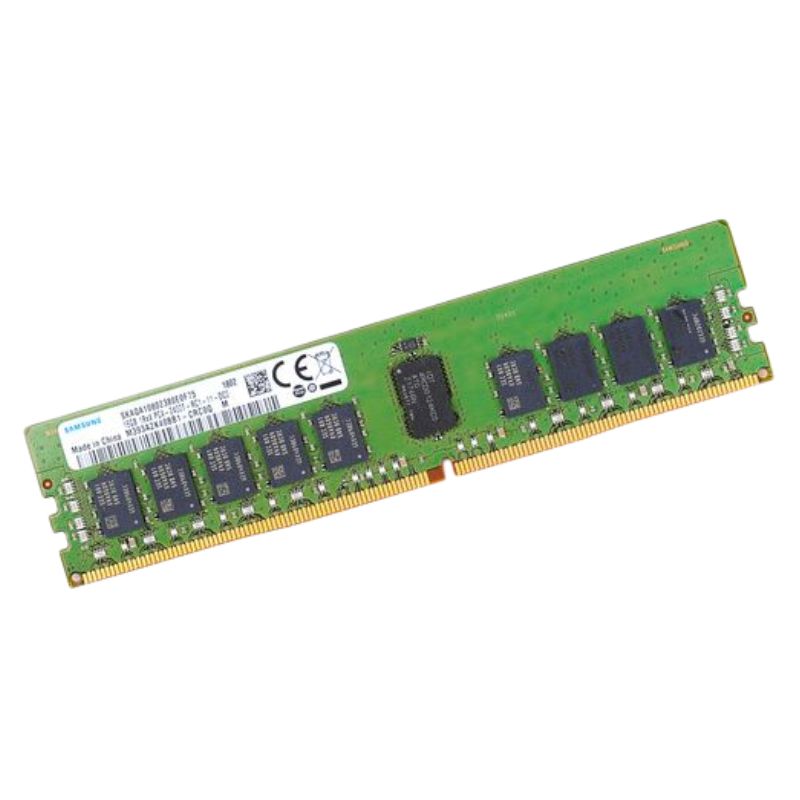


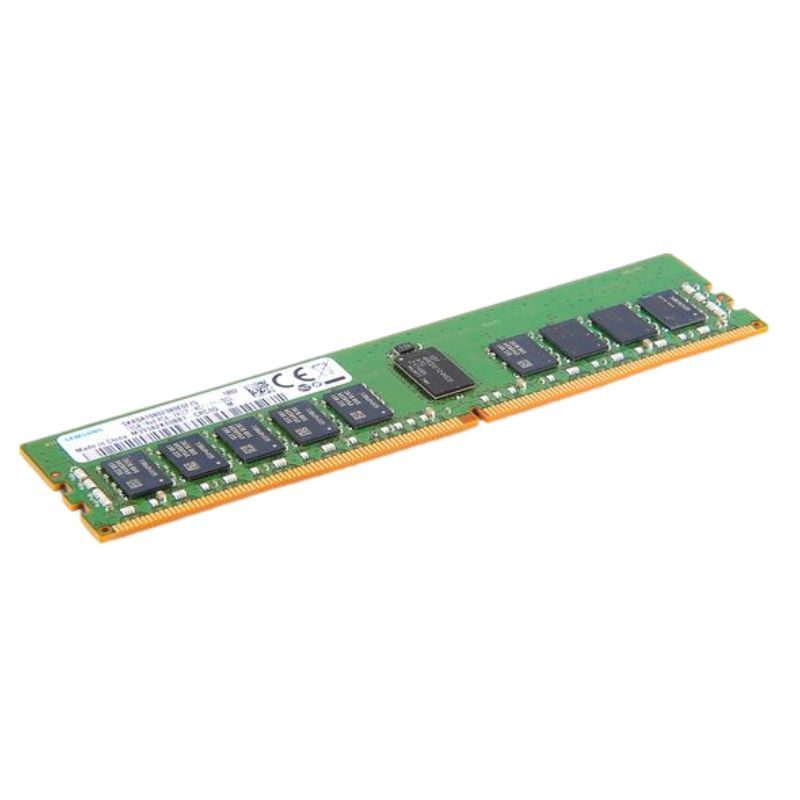
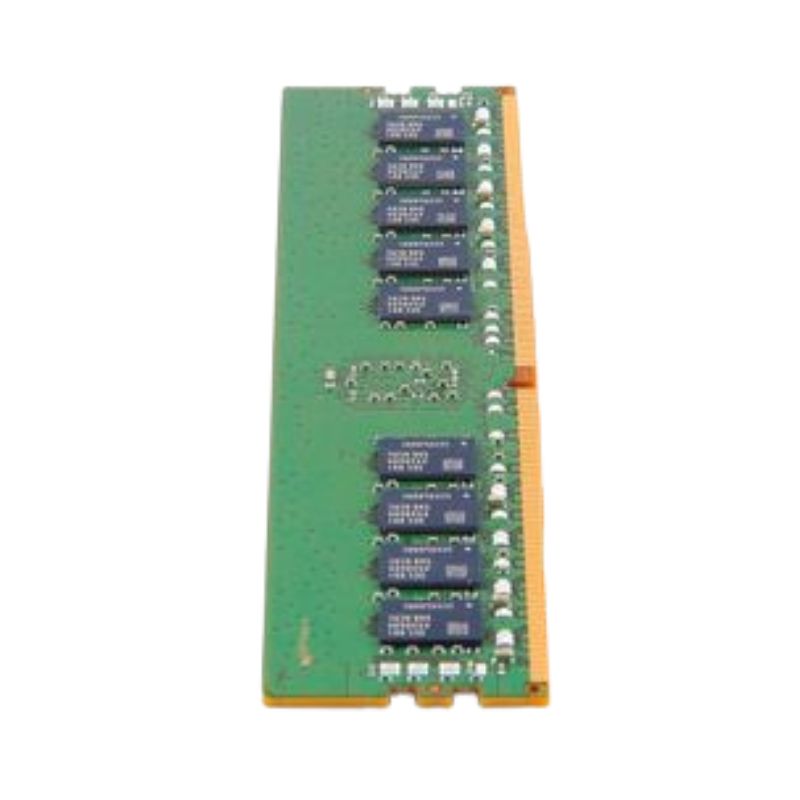
Samsung M474A2K43DB1-CWE 16GB Pc4-25600 DDR4 3200mhz 260-pin ECC Memory Module. New Sealed in Box (NIB) with 3 Years Warranty
The Samsung M474A2K43DB1-CWE is engineered to deliver stable, high-speed memory performance for demanding computing environments. Designed around advanced DDR4 SDRAM technology, this module supports modern workloads that require reliability, efficiency, and consistent throughput. With error-correcting capabilities and enterprise-grade components, this memory solution is widely adopted in servers, workstations, and compatible platforms that prioritize data integrity.
The Samsung M474A2K43DB1-CWE 16GB DDR4-3200 ECC SODIMM is a specialized component engineered for stability and accuracy. Its value proposition lies in its robust ECC protection, high-speed bandwidth, and the reliability inherent to the Samsung brand, all packaged in a space-saving SODIMM form factor. When selecting memory for any critical system, prioritizing compatibility, understanding the necessity of ECC for your workload, and choosing quality modules from a premier manufacturer like Samsung are the keystones of a stable, high-performance, and dependable computing infrastructure.
DDR4 Architecture and Performance Characteristics
M474A2K43DB1-CWE DDR4 SDRAM technology, this module operates at a fast 3200MHz data rate, aligning with the PC4-25600 standard. This ensures higher bandwidth compared to earlier generations, allowing faster access to frequently used data and smoother application switching. The improved signaling efficiency of DDR4 also contributes to reduced latency and better thermal behavior.
With a 16GB capacity, this module strikes an optimal balance for modern server configurations. It provides substantial headroom for virtualization, database management, and in-memory processing, while allowing for cost-effective scaling in multi-channel architectures. Servers typically feature 8, 12, or 16 memory slots, enabling configurations from 64GB to 256GB and beyond using modules of this density. The 16GB density is often considered a workhorse in enterprise deployments, offering a sweet spot of performance, power efficiency, and cost-per-gigabyte.
As a DDR4 (Double Data Rate 4) Synchronous Dynamic Random-Access Memory module, it belongs to the fourth generation of DDR technology. DDR4 introduced significant advancements over DDR3, including higher module densities, lower operating voltage (1.2V for improved energy efficiency), and enhanced data transfer rates. The architectural improvements in DDR4 provide the bandwidth necessary for today's data-intensive enterprise applications.
The terms PC4-25600 and 3200MHz are intrinsically linked. The "3200MHz" refers to the module's data rate, measured in millions of transfers per second (MT/s). Meanwhile, PC4-25600 denotes the peak theoretical bandwidth of the module. Calculating this bandwidth is straightforward: 25600 MB/s (Megabytes per second). This is derived from the 3200 MT/s data rate operating on a 64-bit (8-byte) wide bus: (3200 * 8) / 1 = 25,600 MB/s. This high bandwidth is crucial for reducing bottlenecks in multi-CPU systems and accelerating data movement between RAM and processors.
A critical and often-overlooked specification is the 260-pin designation. This explicitly identifies the module as a SODIMM (Small Outline Dual In-line Memory Module). Unlike the 288-pin DIMMs used in standard servers and desktops, 260-pin SODIMMs are physically smaller and designed for space-constrained systems. This includes:
The "ECC" in the module's description is arguably its most critical feature for enterprise use. Error-Correcting Code memory is a non-negotiable requirement for servers, scientific computing, and financial systems. ECC is a hardware-based technology that automatically detects and corrects the most common types of memory data corruption. Cosmic rays, electrical interference, and even subtle manufacturing variances can cause "soft errors"—single-bit flips in memory cells. ECC memory includes extra bits (e.g., 8 extra bits for a 64-bit word) that store an encrypted code. When data is read, the memory controller recalculates the code and compares it to the stored one. If a single-bit error is detected, it is instantly corrected on the fly, preventing corrupted data from being processed by the CPU.
It's important to note that while all ECC modules correct errors, they come in different architectures. The Samsung M474A2K43DB1-CWE is typically an ECC Unbuffered DIMM (UDIMM). This means it does not include a register (or buffer) between the memory controller and the DRAM chips. UDIMMs offer lower latency but place a higher electrical load on the memory controller. They are common in entry-level servers, workstations, and systems where maximum performance per module is key. In contrast, Registered DIMMs (RDIMMs) use a register to buffer command and address signals, allowing systems to support a much greater number of memory modules (and thus higher total capacity) with greater stability. Compatibility is determined by the server's motherboard and chipset.
Samsung memory modules are built to meet stringent standards and are often backed by limited lifetime warranties for original purchasers. Their reliability is proven in data centers worldwide, making them a trusted, low-risk choice for IT procurement. As an innovator, Samsung often incorporates advanced processes (like 10nm-class fabrication) into its DRAM, leading to modules that are not only high-performing but also power-efficient—a crucial factor for reducing TCO (Total Cost of Ownership) in large server deployments.
Compatibility
Successfully deploying the Samsung M474A2K43DB1-CWE requires careful attention to compatibility. Always consult your system or motherboard manufacturer's qualified vendor list (QVL). The QVL is a tested list of memory modules guaranteed to be compatible with a specific system model. While the Samsung module may be electrically and physically compatible, system firmware (BIOS/UEFI) can be optimized for specific memory timings and sub-timings. Using a QVL-listed module ensures stability and performance.


 Contact Us
 Information
 Catalog
 Solid State Drives (SSD)
 Network Switches
 Hard Disk Drives
 HBA & Controllers
 PC & Servers
 PC & Server Memory
 CPU & Processors
 Network Routers
 Power Supplies
 Tape Drives & Libraries
 Network Devices
 Computer & Network Cables