(7% discount is applied at checkout)
Cart is empty
Your go-to destination for cutting-edge server products
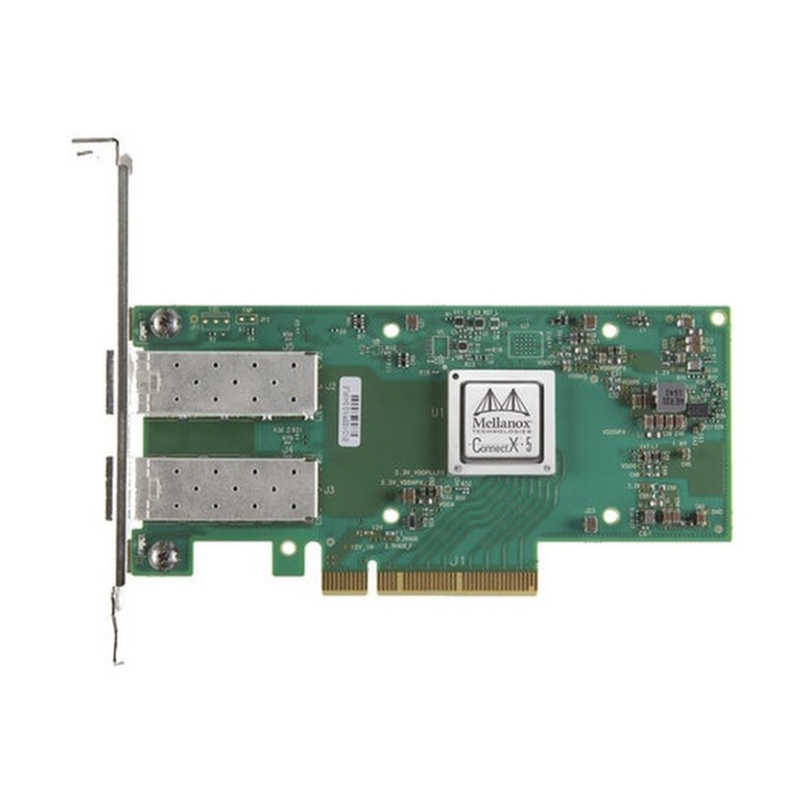


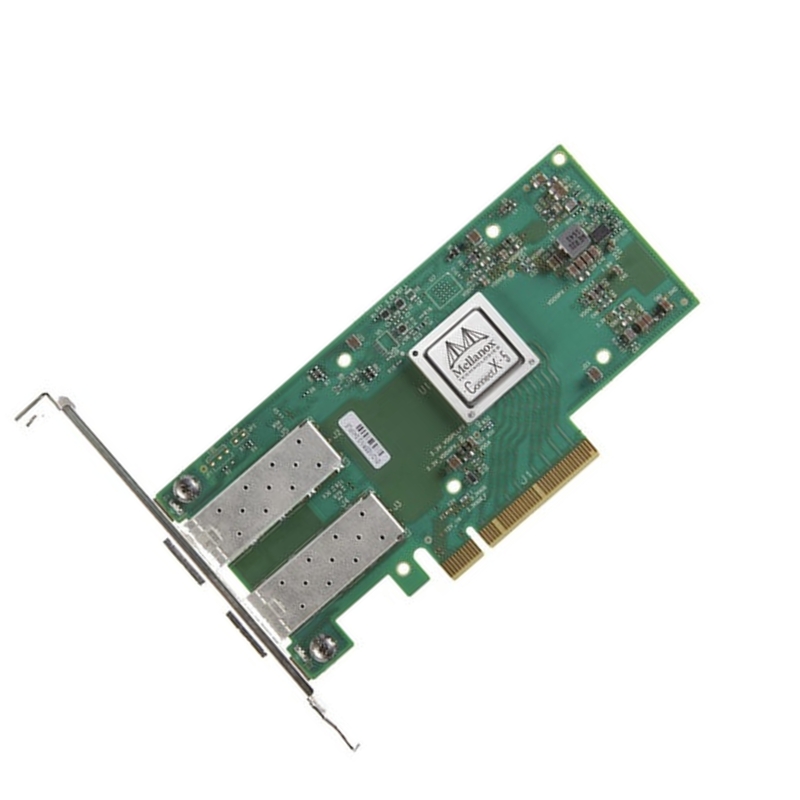
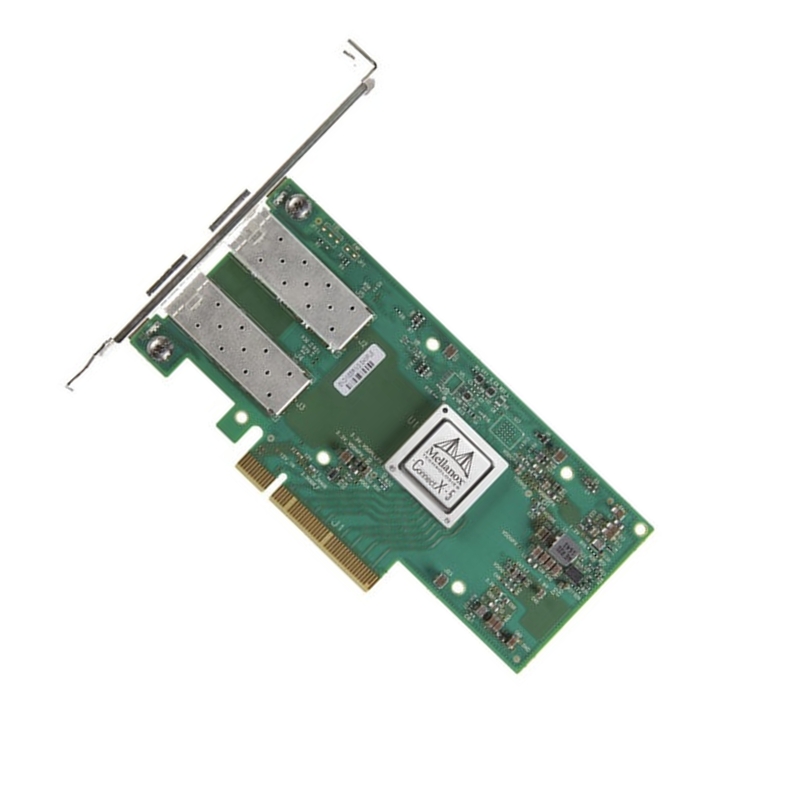
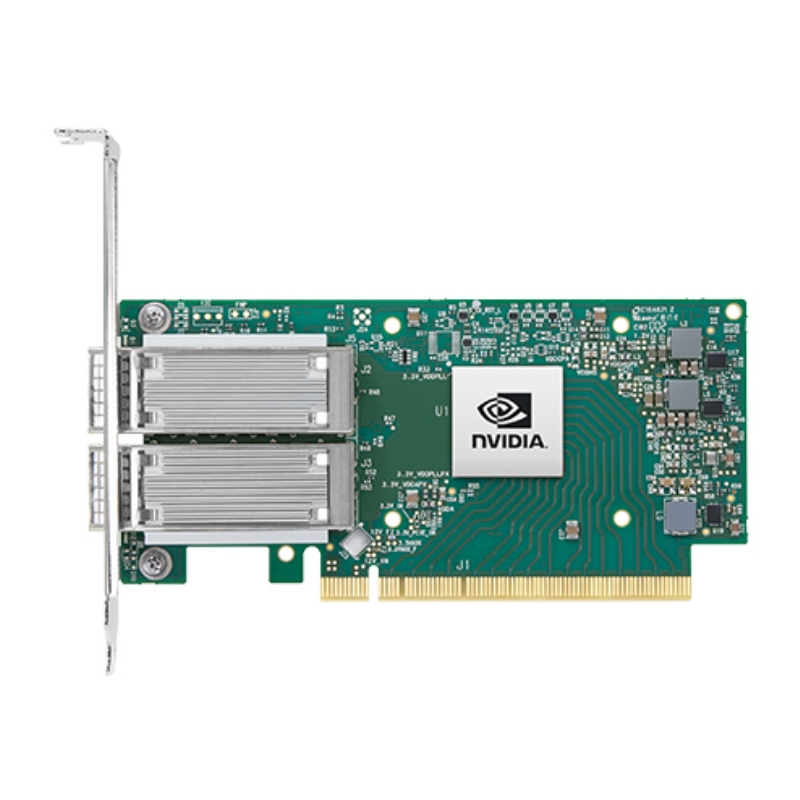
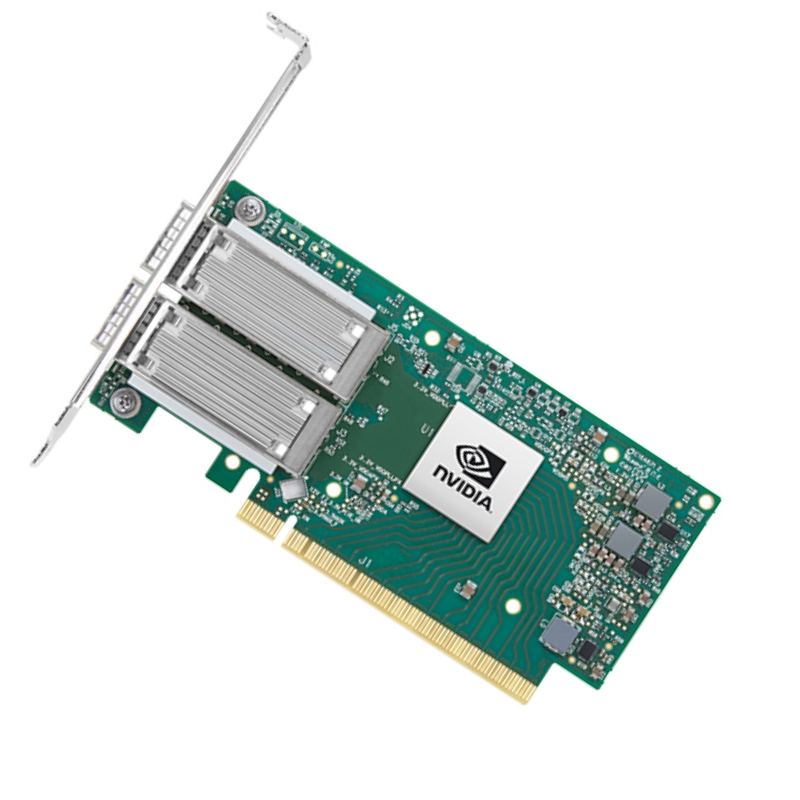
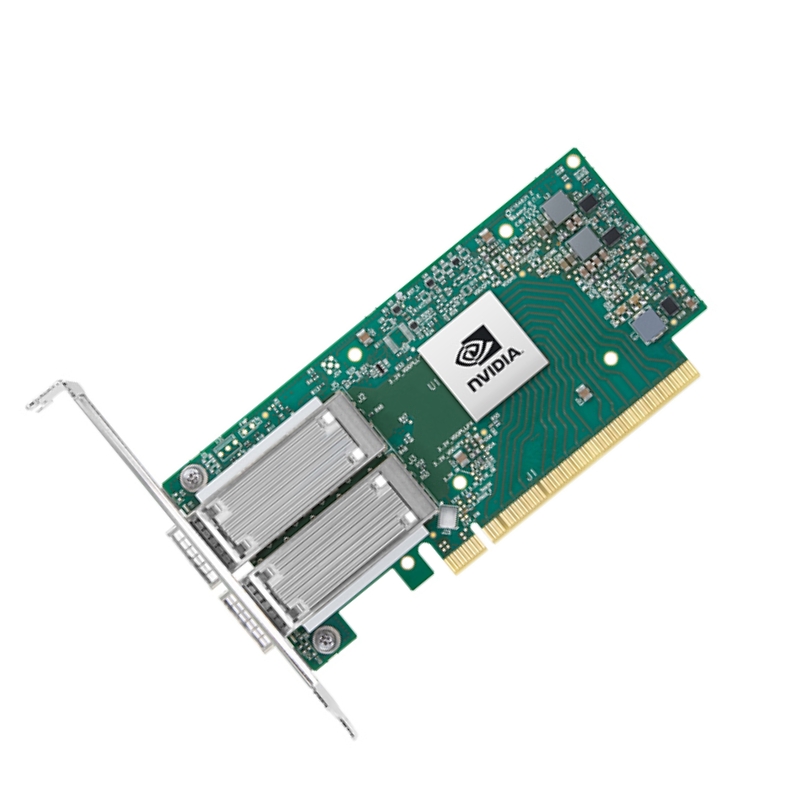
Nvidia 900-9X5AZ-0053-0T3 ConnectX-5 EN 25GBE Dual-port SFP28 PCIE Gen 3.0 X8 Tall Bracket Network Interface Card. New Sealed in Box (NIB) with 3 Years Warranty
| SKU/MPN | Warranty | Price | Condition | You save |
|---|---|---|---|---|
| 900-9X5AZ-0053-0T3 | 1 Year Warranty | $308.00 | New (Box Not Sealed) | You save: $107.80 (26%) |
| 900-9X5AZ-0053-0T3 | 1 Year Warranty | $351.00 | New Sealed in Box (NIB) | You save: $122.85 (26%) |
The Nvdia ConnectX-5 EN 25GbE network interface card (Part No: 900-9X5AZ-0053-0T3) is a high-performance dual-port SFP28 PCI Express Gen 3.0 x8 adapter designed for enterprise-grade data centers. It delivers ultra-fast networking capabilities, optimized throughput, and low-latency communication for modern cloud, virtualization, and storage environments.
The Nvidia 900-9X5AZ-0053-0T3 ConnectX-5 EN 25GbE Dual-Port SFP28 PCIe Gen 3.0 x8 Tall Bracket Network Interface Card is a high-performance networking solution designed for modern data-driven infrastructures that demand low latency, high throughput, and efficient data handling. Built on advanced Ethernet adapter architecture, this network interface card (NIC) is widely used in enterprise environments, cloud computing platforms, virtualization clusters, and high-performance computing (HPC) systems. It provides a robust foundation for scalable network interconnect solutions where performance consistency and reliability are essential.
The ConnectX-5 EN series is built on a highly optimized architecture that focuses on maximizing packet processing efficiency while minimizing CPU overhead. The dual-port configuration allows simultaneous data transmission and reception across two independent channels, enabling balanced workloads and improved redundancy in mission-critical systems.
At its core, the adapter integrates advanced hardware offload engines that reduce the burden on system processors. This ensures that network-intensive tasks such as packet encapsulation, checksum calculations, and data segmentation are handled directly by the NIC. As a result, system resources remain available for application-level workloads, improving overall system efficiency.
One of the defining features of this network interface card is its support for hardware acceleration technologies. These capabilities allow the card to process large volumes of data at wire speed while maintaining minimal latency. The architecture supports remote direct memory access (RDMA) over converged Ethernet (RoCE), which enables direct memory-to-memory data transfer without involving the CPU.
This architecture is especially beneficial in environments where latency-sensitive operations are critical, such as financial trading systems, real-time analytics platforms, and distributed storage clusters.
The Nvidia ConnectX-5 EN adapter supports 25 Gigabit Ethernet (25GbE), a high-speed networking standard designed to bridge the gap between 10GbE and 40GbE infrastructures. The 25GbE standard provides a significant performance boost while maintaining cost efficiency and compatibility with modern data center switches.
With dual SFP28 ports, this network interface card enables flexible deployment options. Each port supports independent or aggregated traffic flows, allowing administrators to configure link aggregation for higher throughput or redundancy configurations for fault tolerance.
The PCIe Gen 3.0 x8 interface provides a high-speed connection between the network adapter and the host system. This interface ensures that the full potential of 25GbE bandwidth is utilized without bottlenecks at the bus level.
PCIe Gen 3.0 architecture offers a balanced combination of bandwidth and compatibility with a wide range of server platforms. The x8 lane configuration ensures sufficient data lanes for high-speed packet transmission, making it suitable for enterprise-grade servers and storage systems.
The dual-port SFP28 configuration provides flexibility and scalability in network design. Each port can operate independently, allowing two separate network connections or a combined aggregated link for increased throughput.
SFP28 transceiver support ensures compatibility with a wide range of optical and direct attach copper (DAC) cables. This allows system administrators to choose the most suitable connectivity medium based on distance, power consumption, and deployment environment.
In mission-critical environments, network downtime is not acceptable. The dual-port design enables failover configurations, ensuring that if one port experiences issues, the second port can immediately take over network traffic without disruption.
This network interface card is widely deployed in enterprise data centers where high-speed communication between servers, storage systems, and virtualization hosts is required. Its ability to handle large volumes of concurrent connections makes it suitable for multi-tenant cloud environments.
Virtual machine migration, storage replication, and distributed computing tasks benefit significantly from the low latency and high bandwidth capabilities of this adapter.
In cloud computing environments, efficient network utilization is essential for scaling services dynamically. The ConnectX-5 EN NIC supports advanced virtualization features that allow network resources to be shared efficiently among virtual machines and containers.
This results in improved workload distribution and optimized resource allocation across large-scale cloud infrastructures.
The ConnectX-5 EN NIC is supported across multiple operating systems and virtualization platforms. This includes Linux-based distributions, Windows Server environments, and hypervisor platforms commonly used in enterprise infrastructures.
Regular driver updates ensure compatibility with evolving network protocols and security standards, maintaining long-term usability in production environments.
Network security is a critical requirement in modern infrastructure. This network interface card includes hardware-based security features that help protect data in transit and ensure packet integrity.
Features such as checksum offloading and secure packet processing reduce the risk of data corruption while maintaining high performance levels. Compared to traditional 10GbE network adapters, the 25GbE ConnectX-5 EN offers significantly higher bandwidth while maintaining similar infrastructure requirements. This makes it a cost-effective upgrade path for organizations looking to enhance network performance without overhauling entire systems.


 Contact Us
 Information
 Catalog
 Solid State Drives (SSD)
 Network Switches
 Hard Disk Drives
 HBA & Controllers
 PC & Servers
 PC & Server Memory
 CPU & Processors
 Network Routers
 Power Supplies
 Tape Drives & Libraries
 Network Devices
 Computer & Network Cables