(7% discount is applied at checkout)
Cart is empty
Your go-to destination for cutting-edge server products
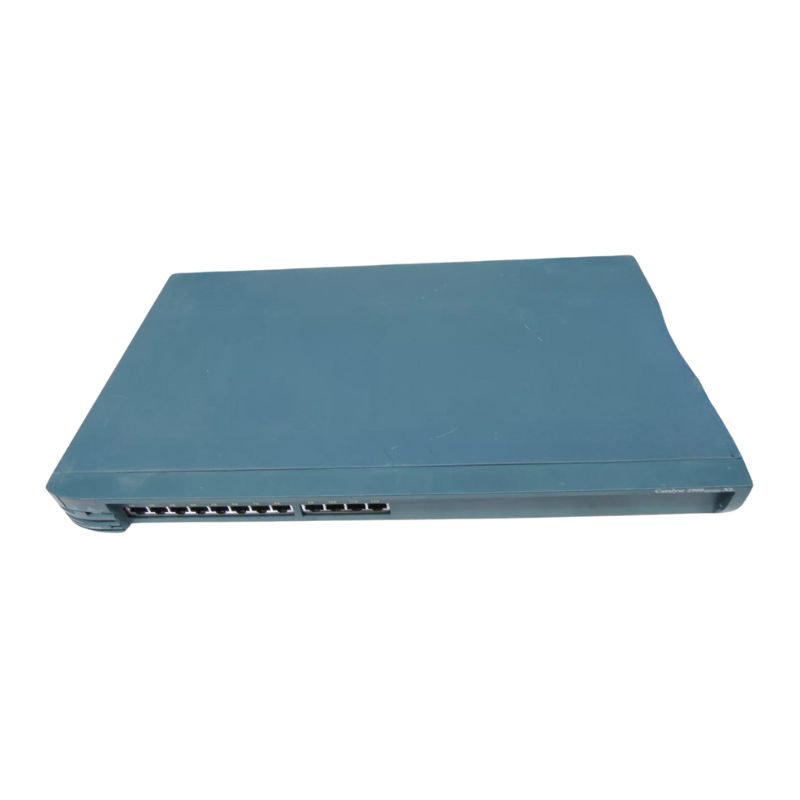


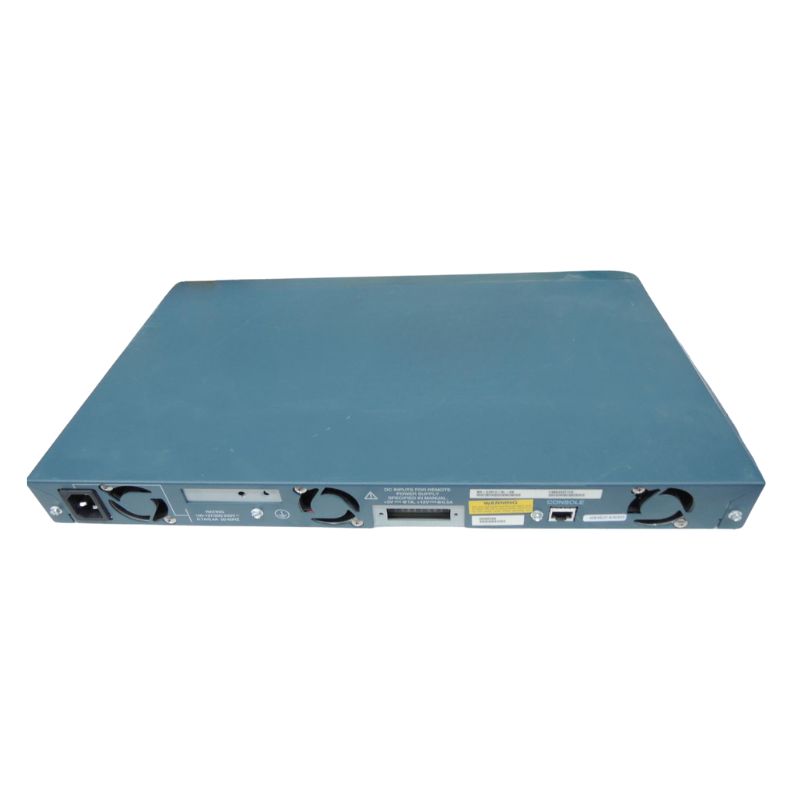
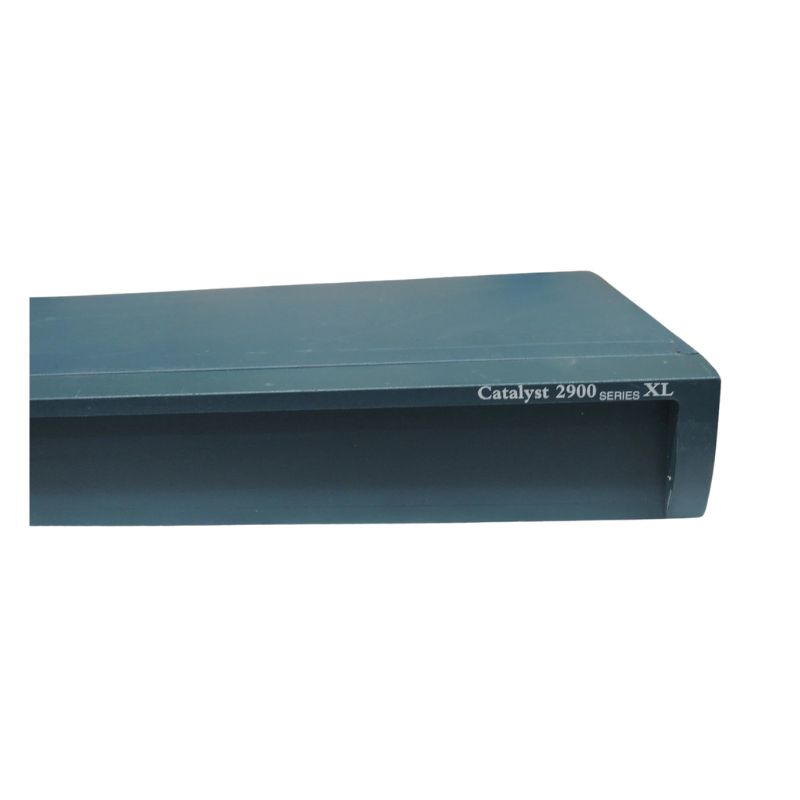
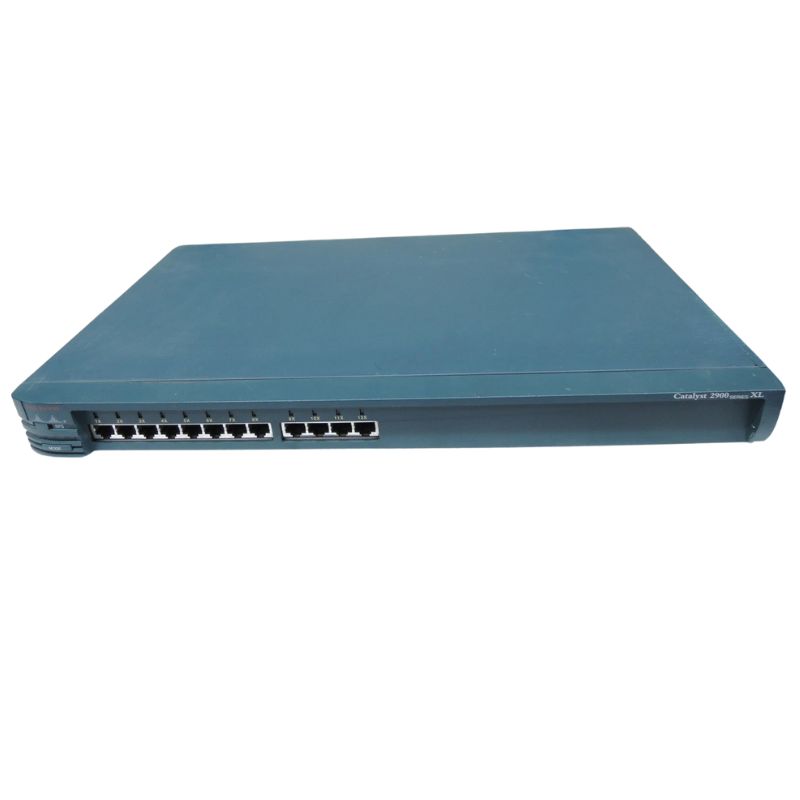
Cisco WS-C2912-LRE-XL Catalyst 16 Ports Ethernet Switch. Excellent Refurbished with 1 year replacement warranty
The Cisco WS-C2912-LRE-XL Catalyst Ethernet Switch is a reliable managed networking solution designed for small to mid-sized business environments. Built under the trusted Cisco Catalyst 2900 Series, this switch delivers stable Fast Ethernet connectivity, efficient traffic management, and long-term durability for enterprise-grade networks.
At the heart of the WS-C2912-LRE-XL is a technology that defied the standard limitations of traditional Ethernet. In the early 2000s, a significant pain point existed for hotels, campuses, apartment buildings, and older factories: the abundance of legacy voice-grade copper wiring (Cat 3/Phone wire) and the prohibitive cost of ripping and replacing it with Cat 5/6 cabling for Fast Ethernet.
LRE operates as a broadband signal technology, distinct from baseband Ethernet. It uses frequency division multiplexing to create multiple channels over a single pair of copper wires.
Unlike 10BASE-T or 100BASE-TX, which use simple line encoding, LRE employs sophisticated carrier modulation (similar to DSL) to achieve three primary speed profiles over distances up to 5,000 feet: 5 Mbps, 10 Mbps, and 15 Mbps. The switch could auto-negotiate the optimal speed with the LRE Customer Premises Equipment (CPE) device based on line conditions.
A key feature was LRE's ability to share the same cable bundle with POTS (Plain Old Telephone Service) and ISDN signals without interference. This "always-on" broadband connection did not disrupt existing telephone services, making deployments seamless for multi-tenant units.
LRE occupied a unique niche. It offered longer distances than standard Ethernet (100m limit) and was more centrally managed and switched than contemporary DSL solutions, providing a true LAN-like experience with higher port density for multi-dwelling units.
The physical design of this Catalyst switch is tailored for its LRE mission. It is a fixed-configuration, 1RU rack-mountable switch with specific components dedicated to LRE functionality.
The switch provides 16 fixed LRE ports. Each port is an RJ-21 50-pin Telco connector (amphenol connector), not the standard RJ-45. This design allowed the connection of 16 pairs of copper wires (one pair per port) via a breakout cable to cross-connect blocks, typical in telephony closets. The backplane capacity is sufficient to handle wire-speed traffic across all ports at the LRE speeds offered.
Powered by a dedicated ASIC and CPU for the Catalyst 2900 XL series, it features fixed DRAM and flash memory for the Cisco IOS Software. The switching fabric is optimized for the low-latency forwarding of Ethernet frames derived from the modulated LRE signals. Performance metrics are centered on throughput at 15 Mbps per port and overall packet forwarding rate in the context of LRE's operational parameters.
The unit includes a single, internal AC power supply. Cooling is provided by a bank of fans designed to operate in wiring closet environments. Given the age of these units, attention to thermal management and potential power supply failure is a critical consideration for current users.
Running a specialized version of Cisco IOS Software, the WS-C2912-LRE-XL was a fully managed Layer 2 switch, offering control and features expected from the Catalyst lineage, adapted for the LRE domain.
The switch supports IEEE 802.1Q trunking and port-based VLANs, essential for segregating tenant or departmental traffic across the shared LRE infrastructure. Basic Quality of Service (QoS) features, such as traffic prioritization based on CoS, helped in managing bandwidth for latency-sensitive applications like voice, even on the sub-100 Mbps links.
Management could be performed via the console port, Telnet, or a web-based interface. It supported SNMP for network monitoring. Security features included port security, MAC address filtering, and support for RADIUS authentication for network access control, a vital feature for guest-facing deployments in hospitality.
The CLI and GUI included commands and screens specific to LRE operation. Administrators could view the negotiated speed and line conditions for each port, run basic line diagnostics, and remotely configure or reset the connected LRE CPE devices (like the Cisco 575 LRE CPE).
The Cisco LRE solution was targeted at specific vertical markets where its unique distance capabilities solved a tangible, expensive problem.
This was the flagship use case. Hotels could offer high-speed internet access to every room using the existing telephone wiring, without new cabling. The WS-C2912-LRE-XL in the main telecom room would connect to LRE modems in individual rooms, providing a managed, billable service.
The technology enabled both always-on guest access and quick deployment of temporary networks in conference areas, all leveraging the ubiquitous phone jacks.
University housing and apartment buildings faced identical challenges. LRE allowed educational institutions and property managers to roll out campus-wide networks cost-effectively, often using the switches in a hierarchical design with distribution and core switches upstream.
Older factories, office parks, and retail spaces with Category 3 cabling for old IBM Token Ring or telephone systems could repurpose their infrastructure for IP-based surveillance, access control, or point-of-sale systems using LRE as a transitional technology.
Deploying the WS-C2912-LRE-XL was never in isolation; it was part of a broader Cisco LRE ecosystem and had to integrate into a hierarchical network model.
The switch was designed to work in tandem with Cisco LRE CPE devices, such as the 575 LRE CPE. These modems converted the LRE signal to a standard 10/100BASE-T Ethernet output for end-user devices. The switch could provision and manage these CPEs to a degree, creating a cohesive system.
The switch features two optional uplink slots. Commonly, a 100BASE-FX (fiber) or 100BASE-TX (copper) uplink module was used. This allowed the LRE switch segment to aggregate traffic and connect via fiber to a distribution layer switch (like a Catalyst 3500 or 4500), overcoming the distance limitations of the copper uplink and integrating into the campus backbone.
As an access layer switch, it had limited redundancy features. Scalability was achieved by stacking multiple 2912 LRE switches (using dedicated stacking cables) or by deploying them in parallel, each serving a bank of rooms or a floor. The total number of supported CPEs and the bandwidth aggregation needs at the uplink were key design limits.
With the technology being obsolete, organizations still running on LRE face a necessary migration. Understanding the modern equivalents is part of this category's narrative.
The widespread, cost-effective deployment of Category 5e/6 cabling, the rise of Power over Ethernet (PoE) for phones and access points, and the advent of fiber-to-the-desktop made the niche for LRE increasingly narrow. Wireless technologies, especially robust Wi-Fi (802.11n/ac/ax), provided a more flexible access medium for many of the same use cases.
Today, similar challenges are solved with different tools.
Modern switches supporting 2.5GBASE-T and 5GBASE-T often have better reach on existing Cat 5e cabling (up to 100m). For longer distances, Ethernet extenders (using DSL technology) or media converters to fiber are the standard. A modern access switch like a Catalyst 1000 series with SFP slots for fiber uplinks would be the core of such a design.
For hospitality and MDUs, a high-density, managed Wi-Fi 6/6E/7 network, often with wall-plate or ceiling-mounted access points connected via PoE over modern cabling, has become the predominant solution, offering greater speed and user convenience.


 Contact Us
 Information
 Catalog
 Solid State Drives (SSD)
 Network Switches
 Hard Disk Drives
 HBA & Controllers
 PC & Servers
 PC & Server Memory
 CPU & Processors
 Network Routers
 Power Supplies
 Tape Drives & Libraries
 Network Devices
 Computer & Network Cables