(7% discount is applied at checkout)
Cart is empty
Your go-to destination for cutting-edge server products
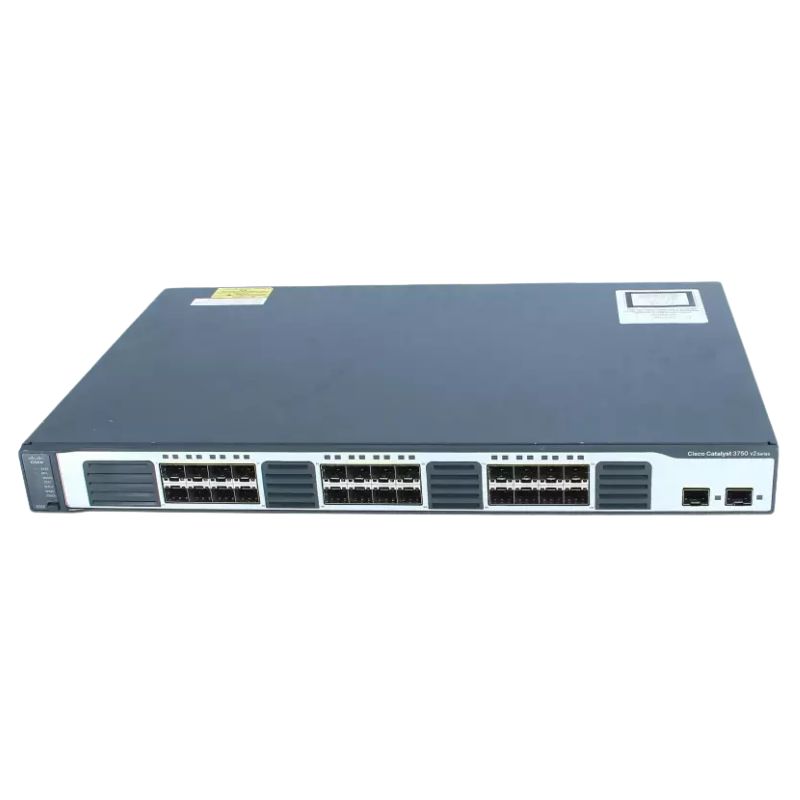


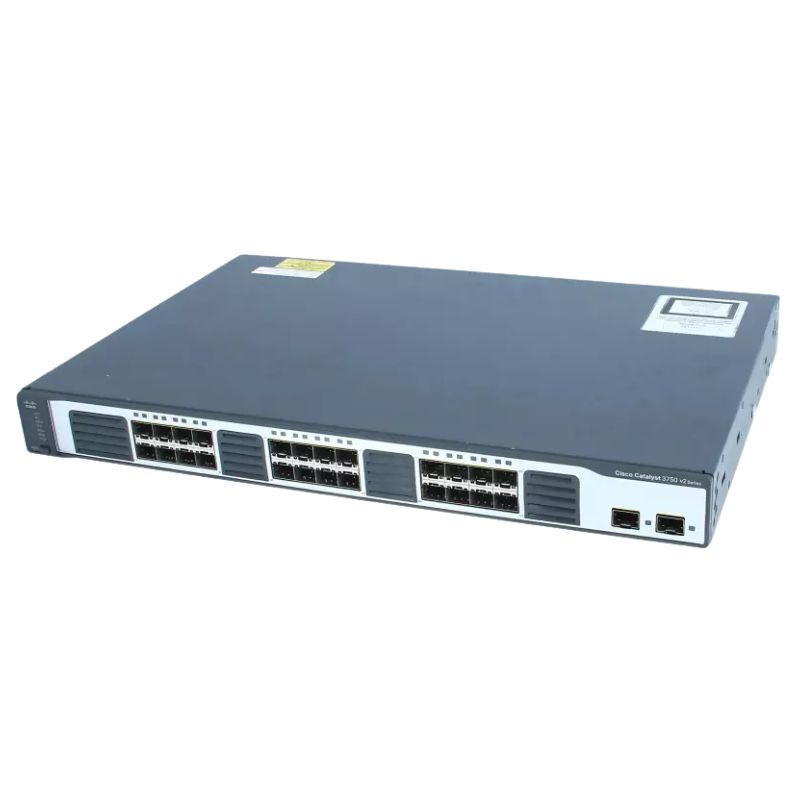
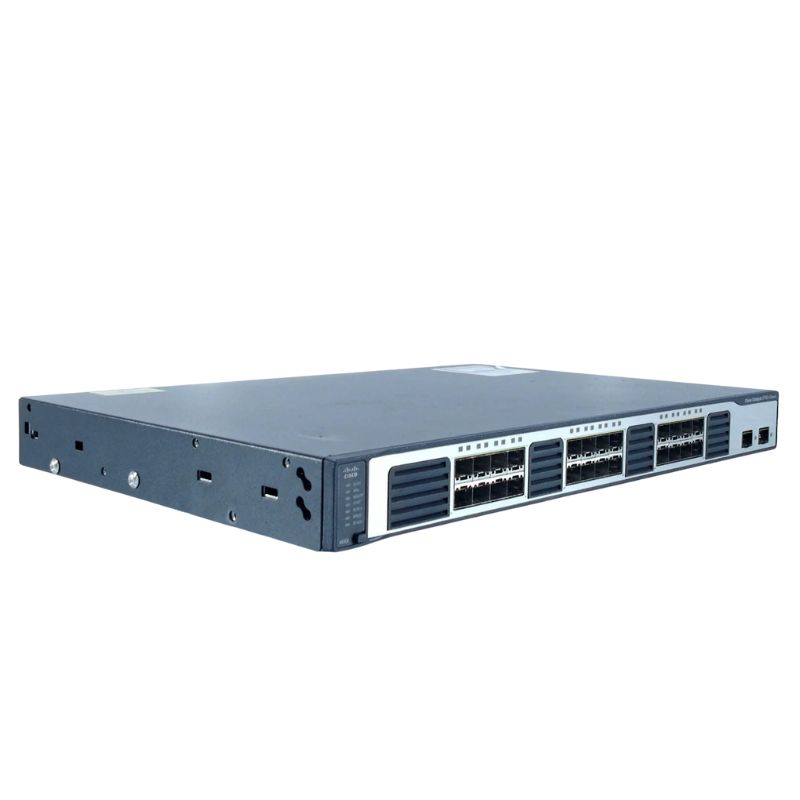
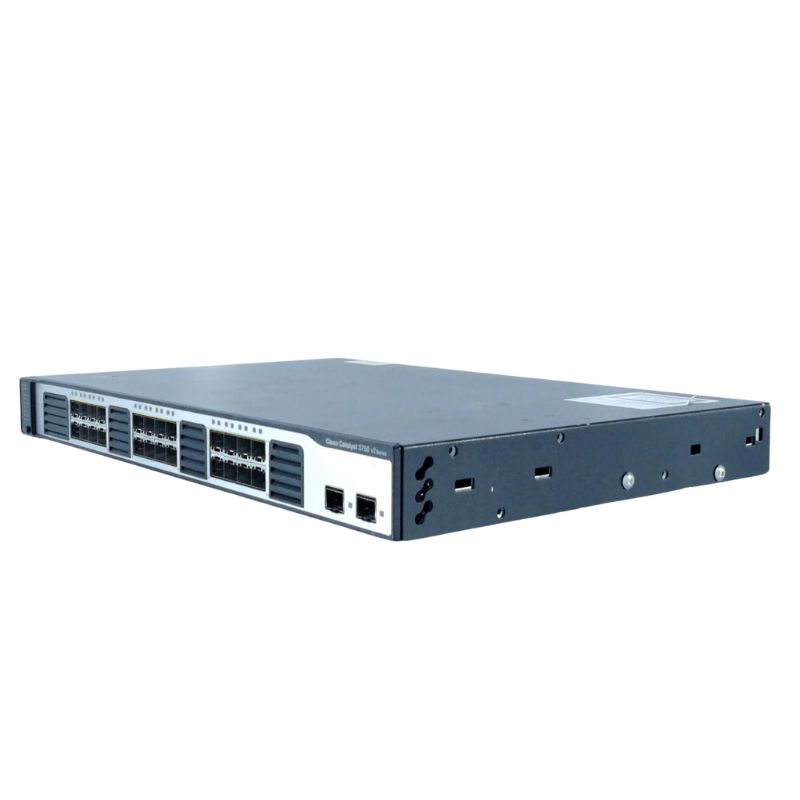
Cisco WS-C3750V2-24FS-S Catalyst 3750V2 24 Ports Switch. Excellent Refurbished with 1 year replacement warranty
| SKU/MPN | Warranty | Price | Condition | You save |
|---|---|---|---|---|
| WS-C3750V2-24FS-S | 1 Year Warranty | $456.00 | Excellent Refurbished | You save: $159.60 (26%) |
| WS-C3750V2-24FS-S | 1 Year Warranty | Contact us for a price | Factory-Sealed New Retail in Original Box (FSB) |
The Cisco WS-C3750V2-24FS-S Catalyst 3750V2 is designed for enterprise-grade networking environments that demand reliable fiber connectivity, advanced traffic control, and scalable switching performance. This managed Layer 3 switch integrates Fast Ethernet fiber ports with flexible uplink options to support growing network infrastructures.
The Cisco WS-C3750V2-24FS-S Catalyst 3750V2 Ethernet Switch belongs to a specialized category of enterprise access-layer switches engineered to deliver reliable optical Ethernet connectivity in high-density network environments. This category focuses on fiber-based Fast Ethernet switching, emphasizing extended distance transmission, electromagnetic immunity, and deterministic performance across campus, industrial, and service provider edge networks. With twenty-four 100BASE-FX fiber ports complemented by two Small Form-Factor Pluggable uplink interfaces, this class of switches is designed for organizations that require stable fiber access without compromising Cisco Catalyst reliability and software intelligence.
Fiber-based Fast Ethernet remains relevant in many enterprise and institutional deployments where copper cabling is unsuitable due to distance, electrical interference, or environmental constraints. The 100BASE-FX standard enables data transmission over multimode fiber, supporting longer cable runs than traditional twisted-pair Ethernet. Switches in this category act as aggregation points for optical endpoints such as building-to-building links, factory floor devices, campus access nodes, and legacy fiber infrastructures that still depend on Fast Ethernet signaling.
The use of fiber optic interfaces ensures signal integrity across extended distances, making these switches ideal for distributed network topologies. Optical media eliminates susceptibility to electromagnetic interference, ensuring consistent throughput in electrically noisy environments. This advantage is particularly valuable in manufacturing plants, transportation facilities, healthcare campuses, and educational institutions where reliable connectivity is essential.
Switches in this category are optimized for compatibility with existing multimode fiber installations, allowing organizations to extend the life of deployed cabling assets. This reduces upgrade costs while maintaining dependable network performance. The Cisco WS-C3750V2-24FS-S is aligned with these requirements, offering a seamless fit into established fiber-based access networks.
The Catalyst 3750V2 series represents Cisco’s commitment to scalable, stackable switching solutions that simplify network expansion while maintaining centralized management. This category emphasizes modular growth, operational consistency, and robust Layer 2 and basic Layer 3 capabilities suitable for enterprise access and distribution layers. The WS-C3750V2-24FS-S model specifically addresses environments where fiber connectivity is the primary medium.
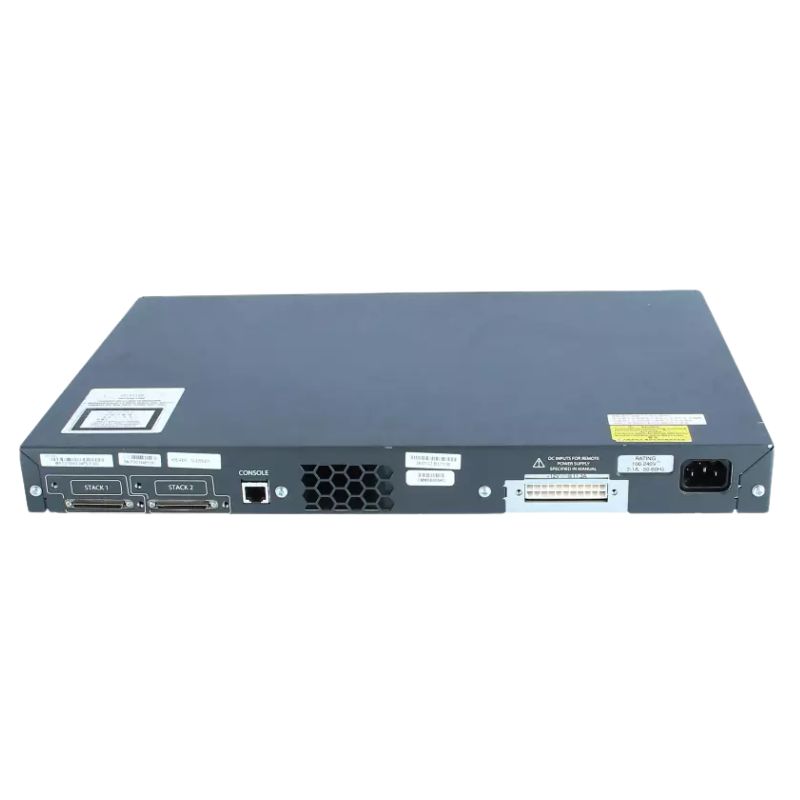
StackWise technology defines this switch category by enabling multiple physical switches to operate as a single logical unit. This capability simplifies network design by allowing administrators to manage several switches through a single configuration and IP address. It also enhances redundancy by distributing traffic and control across the stack, ensuring that network services remain available even if one member experiences a failure.
Stackable fiber switches offer the ability to scale port density without introducing additional management overhead. Organizations can expand network capacity by adding switches to the stack while preserving consistent performance and configuration policies. This approach is especially beneficial in growing campuses or industrial environments where incremental expansion is common.
Uniform software images and synchronized configurations across stacked switches ensure predictable behavior and simplified troubleshooting. This consistency is a defining characteristic of the Catalyst 3750V2 category, making it a preferred choice for IT teams seeking operational efficiency.
The Standard Image software defines a balanced feature set that supports essential switching and routing functions required at the access layer. This category is positioned to deliver dependable Layer 2 switching with selective Layer 3 features that enable basic inter-VLAN routing and network segmentation. The software architecture prioritizes stability, security, and ease of deployment.
At its core, this category excels in Layer 2 Ethernet switching, supporting VLAN segmentation, trunking, and spanning tree protocols that maintain loop-free network topologies. These capabilities are critical in environments with multiple interconnected access switches and redundant fiber links.
While primarily focused on Layer 2 functionality, the Standard Image includes limited Layer 3 features that allow for efficient routing between VLANs at the access layer. This reduces reliance on centralized routers and improves traffic flow within local network segments.
Switches in this category integrate essential security mechanisms such as port security, access control lists, and network monitoring capabilities. These features help protect network resources and ensure compliance with organizational security policies without adding unnecessary complexity.
The defining characteristic of this category is its high-density fiber port configuration. Twenty-four 100BASE-FX ports provide ample connectivity for optical endpoints, enabling efficient aggregation of fiber links within a compact form factor. This density supports centralized fiber distribution points in large facilities or campus environments.
High port density within a single rack unit reduces the physical footprint of the access layer, allowing organizations to maximize data center and wiring closet space. This efficiency is particularly valuable in environments with limited rack capacity or high equipment density.
Each fiber port delivers consistent Fast Ethernet performance, ensuring predictable throughput for connected devices. This uniformity is essential for applications that rely on stable latency and bandwidth characteristics.
The design of this category aligns with standard fiber distribution practices, allowing straightforward integration with patch panels and distribution frames. This compatibility simplifies installation and ongoing maintenance.
The inclusion of two SFP uplink interfaces extends the versatility of this switch category by enabling flexible connectivity to upstream distribution or core switches. These uplinks support a range of fiber transceivers, allowing organizations to tailor link distance and performance to their specific network topology.
SFP uplinks provide adaptability in backbone connections, supporting multimode or single-mode fiber as required. This flexibility ensures seamless integration into diverse network architectures, from compact campuses to geographically dispersed facilities.
By aggregating access-layer traffic through dedicated uplinks, this category ensures efficient data flow toward the core network. This design minimizes congestion and supports consistent application performance across the network.
The modular nature of SFP interfaces allows organizations to upgrade uplink transceivers as network requirements evolve, extending the useful life of the switch hardware.
Reliability is a cornerstone of this category, reflecting Cisco’s focus on enterprise-grade hardware design and software stability. The Catalyst 3750V2 family is engineered to deliver continuous operation in demanding environments where downtime is unacceptable.
Support for advanced spanning tree protocols and link aggregation ensures that redundant fiber paths can be deployed without creating network loops. This redundancy enhances availability and resilience against link failures.
Enterprise-grade components and rigorous testing contribute to the long operational lifespan of switches in this category. This durability makes them suitable for environments with extended deployment cycles and limited maintenance windows.
The switching architecture is designed to maintain stability even under sustained traffic loads, ensuring reliable performance for connected devices and applications.
This category of fiber-based Ethernet switches serves a wide range of industries and deployment scenarios. From educational campuses to industrial automation networks, the combination of optical connectivity and enterprise software features addresses diverse operational needs.
In educational environments, fiber access switches support inter-building connectivity and centralized network management. The ability to stack switches simplifies administration across large campuses with multiple wiring closets.
Fiber connectivity is ideal for industrial settings where electrical interference is common. Switches in this category provide stable communication between control systems, monitoring devices, and centralized management platforms.
Healthcare and government networks benefit from the reliability, security, and manageability of enterprise fiber switches. The Catalyst 3750V2 category supports mission-critical applications where data integrity and availability are paramount.
Energy efficiency is an important consideration in enterprise network design. This category balances performance with power consumption, helping organizations manage operational costs while maintaining reliable connectivity.
The hardware design emphasizes efficient power usage without sacrificing performance. This efficiency contributes to lower energy costs over the lifespan of the deployment.
Effective thermal design ensures stable operation in standard data center and wiring closet environments. Proper airflow and cooling reduce the risk of overheating and extend hardware longevity.
By combining durability, efficiency, and manageable scalability, switches in this category deliver a favorable total cost of ownership for long-term enterprise deployments.
The Catalyst 3750V2 category is designed to integrate seamlessly with broader Cisco network architectures. Compatibility with Cisco management tools and protocols simplifies deployment and ongoing operations.
Support for Cisco management platforms enables centralized monitoring, configuration, and troubleshooting. This integration enhances visibility and control across the network infrastructure.
Consistency across the Catalyst product line ensures smooth interoperability with other access, distribution, and core switches. This uniformity supports standardized network designs and simplifies upgrades.
The design principles and feature set of this category align with established enterprise networking best practices, making it a trusted choice for organizations seeking reliable fiber-based access switching solutions.


 Contact Us
 Information
 Catalog
 Solid State Drives (SSD)
 Network Switches
 Hard Disk Drives
 HBA & Controllers
 PC & Servers
 PC & Server Memory
 CPU & Processors
 Network Routers
 Power Supplies
 Tape Drives & Libraries
 Network Devices
 Computer & Network Cables