(7% discount is applied at checkout)
Cart is empty
Your go-to destination for cutting-edge server products
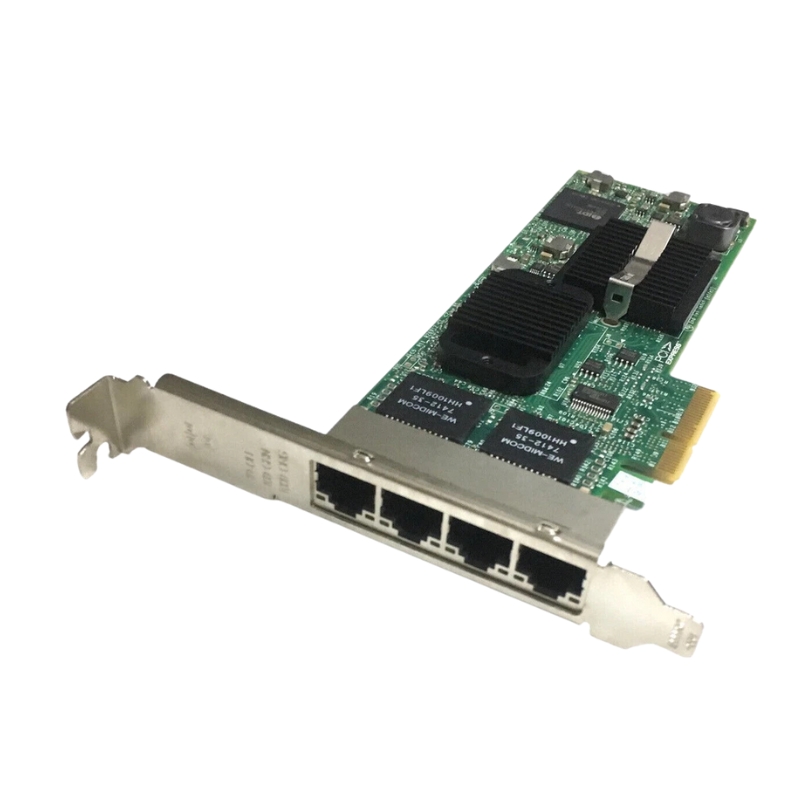


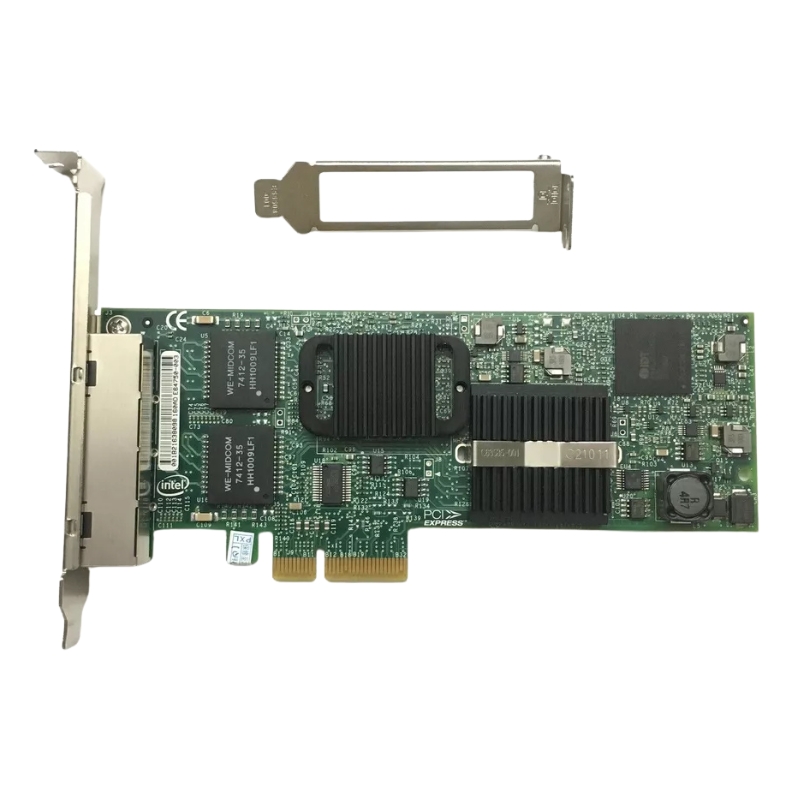
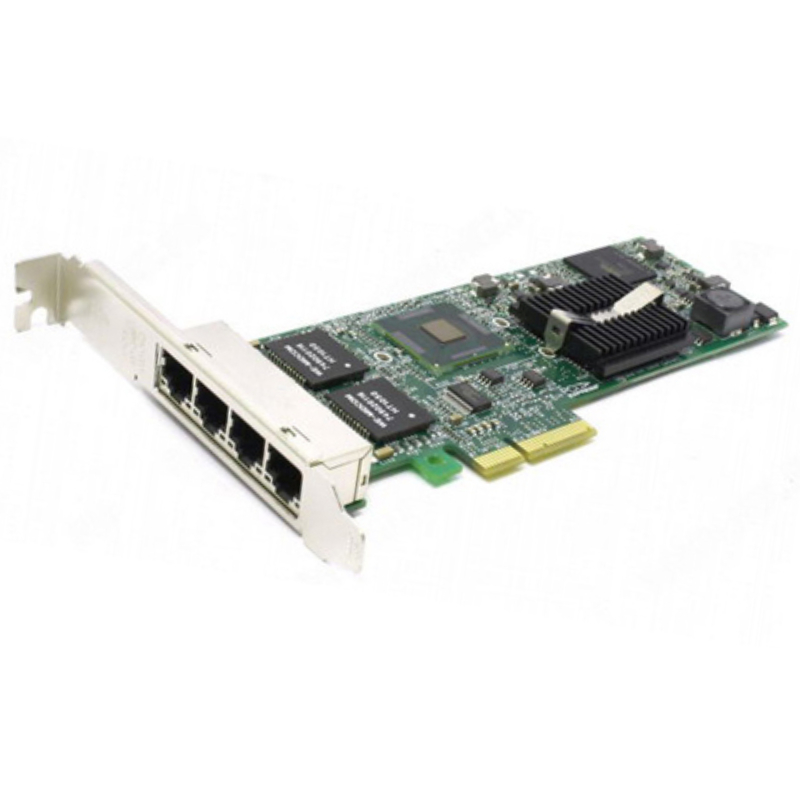
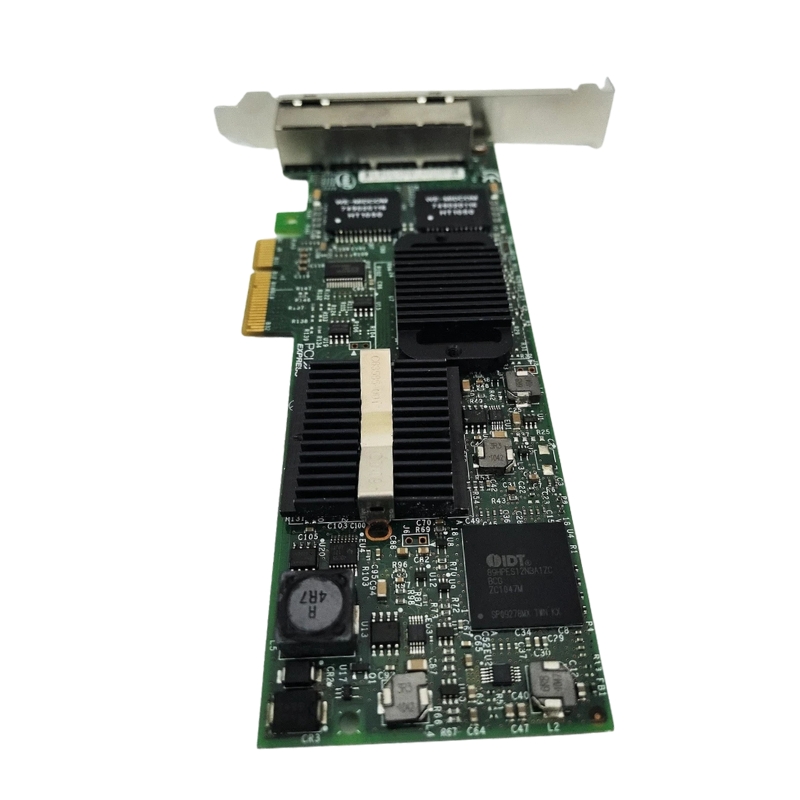
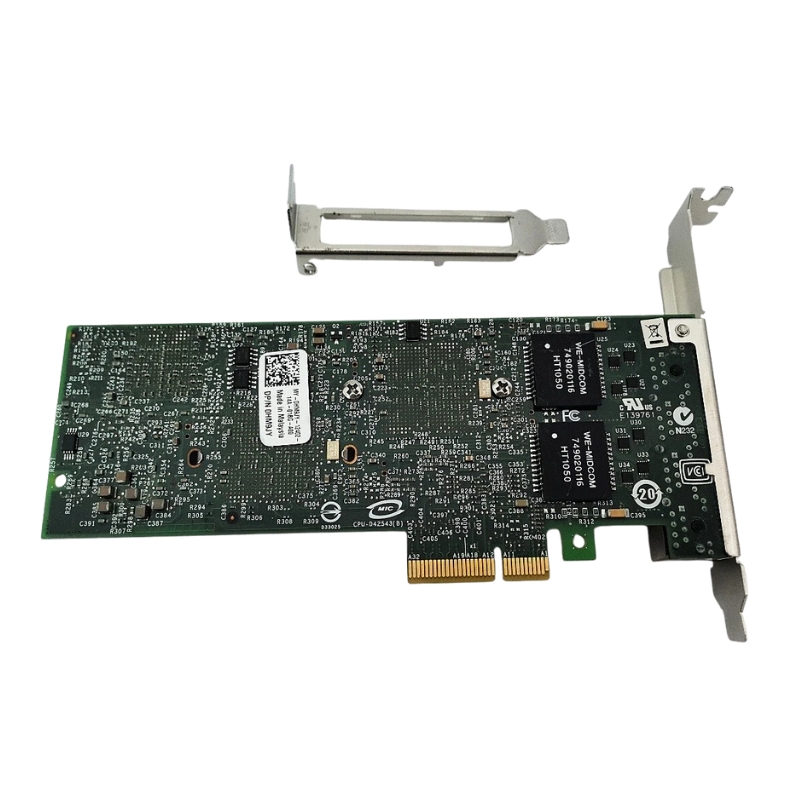
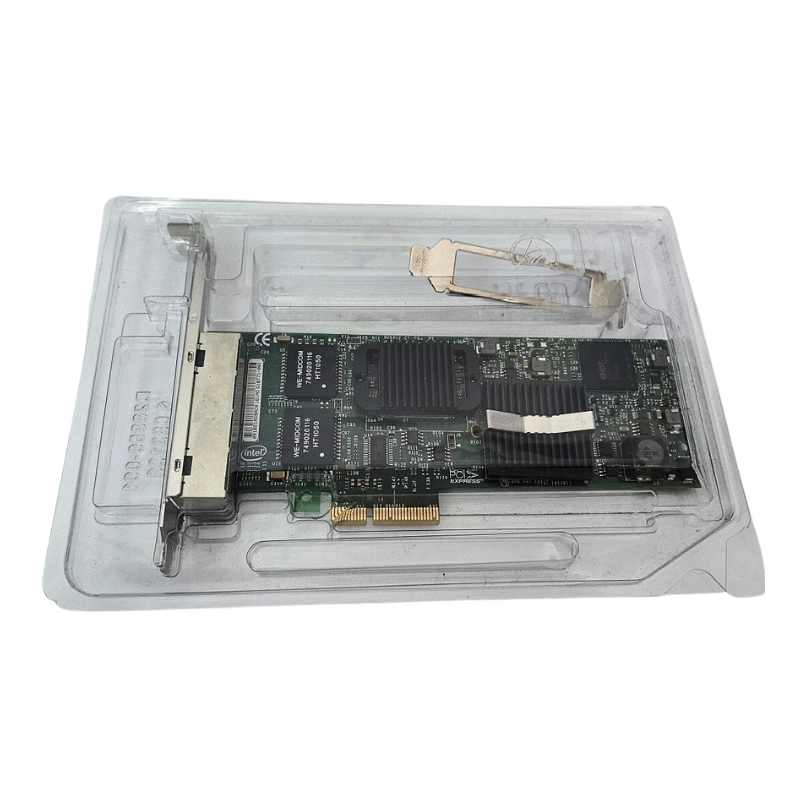
Intel E1G44ETG2P20 4-Port Gigabit Ethernet PCI Express Server Adapter. Excellent Refurbished with 1 year replacement warranty
The Intel E1G44ETG2P20 4-Port Gigabit Ethernet PCI Express Server Adapter is a dependable networking solution engineered for servers and enterprise environments that require stable, high-speed wired connectivity across multiple network links. Built by Intel, this 4-port Gigabit Ethernet adapter is designed to improve bandwidth availability, simplify network segmentation, and support demanding business workloads in data centers, virtualization platforms, and rack-mounted server infrastructures. With four independent Gigabit Ethernet ports integrated into a single PCI Express adapter, it helps organizations expand network capacity without occupying multiple expansion slots, making it an efficient option for performance-focused server deployments.
The Intel E1G44ETG2P20 4-Port Gigabit Ethernet PCI Express Server Adapter belongs to a well-established class of enterprise network interface cards built for servers, storage platforms, virtualization hosts, and business systems that need dependable copper Ethernet connectivity across multiple network paths. In the broader category of server network adapters, this model fits the segment of quad-port Gigabit Ethernet PCIe cards designed to increase port density, simplify cabling, improve segmentation, and support reliable traffic handling in rack servers, tower servers, edge appliances, and network-intensive workstations. For businesses that continue to rely on Gigabit Ethernet as a stable, cost-effective, and widely compatible transport layer, a four-port Intel adapter remains a practical and valuable infrastructure component.
This adapter category is especially relevant in environments where a single onboard LAN interface is not enough. Many server deployments require separate links for production traffic, management traffic, storage-related communication, backup movement, hypervisor networking, firewall segmentation, or dedicated uplinks to different switches. A quad-port Intel PCI Express adapter provides these connections from one expansion card, making it easier to build a clean and scalable network design without using several separate NICs. The Intel E1G44ETG2P20 model is therefore not simply an add-on card; it is part of a broader infrastructure strategy centered on availability, workload separation, predictable performance, and long-term compatibility.
The category represented by the Intel E1G44ETG2P20 is the quad-port copper Gigabit Ethernet server adapter segment. These cards are built for business systems that need multiple physical network interfaces without moving to more expensive high-speed network standards. In practical terms, the category addresses a common requirement in enterprise and SMB environments: one server often needs more than one Ethernet port, but it does not always need 10GbE, 25GbE, or fiber connectivity. A four-port Gigabit adapter fills that gap by offering manageable bandwidth, physical network separation, and flexible port assignment in a format that remains affordable, widely compatible, and easy to integrate into existing structured cabling.
Quad-port server adapters are commonly deployed when administrators need dedicated interfaces for multiple subnets, VLAN trunking, network appliance roles, or failover planning. For example, one port can be reserved for hypervisor management, another for virtual machine traffic, another for storage communication, and the fourth for backup or replication traffic. In another scenario, all four ports may be bonded or teamed for aggregate throughput and resilience. Because the adapter exposes four independent physical interfaces, it allows the network team to align physical topology with logical policy, which is often important in security-sensitive or service-heavy environments.
In this category, Gigabit Ethernet remains relevant because many production networks, branch deployments, surveillance platforms, business applications, and virtualization clusters still operate effectively at 1GbE. Not every workload justifies an immediate migration to faster network standards. Many organizations prefer to maximize the value of their existing switch infrastructure, Cat5e or Cat6 cabling, and Gigabit access design. A product such as the Intel E1G44ETG2P20 fits directly into this operational model by expanding network capacity through additional ports rather than forcing a full transport redesign.
Even as higher-speed networking becomes more common in data centers, multi-port Gigabit adapters continue to play a major role in practical infrastructure design. A large number of business systems do not need a single ultra-fast uplink as much as they need several dependable links for separate functions. Firewalls, virtualization hosts, branch edge servers, appliance platforms, backup systems, and compact lab servers all benefit from multiple copper Ethernet ports. In many of these systems, the challenge is not raw peak bandwidth but port availability, network isolation, and fault-tolerant layout.
Four-port server adapters also help preserve expansion flexibility. Instead of consuming several motherboard slots with separate single-port or dual-port NICs, a quad-port card centralizes connectivity on one adapter. This can be especially useful in short-depth servers, edge systems, compact industrial platforms, and repurposed workstation chassis where expansion slots are limited. It also simplifies inventory management because one card can satisfy several networking roles at once.
The Intel E1G44ETG2P20 4-Port Gigabit Ethernet PCI Express Server Adapter sits in Intel’s enterprise Gigabit adapter family and is aligned with professional server connectivity rather than consumer networking. The card is associated with Intel’s quad-port Gigabit ET/ET2 class of server adapters, a family known for PCI Express connectivity, copper RJ45 ports, and a controller design built to support multi-core servers, virtualization-related optimizations, and balanced traffic handling. This positions the adapter as a strong fit for infrastructure where reliability, operating system support, and multi-port flexibility matter more than flashy consumer-oriented features.
From a category perspective, the most important characteristics of this product class are the four Gigabit Ethernet ports, PCI Express server compatibility, and enterprise-grade Intel controller behavior. Those three attributes together make the adapter useful in physical servers, virtualized hosts, firewall appliances, routing systems, NAS environments, and business continuity designs. Because the card uses standard copper Ethernet rather than specialized optical media, it can often be integrated into existing switch stacks and patch panels with minimal disruption.
The value of the Intel E1G44ETG2P20 is not limited to raw link count. It also lies in the operational possibilities that four Intel-managed Ethernet interfaces create. Administrators can map traffic to dedicated ports, create bonded uplinks, attach separate security zones, or reserve interfaces for specific services. That makes the adapter category especially attractive for environments where network design must remain explicit and controllable.
PCI Express remains the standard expansion interface for server NICs, and the Intel E1G44ETG2P20 belongs to this long-standing ecosystem. PCIe-based server adapters offer a more efficient and scalable path than older bus technologies, which is one reason enterprise quad-port NICs moved decisively to PCIe years ago. A PCIe server adapter integrates more cleanly into modern motherboards, supports dependable bandwidth for multiple Gigabit interfaces, and aligns with mainstream server and workstation hardware layouts.
For administrators, PCI Express matters because it affects compatibility, slot planning, and platform longevity. A PCIe quad-port card can often be installed in a variety of server boards and workstation-class systems, making it useful both in dedicated rack servers and in converted systems such as lab hosts, software routers, and appliance builds. This flexibility broadens the practical market for the Intel E1G44ETG2P20 category because it is not restricted to one narrow chassis type or one single deployment model.
The most visible feature of the Intel E1G44ETG2P20 is its four-port layout. In enterprise networking, port density directly influences how much flexibility a server can provide. A single-port NIC can handle one uplink. A dual-port NIC improves redundancy and enables basic separation. A four-port NIC, however, opens the door to a much wider range of infrastructure designs because it gives the administrator enough interfaces to assign dedicated purposes without exhausting the card immediately.
Port density is particularly useful when the server acts as more than a simple application endpoint. If the system is a hypervisor host, firewall, software-defined storage node, or branch appliance, multiple interfaces are often essential. One interface can be tied to a WAN edge, another to a LAN switch, another to a DMZ or isolated services segment, and another to a management or synchronization network. This level of separation is harder to achieve elegantly with fewer ports.
Another advantage of four physical interfaces is graceful scaling. A business may initially deploy the adapter with only two active links, reserving the remaining ports for future segmentation, backup networks, replication, monitoring, or migration projects. This helps extend the useful life of the card because the infrastructure can grow into the available interfaces instead of requiring immediate replacement.
One of the strongest reasons to choose a quad-port server adapter is physical segmentation. Although VLANs are extremely useful, there are many environments where administrators still prefer or require physically separate interfaces for different network roles. This can improve clarity, simplify troubleshooting, reduce policy ambiguity, and support strict security designs. The Intel E1G44ETG2P20 is well suited to these deployments because each port can be treated as an independent physical path.
For example, a security appliance or firewall platform can assign one port to internet-facing traffic, one to the internal LAN, one to a guest or public-facing network, and one to management. A virtualization host can dedicate one interface to hypervisor administration, one to VM production traffic, one to storage, and one to backup movement. A backup server can separate replication traffic from user-facing file traffic. These are all examples of how the four-port design translates directly into cleaner operational architecture.
Another important characteristic of the quad-port server adapter category is the ability to use multiple ports together in teaming, bonding, or aggregation configurations depending on the operating system and switch environment. The Intel E1G44ETG2P20 can therefore support scenarios where administrators want to combine interfaces for resilience, load distribution, or higher effective bandwidth across multiple sessions. While a single client flow still follows the limits of the chosen network design, aggregate traffic from many sessions can be distributed across multiple links in supported configurations.
This makes the adapter useful in virtualization clusters, file services, and application servers where many simultaneous connections occur. Even when the business does not need 10GbE, it may still need better concurrency and failover behavior than a single Gigabit port can offer. In those cases, a four-port Intel adapter becomes a practical intermediate step that increases flexibility without forcing a complete network refresh.
Gigabit Ethernet remains deeply embedded in enterprise and SMB infrastructure because it balances cost, compatibility, and sufficient bandwidth for a large range of workloads. The Intel E1G44ETG2P20 belongs to a category that continues to be valuable wherever organizations maintain extensive 1GbE switching, copper structured cabling, and workloads that are sensitive to reliability and segmentation more than they are to cutting-edge throughput. File servers, line-of-business applications, virtual desktops, voice systems, surveillance platforms, print services, management nodes, and branch servers often perform very well in a Gigabit environment.
The continued relevance of Gigabit server adapters is also tied to ecosystem maturity. Switches, patch panels, transceivers, cables, and operating system drivers for 1GbE are widely available and well understood. Technicians know how to deploy them, troubleshoot them, and replace them quickly. This reduces operational friction and lowers the risk associated with incremental upgrades. Installing an Intel E1G44ETG2P20 in an existing server usually does not require redesigning the network edge; it extends the server’s physical connectivity using a familiar standard.
In many organizations, bandwidth bottlenecks are not constant across every workload. What they need is the ability to distribute traffic sensibly, isolate critical services, and maintain predictable performance. A four-port Gigabit adapter does exactly that. It gives the network team multiple 1GbE pathways that can be assigned intelligently across workloads, rather than relying on one congested uplink for everything.
The Intel E1G44ETG2P20 uses copper Gigabit Ethernet connectivity, which is a major advantage for businesses with established RJ45 cabling environments. Copper ports allow direct integration with standard Ethernet switches, structured patching, and common rack practices without the additional cost of optical modules or specialized cabling. This makes the adapter especially attractive for server rooms, branch closets, education environments, and general enterprise spaces where copper remains the dominant access medium.
RJ45 compatibility also helps with field service and replacement logistics. Spare cables are easy to source, switch ports are familiar, and the physical link behavior is straightforward for IT teams. In practical deployment planning, this reduces complexity and keeps total network cost under control, especially in mixed environments where some systems are modern and others are legacy but still business-critical.
The Intel E1G44ETG2P20 category is highly relevant to virtualization because hypervisor hosts often need multiple network interfaces for structured traffic separation. In a virtualized environment, one physical server can run many virtual machines, each generating traffic with different priorities and destinations. Without enough physical interfaces, administrators may be forced to overconsolidate traffic onto too few links, which can complicate troubleshooting and reduce design flexibility.
A four-port Intel server adapter gives virtualization teams room to create cleaner layouts. One interface can handle management, another can carry production VM traffic, a third can be dedicated to storage or backup, and a fourth can be used for migration traffic or secondary uplinks. Even when VLANs are used heavily, having multiple physical NICs makes it easier to define redundancy groups, assign traffic classes, and isolate maintenance operations from application data flows.
Hypervisor deployments also benefit from Intel’s long history of enterprise driver support and compatibility across mainstream server operating systems. Stability matters in virtual environments because one host can support many business services. The Intel E1G44ETG2P20 is therefore attractive not only for its port count but also for the confidence that comes from using a recognized server adapter family in a role where downtime can affect multiple applications at once.
Virtual machines often represent different applications, departments, or trust levels. A virtualization administrator may want separate uplinks for management tools, production traffic, development traffic, replication jobs, and backup operations. The quad-port server adapter category supports this style of planning because it offers enough physical interfaces to create meaningful separation without requiring a second NIC immediately.
This is especially useful in smaller clusters and branch virtualization hosts where there may only be one or two physical servers, but those servers still run many roles. The Intel E1G44ETG2P20 helps these systems behave more like larger enterprise hosts by giving them multiple network identities and pathways.
One of the reasons Intel server adapters remain popular is the emphasis on driver maturity and operational stability. In business environments, the value of a NIC is not limited to link speed; it also depends on how predictably the adapter behaves across operating system updates, hypervisor revisions, and server lifecycle changes. The Intel E1G44ETG2P20 belongs to a product family commonly selected because administrators trust Intel’s ecosystem of drivers, firmware behavior, and platform compatibility.
Manageability matters because server NICs often remain in service for years. During that time, the card may be moved between systems, repurposed into new roles, or retained as a spare for similar hosts. A well-supported Intel quad-port adapter reduces uncertainty during these transitions. IT teams are more likely to find documentation, driver packages, and community experience for troubleshooting. That practical support value is a major reason why the adapter category remains attractive in enterprise refurbishing, lifecycle extension projects, and cost-conscious infrastructure upgrades.
The Intel E1G44ETG2P20 is useful in both fresh server builds and upgrades to older systems. In new builds, it can be selected as a deliberate way to provide four copper interfaces from day one, supporting segmentation and redundancy planning from the start. In existing servers, it can be added to extend network capacity without replacing the motherboard or moving to a more expensive server platform. This is particularly valuable in long-lived business environments where the server itself is still adequate for compute needs, but the onboard networking is too limited for current operational demands.
Because the adapter category relies on PCI Express and standard RJ45 networking, it is well suited to lifecycle extension projects. A business may upgrade a reliable application server, virtualization node, or backup appliance by adding a quad-port Intel NIC rather than replacing the whole system. This approach can preserve software investments, reduce downtime, and keep capital costs under control while still improving the server’s network design.


 Contact Us
 Information
 Catalog
 Solid State Drives (SSD)
 Network Switches
 Hard Disk Drives
 HBA & Controllers
 PC & Servers
 PC & Server Memory
 CPU & Processors
 Network Routers
 Power Supplies
 Tape Drives & Libraries
 Network Devices
 Computer & Network Cables