(7% discount is applied at checkout)
Cart is empty
Your go-to destination for cutting-edge server products
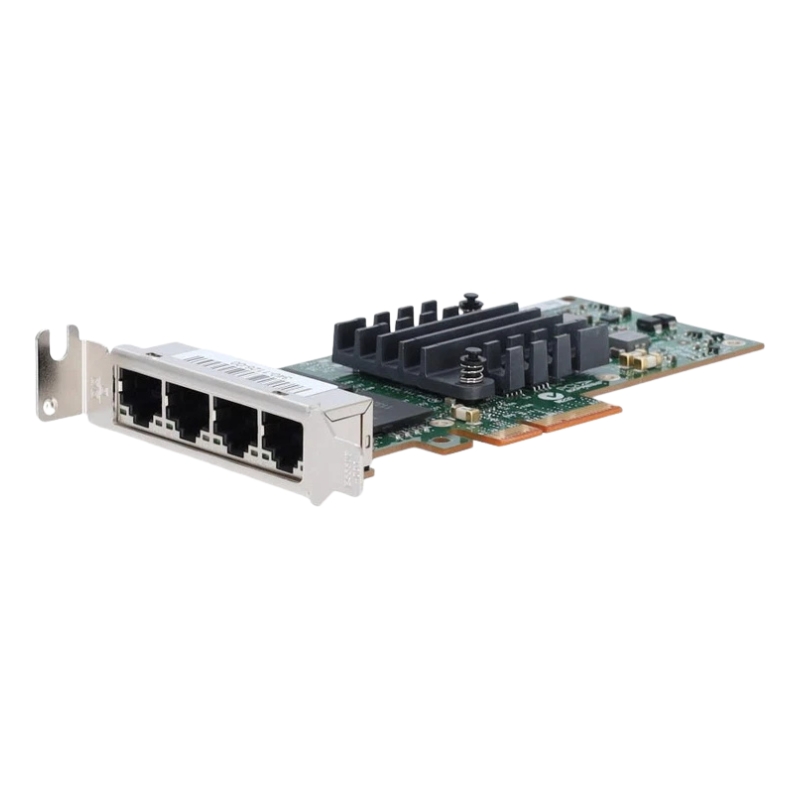


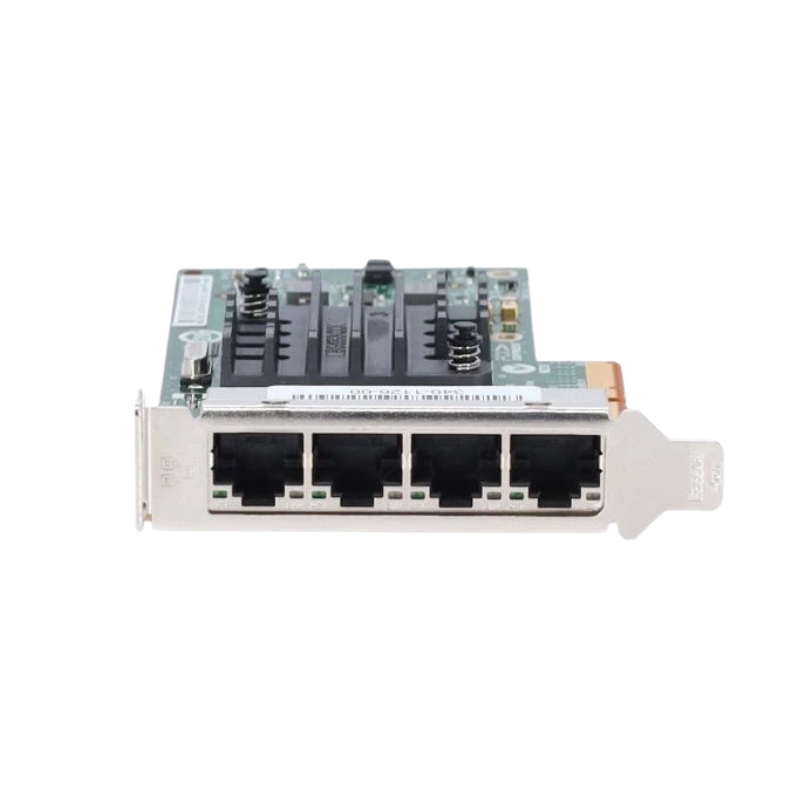
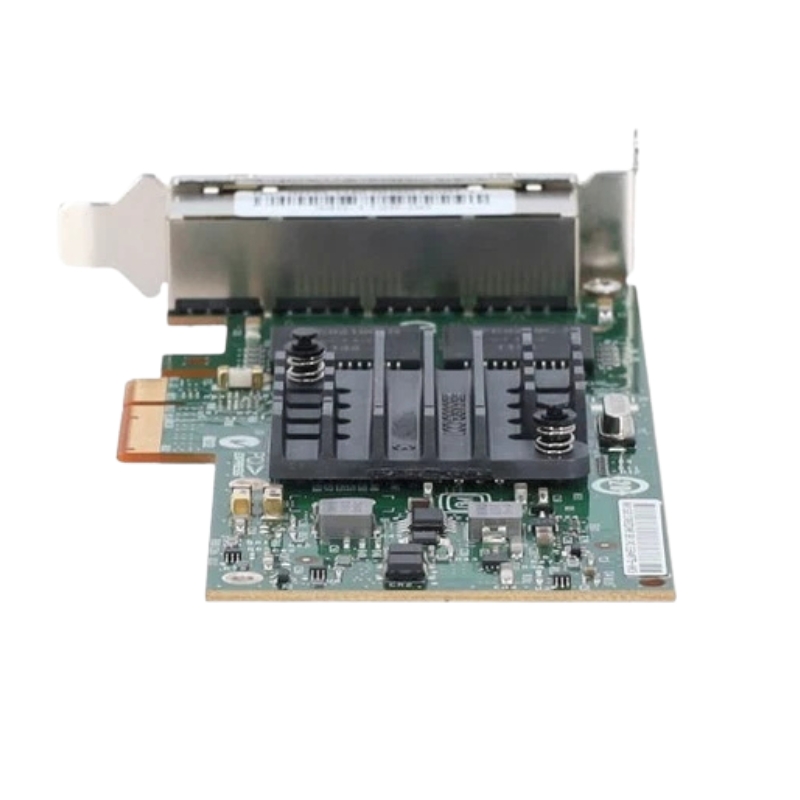
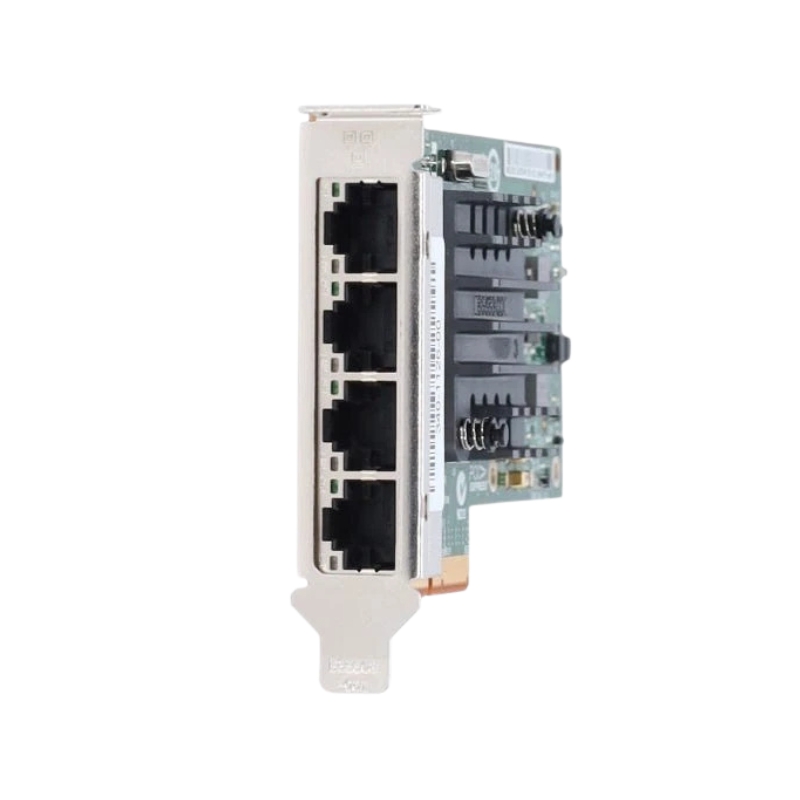
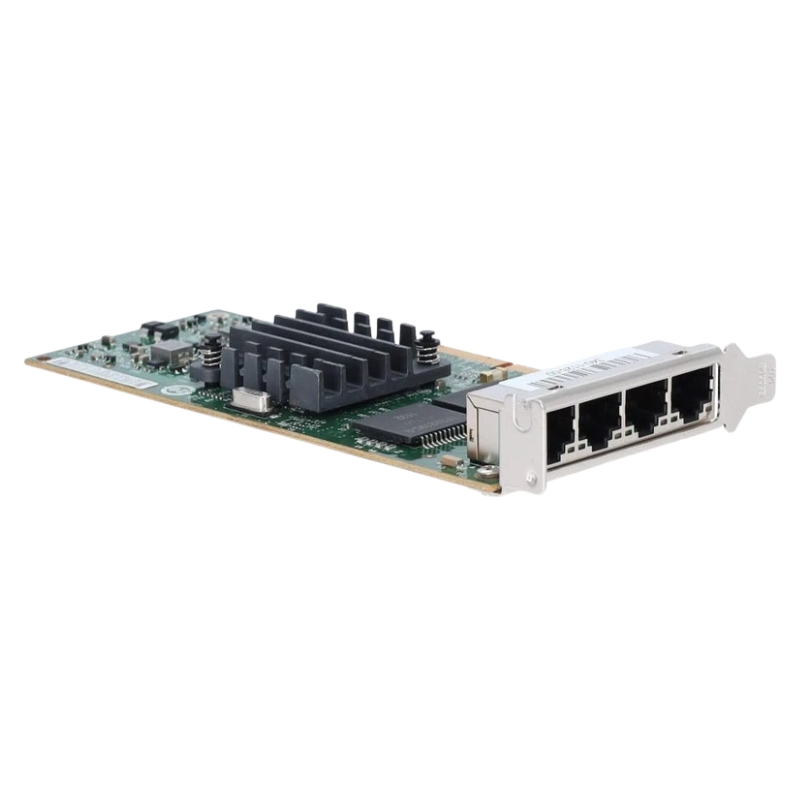
Intel E1G44HTBLK Quad-Port Gigabit Ethernet PCI-Express Server Adapter. Excellent Refurbished with 1 year replacement warranty
The Intel E1G44HTBLK Quad-Port Gigabit Ethernet PCI-Express Server Adapter is a reliable multi-port networking solution designed for servers and enterprise environments that require stable, high-speed wired connectivity. Built to deliver dependable Gigabit Ethernet performance, this adapter provides four separate RJ-45 ports on a single card, making it an efficient option for virtualization platforms, data-intensive workloads, network segmentation, and bandwidth-demanding business applications. Its PCI-Express interface helps ensure consistent throughput while reducing bottlenecks, allowing servers to handle multiple network connections simultaneously. This adapter is well suited for rack servers, tower servers, and infrastructure deployments where administrators need flexible port allocation, improved traffic distribution, and dependable network uptime.
The Intel E1G44HTBLK Quad-Port Gigabit Ethernet PCI-Express Server Adapter belongs to the enterprise network adapter category built for servers that need dependable multi-port copper Ethernet connectivity, balanced traffic distribution, efficient bandwidth handling, and strong compatibility with business-class operating environments. In the broader server adapter market, quad-port Gigabit Ethernet cards continue to hold a valuable role because many organizations still depend on stable 1GbE infrastructure for virtualization hosts, application servers, file servers, backup systems, edge appliances, storage gateways, firewall platforms, and rack-dense enterprise deployments. The Intel E1G44HTBLK category is especially relevant where administrators need four Ethernet connections from a single PCI Express slot, allowing better port density without consuming multiple expansion bays.
As a quad-port server adapter, this class of Intel network card is designed to solve several practical infrastructure problems at once. It can expand physical network connectivity, separate workloads across dedicated interfaces, support failover planning, enable link aggregation strategies, and improve cable organization in multi-service servers. Instead of using several single-port adapters or mixing different NIC models in one system, a quad-port Intel adapter creates a more unified hardware foundation for structured network design. This matters in data center racks, branch servers, industrial systems, appliance platforms, and virtualization clusters where consistent network hardware reduces deployment complexity and simplifies driver management.
In category terms, the Intel E1G44HTBLK sits within PCI Express server Ethernet adapters, copper RJ45 server NICs, quad-port Gigabit network interface cards, and Intel enterprise connectivity components. Buyers looking at this class of hardware are often not just searching for a replacement part. They are typically planning around bandwidth allocation, redundancy, traffic segmentation, virtual machine networking, storage access paths, operating system support, and long-term maintainability. That is why a category page for the Intel E1G44HTBLK should not only mention the adapter itself, but also explain the use cases, server roles, architectural benefits, and platform-level advantages that make a quad-port Gigabit Intel server adapter valuable in professional environments.
A defining characteristic of the Intel E1G44HTBLK Quad-Port Gigabit Ethernet PCI-Express Server Adapter category is the availability of four independent Ethernet interfaces on one card. In practical server deployment, this is far more than a simple port count increase. Each port can serve a distinct operational role, allowing the server to participate in multiple traffic domains without relying on external workarounds. For example, one interface may handle production LAN traffic, another may be assigned to backup operations, a third may carry storage or replication data, and a fourth may be reserved for management, clustering, or failover. This port separation helps administrators control network behavior with greater precision and reduces the likelihood of one traffic class interfering with another.
Quad-port adapters are also useful in consolidation scenarios. A virtualization host can support several virtual switches or VLAN-backed traffic groups while still using a single physical NIC card. A branch server that runs file services, local applications, surveillance retention, and WAN edge functions may use separate ports for each traffic path. Security appliances and monitoring systems often require multiple interfaces to separate trusted, untrusted, mirrored, or service-specific connections. In each of these cases, the category value of a quad-port Intel adapter is not just that it offers four connectors, but that it provides structural flexibility for how the server participates in the wider network.
The Gigabit Ethernet speed tier remains widely relevant because many production environments do not need immediate migration to higher-cost multi-gigabit or 10GbE infrastructure on every server. For print services, domain controllers, licensing servers, branch application systems, backup coordinators, edge firewalls, and moderate virtualization workloads, Gigabit Ethernet still provides a dependable and cost-effective networking foundation. The Intel E1G44HTBLK category therefore appeals to organizations seeking a balance between business-grade performance and budget-conscious infrastructure planning. It allows the continued use of established copper switching ecosystems while still bringing server-focused adapter features associated with Intel Ethernet hardware.
Traffic segmentation is one of the most important reasons organizations choose a quad-port server adapter. Segmenting traffic by physical port can improve security posture, reduce congestion, and simplify troubleshooting. An administrator may dedicate one port to hypervisor management, one to production virtual machine traffic, one to storage access, and one to live migration or backup replication. In a firewall appliance, one port may face the ISP handoff, another may connect to the internal LAN, a third may serve a DMZ, and a fourth may be reserved for monitoring or high-availability synchronization.
This hardware-level separation is often preferred in environments where clear operational boundaries matter. It makes packet captures easier to interpret, narrows the blast radius of misconfiguration, and helps teams enforce more predictable routing and switching policies. Even in VLAN-heavy networks, having multiple physical ports available creates more design choices for administrators who want a clean separation between critical services.
PCIe slot efficiency is another major strength of the Intel E1G44HTBLK category. Many servers, especially compact rack systems or appliance-style platforms, have a limited number of expansion slots. Those slots may already be needed for RAID controllers, storage HBAs, GPU accelerators, specialized security cards, or other infrastructure devices. A quad-port adapter allows one slot to deliver the connectivity that might otherwise require two or four separate cards. That efficiency can preserve room for future upgrades and reduce the complexity of current builds.
Slot conservation also matters in long-lived server platforms that remain in service for branch, manufacturing, retail, and back-office workloads long after initial deployment. If a business later needs to add additional network paths, a quad-port adapter can extend the usefulness of an older system without requiring a complete hardware refresh.
The PCI Express architecture behind the Intel E1G44HTBLK category is fundamental to its value as a server-class network adapter. PCIe provides a dedicated serial interconnect model that improves throughput consistency and reduces the limitations associated with legacy shared bus designs. In a server environment, network I/O should not be treated as a minor peripheral task. Every directory lookup, file transfer, authentication request, backup job, application transaction, and virtual machine packet stream depends on reliable network movement between systems, storage targets, users, and services.
A quad-port Intel adapter installed in a PCIe slot gives the operating system a structured, high-performance path to multiple Ethernet controllers on the card. This helps maintain balanced communication across ports while supporting advanced offload features and enterprise driver capabilities. When organizations evaluate server adapters, they often focus on raw speed, but the real category value is broader. They need dependable driver behavior, stable link negotiation, manageable interrupt handling, compatibility with server motherboards, and predictable performance under sustained workloads. Intel’s server adapter category is popular because it is associated with exactly these kinds of deployment expectations.
PCI Express also supports broader platform flexibility. In mixed hardware environments, administrators may be maintaining older servers for secondary roles while newer systems handle high-priority compute tasks. A PCIe-based quad-port Gigabit adapter fits into this ecosystem by providing a practical network upgrade path without forcing a redesign of switching, cabling, or application dependencies. The Intel E1G44HTBLK category therefore works well in staged refresh cycles where organizations modernize gradually rather than replacing entire infrastructure stacks at once.
Servers rarely handle only one type of network traffic. Even a small business server may simultaneously process user logins, file access, remote desktop sessions, software updates, backups, monitoring traffic, and application communications. In a larger enterprise, the same server may also participate in clustering, replication, and centralized logging. A quad-port adapter supports more graceful handling of these concurrent services by giving administrators multiple interfaces across which traffic can be distributed.
When combined with appropriate switching policies, routing rules, or operating system network configuration, the Intel E1G44HTBLK category can help isolate heavy traffic streams from latency-sensitive tasks. This is especially useful in servers that combine legacy roles with modern services, where not every workload has been moved into separate appliances or cloud platforms.
One of the most practical strengths of a quad-port Gigabit copper adapter is compatibility with established structured cabling. Many business environments continue to rely on RJ45 copper infrastructure because it is familiar, widely deployed, and economical to maintain. Reusing Category-rated cabling helps organizations extend the life of their network investments while still improving server connectivity. The Intel E1G44HTBLK category is therefore attractive to administrators who want dependable server networking without moving to optical transceivers or more specialized media for every deployment.
Copper Ethernet also simplifies spare management in many IT departments. Patch leads, switch ports, test tools, and technician workflows are already optimized for RJ45 environments. For branch offices, educational institutions, medical offices, warehouses, and distributed enterprises, this compatibility can be as important as the adapter’s electrical performance.
The Intel E1G44HTBLK Quad-Port Gigabit Ethernet PCI-Express Server Adapter category is highly relevant in virtualized server environments. Virtualization changes the way network traffic behaves because a single physical host may support many workloads at once. Domain services, web applications, internal databases, monitoring tools, backup agents, and test environments may all run on one hypervisor. Without sufficient network planning, these mixed traffic patterns can create bottlenecks or management challenges. A quad-port Intel adapter provides a more flexible foundation for assigning traffic classes to separate physical uplinks or logical team configurations.
In a hypervisor environment, administrators often map different services to different NICs or teamed links. Management traffic, virtual machine production traffic, storage access, and migration events are common examples. Even when VLANs are heavily used, the presence of four physical interfaces makes it easier to align logical design with physical resilience. One pair of ports may serve a production virtual switch, while the remaining pair supports management and backup operations. Another deployment may use all four ports in two separate redundancy groups to support different clusters or business units.
Consolidation is another major reason for using a quad-port adapter. Instead of maintaining multiple single-purpose physical servers, organizations often collapse services onto fewer, more capable hosts. As server consolidation increases, the need for thoughtful network segmentation also increases. The Intel E1G44HTBLK category supports that trend by delivering multi-port connectivity in a format suitable for consolidated infrastructure. It gives administrators enough physical network presence to keep workloads organized while avoiding the clutter and slot usage of several independent NIC cards.
In VMware, Hyper-V, Proxmox, and other virtualized environments, traffic planning determines stability as much as CPU or memory sizing does. A quad-port adapter can support separate uplinks for management, tenant workloads, backup movement, and storage-related access. This helps reduce contention and makes maintenance easier because administrators can identify the role of each interface quickly. During troubleshooting, it is much easier to isolate a network issue when physical ports have defined responsibilities rather than all services sharing one or two generic uplinks.
Quad-port adapters are especially useful in smaller virtualization clusters where budget constraints do not justify 10GbE everywhere but uptime and workload separation still matter. They let organizations build a cleaner and more resilient Gigabit design while preserving flexibility for future network policy changes.
Server adapters are judged not only by hardware specifications but also by how well they integrate into real operational environments. The Intel E1G44HTBLK category is attractive because Intel Ethernet adapters have long been associated with broad operating system support, mature driver ecosystems, and manageable deployment behavior across Windows Server, Linux distributions, virtualization platforms, and appliance operating environments. For IT teams, that matters as much as raw bandwidth. A network adapter that installs cleanly, negotiates links consistently, supports standard monitoring workflows, and behaves predictably during firmware or driver updates is easier to keep in production.
Manageability includes more than installation. Administrators need visibility into link state, teaming behavior, duplex settings, error counters, cable health indicators where supported, and boot or remote deployment options in some environments. A well-established server NIC category provides these operational conveniences and reduces the time required to standardize new systems. In multi-site organizations, consistency across adapters also improves documentation and support processes because the same configuration approach can be reused across different server roles.


 Contact Us
 Information
 Catalog
 Solid State Drives (SSD)
 Network Switches
 Hard Disk Drives
 HBA & Controllers
 PC & Servers
 PC & Server Memory
 CPU & Processors
 Network Routers
 Power Supplies
 Tape Drives & Libraries
 Network Devices
 Computer & Network Cables