(7% discount is applied at checkout)
Cart is empty
Your go-to destination for cutting-edge server products
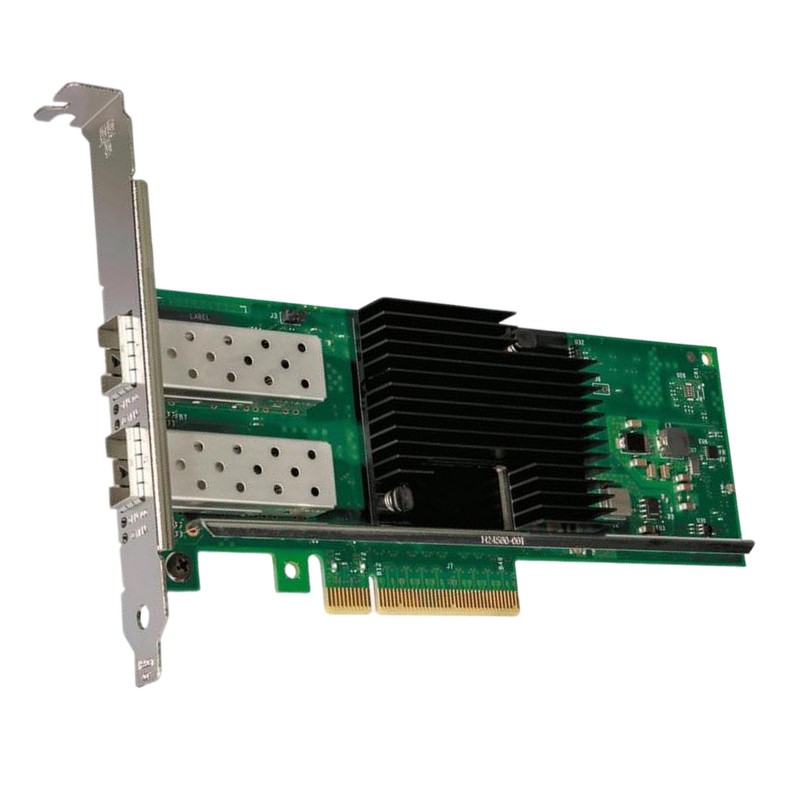


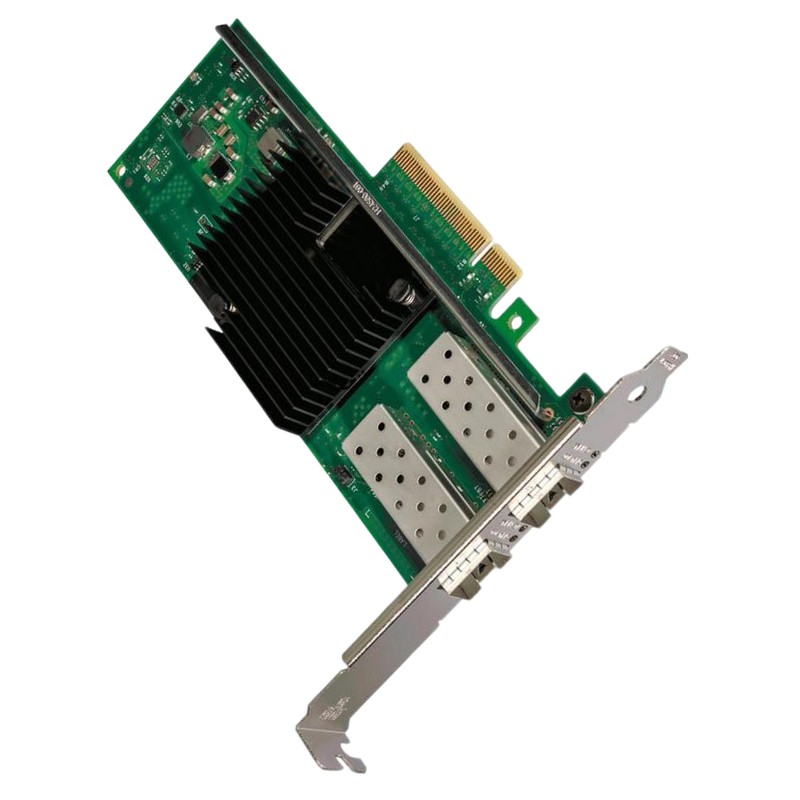
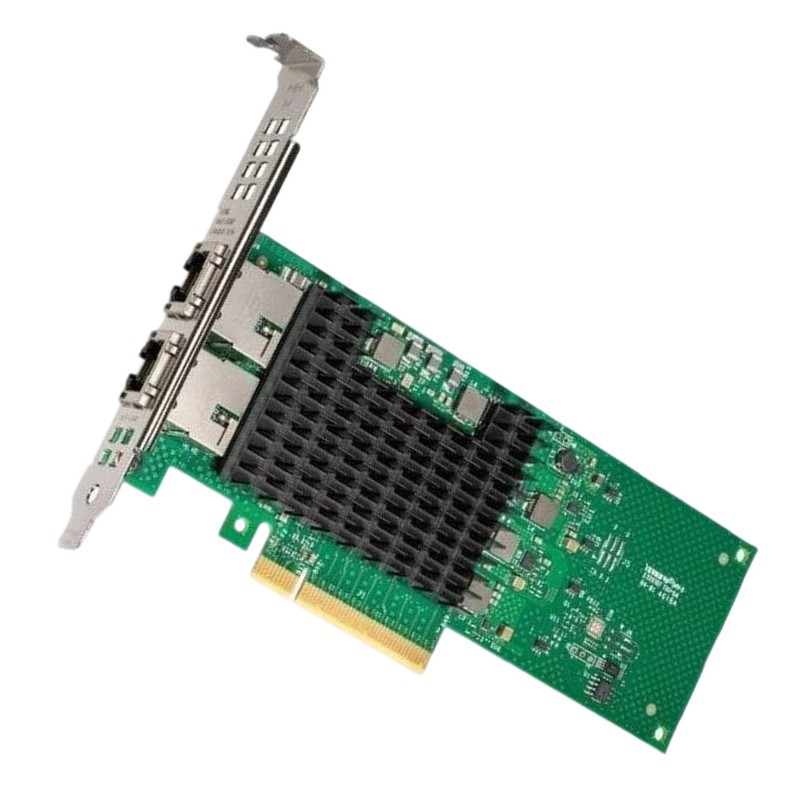
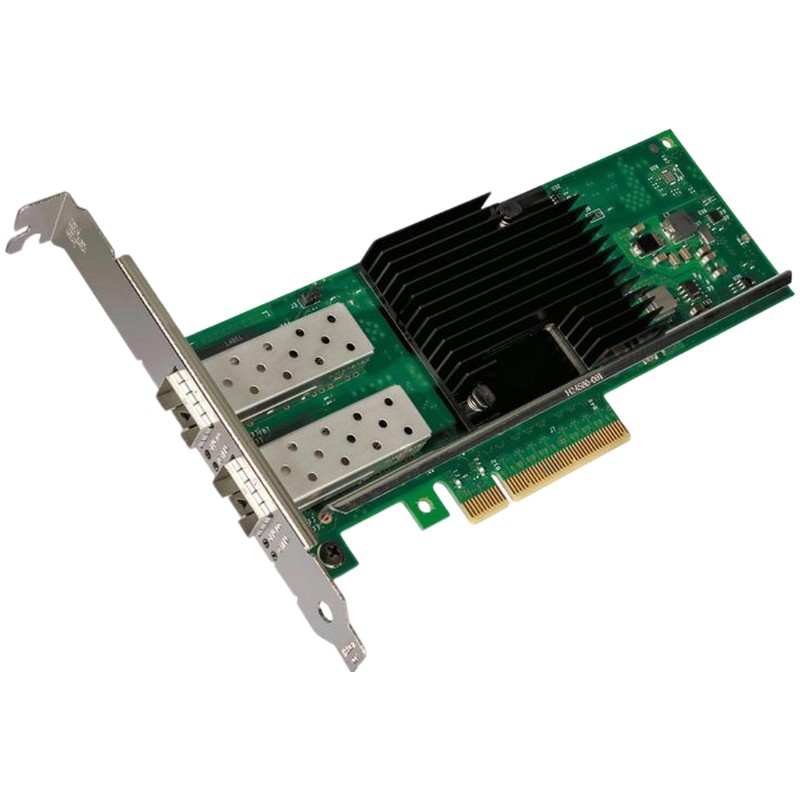
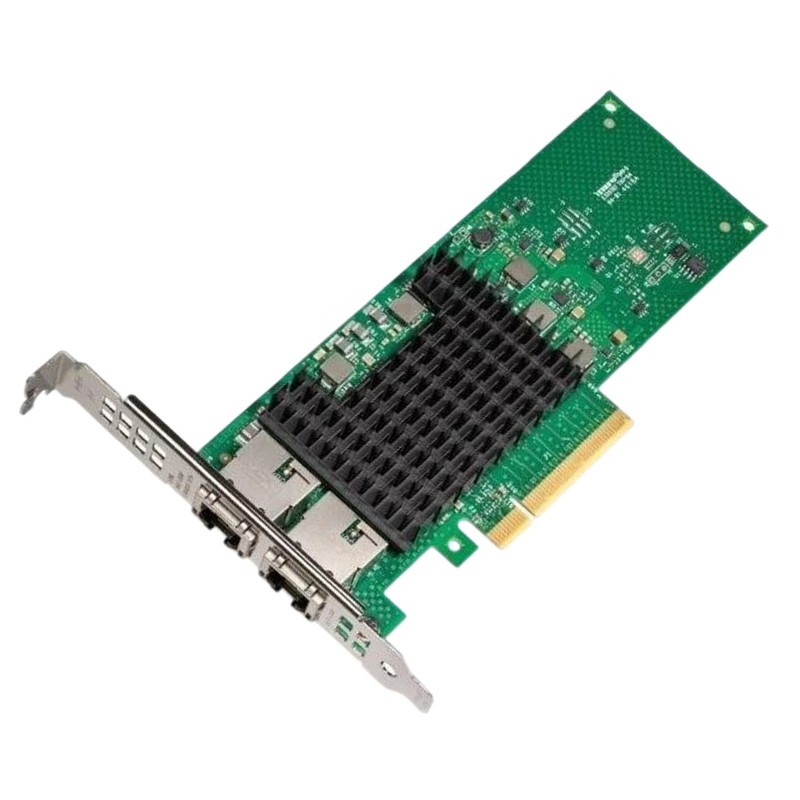
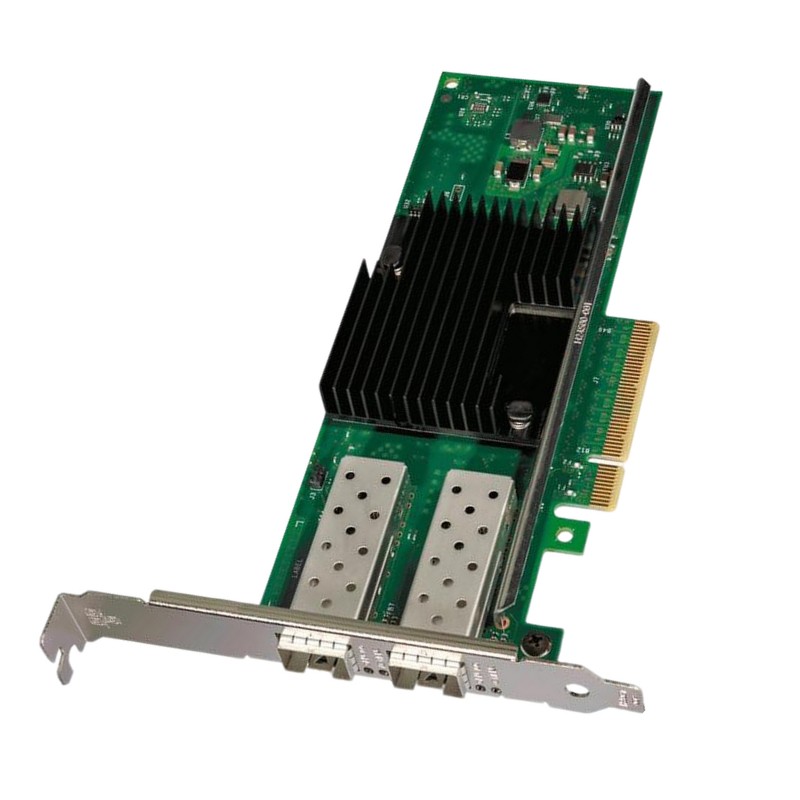
Intel E610XT2M5 PCI-E 4.0 X4 2 Ports 10GbE 5GbE 2.5GbE 1GbE Ethernet Network Adapter. Factory-Sealed New in Original Box (FSB) with 3 Years Warranty
The Intel E610XT2M5 network interface card facilitates seamless technological evolution. Its sophisticated auto-negotiation capability enables automatic configuration across multiple port velocities, offering unparalleled deployment versatility for dual-port setups. This adapter's refined architecture also achieves a substantial generation-to-generation decrease in energy usage, empowering a broad spectrum of applications within servers and networked appliances.
This adapter is equipped with INTEL Virtualization Technology for Connectivity (VT-c), enhancing performance and flexibility in virtualized server deployments.
Engineered For demanding network environments, the E610XT2M5 Intel PCI-E 4.0 X4 network adapter category represents a modern class of multi-rate Ethernet interface cards designed to deliver high throughput, low latency, and versatile connectivity options. This category centers on adapters that combine multiple physical link speeds — including 10GbE, 5GbE, 2.5GbE and 1GbE — with advanced offload capabilities and robust driver ecosystems to support data centers, virtualization hosts, edge compute nodes, and high-performance workstations. The E610XT2M5 family is positioned as a premium solution where administrators need both multi-speed flexibility and the reliability of Intel silicon.
Built On PCI Express 4.0 X4 architecture, devices in this category benefit from higher bus bandwidth compared with older PCIe generations, enabling them to sustain multiple aggregated flows at near line rate. The presence of two physical ports on the E610XT2M5 models provides redundancy and link aggregation options, while native support for 10GbE and intermediate speeds such as 5GbE and 2.5GbE makes these adapters uniquely suitable for networks that are in transition between gigabit and multigigabit topologies. Hardware-assisted features such as Large Send Offload (LSO), TCP Segmentation Offload (TSO), Receive Side Scaling (RSS), and virtualization-aware technologies like SR-IOV reduce CPU overhead and increase effective throughput.
Adopters Of PCI-E 4.0 X4 gain an immediate advantage: double the raw interface bandwidth compared to PCI-E 3.0 X4, which translates into headroom for simultaneous flows, lower chances of bus saturation, and improved resilience under burst traffic patterns. This capability is particularly relevant for multi-tenant hypervisors and database servers where east-west traffic spikes are common. The E610XT2M5 series leverages this interface to feed its dual ports effectively, making full use of the adapter’s hardware acceleration without becoming bus-bound in demanding scenarios.
Organizations Migrating from 1GbE infrastructure to multigigabit or 10GbE networks often face compatibility and budgetary constraints. The multi-rate design of E610XT2M5 adapters eases the transition by supporting 1GbE for legacy switches, 2.5GbE and 5GbE for intermediate performance upgrades, and 10GbE for full high-performance deployments. This single-hardware strategy reduces inventory complexity and future-proofs server NIC choices across heterogeneous environments. Administrators can deploy the same adapter in a range of physical hosts knowing it will negotiate the optimum speed given the switch and cabling limitations.
Under Typical Conditions, E610XT2M5 adapters exhibit high wire-rate throughput across supported speeds, with low CPU utilization when offload features are enabled. In real-world benchmarks that include mixed packet sizes and simultaneous bidirectional flows, the adapter sustains stable throughput with minimal packet loss. The card’s hardware logic and firmware are optimized for small packet performance, which benefits latency-sensitive workloads such as virtualization, voice/video conferencing, and financial trading applications.
Designed For scenarios where determinism matters, this category emphasizes predictable latency across traffic mixes. Hardware queues, priority flow control, and traffic shaping capabilities allow administrators to create consistent forwarding behaviors. The deterministic qualities of the E610XT2M5 family make it suitable for distributed storage clusters, NVMe-over-Fabric initiators and targets, and real-time analytics that cannot tolerate unpredictable delays.
Offload Capabilities Such as checksum offload, segmentation offload, and virtualization-aware packet handling reduce CPU cycles per packet, enabling a single host CPU to handle more virtual machines or containers. The distribution of work across multiple hardware queues and support for NUMA-aware driver implementations ensure scaling is effective as host core counts increase. This makes E610XT2M5 adapters appropriate for high-density compute nodes where CPU remains a scarce resource.
Enterprises, Service Providers, And SMBs will find E610XT2M5 class adapters appropriate across a wide spectrum of deployments. In data centers, these adapters are commonly installed in storage servers to accelerate backup and replication tasks, in hyperconverged nodes to carry east-west VM traffic, and in network appliances to provide multigigabit uplinks. At the edge, compact tower servers and appliances benefit from the card’s ability to connect to multigigabit access points or aggregation devices. In high-performance workstations and developer rigs, content creators, simulation engineers, and developers of real-time systems use the card to access high-bandwidth shared storage or to reduce build times with high-speed networked file systems.
With Native Support for SR-IOV and driver ecosystems that integrate with mainstream hypervisors, the E610XT2M5 category is well suited to virtualized infrastructures. Service Providers can map hardware virtual functions to tenant VMs, providing near-bare-metal network performance while preserving isolation. The adapter’s compatibility with common toolchains and cloud orchestration frameworks ensures it can be integrated into automated provisioning pipelines, enabling rapid instance bootstrapping and predictable network characteristics for containerized workloads.
Compatibility With Major Operating Systems is a critical consideration. Intel-based network adapters enjoy broad support across Windows Server versions, multiple Linux distributions (including long-term support kernels), and commercial UNIX derivatives. Intel’s driver packages and community drivers provide a mature feature set, frequent maintenance updates, and compatibility with kernel features such as ethtool, netplan, systemd networkd, and advanced traffic control tools. This strong driver support reduces integration friction and accelerates time to production.
Administrators Benefit From diagnostic utilities and agentless monitoring support that expose link statistics, error counters, and advanced telemetry. Tools that accompany Intel adapters permit firmware updates, advanced configuration of offload features, and tuning of interrupts and queue settings. These capabilities assist in troubleshooting, allow proactive maintenance, and provide the telemetry required for capacity planning and SLAs in production networks.
Firmware For E610XT2M5 category adapters is typically delivered via vendor packaging and can be updated in fielded systems to address performance improvements, bug fixes, and security updates. Best practices recommend testing firmware updates in staging environments prior to broad rollouts, validating driver compatibility after firmware changes, and scheduling updates in maintenance windows to avoid unintended service disruptions. The adapters’ firmware update mechanisms support scripted and automated update flows, which is essential for large-scale deployments.
Security Is Addressed Both At The Hardware And Software Layers. Features such as hardware-based VLAN tagging, secure boot firmware checks, and support for MACsec (where applicable with additional vendor add-ons) help secure traffic in transit and reduce attack surface. On the software side, mature drivers and signed firmware reduce the risk of malicious or unintended modifications. Redundancy Features such as dual-port failover, link aggregation, and support for teaming provide higher availability and graceful degradation in the event of a single link failure.
Enterprise Workloads Often Require Prioritization To Meet Business Objectives. The E610XT2M5 category supports multiple hardware queues and priority mappings that allow voice, storage, and control traffic to be handled preferentially. When combined with switch-level QoS policies, these adapters facilitate end-to-end traffic shaping that is essential for unified communications, synchronous replication, and interactive applications where packet delay variation must be minimized.
Long-Term Reliability Is Supported Through Intel’s mature hardware design, extensive validation matrices, and long lifecycle support commitments. Enterprises Can Plan lifecycle refreshes knowing the adapter family will receive driver and firmware maintenance for extended periods. Moreover, the simple, rugged design of the PCIe form factor and robust thermal tolerances make these adapters suitable for continuous server operation within data center environments.
Although Form Factor Remains A Standard Full-Height, Low-Profile PCIe Card, many vendors offer low-profile brackets or single-slot designs suitable for dense server interiors. Power Consumption Is Tuned To Be Efficient across modes; the card scales power usage depending on negotiated link speed and active offload functionality. Thermal Considerations Are Addressed via passive cooling profiles compatible with typical server airflow designs, ensuring consistent operation in hot-aisle data center racks.
Cable Selection Is Important For Achieving Desired Speeds. For 10GbE, direct attach copper (DAC) or SFP+ options are commonly used in data center topologies, while 2.5GbE and 5GbE over twisted-pair copper are often supported by modern multigigabit switches and access points. The E610XT2M5 family’s negotiation capabilities allow it to adapt to the physical medium in place, simplifying migrations and maximizing compatibility with a broad range of networking hardware.
For Users That Require Ultra-High Packet Rate Performance, DPDK (Data Plane Development Kit) compatibility is a strategic advantage. The E610XT2M5 category supports accelerated datapaths and poll-mode drivers that bypass the kernel network stack to achieve extremely high packet processing rates. This opens opportunities for network function developers and telco operators to implement custom packet processing while still leveraging proven Intel silicon.
When Evaluating Network Adapters, Buyers Should Consider Several Factors: the required link speeds, expected traffic patterns, host CPU availability, virtualization needs, and long-term roadmap for network upgrades. The E610XT2M5 family offers an attractive balance of performance and flexibility for environments that cannot afford to standardize immediately on 10GbE. Compared with single-speed 10GbE NICs, the multi-rate approach reduces stranded capacity and aligns investment with incremental network upgrades. Conversely, for ultra-dense 100GbE fabrics, buyers may opt for higher port-density adapters; however, for the broad middle ground of data centers and enterprise edge nodes, the E610XT2M5 category often represents the most pragmatic choice.
Data Center Operators Must Verify That Adapters Meet Regional Regulatory Standards For Electromagnetic Emissions, RoHS Compliance, And Any Applicable Environmental Certifications. Vendors Typically Provide Compliance Declarations and component-level information that assist with procurement approvals in regulated industries. For deployments in sensitive environments, compatibility with specific security standards and controlled firmware update pathways should be validated as part of the procurement process.


 Contact Us
 Information
 Catalog
 Solid State Drives (SSD)
 Network Switches
 Hard Disk Drives
 HBA & Controllers
 PC & Servers
 PC & Server Memory
 CPU & Processors
 Network Routers
 Power Supplies
 Tape Drives & Libraries
 Network Devices
 Computer & Network Cables