(7% discount is applied at checkout)
Cart is empty
Your go-to destination for cutting-edge server products
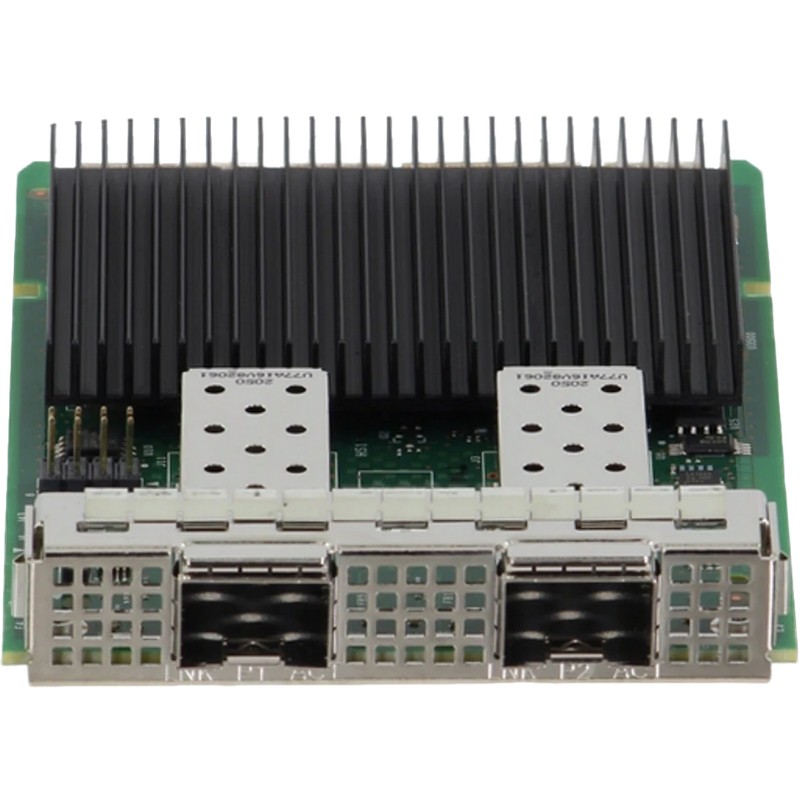


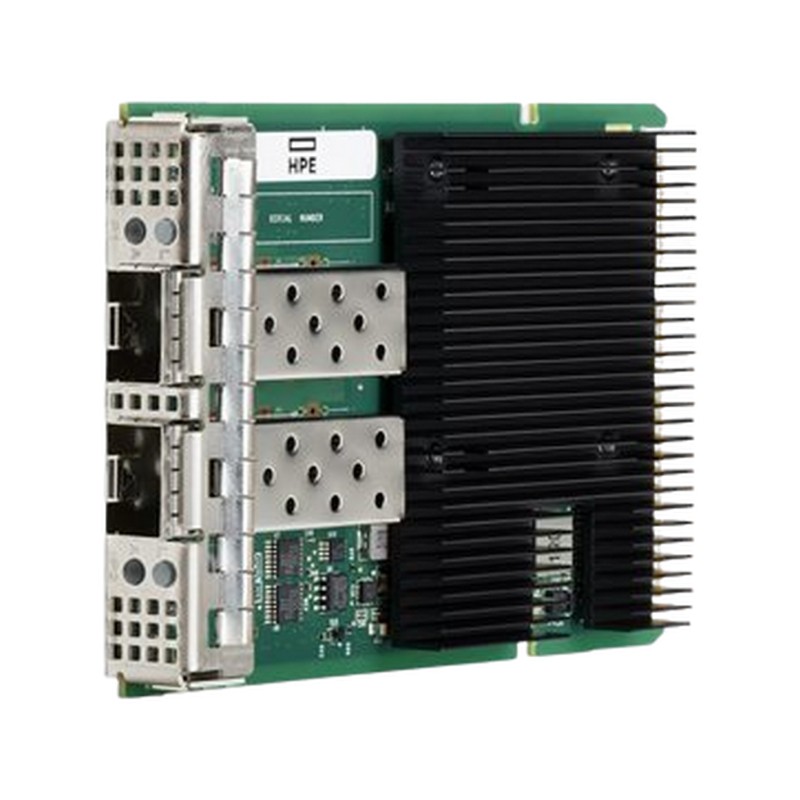
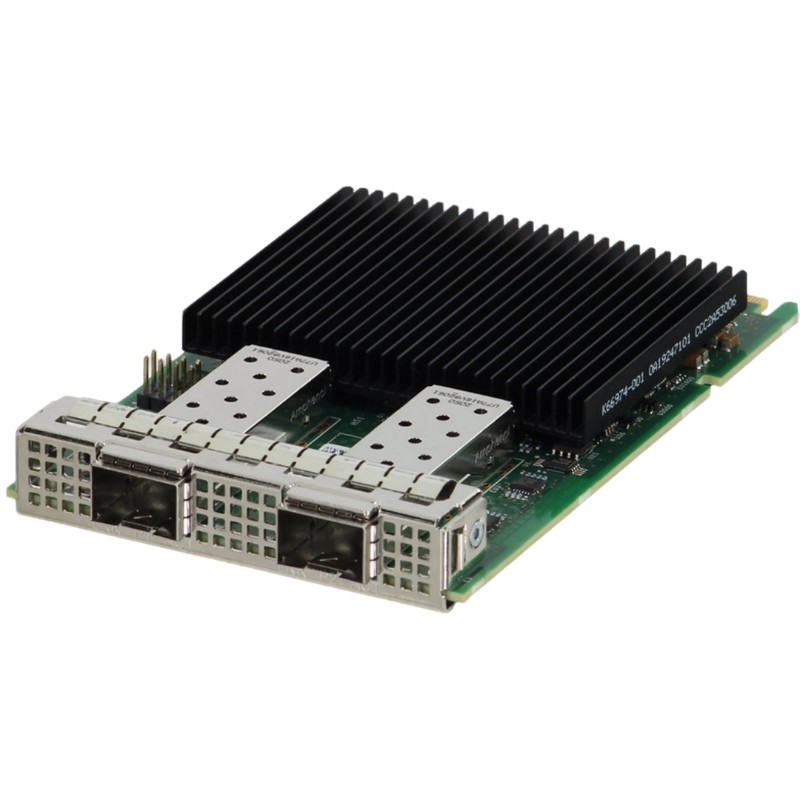
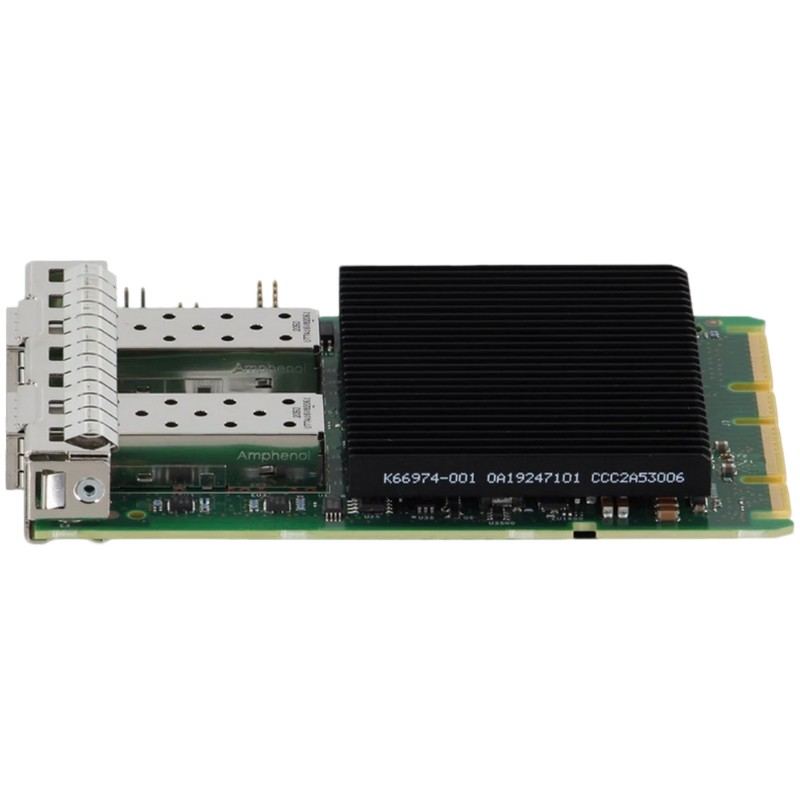
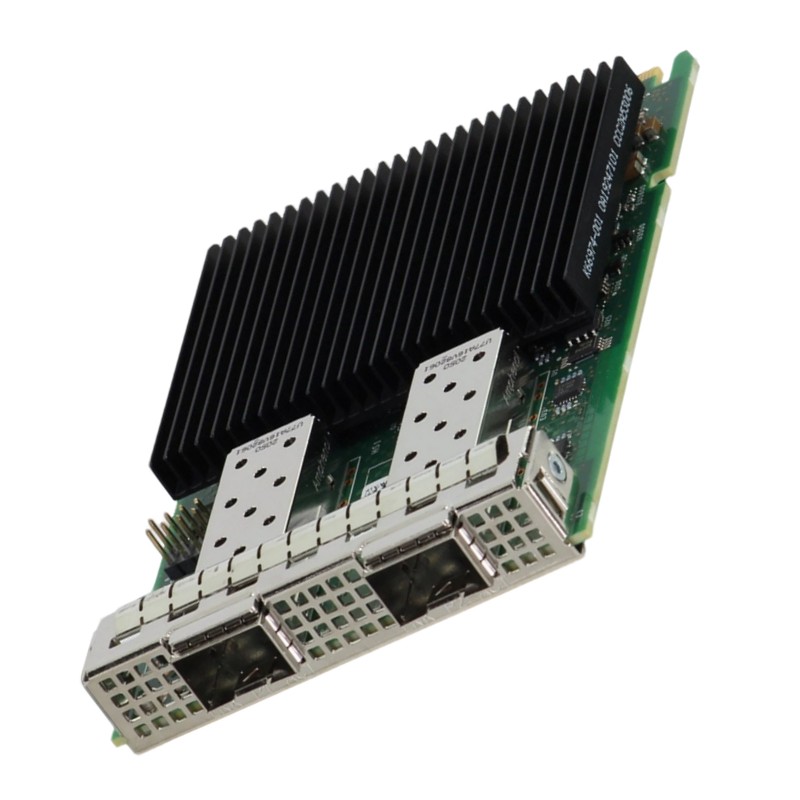
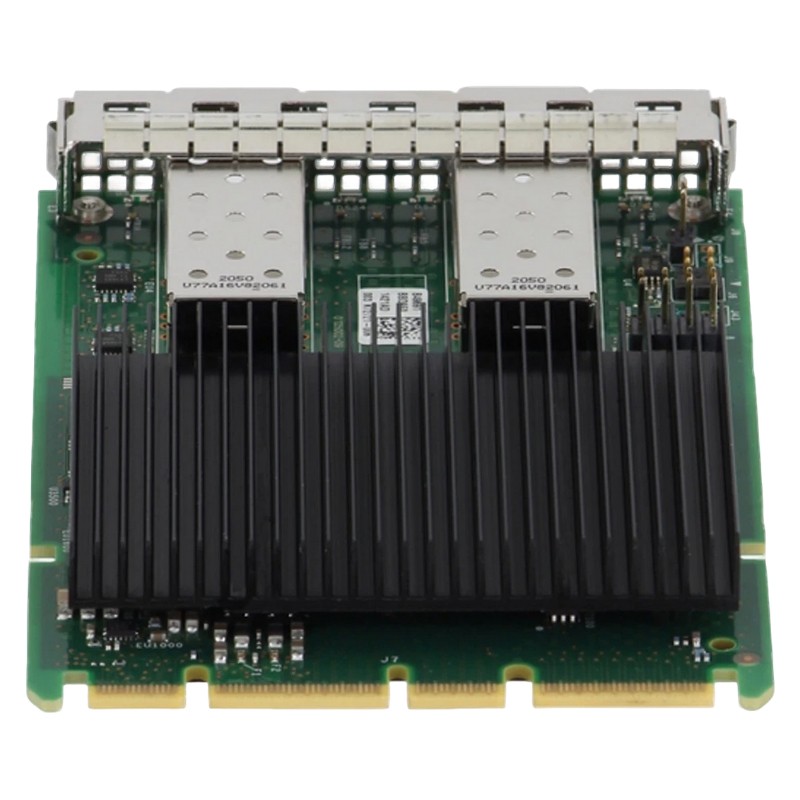
E810XXVDA2OCP3L Intel PCI-Express 4.0 X16 2 Ports SFP28 25Gbase-x Ethernet Network Adapter. New Sealed in Box (NIB) with 3 Years Warranty
This high-performance Ethernet adapter is engineered for modern data-intensive applications, providing exceptional connectivity and throughput for enterprise and data center environments.
This network interface card is optimally suited for:
Intel E810XXVDA2OCP3L network adapters represent a modern class of high-performance Ethernet adapters built for demanding data center, enterprise, and carrier environments. Designed around PCI-Express 4.0 X16 connectivity and featuring dual SFP28 ports running 25Gbase-x, these adapters combine low latency, high throughput, and advanced offloads to optimize server networking for cloud-native applications, virtualized workloads, storage fabric, and high-frequency trading. The category includes adapters that emphasize hardware acceleration, broad operating system support, and firmware ecosystems that simplify deployment and lifecycle management.
At the heart of this category is a focus on enabling high-performance networking without compromising on efficiency or manageability. The E810XXVDA2OCP3L PCI-Express 4.0 X16 interface provides a wide host bus to saturate multiple 25GbE lanes simultaneously while minimizing CPU overhead through smart design. SFP28 connectors support 25G optics and cabling ecosystems, ensuring compatibility with existing optical transceivers and direct attach cables where appropriate. The architecture centers on programmable engines and offload functions — such as RDMA, TOE-like accelerations, and advanced checksum and segmentation offloads — that move packet processing out of the CPU and into the adapter silicon, giving applications predictable latency and freeing CPU cycles for business logic.
In production, adapters in this category deliver consistent multi-gigabit throughput at both line rate and mixed-packet profiles. The E810XXVDA2OCP3L combination of dual 25G ports provides up to 50Gbps of aggregate bandwidth per host adapter when configured in active-active or link-aggregated topologies, and they scale efficiently with PCIe 4.0 host platforms. Packet processing engines handle thousands of concurrent connections with minimal tail latency, making these adapters suitable for real-time analytics, streaming telemetry, distributed databases, and microservices communication fabrics. Where low-latency deterministic behaviour is required, built-in hardware timestamping and precise interrupt moderation allow finely tuned performance without sacrificing throughput.
One defining characteristic for buyers evaluating this category is the depth of offload functionality. Modern Intel adapters provide advanced checksum offloads, Large Segment Offload (LSO), Receive Side Scaling (RSS), Flow Director filtering, and virtualization-specific features like VMDq and SR-IOV. These offloads ensure that heavy packet processing tasks — packet steering, segmentation, and checksum computation — are handled by the adapter hardware, reducing host CPU utilization and improving application density per server. Hardware-based flow steering and programmable match-action tables accelerate policy enforcement, traffic conditioning, and QoS features typically handled in software.
Because data centers increasingly rely on virtual machines and containers, adapters in this family provide features that are essential for high-density virtualization. Single-root I/O virtualization (SR-IOV) enables multiple virtual functions to be exposed to VMs with near-native performance, while features such as Virtual Machine Device Queues (VMDq) and receive-side scaling distribute traffic efficiently across multiple CPU cores. Integration with popular hypervisors ensures that administrators can map tenant traffic to specific functions and apply QoS and security policies at the adapter level. For containerized workloads, support for modern networking plugins and CNI integrations helps reduce latency for east-west traffic inside clusters.
Firmware management is a crucial operational aspect of adapters in this category. Regular firmware updates address performance optimizations, security hardening, and new features. Security-conscious deployments should consider signed firmware, secure boot integration, and vendor provisioning that limits unauthorized firmware updates. The E810XXVDA2OCP3L adapter firmware also plays a role in handling packet parsing and offload instruction streams, so validated firmware releases reduce the risk of stability regressions and help maintain consistent networking behavior under high loads.
Intel-based 25G adapters are designed for broad interoperability. The use of SFP28 optics means administrators can choose from a wide selection of transceivers and DACs compatible with their cabling standard, whether they deploy single-mode fiber, multimode fiber, or direct-attach copper solutions for short links. Host compatibility spans the latest server platforms with PCIe 4.0 slots as well as many backward-compatible PCIe 3.0 systems, though peak performance benefits are most pronounced on PCIe 4.0 hosts. Networking stacks and orchestration systems commonly used in modern data centers recognize these adapters and expose their advanced features to administrators through consistent APIs.
When deployed in leaf-spine or other multi-tier fabrics, the 25Gbase-x ports on these adapters integrate seamlessly with 25GbE and higher-speed switches. Auto-negotiation and fixed-speed modes allow administrators to tune link behavior depending on switch port capabilities. Features such as Data Center Bridging (DCB) can be enabled for converged networking scenarios where lossless behavior is desirable for storage traffic over Ethernet. The adapters’ support for standard protocols ensures that advanced network features like LACP, VLAN tagging, and PFC are available and consistent across vendors when proper configuration is applied.
25GbE represents a powerful connectivity option for storage fabrics, especially when using NVMe over Fabrics (NVMe-oF) or iSCSI over high-speed Ethernet. These adapters are well-suited for host connectivity in disaggregated storage architectures, enabling low-latency access to remote NVMe namespaces while preserving CPU cycles through offloaded protocol handling. Their support for RDMA over Converged Ethernet (RoCE) in compatible firmware and driver stacks further accelerates storage operations by enabling zero-copy data transfers directly into application memory spaces.
Enterprises and service providers choose dual-port 25G adapters for a range of scenarios. In hyperconverged infrastructure, they provide the east-west connectivity necessary to support storage replication and node-to-node communication. In cloud and hosting environments, they deliver tenant isolation and high throughput for multi-tenant networking. High-performance computing centers and analytics clusters benefit from their low-latency packet processing when aggregating data streams. Carrier and edge deployments use the adapters to bridge servers to 25G transport links, enabling dense, cost-effective connectivity for virtualized network functions.
Because these adapters free CPU cycles with their offloads, server consolidation ratios can increase without sacrificing application responsiveness. Workloads such as microservices, containerized databases, and distributed caches become more efficient when the network stack imposes predictable latency and minimal jitter. At the same time, the dual-port configuration offers redundancy and flexible traffic engineering: one port can be reserved for storage or management traffic while the other handles production workloads, or both can be bonded for higher aggregate throughput and link-level failover.
In edge locations where space and power are constrained, the energy-efficient design and dense bandwidth of 25G adapters matter. Carriers and telco cloud operators can host virtual network functions (VNFs) and cloud-native network functions (CNFs) on standard x86 servers equipped with these adapters, achieving telecom-grade performance and lifecycle management without bespoke hardware. The E810XXVDA2OCP3L SFP28 ecosystem also allows operators to use existing transceivers, keeping operational costs predictable while enabling upgrades as network demands increase.
Designers of server platforms and rack layouts must consider the thermal and power profiles of high-speed network adapters. While modern silicon is optimized for power efficiency, sustained high throughput causes higher power draw and thermal dissipation. Proper chassis airflow, thermal profiling, and power budgeting are critical to avoid throttling or reduced lifetime of components. The physical form factor for many adapters in this category is low-profile or full-height PCIe brackets with robust heatsinks; ensure that the selected server has the appropriate slot profile and clearance for any ancillary cooling or cable routing needs.
Network adapters are a part of the trusted computing base and should be managed accordingly. Secure firmware signing, authenticated update mechanisms, and hardened driver interfaces reduce the attack surface. When used in multi-tenant environments, features such as secure boot, secure I/O partitioning, and strict isolation between virtual functions help prevent lateral movement. Compliance with industry standards and vendor-published security advisories should guide update schedules and patch management policies to maintain a defensible posture.
While encryption is often handled at higher layers, adapters with support for offloading cryptographic operations or integration with IPsec accelerators can reduce CPU impact for encrypted tunnels. For workloads requiring in-flight encryption or secure overlays, pairing adapter capabilities with host-based cryptography and secure key management delivers both performance and compliance. Consideration should be given to regulatory frameworks that may mandate specific logging or encryption standards when handling protected data over network links.
When designing for growth, remember that 25G connectivity is commonly used as a stepping stone to higher speeds. Choosing adapters that support flexible firmware and broad transceiver compatibility enables gradual upgrades to 50G or 100G fabrics at the switch layer while maintaining host-level investment protection. Capacity planning must account for both bandwidth headroom and the ability of the host CPU and PCIe bus to handle increased packet rates as links are upgraded.
Organizations moving to hybrid cloud models should evaluate adapter support for features that ease integration with cloud-native networking paradigms, such as programmable telemetry, support for overlays, and APIs that can be consumed by cloud management platforms. For workloads that may be migrated between private and public clouds, adapters that maintain configuration compatibility through automation and APIs minimize friction during migrations and hybrid operations.
For latency-sensitive environments, tuning interrupt moderation, enabling hardware timestamping, and configuring CPU affinity for network queues are practical techniques. Ensuring that NUMA alignment is correct — placing the adapter on the same NUMA node as the consuming application or aligning queues to CPU cores local to the adapter — reduces cross-node memory traffic and improves deterministic latency. Packet pacing and traffic shaping at the host and switch level further smooth bursts that could otherwise introduce jitter.
Migration from 10G to 25G or from 40G to 25G involves considerations about switch uplinks, cabling, and transceiver inventory. Many organizations adopt a phased approach: upgrade server hosts to 25G where needed, while running 40G or 100G aggregation at the spine layer. In some scenarios, using breakout cables and modular switch platforms helps bridge speeds during transition. Assessing application sensitivity to bandwidth and latency helps prioritize which hosts receive early upgrades.


 Contact Us
 Information
 Catalog
 Solid State Drives (SSD)
 Network Switches
 Hard Disk Drives
 HBA & Controllers
 PC & Servers
 PC & Server Memory
 CPU & Processors
 Network Routers
 Power Supplies
 Tape Drives & Libraries
 Network Devices
 Computer & Network Cables