(7% discount is applied at checkout)
Cart is empty
Your go-to destination for cutting-edge server products
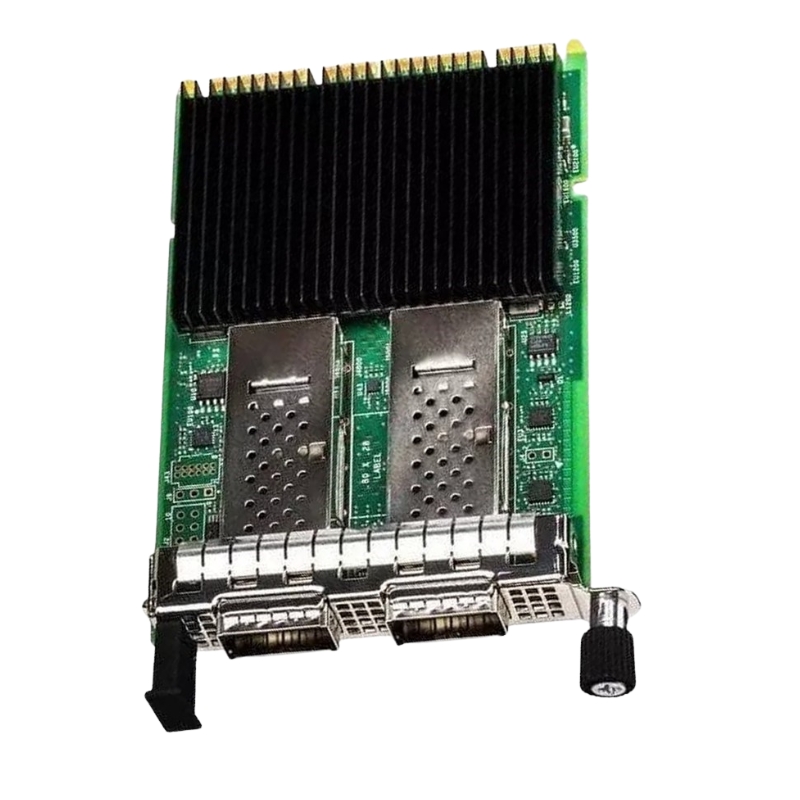


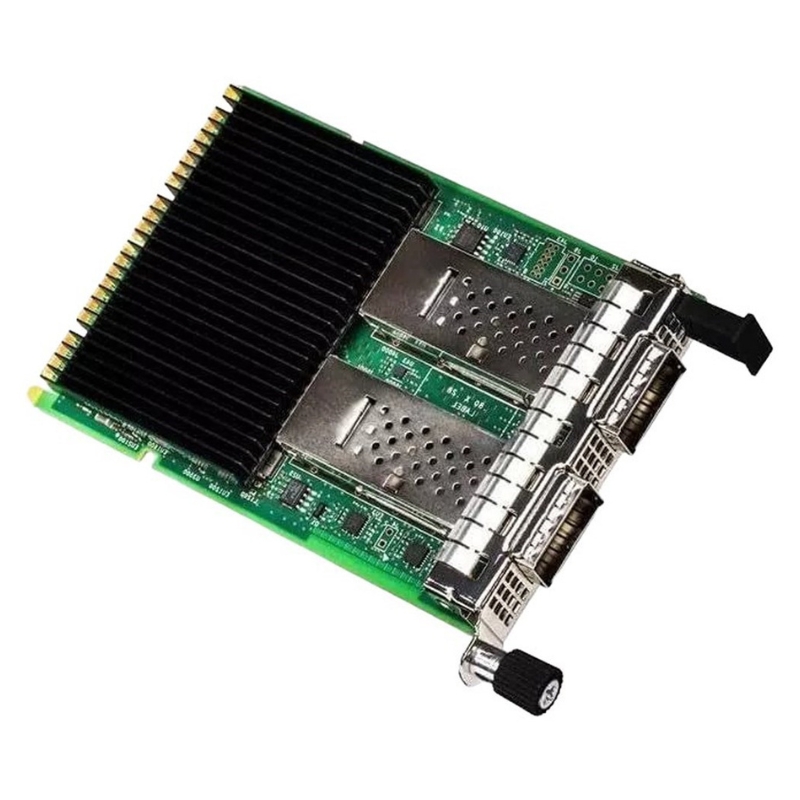
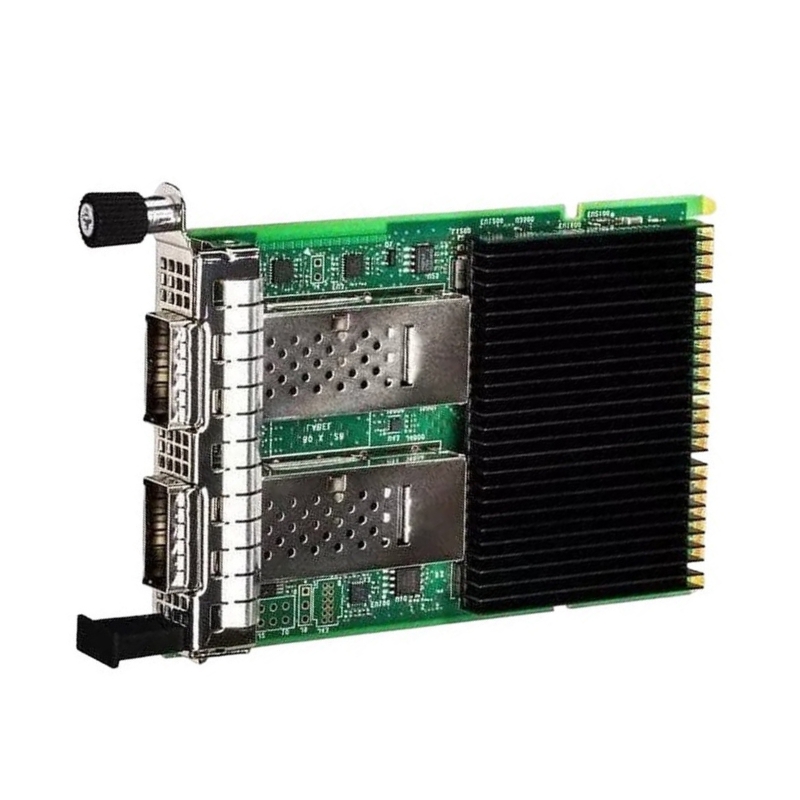
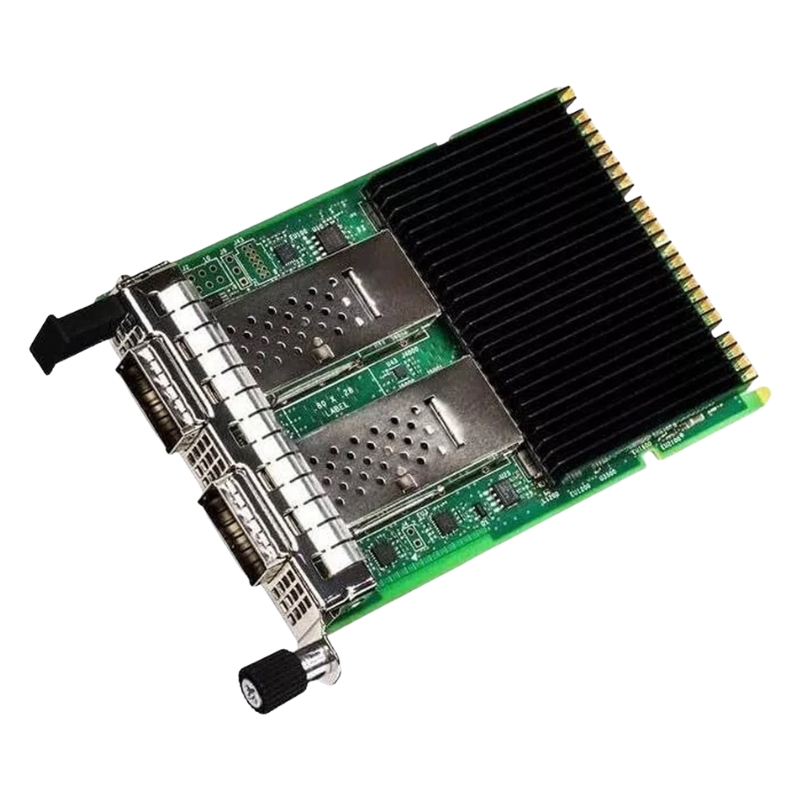
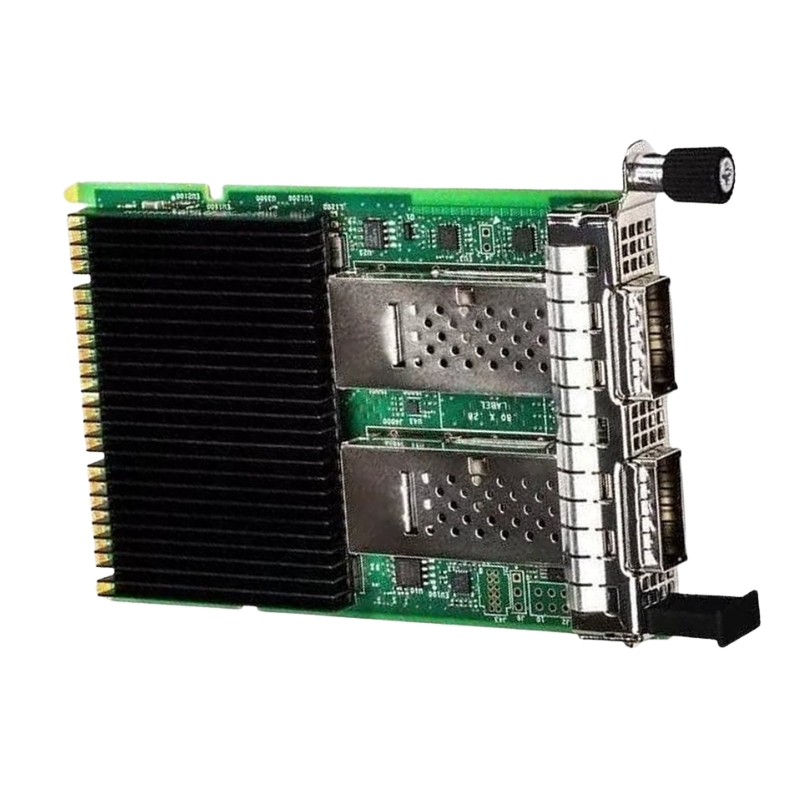
Intel E810XXVDA2OCPV3 25 Gigabit Dual Port Ethernet PCI Express Adapter. New Sealed in Box (NIB) with 3 Years Warranty
The Intel E810XXVDA2OCPV3 is a high-performance dual-port network interface card designed for modern data centers, cloud infrastructure, and enterprise networking environments. This adapter delivers ultra-low latency, high throughput, and advanced hardware offload capabilities to support demanding workloads such as virtualization, storage networking, and high-speed communication systems.
The Intel E810XXVDA2OCPV3 25 Gigabit Dual Port Ethernet PCI Express Adapter represents a high-performance networking category designed for modern enterprise data centers, cloud infrastructures, and virtualization-heavy computing environments. Built on advanced PCIe 4.0 architecture and compliant with OCP NIC 3.0 form factor standards, this adapter class is engineered to deliver ultra-low latency, high throughput, and scalable connectivity for next-generation workloads where bandwidth demand continues to grow rapidly. As organizations transition toward AI-driven computing, distributed storage systems, and hyper-converged infrastructure, this category of network adapter becomes a critical foundation for ensuring reliable and efficient data movement across compute nodes and storage clusters.
The PCI Express 4.0 interface embedded in this category significantly enhances data transfer capacity compared to previous generations. With doubled bandwidth per lane, PCIe 4.0 ensures that the dual-port 25 Gigabit Ethernet capability is fully utilized without bottlenecks. This architectural enhancement enables sustained high throughput for applications involving large-scale data ingestion, real-time analytics, and distributed virtual machine communication. The x8 lane configuration ensures optimal balance between performance efficiency and system compatibility across enterprise-grade server platforms.
The adapter’s x8 PCIe configuration is specifically engineered to maximize lane utilization efficiency. This ensures that both network ports can operate simultaneously at full 25GbE capacity without compromising performance. In environments where workload distribution is dynamic, such as cloud orchestration platforms and containerized deployments, the optimized lane architecture reduces congestion and enhances packet flow consistency across virtual network interfaces.
The Open Compute Project (OCP) NIC 3.0 standard plays a vital role in defining the physical and electrical design of this adapter category. The Intel E810XXVDA2OCPV3 conforms to this open specification, making it suitable for hyperscale data centers that prioritize modularity, serviceability, and energy efficiency. OCP design principles ensure easier maintenance, improved airflow within server chassis, and simplified hardware replacement processes, which are essential for large-scale infrastructure deployments.
Thermal efficiency is a major design consideration in OCP-based network adapters. The structural layout allows optimized airflow pathways, reducing heat accumulation during sustained high-bandwidth operations. This ensures stable performance in dense rack environments where multiple high-speed networking devices operate simultaneously under heavy computational load.
The dual-port configuration of the Intel E810XXVDA2OCPV3 adapter allows simultaneous handling of multiple high-speed data streams. Each port operates at 25 Gigabits per second, enabling aggregated bandwidth that supports demanding applications such as distributed databases, large-scale virtualization clusters, and real-time data replication systems. This level of throughput is essential for organizations transitioning from 10GbE infrastructure to higher-speed networking environments.
With two independent high-speed ports, traffic can be efficiently distributed across multiple network paths. This improves redundancy, minimizes congestion, and ensures continuous data flow even during peak usage periods. Advanced load balancing mechanisms allow administrators to optimize network utilization based on application priority and bandwidth demand.
Latency reduction is a core performance characteristic of this adapter category. The Intel E810 series incorporates advanced packet processing engines that reduce delays in data transmission. This is particularly beneficial for high-frequency trading systems, real-time analytics platforms, and latency-sensitive cloud applications where microsecond-level performance differences can impact overall system efficiency.
Hardware offloading capabilities reduce CPU overhead by transferring networking tasks such as checksum calculations, segmentation, and packet filtering directly to the adapter. This allows server processors to focus on application-level workloads, improving overall system efficiency and throughput consistency across enterprise environments.
Single Root Input/Output Virtualization (SR-IOV) support is a defining feature in this adapter category. It enables the creation of multiple virtual functions from a single physical network interface, allowing virtual machines and containers to access dedicated network resources. This reduces hypervisor overhead and enhances network performance consistency across virtualized environments.
In multi-tenant cloud infrastructures, isolation and performance consistency are critical requirements. The SR-IOV capability ensures that each tenant or virtual machine receives dedicated bandwidth allocation, reducing interference between workloads and improving service-level agreement compliance in shared environments.
The Intel E810XXVDA2OCPV3 adapter category is designed to integrate seamlessly with software-defined networking (SDN) frameworks. This allows centralized control over network configurations, dynamic traffic routing, and automated policy enforcement across distributed systems. SDN compatibility enhances scalability and reduces manual configuration overhead in large-scale deployments.
Modern cloud orchestration systems require flexible and programmable network interfaces. This adapter category supports API-driven configuration models that allow integration with Kubernetes clusters, OpenStack environments, and other cloud-native infrastructures. This ensures consistent networking performance across automated deployment pipelines.
The compact and efficient design of the OCP NIC 3.0 form factor enables deployment in high-density server racks. This is particularly beneficial for hyperscale data centers where space optimization and energy efficiency are critical operational considerations. The adapter supports large-scale deployment without compromising thermal stability or network performance.
Energy efficiency is a major focus in modern data center design. The Intel E810XXVDA2OCPV3 category is engineered to minimize power consumption while maintaining high throughput. This balance between performance and energy usage contributes to reduced operational costs and improved sustainability metrics for enterprise IT environments.
Storage systems such as distributed file systems and software-defined storage platforms benefit significantly from high-speed 25GbE connectivity. This adapter category ensures rapid data replication, efficient backup operations, and low-latency access to storage nodes across clustered environments.
The adapter supports advanced networking protocols such as NVMe over Fabrics, enabling direct access to remote storage devices with minimal latency overhead. This enhances performance in environments requiring high-speed storage access, such as database clusters and virtualization storage backends.
The integrated packet processing engine in this adapter category enhances traffic classification, routing efficiency, and workload distribution. It enables intelligent handling of diverse network traffic types, ensuring that high-priority packets receive optimal routing paths across the network infrastructure.
Deep packet inspection capabilities allow the adapter to analyze packet headers and payload structures to optimize routing decisions. This improves security enforcement and ensures efficient utilization of available bandwidth in complex enterprise networks.
Accurate timing synchronization is essential in distributed computing environments. This adapter category supports advanced timing protocols that ensure consistency across networked systems, which is particularly important for financial services, telecommunications infrastructure, and real-time analytics platforms.
Deterministic networking ensures predictable latency and throughput behavior, which is critical for mission-critical applications. The Intel E810 architecture provides stable and repeatable performance characteristics under varying workload conditions.
Security is integrated at the hardware level in this adapter category, providing protection against unauthorized data access and network-based attacks. These features enhance data integrity and ensure secure communication between distributed systems in enterprise environments.
Secure boot mechanisms ensure that only verified firmware is executed on the adapter, reducing the risk of malicious firmware injection. This enhances system reliability and strengthens overall infrastructure security posture.
High availability is a key requirement in enterprise networking environments. The dual-port configuration provides redundancy in case of link failure, ensuring continuous network connectivity and minimizing downtime in mission-critical systems.
Automatic failover capabilities ensure seamless transition between network paths in case of hardware or link degradation. This enhances resilience and maintains uninterrupted service delivery in distributed computing environments.
Container-based applications benefit significantly from the high throughput and low latency characteristics of this adapter category. Efficient packet processing ensures smooth communication between microservices in distributed container clusters.
Microservices architectures rely heavily on fast and reliable network communication. The Intel E810XXVDA2OCPV3 adapter ensures consistent packet delivery performance, reducing latency between service endpoints and improving overall application responsiveness.
In high-performance computing environments, network adapters play a critical role in ensuring efficient inter-node communication. This category supports workloads that require rapid data exchange, including scientific simulations, machine learning training, and large-scale computational modeling.
Distributed compute clusters rely on synchronized data transfer between nodes. The dual-port 25GbE architecture ensures consistent and high-speed connectivity across all compute nodes, enabling scalable parallel processing performance.


 Contact Us
 Information
 Catalog
 Solid State Drives (SSD)
 Network Switches
 Hard Disk Drives
 HBA & Controllers
 PC & Servers
 PC & Server Memory
 CPU & Processors
 Network Routers
 Power Supplies
 Tape Drives & Libraries
 Network Devices
 Computer & Network Cables