(7% discount is applied at checkout)
Cart is empty
Your go-to destination for cutting-edge server products
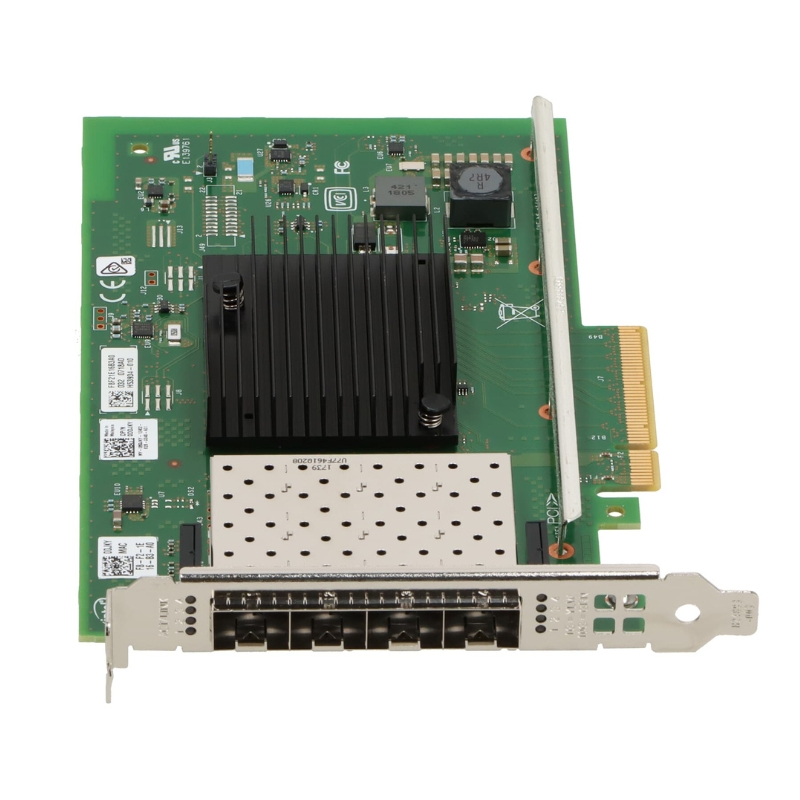


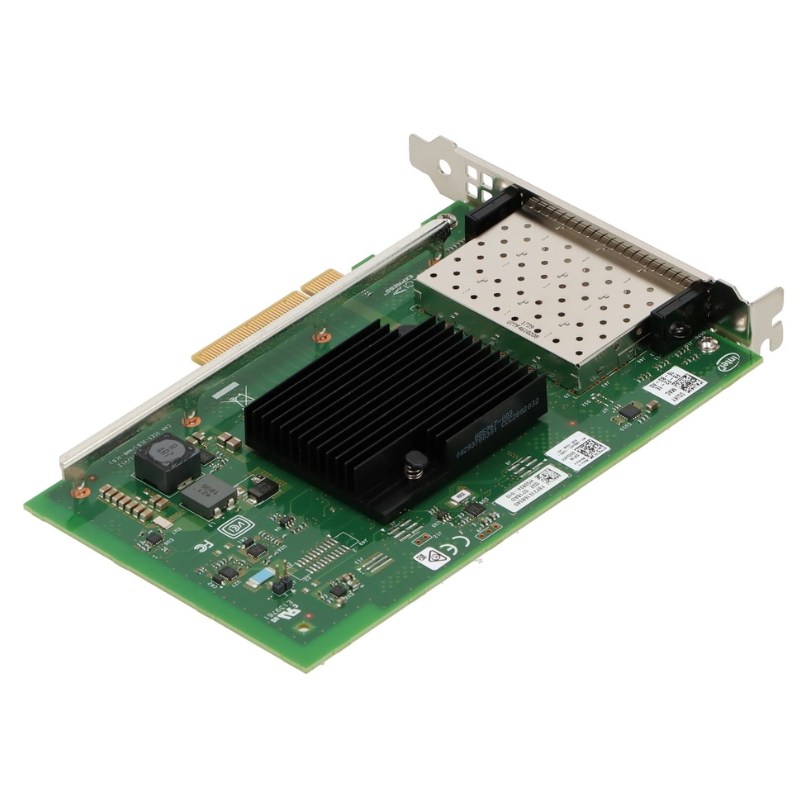
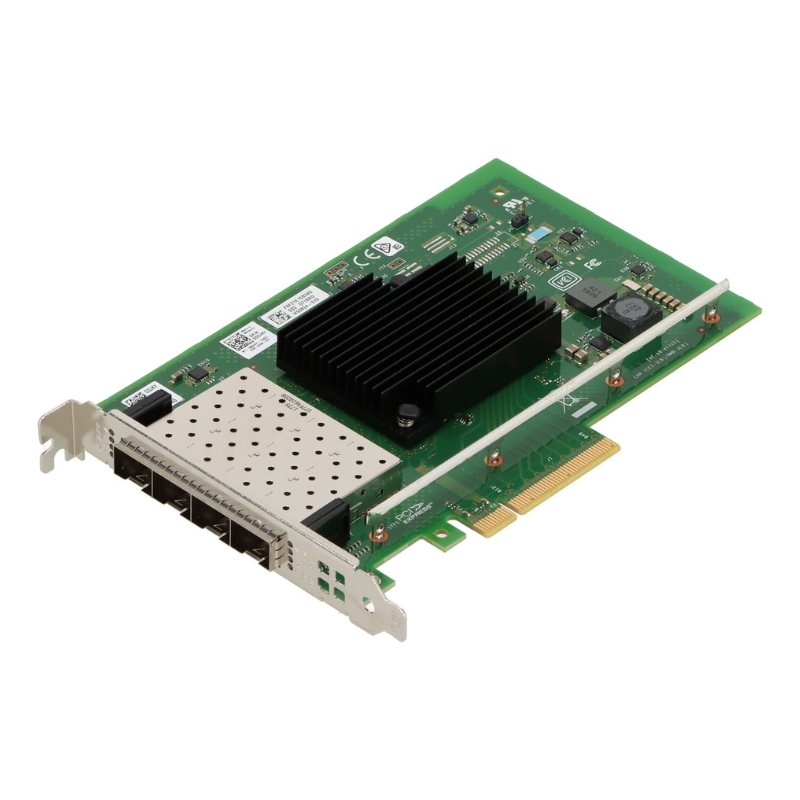
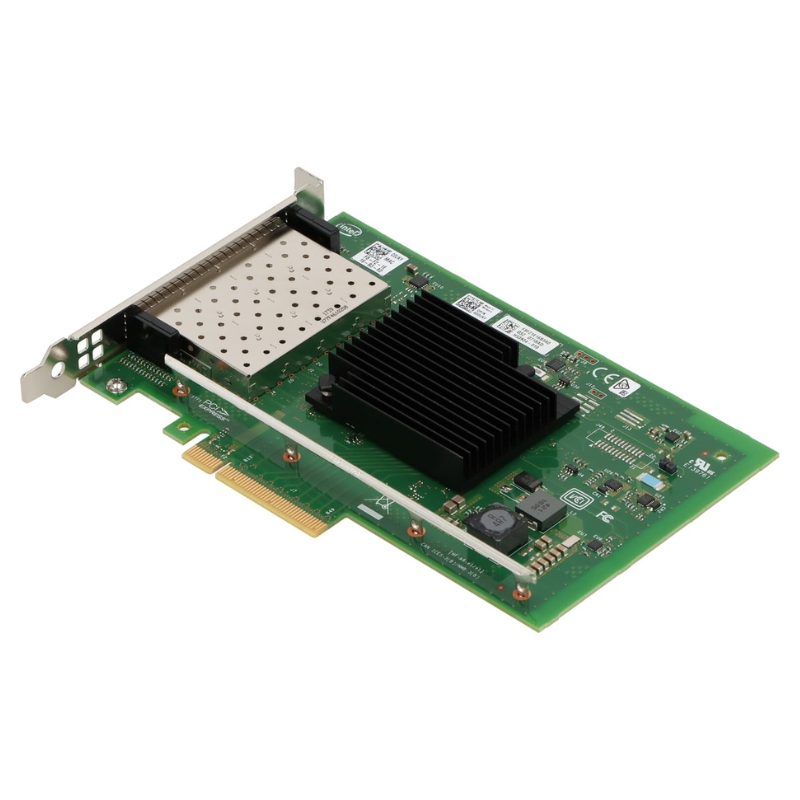
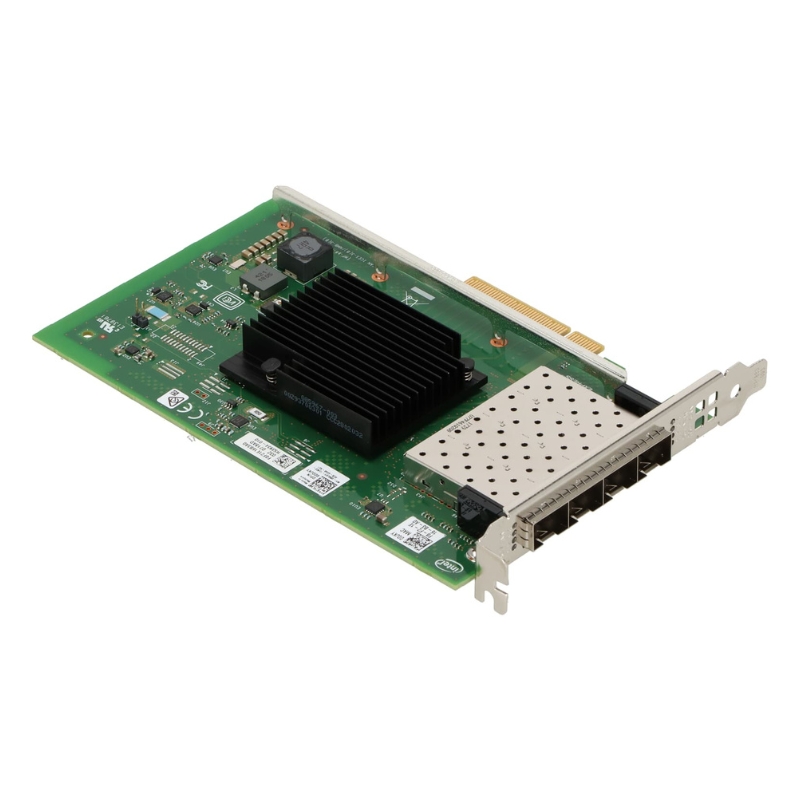
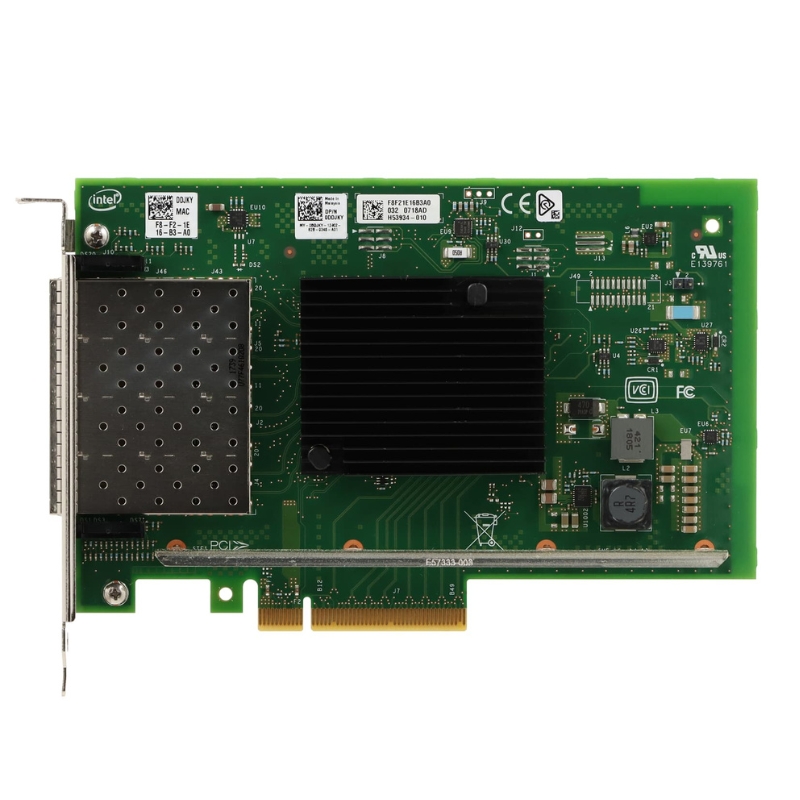
Intel E810XXVDA4G2P5 25 Gigabit SFP28 Ethernet PCI Express Adapter. Factory-Sealed New in Original Box (FSB) with 3-Years Warranty
The Intel E810XXVDA4G2P5 is a high-performance enterprise-grade Ethernet network adapter designed for modern data centers, cloud computing environments, and virtualization-heavy workloads. This advanced PCI Express 4.0 x16 plug-in card delivers ultra-fast connectivity, low latency, and scalable bandwidth for demanding server applications.
The Intel E810XXVDA4G2P5 Quad-Port PCIe 4.0 x16 FH 25 Gigabit SFP28 x 2 Ethernet Network Adapter belongs to a class of advanced datacenter interconnect solutions designed for high-throughput, low-latency, and highly scalable enterprise environments. This network interface card (NIC) leverages modern PCI Express Gen4 architecture to deliver exceptional bandwidth density and flexible network virtualization capabilities for mission-critical workloads.
This category of high-speed Ethernet adapters is optimized for cloud service providers, hyperscale computing clusters, enterprise virtualization infrastructures, high-frequency trading systems, AI/ML compute nodes, and storage-intensive environments where deterministic packet delivery and minimal jitter are essential for operational efficiency.
The PCIe 4.0 x16 interface provides a significant leap in throughput compared to previous generations, enabling aggregated bandwidth that supports multiple high-speed SFP28 links simultaneously without bottlenecking host system performance. This makes the adapter suitable for dense server environments requiring deterministic network performance under sustained load conditions.
The PCI Express 4.0 x16 interface represents a foundational component of the adapter’s performance capabilities. With each lane delivering up to 16 GT/s signaling rates, the aggregated x16 configuration enables extremely high theoretical bandwidth, allowing the network adapter to fully utilize multiple 25GbE links concurrently without congestion at the host interface level.
This architectural design reduces latency between CPU memory subsystems and network processing engines, which is particularly important for real-time analytics, distributed computing clusters, and high-frequency transaction processing systems where microseconds of delay can significantly impact performance outcomes.
Modern server architectures benefit significantly from NICs that support advanced offloading features. Within this category, the adapter reduces CPU overhead by handling tasks such as checksum calculations, segmentation offload, and interrupt moderation directly on hardware. This improves overall system efficiency by freeing CPU cycles for application-level workloads rather than packet processing tasks.
By integrating tightly with multi-core processors and NUMA-aware memory architectures, the adapter ensures efficient packet steering and reduces cross-node memory traffic, contributing to predictable performance scaling in distributed systems.
The SFP28 interface standard supports 25 Gigabit Ethernet per lane, enabling high-density network deployments using optical transceivers or direct attach copper cables. This flexibility allows data center operators to optimize infrastructure based on distance requirements, cost constraints, and energy efficiency goals.
The adapter category supports scalable connectivity configurations that allow seamless integration into leaf-spine network topologies commonly used in modern hyperscale environments. This ensures consistent bandwidth delivery between compute nodes, storage clusters, and aggregation switches.
One of the defining characteristics of 25GbE SFP28-based adapters is their ability to minimize serialization delay while maintaining high throughput efficiency. The Intel-based controller architecture ensures that packet transmission pipelines remain optimized for low jitter operation, which is critical in latency-sensitive workloads such as financial modeling, real-time analytics, and AI inference serving.
The quad-port design enables parallel traffic streams across multiple network interfaces, facilitating efficient load distribution in high-demand environments. Each port operates independently, allowing system administrators to configure link aggregation, failover strategies, or segmented network zones depending on application requirements.
In clustered computing environments, multi-port NICs reduce the need for additional hardware expansion, thereby optimizing PCIe slot utilization and improving airflow efficiency within server chassis designs.
Multi-port configurations enable logical segmentation of network traffic across different operational domains. For example, storage traffic, management traffic, and application traffic can be isolated across separate physical interfaces, reducing contention and improving security posture within enterprise environments.
The adapter class supports Single Root I/O Virtualization (SR-IOV), allowing a single physical NIC to be divided into multiple virtual functions. This capability is essential in virtualized environments where multiple virtual machines require direct and independent access to network resources without hypervisor bottlenecks.
By bypassing software-based network abstraction layers, SR-IOV reduces latency and improves throughput consistency for virtual workloads, particularly in cloud-native architectures and containerized deployments.
Integration with hypervisors such as KVM, VMware ESXi, and Hyper-V enables advanced traffic steering and resource allocation mechanisms. This ensures that virtual machine workloads maintain consistent network performance even under high consolidation ratios.
In hyperscale environments, network adapters in this category serve as critical interconnects between compute nodes. Their ability to sustain high throughput under continuous load conditions makes them suitable for distributed computing frameworks such as large-scale data processing engines and AI training clusters.
Cloud infrastructure providers rely heavily on predictable network performance to deliver consistent service-level agreements. The PCIe 4.0 x16 Ethernet adapter category ensures that multi-tenant environments maintain isolation while still providing scalable bandwidth allocation per tenant workload.
Enterprise data centers benefit from the flexibility of this adapter class when transitioning from traditional three-tier architectures to modern software-defined networking models. The ability to dynamically allocate network resources enables more efficient infrastructure utilization.
Modern storage architectures increasingly rely on network-based communication protocols such as NVMe over Fabrics (NVMe-oF). The 25GbE throughput capacity of this adapter class provides sufficient bandwidth to support high-performance storage clusters with minimal latency overhead.
This enables remote storage devices to perform comparably to locally attached NVMe drives, which is essential in distributed storage systems and hyperconverged infrastructure deployments.
By minimizing packet processing overhead and optimizing DMA transfers, the adapter reduces latency in storage read/write operations. This is particularly important in environments that require high IOPS consistency, such as virtualization storage backends and real-time database systems.
The multi-port architecture enables link aggregation strategies that enhance both throughput and redundancy. In the event of a link failure, traffic can be rerouted automatically through operational ports, ensuring continuous service availability.
This redundancy model is essential in mission-critical environments where downtime can result in significant operational disruption or financial loss.
The hardware design incorporates advanced error correction mechanisms and resilient packet handling systems that ensure data integrity across high-load network conditions. These features contribute to long-term stability in 24/7 operational environments.
The adapter is supported across major enterprise operating systems including Linux distributions, Windows Server editions, and specialized network operating environments. This ensures compatibility across diverse infrastructure deployments.
Open-source driver support within Linux ecosystems allows for deep integration with kernel-level networking stacks, enabling performance tuning and advanced telemetry collection.
High-performance network adapters must balance throughput capability with power efficiency. This category incorporates dynamic power scaling features that adjust energy consumption based on traffic load, reducing operational costs in large-scale deployments.
The full-height bracket design ensures efficient heat dissipation within rack-mounted server systems. Proper airflow alignment within datacenter chassis designs is critical for maintaining sustained performance under continuous high-throughput workloads.
The adapter class includes hardware acceleration engines that handle packet classification, filtering, and routing decisions at line rate. This reduces CPU intervention and ensures deterministic packet handling under heavy traffic loads.
Advanced QoS mechanisms allow prioritization of critical traffic flows. This is particularly valuable in environments where latency-sensitive applications must coexist with bulk data transfer operations.
Security features embedded in the network controller enable early-stage packet filtering, reducing exposure to malicious traffic before it reaches the host system. This contributes to a layered defense strategy in enterprise environments.
Virtualized environments benefit from isolated traffic paths that prevent cross-VM data leakage. SR-IOV-based segmentation ensures that virtual functions operate independently, improving overall security posture.


 Contact Us
 Information
 Catalog
 Solid State Drives (SSD)
 Network Switches
 Hard Disk Drives
 HBA & Controllers
 PC & Servers
 PC & Server Memory
 CPU & Processors
 Network Routers
 Power Supplies
 Tape Drives & Libraries
 Network Devices
 Computer & Network Cables