(7% discount is applied at checkout)
Cart is empty
Your go-to destination for cutting-edge server products
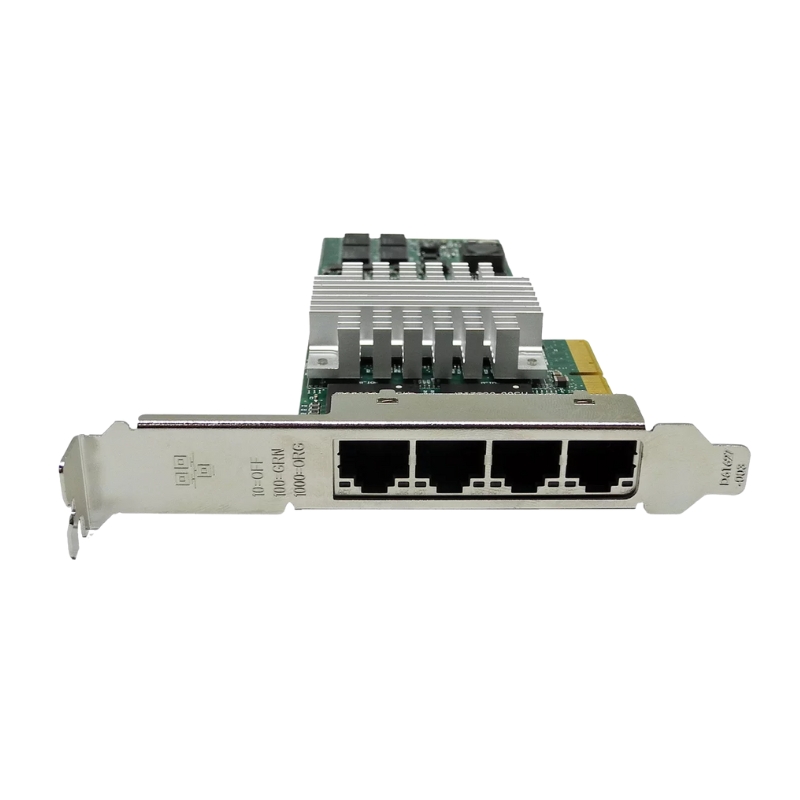


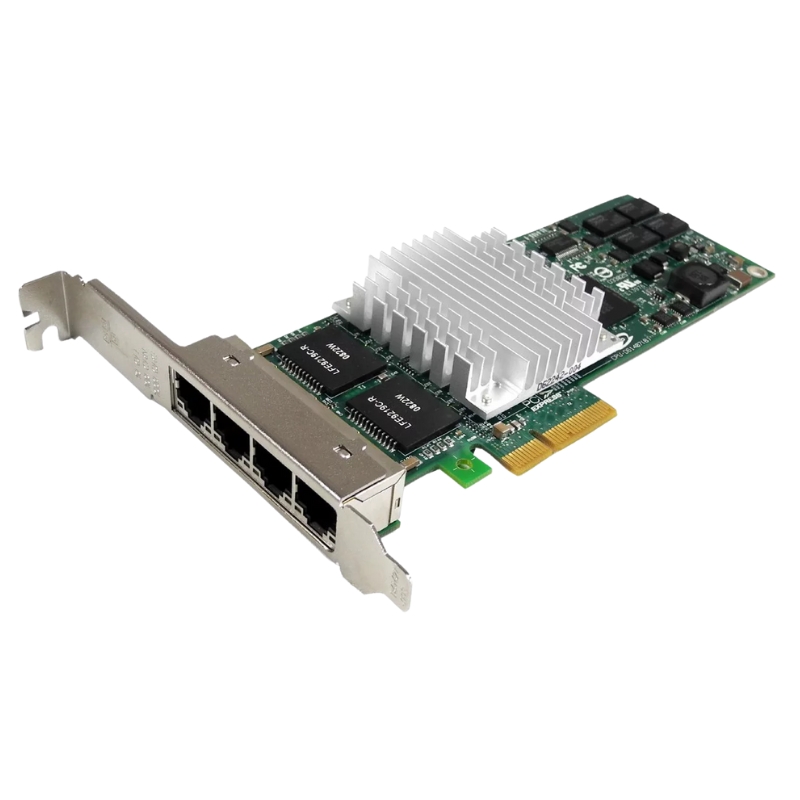
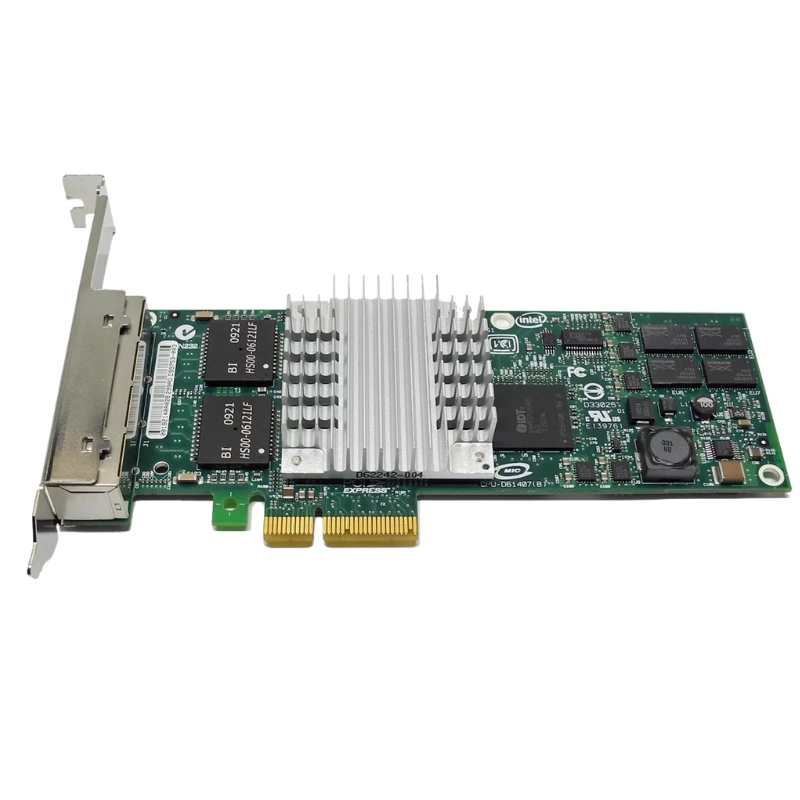
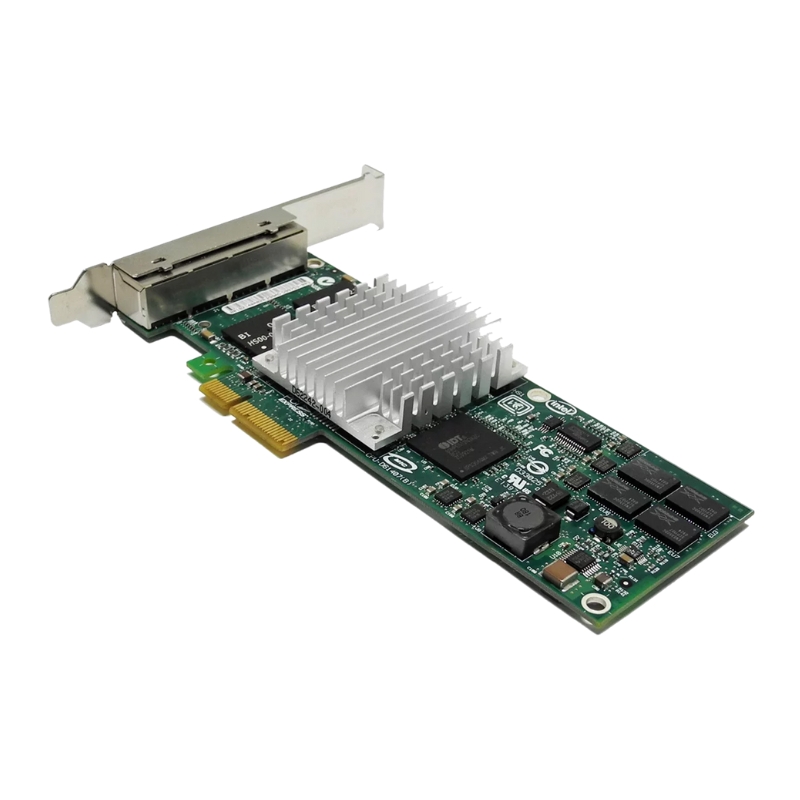
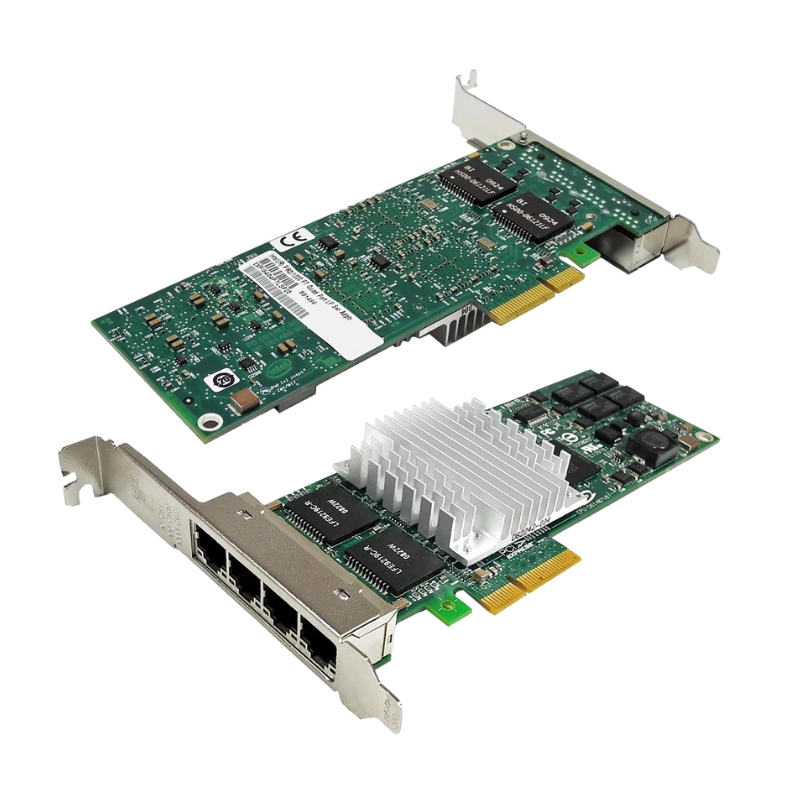
Intel EXPI9404PTLBLK Gigabit Ethernet 4 Ports PCI Express Low Profile Server Adapter. Excellent Refurbished with 1 year replacement warranty
The Intel Gigabit Ethernet 4-Port PCI Express Low Profile Server Adapter, widely associated with the model EXPI9404PTLBLK, represents a high-density networking solution engineered for enterprise-grade server environments requiring reliable multi-port Gigabit connectivity. This class of network interface card (NIC) is designed to deliver stable throughput, advanced network offloading capabilities, and scalable performance in data centers, virtualization hosts, and enterprise switching architectures. Built around Intel’s proven Ethernet controller architecture, the adapter enables servers to efficiently manage multiple simultaneous network streams while maintaining low latency and consistent packet delivery across all ports.
Operating System Compatibility
As modern IT infrastructures continue to evolve toward virtualization, cloud computing, and software-defined networking, the demand for multi-port server adapters such as this 4-port PCI Express Gigabit Ethernet card has increased significantly. It allows system administrators to consolidate network interfaces, reduce PCIe slot consumption, and improve redundancy through link aggregation and failover configurations. This category of server adapter is especially relevant for applications that require predictable performance under sustained workloads, including database hosting, virtualization clusters, storage networking, and application delivery environments.
The Intel Gigabit Ethernet 4-port server adapter is built on a PCI Express interface, ensuring high-speed communication between the network controller and the server motherboard. PCIe architecture provides dedicated bandwidth lanes for each adapter, reducing bottlenecks commonly associated with legacy bus-based networking cards. This results in improved packet processing efficiency and reduced CPU overhead, especially in environments where multiple network streams are processed simultaneously.
At the heart of this category of adapter is Intel’s Gigabit Ethernet controller technology, which integrates advanced hardware acceleration features. These features include checksum offloading, segmentation offloading, and interrupt moderation, all of which contribute to reducing CPU utilization while increasing throughput stability. The multi-port design allows four independent Gigabit Ethernet channels to operate concurrently, each capable of full-duplex communication at up to 1000 Mbps.
The low-profile form factor is another critical design consideration, making the adapter suitable for rack-mounted servers and compact enterprise hardware systems. This ensures compatibility with a wide range of server chassis configurations without sacrificing expansion flexibility.
One of the most significant advantages of this category of server adapter is its ability to provide four independent Gigabit Ethernet ports on a single PCI Express card. This high-density configuration enables administrators to maximize available PCIe slots while expanding network capacity. Each port operates independently, supporting simultaneous traffic flows for redundancy, segmentation, or load balancing.
Intel Gigabit Ethernet adapters are engineered with multiple hardware offloading features that reduce CPU workload. TCP/IP checksum offloading ensures that packet verification is handled by the NIC rather than the server CPU. Similarly, TCP segmentation offloading (TSO) improves large data transfers by allowing the adapter to segment packets efficiently before transmission.
Link aggregation, often implemented through IEEE 802.3ad (LACP), enables multiple ports to be combined into a single logical channel. This increases total available bandwidth and provides redundancy in case one link fails. In enterprise environments, this feature is essential for ensuring high availability and improved network resilience.
The adapter typically includes both low-profile and full-height brackets, allowing installation flexibility across different server chassis types. This ensures compatibility with blade servers, rack servers, and compact industrial systems.
Performance is a defining characteristic of the Intel Gigabit Ethernet 4-port PCI Express adapter category. Each port is capable of delivering up to 1 Gbps of throughput, resulting in a combined potential bandwidth of 4 Gbps under ideal conditions. However, real-world performance is influenced by workload type, PCIe lane allocation, system CPU capabilities, and network configuration. These adapters are optimized for low latency communication, making them suitable for time-sensitive applications such as financial trading platforms, virtualization clusters, and real-time analytics systems. Interrupt moderation technology further enhances performance by reducing the frequency of CPU interrupts during heavy network traffic conditions, allowing the system to allocate resources more efficiently.
Additionally, support for jumbo frames improves throughput efficiency in storage networks and high-volume data transfer environments. By increasing the maximum transmission unit (MTU), the adapter reduces packet overhead and improves overall network efficiency.
In virtualized infrastructures, such as those running hypervisors like VMware ESXi, Microsoft Hyper-V, or KVM-based solutions, the need for multiple virtual network interfaces is critical. A 4-port Gigabit Ethernet adapter allows virtualization hosts to separate management traffic, storage traffic, and virtual machine traffic across dedicated physical interfaces, improving performance and isolation.
Storage environments benefit significantly from multi-port Gigabit adapters. By dedicating ports to iSCSI traffic or file sharing protocols such as NFS and SMB, administrators can ensure consistent throughput and reduce congestion. Link aggregation further enhances storage performance by combining multiple ports into a single high-bandwidth channel.
Web hosting environments require stable and scalable network connectivity. A 4-port server adapter enables separation of inbound traffic, backend database communication, administrative access, and backup operations. This segmentation improves security and ensures that high traffic loads do not impact critical system operations.
Cloud computing nodes rely heavily on network efficiency. Multi-port NICs enable better distribution of network workloads across physical interfaces, improving scalability and redundancy in distributed systems. These adapters play a key role in private cloud deployments and hybrid cloud architectures.
The Intel Gigabit Ethernet 4-port PCI Express adapter is designed for broad compatibility across server operating systems and hardware platforms. It supports major enterprise operating systems including Windows Server editions, Linux distributions, and UNIX-based systems. Driver support is typically provided by Intel’s Ethernet driver package, ensuring consistent updates and performance improvements.
From a hardware perspective, the adapter requires a PCI Express slot with sufficient lane allocation, typically x4 or higher, depending on the specific model and motherboard architecture. Compatibility with server-grade motherboards ensures stable operation in high-density computing environments.
Virtualization support is also a key aspect of compatibility. Many configurations support virtualization technologies such as SR-IOV (Single Root I/O Virtualization), allowing physical network interfaces to be partitioned into multiple virtual functions for use by virtual machines.
Security is a major concern in enterprise networking environments, and multi-port server adapters contribute significantly to network segmentation strategies. By dedicating physical ports to specific functions, such as management traffic or backup networks, organizations can reduce the attack surface and isolate sensitive workloads.
VLAN tagging support allows for logical segmentation of network traffic, ensuring that data remains isolated even when transmitted over shared physical infrastructure. This is particularly important in multi-tenant environments where different departments or clients share the same physical servers.
Additionally, hardware-level checksum validation and error detection mechanisms help ensure data integrity during transmission, reducing the risk of corrupted packets affecting critical applications.
Modern server adapters in this category are designed with virtualization in mind. Features such as SR-IOV enable the creation of multiple virtual NICs from a single physical adapter, allowing virtual machines to access network resources directly with near-native performance.
This reduces overhead caused by software-based network switching and improves scalability in virtualized environments. Each virtual function can be assigned to different virtual machines, ensuring fair distribution of network resources and reducing contention.
Network teaming and bonding further enhance virtualization environments by enabling multiple physical ports to act as a single logical interface. This improves both bandwidth and redundancy, ensuring high availability in mission-critical deployments.
Reliability is a cornerstone of enterprise networking hardware. The Intel 4-port Gigabit Ethernet adapter supports multiple redundancy configurations, allowing network traffic to fail over seamlessly in case of port or cable failure. This ensures uninterrupted connectivity for critical applications.
Load balancing across multiple ports helps distribute traffic evenly, preventing congestion and improving overall system responsiveness. In mission-critical environments, this capability is essential for maintaining service-level agreements (SLAs).
Compared to single-port Gigabit Ethernet adapters, the 4-port PCI Express server adapter offers significantly improved scalability and flexibility. While single-port adapters may suffice for basic server configurations, they lack the redundancy and load distribution capabilities required in enterprise environments.
When compared to 10 Gigabit Ethernet adapters, 4-port Gigabit solutions offer a cost-effective alternative for environments where aggregated bandwidth is sufficient but ultra-high single-stream throughput is not required. This makes them ideal for medium-scale deployments and legacy infrastructure upgrades.
The Intel Gigabit Ethernet 4-port PCI Express server adapter plays a foundational role in modern enterprise networking architectures. By enabling high-density connectivity within a single expansion slot, it supports scalable infrastructure design while optimizing hardware utilization. As enterprises continue transitioning toward hybrid cloud environments and software-defined networking models, the need for flexible and reliable physical network interfaces remains critical. Multi-port server adapters serve as the physical backbone that supports these advanced networking strategies, ensuring stable communication between compute, storage, and management layers.


 Contact Us
 Information
 Catalog
 Solid State Drives (SSD)
 Network Switches
 Hard Disk Drives
 HBA & Controllers
 PC & Servers
 PC & Server Memory
 CPU & Processors
 Network Routers
 Power Supplies
 Tape Drives & Libraries
 Network Devices
 Computer & Network Cables